The Hidden Costs of AI Monitoring in the Workplace
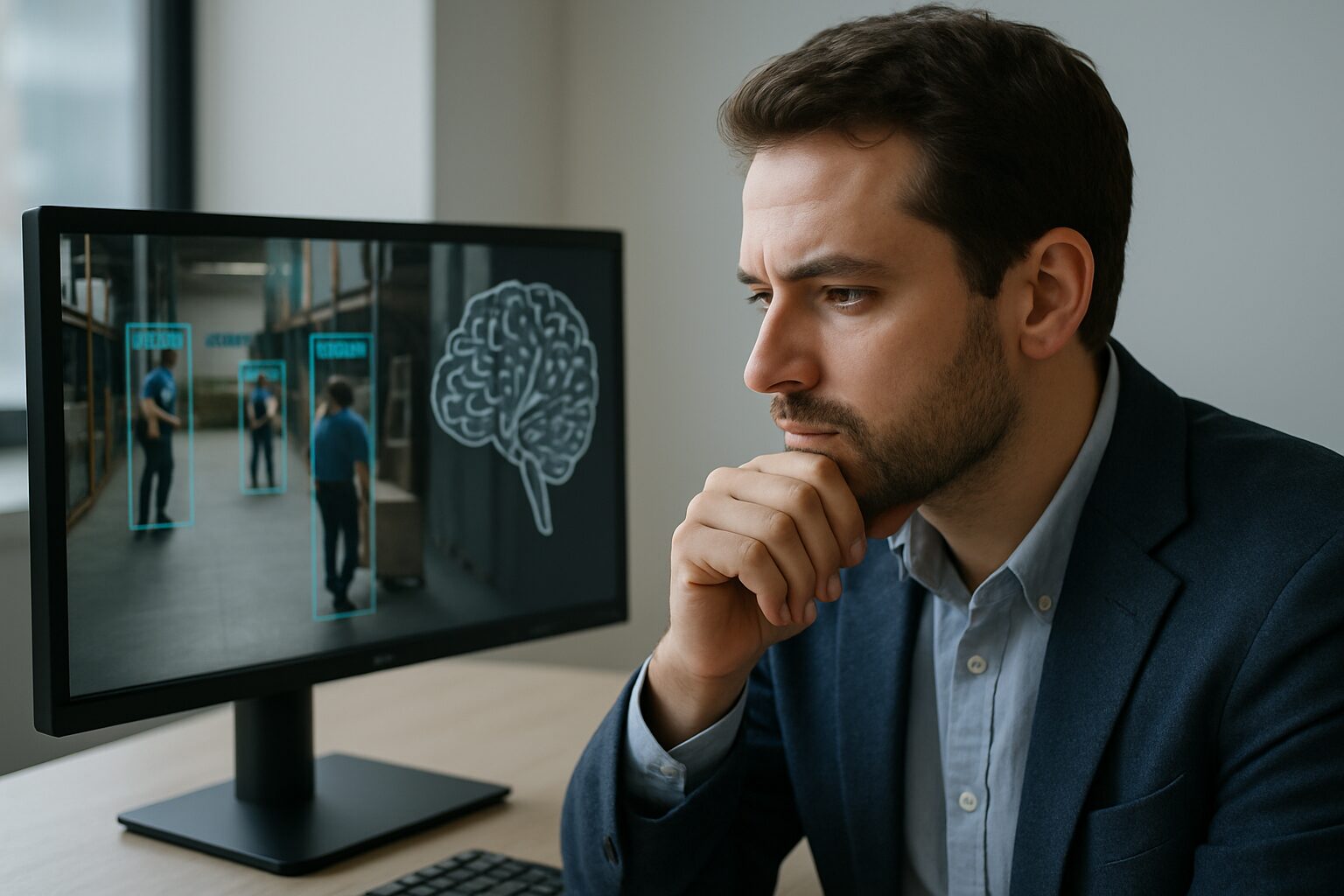
Worker surveillance using AI tools involves the collection and analysis of employee data—such as keystrokes, screen activity, or location—to monitor productivity, behavior, or compliance. These technologies raise ethical concerns about privacy, autonomy, and the potential for misuse in workplace management. The growing adoption of AI-driven surveillance also prompts questions about its broader impact on labor rights and workplace dynamics.
Why It Matters - Real-world impact
Worker surveillance through AI tools has far-reaching implications for employees, employers, and society at large. Employees subjected to constant monitoring may face heightened stress, loss of autonomy, and eroded trust, while employers risk fostering a culture of control rather than collaboration. Misuse of surveillance data can lead to discrimination, unfair performance evaluations, or even wrongful termination, disproportionately affecting marginalized groups. For regular people, this trend signals a broader erosion of workplace privacy and dignity, with potential spillover effects into personal lives as the line between work and private time blurs. Without safeguards, unchecked AI surveillance could normalize intrusive practices, setting dangerous precedents for future labor rights and freedoms.
Ethical Concerns - What’s wrong or risky?
Economic Impact and Job Security
AI-driven surveillance can lead to significant economic impact, as companies may use data to justify layoffs or restructurings based on productivity metrics. This raises concerns about whether such decisions fairly account for external factors affecting performance.
Discrimination and Bias
Surveillance tools can perpetuate or even amplify discrimination, as algorithms might be trained on biased data, leading to unfair evaluations of workers from certain demographic groups.
Fairness in Evaluation
Questions of fairness arise when AI systems monitor and assess employee performance without considering context, such as personal circumstances or collaborative efforts that aren't easily quantified.
Transparency and Understanding
A lack of transparency in how surveillance data is collected, used, and interpreted can leave workers in the dark, unable to challenge or even understand decisions affecting their employment.
Worker Rights and Autonomy
Continuous monitoring infringes on worker rights, potentially eroding privacy, consent, and autonomy, and creating an environment of distrust rather than mutual respect.
Differing Perspectives
Some argue that AI surveillance boosts productivity and identifies areas for employee support, while critics emphasize the moral risks of dehumanizing workplaces and enabling exploitative practices.
Additional Ethical Concerns
Other issues include mental health impacts from constant monitoring, the potential for data breaches, and the erosion of work-life boundaries as surveillance extends beyond the workplace.
Solutions - What’s being done or proposed?
Legislative Protections for Workers
Several countries and regions have introduced or proposed laws to regulate AI-driven worker surveillance. For example, the European Union's General Data Protection Regulation (GDPR) includes provisions that limit excessive data collection, requiring transparency and consent. In the U.S., some states have explored bills mandating disclosure of surveillance tools to employees. These legal measures aim to balance employer oversight with worker privacy rights, though enforcement remains a challenge.
Union-Led Bargaining Agreements
Labor unions have increasingly negotiated contracts that restrict or regulate AI surveillance in workplaces. For instance, some unions have secured clauses requiring employers to disclose surveillance technologies and their purposes. Others have pushed for limits on data retention or the right to human review of AI decisions. Collective bargaining provides a direct way for workers to demand fairer surveillance practices, though not all industries have strong union representation.
Ethical AI Audits and Transparency Tools
Some organizations and researchers advocate for third-party audits of workplace AI systems to assess bias, accuracy, and fairness. Tools like algorithmic impact assessments or transparency dashboards can help workers understand how surveillance data is used. Companies like Microsoft and Google have developed frameworks for responsible AI deployment, though voluntary adoption remains inconsistent across industries.
Worker-Centric Design and Feedback Loops
A growing movement encourages involving employees in the design and implementation of workplace AI tools. Pilot programs have tested systems where workers provide feedback on surveillance mechanisms, helping to identify overly intrusive features. Co-design approaches aim to align monitoring tools with productivity goals without compromising dignity or autonomy, though widespread adoption is still limited.
Data Minimization and Anonymization Techniques
Technical solutions like differential privacy or aggregated data reporting can reduce the invasiveness of surveillance. Some companies have implemented systems that track team performance rather than individual metrics, or that anonymize data after short periods. While these methods don't eliminate surveillance, they can mitigate privacy harmsu2014if properly implemented and enforced.
Public Awareness and Worker Advocacy Campaigns
Nonprofits and worker advocacy groups have launched campaigns to educate employees about their rights regarding AI surveillance. Resources include guides on opting out where possible, recognizing unlawful monitoring, and reporting abuses. High-profile media exposu00e9s have also pressured companies to scale back intrusive practices, demonstrating the power of public scrutiny.
Examples and Real Cases
Amazon's Employee Monitoring System
In 2019, Amazon implemented an AI-driven tracking system in its warehouses that monitored workers' productivity in real-time. Employees reported being automatically flagged and even fired for taking short breaks or not meeting strict productivity quotas, leading to widespread criticism about worker treatment.
Microsoft Productivity Score Feature
In November 2020, Microsoft faced backlash for its 'Productivity Score' tool, which used AI to track individual employee activity across apps like Outlook and Teams. Critics argued it enabled employer surveillance, prompting Microsoft to remove individual user names from the feature by December 2020.
Hypothetical: AI-Powered Warehouse Injury Prediction
A hypothetical logistics company could use AI to analyze worker movements and predict injury risks. While intended to improve safety, such a system might pressure employees to avoid natural movements or needed breaks to maintain 'safe' scores, creating new workplace stressors.
Tesla's In-Car Camera Monitoring
In April 2021, Tesla confirmed it uses AI-powered in-car cameras to monitor driver attentiveness in vehicles with Autopilot. While framed as a safety feature, some drivers expressed privacy concerns about constant surveillance during their work shifts.
Uber's Real-Time Driver Monitoring
Uber's AI systems constantly monitor driver behavior through smartphone sensors, tracking acceleration, braking and phone usage. In 2019, drivers reported being penalized or deactivated without human review based solely on these algorithmic assessments.
Frequently Asked Questions
What is worker surveillance with AI tools?
Worker surveillance with AI tools refers to the use of artificial intelligence to monitor employees' activities, productivity, and behavior in the workplace. This can include tracking computer usage, analyzing communication, or even monitoring physical movements through cameras and sensors.
Why is AI surveillance in the workplace important?
AI surveillance in the workplace is important because it can impact workers' privacy, job security, and mental health. It also raises ethical questions about fairness, autonomy, and the balance between employer oversight and employee rights in modern labor practices.
How does AI worker surveillance affect the economy?
AI worker surveillance can affect the economy by increasing productivity and efficiency for businesses, but it may also lead to job displacement, wage stagnation, or increased worker stress. It can reshape labor markets by favoring tech-driven monitoring over traditional trust-based management.
What are the risks of using AI to monitor employees?
The risks include invasion of privacy, reduced employee morale, potential biases in AI decision-making, and legal challenges over data collection. Over-surveillance can also create a culture of distrust between workers and employers.
How is AI surveillance used in workplaces today?
Today, AI surveillance is used for tasks like tracking keystrokes, analyzing email tone, monitoring break times, or even predicting employee turnover. Some companies use AI for productivity scoring, while others apply it for safety compliance or remote work oversight.