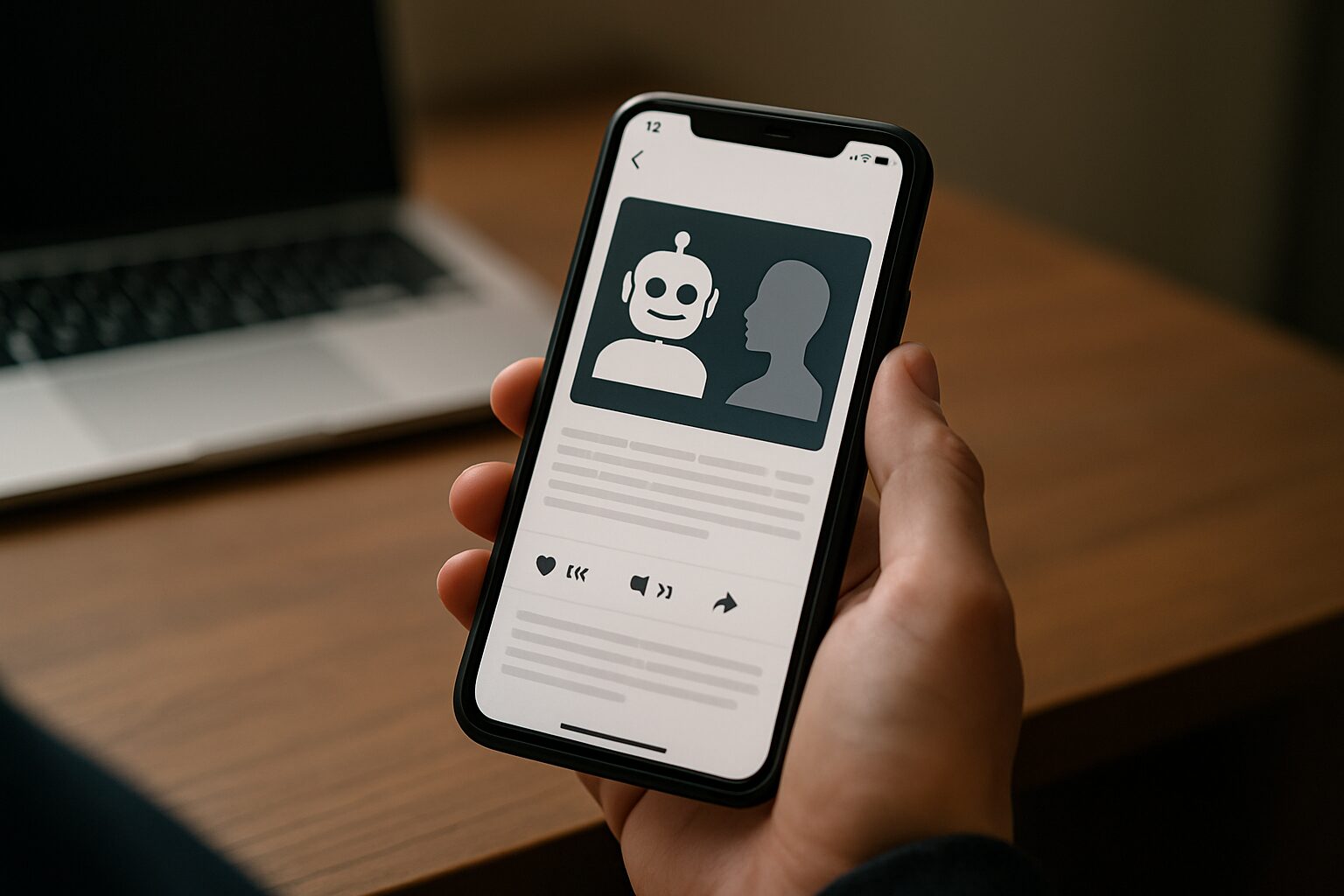
How AI-Generated Reviews Are Shaping Consumer Trust Online
Generative AI can create realistic fake reviews that are difficult to distinguish from genuine customer feedback. This raises ethical concerns about manipulation, as businesses or individuals may use AI-generated reviews to deceive consumers and influence purchasing decisions. The practice undermines trust in online platforms and distorts fair competition.
Why It Matters - Real-world impact
The proliferation of AI-generated fake reviews undermines trust in online platforms, distorting consumer decisions and harming businesses that rely on genuine feedback. Consumers may waste money on inferior products or services, while honest companies lose sales to competitors who manipulate ratings. Small businesses, in particular, suffer when they cannot compete with fabricated praise or malicious defamation. Beyond commerce, the erosion of trust in digital spaces fosters cynicism and weakens the integrity of shared information. For regular people, this means navigating an increasingly deceptive online landscape where even basic purchases require skepticism. Left unchecked, such manipulation could normalize dishonesty, eroding the foundations of fair markets and informed choices.
Ethical Concerns - What’s wrong or risky?
The Pervasive Threat of Generative AI in Fake Reviews
Generative AI's ability to create convincing fake reviews introduces significant ethical risks, particularly in the realms of fairness and transparency. When AI-generated reviews skew product ratings, they unfairly advantage or disadvantage businesses, distorting market competition and misleading consumers. This manipulation erodes trust in online platforms and violates the principle of informed choice.
Discrimination and Economic Consequences
Fake reviews can perpetuate discrimination, as AI might be used to target or favor certain businesses based on biased data, harming marginalized entrepreneurs. Economically, the widespread use of AI for fake reviews could lead to significant economic impact, such as revenue losses for honest businesses and inflated prices for consumers due to artificial demand.
Divergent Perspectives
Some argue that generative AI can be regulated to minimize harm, emphasizing its potential for generating helpful synthetic data. Others contend that the technology inherently facilitates deception, outweighing any benefits. There is also debate over whether responsibility lies with AI developers, platforms, or users in combating fake reviews.
Broader Ethical Considerations
Beyond the linked concerns, fake reviews created by AI raise issues about accountability and intellectual property. If AI generates defamatory content, assigning liability becomes complex. Additionally, the use of AI in this context may contribute to job loss for human content moderators and reviewers, while also implicating worker rights if underpaid laborers are used to train or validate these systems.
Solutions - What’s being done or proposed?
Legal Regulations and Penalties
Governments and regulatory bodies have proposed or implemented laws to penalize the creation and dissemination of fake reviews generated by AI. These regulations often include hefty fines for businesses caught using such practices and require platforms to enforce stricter verification processes. For example, the EU's Digital Services Act mandates transparency in online content, including reviews, and holds platforms accountable for failing to address fraudulent activities.
AI Detection Tools
Technical solutions involve developing AI-powered detection tools to identify and flag fake reviews. These tools analyze patterns, language inconsistencies, and metadata to distinguish between genuine and AI-generated content. Companies like Yelp and Amazon have invested in such technologies to maintain trust in their review systems. However, as generative AI evolves, detection methods must continuously adapt to stay effective.
User Verification Systems
Platforms are increasingly adopting user verification systems, such as requiring proof of purchase or linking reviews to verified accounts. This reduces anonymity and makes it harder for bots or fake accounts to post reviews. Some services also use two-factor authentication or CAPTCHAs to ensure that reviews are submitted by real humans, though these methods can sometimes inconvenience legitimate users.
Community Reporting and Moderation
Encouraging users to report suspicious reviews and employing human moderators to investigate flagged content is another approach. Platforms like TripAdvisor rely on community feedback to identify fake reviews, combining user reports with manual review processes. While effective, this method can be resource-intensive and may not scale well for larger platforms with vast amounts of content.
Transparency and Disclosure Requirements
Some advocates suggest mandatory disclosure when content is generated by AI, including reviews. This would involve labeling AI-generated posts or requiring businesses to declare if they used AI to create or solicit reviews. Such transparency aims to help consumers make informed decisions while holding companies accountable for their marketing practices.
Ethical AI Development Guidelines
Industry groups and organizations are promoting ethical guidelines for AI development to discourage the creation of tools designed for manipulation. These guidelines encourage developers to prioritize accountability and fairness, avoiding applications that could harm consumer trust. While voluntary, adherence to such principles can foster a culture of responsibility among tech companies.
Consumer Education Initiatives
Educating consumers about the prevalence of fake reviews and how to spot them can empower them to make better judgments. Campaigns by consumer protection agencies and nonprofits provide tips, such as checking for overly generic language or sudden spikes in reviews. Informed users are less likely to be swayed by fraudulent content, reducing its overall impact.
Examples and Real Cases
Amazon's Fake Review Problem (2021)
In 2021, Amazon reported removing over 200 million suspected fake reviews before they were seen by customers. Investigations revealed that some sellers used generative AI to create realistic but entirely fabricated positive reviews for their products.
TripAdvisor AI-Generated Hotel Reviews (2020)
A 2020 investigation by Which? found that TripAdvisor contained numerous AI-generated fake reviews. One hotel in Blackpool, UK was found to have 86 suspicious 5-star reviews all using similar AI-generated language patterns.
Hypothetical: AI-Generated Political Endorsements
In a potential future scenario, a political campaign could use generative AI to create thousands of fake social media reviews praising their candidate. These could appear as authentic voter testimonials while actually being completely fabricated by AI systems.
Fiverr's Fake Review Services (2022)
A 2022 BBC investigation found freelancers on Fiverr offering to generate fake product reviews using AI. One seller admitted to using GPT-3 to create hundreds of convincing but fake positive reviews for e-commerce products.
Hypothetical: AI-Generated Medical Product Reviews
A concerning hypothetical involves pharmaceutical companies using generative AI to create fake patient testimonials for medications. These could artificially inflate perceived effectiveness while downplaying side effects through fabricated experiences.
Frequently Asked Questions
What is generative AI and how can it create fake reviews?
Generative AI is a type of artificial intelligence that can create text, images, or other content. It can be used to generate fake reviews by mimicking human writing styles, making them seem authentic even though they're fabricated to manipulate opinions.
Why are fake reviews created by AI a problem?
Fake reviews can mislead consumers into buying poor-quality products or services, damage the reputation of honest businesses, and erode trust in online platforms. AI-generated fake reviews are especially concerning because they can be produced quickly and at scale, making them harder to detect.
How can I spot a fake review created by AI?
Look for overly generic language, repetitive phrases, or unnatural perfection in reviews. AI-generated reviews might lack personal details or specific experiences. Tools and browser extensions are also available to help detect suspicious reviews.
What impact do AI-generated fake reviews have on businesses?
Legitimate businesses can lose customers to competitors using fake positive reviews, while others may suffer from fake negative reviews harming their reputation. This unfair manipulation can distort market competition and consumer trust.
Are there laws or regulations against AI-generated fake reviews?
Yes, many countries have laws against deceptive advertising, including fake reviews. Platforms like Amazon and Google also have policies to remove fake reviews and penalize offenders, but enforcement can be challenging due to the scale of AI-generated content.