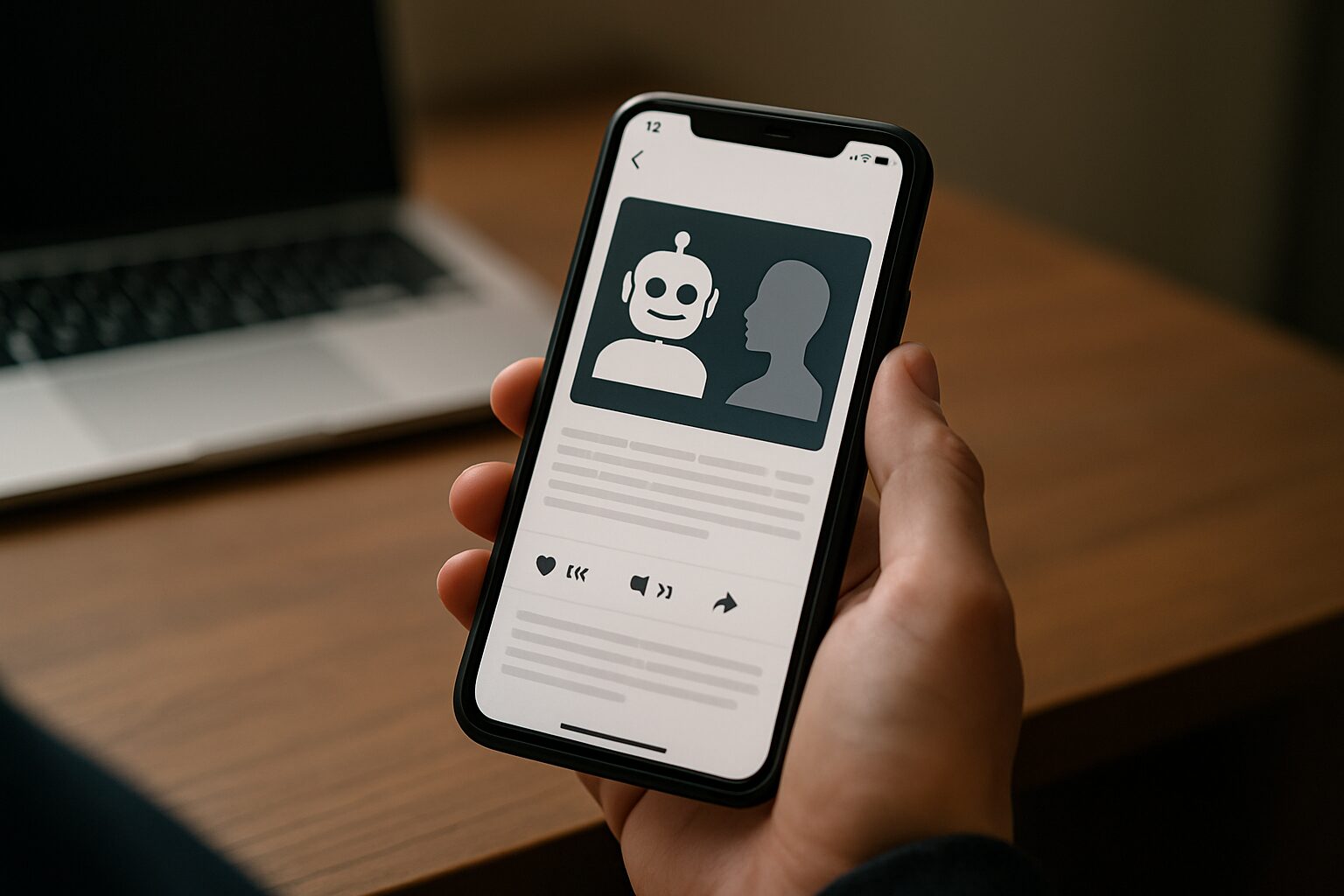
Exposing Digital Deception: How AI Shapes Online Trust and Truth
Generative AI can create realistic fake reviews that are difficult to distinguish from genuine ones. This raises ethical concerns about manipulation, consumer trust, and transparency in online platforms. Without clear disclosure, AI-generated reviews may mislead customers and distort market competition.
Why It Matters - Real-world impact
The proliferation of AI-generated fake reviews undermines trust in online platforms, distorting consumer decisions and harming businesses that rely on authentic feedback. Consumers may waste money on inferior products or services, while honest companies lose out to competitors gaming the system. Small businesses, in particular, suffer when they cannot compete with fabricated praise or malicious defamation. For regular people, this erosion of trust makes it harder to navigate everyday purchases, from restaurants to medical services. Worse, if left unchecked, such manipulation could extend beyond commerce into areas like political discourse or public safety, where misinformation carries graver consequences. Transparency in AI-generated content is not just a technical issue—it’s a societal safeguard.
Ethical Concerns - What’s wrong or risky?
Generative AI and the Proliferation of Fake Reviews
Generative AI has made it alarmingly easy to create convincing fake reviews at scale, posing significant ethical risks. These systems can mimic human writing styles, generate persuasive narratives, and evade detection, undermining trust in online platforms and harming both consumers and honest businesses.
Threats to Transparency
A core issue is the erosion of transparency. When AI generates reviews without disclosure, users cannot distinguish genuine feedback from fabricated content. This lack of clarity violates the principle of informed consent, as consumers make decisions based on misleading information.
Unfair Competitive Practices
Generative AI can be used to manipulate market dynamics, creating an uneven playing field. Businesses might deploy fake positive reviews for themselves or negative ones for competitors, raising serious concerns about fairness. This distorts competition and penalizes companies that rely on authentic customer feedback.
Discriminatory Outcomes
If AI systems are trained on biased data, they may produce fake reviews that disproportionately target or favor certain groups, products, or services based on demographics, leading to issues of discrimination. For example, reviews for businesses owned by minorities might be artificially suppressed or attacked.
Economic and Labor Implications
The automation of review generation could contribute to job loss in sectors like content moderation or marketing, where human oversight is replaced. Additionally, if fake reviews damage a business’s reputation, the economic impact on livelihoods and small enterprises can be severe. There are also concerns about worker rights if humans are involved in training or cleaning data for these systems under poor conditions.
Differing Perspectives
Not all stakeholders view these risks uniformly. Some argue that generative AI can be used ethically to assist in drafting reviews or summarizing feedback, enhancing efficiency. Others believe that with proper regulation and disclosure, the benefits could outweigh the harms. However, skeptics emphasize that the potential for abuse and the difficulty of enforcement make proactive measures essential.
Solutions - What’s being done or proposed?
Legal Regulations and Penalties
Some governments and regulatory bodies have proposed or enacted laws to penalize the creation and dissemination of fake reviews generated by AI. For example, the FTC in the U.S. has fined companies for deceptive practices involving fake reviews. These regulations aim to deter misuse by imposing financial penalties or legal consequences on offenders.
AI Detection Tools
Technical solutions include developing AI-powered detection tools that can identify fake reviews by analyzing patterns, language use, and metadata. Companies like Google and Amazon have implemented algorithms to flag or remove suspicious reviews. These tools rely on machine learning to continuously improve their accuracy in distinguishing between genuine and AI-generated content.
Transparency and Disclosure Requirements
Platforms and businesses are increasingly adopting policies that require clear disclosure when content is AI-generated. For instance, some review platforms now mandate that users or companies label AI-generated reviews. This approach promotes transparency, allowing consumers to make informed decisions about the authenticity of the reviews they read.
Community Reporting and Moderation
Social solutions involve empowering users to report suspicious reviews. Platforms like Yelp and TripAdvisor rely on community feedback to identify and remove fake content. Moderators or automated systems then review these reports. This crowdsourced approach leverages the collective vigilance of users to maintain review integrity.
Blockchain for Review Authenticity
Some innovators suggest using blockchain technology to create immutable records of reviews. Each review would be tied to a verified user identity and timestamp, making it harder to fabricate or alter reviews. While promising, this solution faces challenges in scalability and user privacy concerns.
Ethical AI Development Standards
Institutional efforts include establishing ethical guidelines for AI developers to prevent misuse in generating fake content. Organizations like the IEEE and Partnership on AI have published frameworks encouraging responsible AI use. These standards aim to foster accountability and reduce the likelihood of AI being used for deceptive practices.
Consumer Education and Awareness
Educational campaigns help consumers recognize signs of fake reviews, such as overly generic language or sudden spikes in ratings. By improving digital literacy, consumers can become more skeptical and critical of reviews, reducing the impact of AI-generated misinformation. Nonprofits and consumer advocacy groups often lead these initiatives.
Examples and Real Cases
Amazon's Fake Review Problem (2021)
In 2021, Amazon faced scrutiny for fake reviews on its platform, many of which were suspected to be generated by AI. The UK's Competition and Markets Authority (CMA) investigated how these reviews misled consumers and manipulated product ratings.
TripAdvisor's AI-Generated Hotel Reviews (Hypothetical)
A hypothetical scenario involves a hotel chain using generative AI to post glowing fake reviews on TripAdvisor. These AI-generated reviews could artificially inflate ratings, deceiving travelers and undermining trust in the platform.
Fiverr's Fake Review Services (2020)
In 2020, a BBC investigation found sellers on Fiverr offering fake review services, some likely powered by AI. These services allowed businesses to purchase positive reviews, distorting consumer perceptions and violating platform policies.
AI-Generated Restaurant Reviews (Hypothetical)
A restaurant could use generative AI to create hundreds of fake Yelp reviews praising its food and service. This would mislead potential customers and harm competitors who rely on genuine feedback.
Facebook's AI-Generated Product Reviews (2019)
In 2019, Facebook removed fake accounts that were posting AI-generated reviews for products in Marketplace. These reviews were designed to manipulate buyer decisions and boost sales for certain sellers.
Frequently Asked Questions
What is generative AI and how can it create fake reviews?
Generative AI is a type of artificial intelligence that can create text, images, or other content. It can be used to generate fake reviews by mimicking human writing styles, making it hard to tell if a review is real or AI-generated. This can mislead consumers and manipulate opinions.
Why is transparency important when it comes to AI-generated reviews?
Transparency is important because it helps consumers trust the reviews they read. If people know a review was written by AI, they can judge its credibility better. Without transparency, fake reviews can unfairly influence buying decisions or harm businesses.
How can fake reviews created by AI influence people?
Fake AI reviews can manipulate opinions by making products seem better or worse than they really are. This can lead people to buy low-quality items or avoid good ones, affecting both consumers and honest businesses.
What can we learn from the rise of AI-generated fake reviews?
We can learn that technology can be used unethically to deceive people. It highlights the need for better detection tools, regulations, and awareness so consumers and platforms can identify and prevent fake reviews.
How does AI-generated content apply to online shopping today?
Today, AI can quickly create large numbers of fake reviews to boost or damage products. This makes it harder for shoppers to trust online ratings, emphasizing the need for verified reviews and AI-detection tools on platforms like Amazon or Yelp.