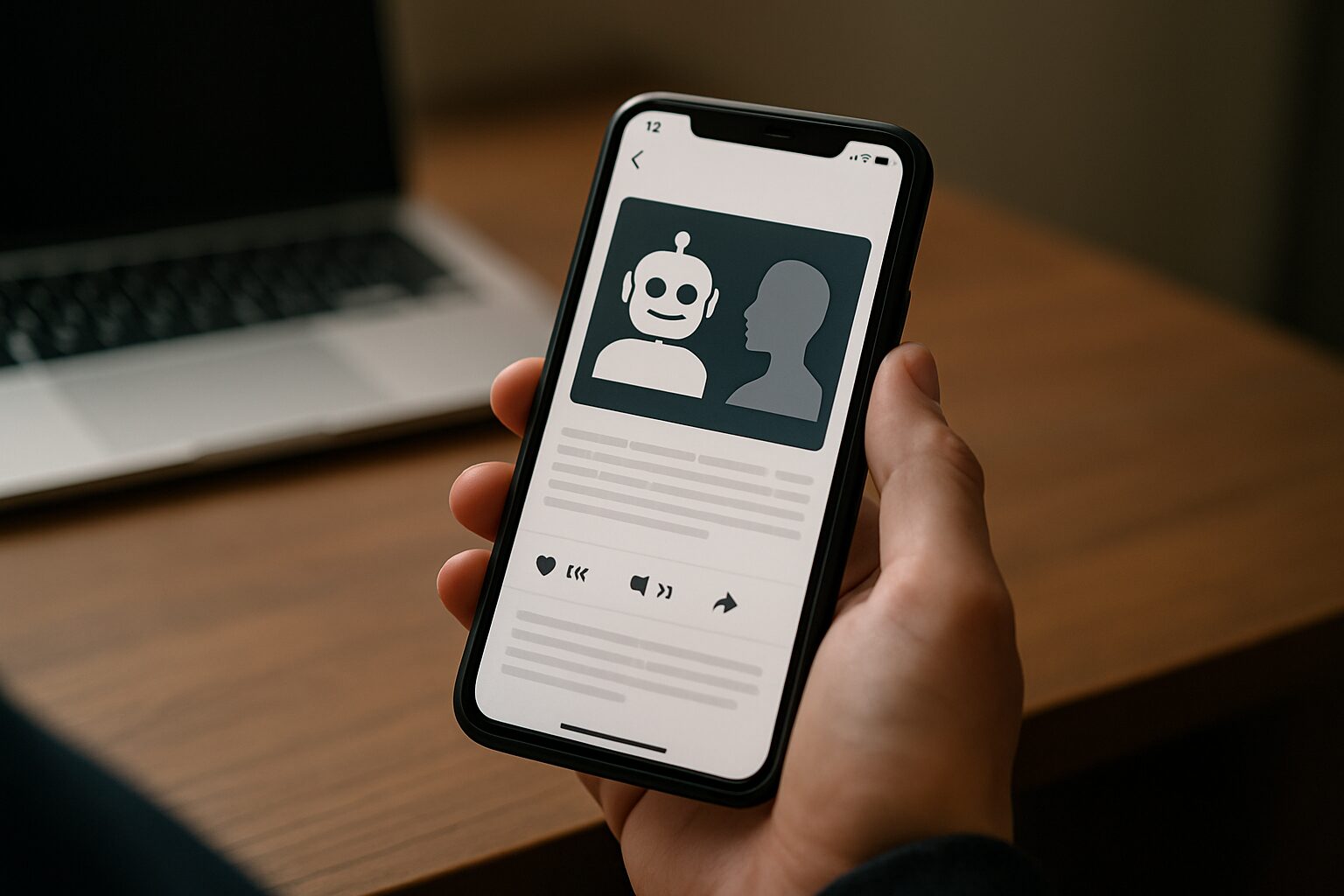
The Hidden Influence: How AI Shapes Our Choices Without Us Knowing
Behavioral nudging refers to the use of subtle design or messaging to influence people's decisions without restricting their options. When AI systems are employed to automate or personalize these nudges, ethical concerns arise about transparency, autonomy, and unintended consequences. The issue centers on whether such AI-driven influence respects user agency or crosses into manipulation.
Why It Matters - Real-world impact
The ethics of AI in behavioral nudging matters because it directly impacts personal autonomy and decision-making on a massive scale. From social media algorithms to targeted advertising, AI-driven nudges influence choices ranging from consumer purchases to political views, often without explicit user awareness. Vulnerable populations—such as children, the elderly, or those with limited digital literacy—are disproportionately affected, as they may lack the tools to recognize or resist manipulation. If left unchecked, these systems can reinforce biases, exploit psychological weaknesses, or prioritize corporate profits over individual well-being. Regular people should care because these invisible influences shape daily life, from financial decisions to social behaviors, often with little transparency or accountability. The consequences—eroded trust, diminished agency, or unintended harm—demand ethical scrutiny and safeguards.
Ethical Concerns - What’s wrong or risky?
Understanding the Ethical Landscape of AI in Behavioral Nudging
AI-driven behavioral nudging leverages algorithms to subtly influence human decisions, from consumer purchases to health choices. While it can promote positive behaviors, it raises significant ethical questions that demand scrutiny.
Key Ethical Risks
One primary concern is fairness, as AI systems may prioritize outcomes beneficial to developers or corporations rather than users, potentially exploiting cognitive biases without equitable consideration.
Another critical issue is discrimination, where algorithms might inadvertently or systematically nudge different demographic groups in biased ways, reinforcing existing societal inequalities.
Transparency is often compromised, as the complexity of AI models can obscure how and why certain nudges are deployed, leaving users unaware of the influences shaping their decisions.
There are also worries about economic impacts, such as nudging that encourages overconsumption or financial decisions not in the user's best interest, though these are debated based on contextual benefits.
Differing Perspectives
Proponents argue that AI nudging can enhance well-being, such as by promoting healthier lifestyles or sustainable choices, viewing it as a tool for social good when designed ethically.
Critics, however, caution against the potential for manipulation, emphasizing that even well-intentioned nudges can undermine autonomy if users are not adequately informed or able to opt out.
Some experts call for a middle ground, advocating for regulated use where nudges are transparent, user-controlled, and regularly audited for fairness and unintended consequences.
Solutions - What’s being done or proposed?
Transparency and Disclosure Requirements
One proposed solution is implementing strict transparency and disclosure requirements for AI systems used in behavioral nudging. This would mandate that companies clearly inform users when they are being nudged, the purpose behind it, and the data being used. For example, platforms could be required to display a notice when an AI is adjusting content or recommendations to influence behavior. Legal frameworks like the GDPR in Europe already include some provisions for transparency, but advocates argue these need to be expanded specifically for AI-driven nudging.
Ethical Design Guidelines for AI Nudging
Technical and ethical guidelines have been suggested to ensure AI nudging is designed responsibly. These guidelines would outline principles such as user autonomy, beneficence, and non-maleficence. For instance, AI systems could be programmed to avoid exploitative nudges, like those targeting addictive behaviors. Organizations like the IEEE and the Partnership on AI have started developing such frameworks, but widespread adoption and enforcement remain challenges.
User Control and Opt-Out Mechanisms
Giving users more control over AI nudging is another solution. This could include opt-out mechanisms or customizable settings that allow individuals to disable or adjust the intensity of nudges. For example, social media platforms might let users choose whether they want their feeds optimized for engagement or neutrality. While some platforms already offer basic preferences, critics argue these options are often buried in settings and not user-friendly enough.
Independent Oversight and Auditing
Establishing independent oversight bodies to audit AI nudging systems has been proposed. These bodies would evaluate whether nudges align with ethical standards and legal requirements. Audits could assess factors like bias, unintended consequences, and the proportionality of influence. Some suggest modeling this after financial auditing, with third-party organizations certifying compliance. However, defining standards and ensuring auditor independence are significant hurdles.
Public Education and Digital Literacy
Enhancing public understanding of AI nudging through education is a social solution. Schools, governments, and nonprofits could teach digital literacy skills to help people recognize and critically evaluate nudges. For example, curricula might cover how recommendation algorithms work and their potential effects on decision-making. While this empowers individuals, it may not fully address systemic issues or protect vulnerable populations who are more susceptible to manipulation.
Legal Limits on High-Risk Nudging
Some advocate for legal bans or restrictions on certain types of high-risk AI nudging, such as those targeting children, health behaviors, or political opinions. For instance, laws might prohibit using AI to nudge minors toward unhealthy eating habits or to amplify divisive political content. While this approach directly addresses harms, defining and enforcing such limits without stifling innovation or overregulating benign uses is complex.
Collaborative Industry Standards
Industry-wide collaboration to set voluntary standards for ethical AI nudging has been attempted. Tech companies, academia, and civil society groups could work together to create best practices, similar to the Asilomar AI Principles. These standards might include commitments to avoid dark patterns or to prioritize user well-being over engagement metrics. However, without enforcement mechanisms, compliance may be uneven, and bad actors could ignore the standards.
Examples and Real Cases
Facebook's Emotional Contagion Experiment (2014)
In 2014, Facebook conducted a secret experiment where it manipulated the news feeds of 689,000 users to show either more positive or negative content. The study found that users' emotions could be influenced by the content they saw, raising ethical concerns about covert psychological manipulation.
Cambridge Analytica and Political Nudging (2016)
Cambridge Analytica used AI-driven behavioral data from millions of Facebook users to create targeted political ads during the 2016 U.S. presidential election. The firm exploited psychological profiles to nudge voters, sparking debates about the ethics of AI in influencing democratic processes.
Uber's Surge Pricing Notifications (Hypothetical)
A hypothetical example could involve Uber using AI to send push notifications during peak hours, subtly nudging users to accept higher surge prices by creating a fear of missing out. While not confirmed, such practices would raise questions about exploiting behavioral biases for profit.
China's Social Credit System (Ongoing)
China's Social Credit System uses AI to monitor and score citizens' behavior, nudging them toward 'desirable' actions through rewards or penalties. Critics argue this system crosses ethical boundaries by enforcing state-approved behavior through pervasive surveillance.
Netflix's Autoplay Feature (Ongoing)
Netflix employs AI to autoplay the next episode or suggest content based on viewing history, leveraging behavioral nudging to increase watch time. While convenient, this raises ethical questions about exploiting users' attention and decision-making fatigue.
Frequently Asked Questions
What is AI behavioral nudging?
AI behavioral nudging is when artificial intelligence subtly influences people's decisions or actions, often without them realizing it. It uses small prompts, suggestions, or design choices (like default options or highlighted recommendations) to guide behavior in a certain direction, similar to how apps suggest healthier choices or social media platforms prioritize certain content.
Is AI nudging ethical?
It depends on transparency and intent. Ethical nudging helps people make better choices (like saving more money or eating healthier), but unethical nudging can manipulate users for profit or control (like addictive app designs). The key is whether the nudge respects user autonomy and clearly discloses its purpose.
How does AI nudging manipulate people?
AI nudging can manipulate by exploiting psychological biasesu2014for example, using urgency ('Only 3 left!'), social proof ('Most people buy this'), or default settings that favor the nudger's goals. Unlike persuasion, manipulation often hides its intent or pushes choices that benefit the nudger more than the user.
Why is AI nudging controversial?
It's controversial because it blurs the line between helpful guidance and covert control. While nudging can improve decisions (like organ donation opt-outs), critics argue it can erode free will when used irresponsiblyu2014especially when AI personalizes nudges to exploit individual vulnerabilities.
Where do we see AI nudging in everyday life?
Common examples include: streaming platforms autoplaying the next episode, food delivery apps highlighting 'popular' items, or fitness trackers shaming you for skipping workouts. Even default privacy settings or 'smart' subscriptions that renew automatically rely on AI-driven nudges.