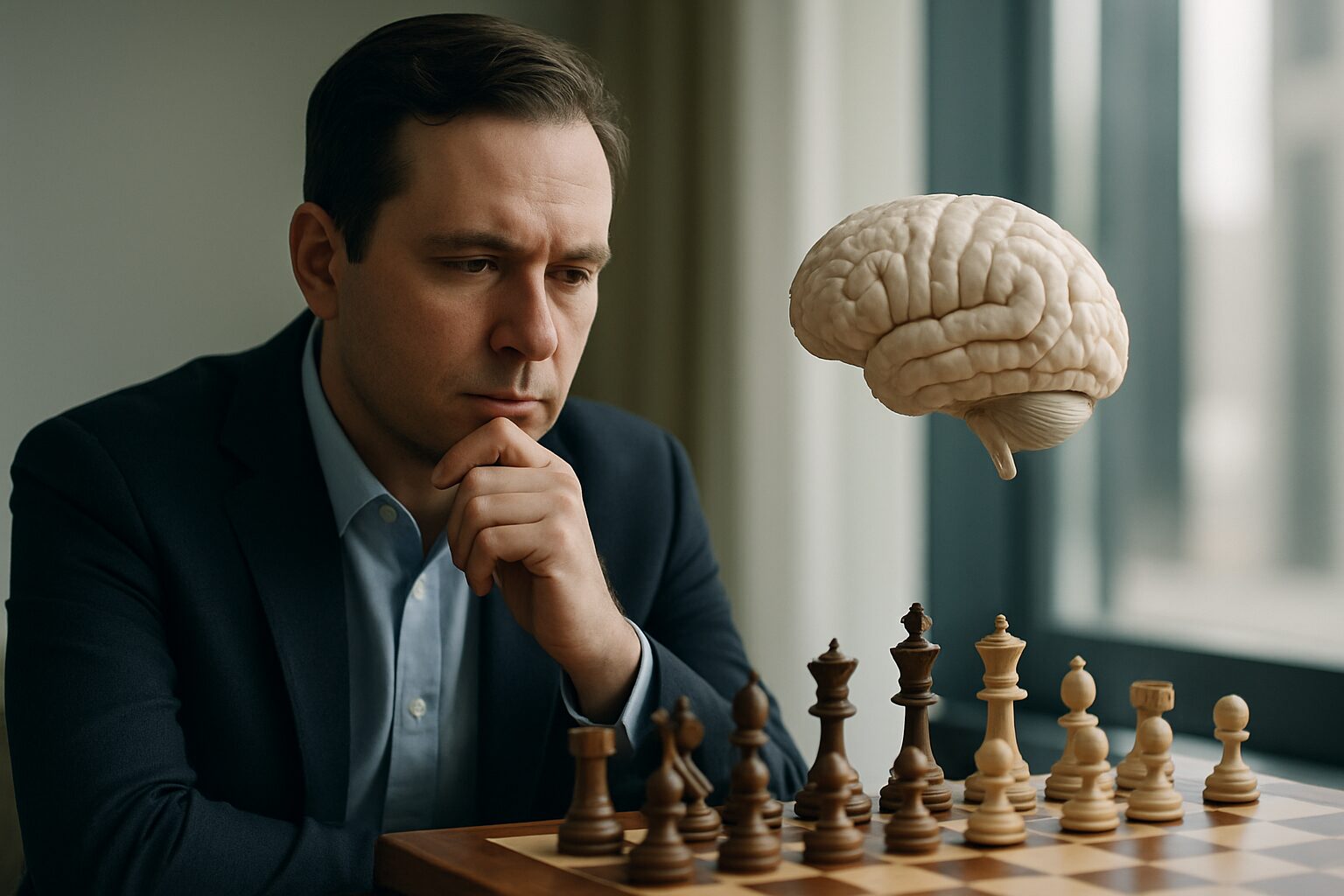
How AI is Reshaping Financial Markets and Sparking Debate
The use of artificial intelligence in financial markets raises concerns about manipulation and undue influence. AI-driven algorithms can analyze vast amounts of data and execute trades at unprecedented speeds, potentially distorting market behavior. This creates ethical questions around fairness, transparency, and the risk of AI systems being exploited to manipulate prices or investor decisions.
Why It Matters - Real-world impact
The influence of AI in financial markets poses real-world risks that extend far beyond trading floors. Investors, retirees, and everyday consumers are all affected when AI-driven algorithms amplify market volatility, manipulate asset prices, or execute high-frequency trades that distort fair valuation. If unchecked, these systems could trigger flash crashes, erode trust in markets, or even enable large-scale fraud—threatening pensions, savings, and economic stability. Regular people should care because these disruptions can lead to job losses, inflated costs of living, or diminished retirement funds, even for those who never directly engage with the stock market. The ethical deployment of AI in finance isn’t just a technical concern—it’s a safeguard for collective financial security.
Ethical Concerns - What’s wrong or risky?
Ethical Risks of AI in Financial Markets
AI's integration into financial markets introduces several ethical concerns. One major issue is fairness, as algorithms may favor certain investors or institutions, creating an uneven playing field. Similarly, discrimination can occur if AI systems inadvertently learn and perpetuate biases based on historical data, disadvantaging particular groups or regions.
Transparency and Accountability
Another critical concern is transparency. Many AI models, especially deep learning systems, operate as "black boxes," making it difficult to understand or challenge their decisions. This lack of clarity can obscure unethical practices, such as market manipulation or insider trading facilitated by AI.
Economic and Social Ramifications
AI-driven automation also raises worries about job loss in traditional financial roles, from analysts to traders, potentially destabilizing employment in the sector. Additionally, the economic impact could be profound if AI amplifies market volatility or triggers flash crashes, harming both individual investors and the broader economy.
Differing Perspectives
Not everyone views these risks uniformly. Some argue that AI enhances market efficiency and accessibility, reducing human error and emotion-driven decisions. Others contend that without stringent oversight, AI could centralize power among tech-savvy elites, exacerbating inequality. Balancing innovation with ethical safeguards remains a contentious and vital discussion.
Solutions - What’s being done or proposed?
Regulatory Oversight and Compliance Frameworks
Governments and financial regulators have proposed stricter oversight of AI systems used in financial markets. This includes mandatory audits of AI algorithms to ensure they comply with existing market manipulation laws. Some jurisdictions are exploring the creation of specialized regulatory bodies tasked with monitoring AI-driven trading activities and enforcing transparency requirements.
Transparency and Explainability Standards
To address the 'black box' nature of many AI systems, experts advocate for implementing transparency and explainability standards. Financial institutions using AI for trading or decision-making may be required to document how their algorithms function and demonstrate that they do not engage in unethical practices like front-running or spoofing. Open-source AI frameworks with built-in audit trails are also being considered.
Ethical AI Certification Programs
Industry groups and academic institutions have suggested certification programs for AI systems used in finance. These programs would evaluate whether an AI model adheres to ethical guidelines, such as fairness, accountability, and avoidance of market manipulation. Certified systems could receive a seal of approval, similar to cybersecurity certifications, to build trust among investors and regulators.
Collaborative Monitoring Networks
Some proposals involve creating collaborative networks where financial institutions, regulators, and tech companies share data on suspicious AI-driven market activities. These networks would use collective intelligence to detect anomalies or coordinated manipulation attempts in real-time, allowing for quicker interventions.
Public Awareness and Education Campaigns
Educating investors and the general public about the risks and realities of AI in financial markets is seen as a key social solution. Awareness campaigns could help individuals recognize signs of manipulation and make more informed decisions. Financial literacy programs may also include modules on how AI impacts trading and investment strategies.
Algorithmic Trading Speed Limits
To curb the potential for AI-driven high-frequency trading to destabilize markets, some have proposed implementing speed limits or cooling-off periods for algorithmic trades. These measures would prevent AI systems from executing thousands of transactions in milliseconds, reducing the risk of flash crashes or other disruptive events.
Whistleblower Protections and Incentives
Strengthening protections for whistleblowers who expose unethical AI practices in finance is another institutional solution. Offering financial incentives or legal safeguards could encourage insiders to report manipulation or bias in AI systems without fear of retaliation, helping regulators identify and address issues more effectively.
Examples and Real Cases
Flash Crash of 2010
On May 6, 2010, the Dow Jones Industrial Average plummeted nearly 1,000 points in minutes before recovering. Investigations revealed high-frequency trading algorithms exacerbated the crash by rapidly selling stocks in response to market conditions.
GameStop Short Squeeze (2021)
In January 2021, retail investors on Reddit's WallStreetBets forum coordinated to drive up GameStop's stock price, countering hedge fund short positions. AI-driven trading bots amplified volatility by reacting to social media trends and market signals.
Hypothetical: AI-Powered Pump-and-Dump Scheme
In a hypothetical scenario, bad actors could use AI to analyze social media sentiment and artificially inflate a stock's price by spreading misinformation. The AI could then execute rapid trades to profit before the market corrects.
Knight Capital Group Algorithmic Glitch (2012)
On August 1, 2012, a faulty algorithm deployed by Knight Capital Group caused erratic trades, resulting in a $440 million loss in 45 minutes. The glitch highlighted risks of unchecked AI-driven trading systems.
Hypothetical: AI-Driven Market Manipulation via News Feeds
A realistic concern is AI systems generating fake financial news to influence stock prices. For example, an AI could create and disseminate false earnings reports to trigger automated trading responses.
Frequently Asked Questions
What is AI's role in financial market manipulation?
AI can analyze vast amounts of data to identify patterns and execute trades at superhuman speeds. While this can improve market efficiency, it also raises concerns about AI being used to manipulate prices, spread misinformation, or create artificial market movements that benefit certain traders.
Why should beginners care about AI influence in financial markets?
AI-driven trading now dominates markets, meaning beginners are competing against algorithms. Understanding AI's role helps new investors recognize unusual market behaviors, avoid manipulated trends, and make more informed decisions in an increasingly automated financial world.
How can AI influence stock prices unfairly?
AI systems can potentially engage in practices like spoofing (placing fake orders to move prices) or layering (creating false market depth). They may also amplify misinformation by rapidly trading on news before humans can verify its accuracy, sometimes based on deliberately planted false data.
What are real examples of AI affecting markets today?
Today, AI impacts markets through high-frequency trading (executing millions of orders per second), sentiment analysis of news/social media to predict movements, and algorithmic trading strategies that can sometimes create flash crashes or unusual volatility when multiple AIs react to the same signals.
How can regular investors protect themselves from AI market manipulation?
Beginners should: 1) Avoid chasing sudden price movements that may be AI-driven, 2) Use limit orders instead of market orders, 3) Diversify investments, 4) Be skeptical of 'hot tips' on social media that AI bots might be amplifying, and 5) Focus on long-term fundamentals rather than short-term volatility.