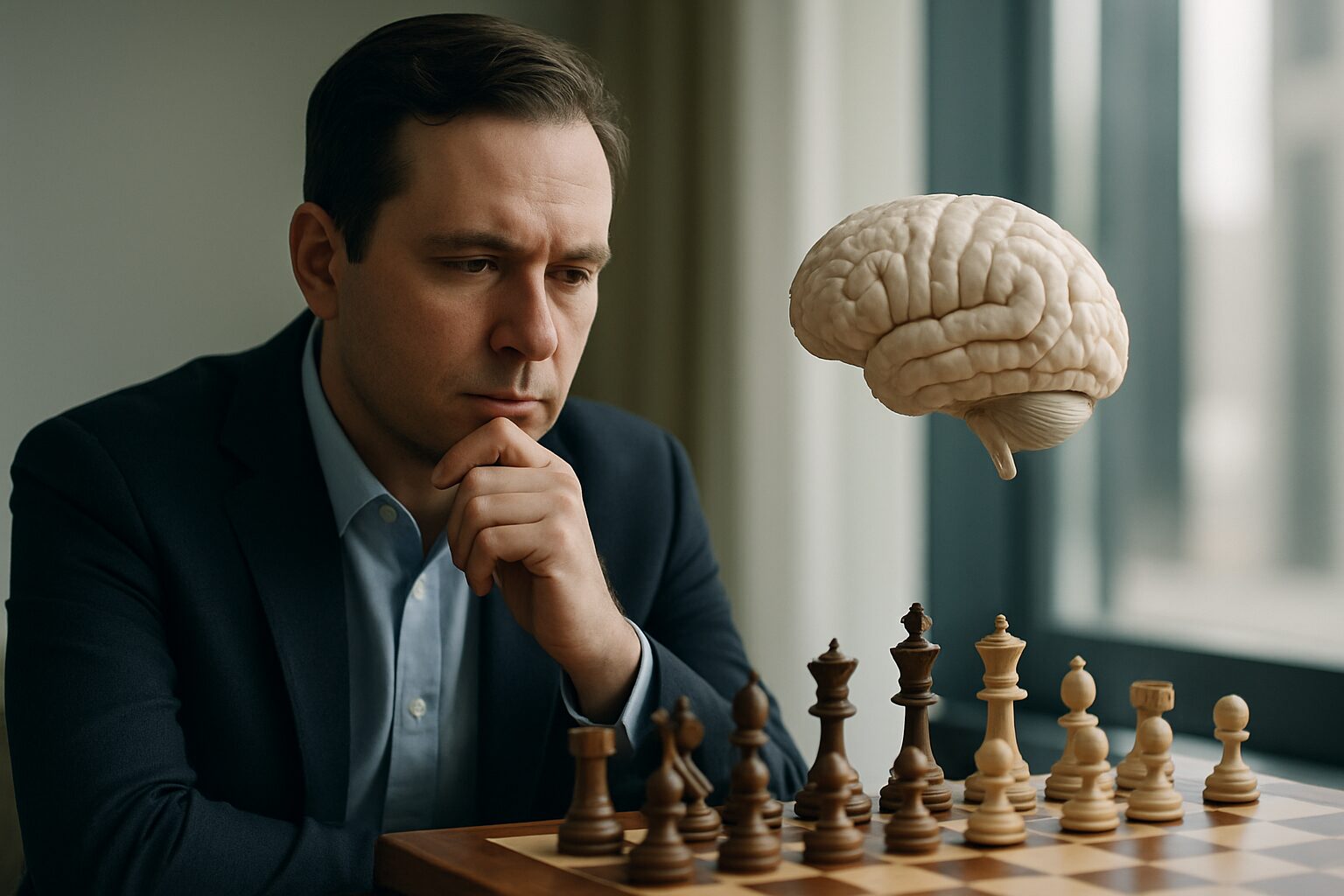
AI in Finance: Debunking Myths and Unveiling the Truth
The use of artificial intelligence in financial markets has sparked debates about its potential to manipulate or unduly influence trading. While some believe AI can predict trends and optimize decisions with near-perfect accuracy, others argue its impact is overstated or misunderstood. This raises ethical questions about transparency, fairness, and the boundaries of automated decision-making in high-stakes environments.
Why It Matters - Real-world impact
The influence of AI in financial markets is not just a theoretical concern—it has real-world consequences for investors, businesses, and everyday consumers. Algorithmic trading, predictive analytics, and AI-driven market manipulation can distort prices, exacerbate volatility, and create unfair advantages for those with access to advanced technology. Retail investors may face skewed markets where high-frequency AI trades outpace human decision-making, while systemic risks could lead to flash crashes or destabilized economies. Regular people should care because these dynamics affect retirement savings, loan rates, and even job markets tied to financial stability. Without proper oversight, AI's unchecked influence could deepen inequality and erode trust in financial systems that underpin daily life.
Ethical Concerns - What’s wrong or risky?
Myth: AI in Finance is a Neutral Force
Many believe AI systems operate without bias, but in reality, they can perpetuate and even amplify existing inequalities. For instance, algorithms trained on historical data may reflect past discriminatory practices, leading to biased lending or investment decisions. This raises significant Ethical Concerns: Discrimination, as certain demographics might be systematically disadvantaged.
Myth: AI Ensures Market Fairness
While AI can process vast amounts of data quickly, it doesn't guarantee fairness. High-frequency trading algorithms might create an uneven playing field, favoring institutions with advanced technology over individual investors. This challenges Ethical Concerns: Fairness, as market advantages could concentrate wealth and power.
Myth: AI Decisions Are Fully Transparent
AI models, especially deep learning systems, are often "black boxes," making it difficult to understand how decisions are made. This lack of clarity can obscure unethical practices, such as manipulation or insider trading disguised as algorithmic strategies. Ensuring Ethical Concerns: Transparency is crucial for accountability and trust.
Myth: AI Only Creates Opportunities, Not Harms
AI's efficiency can lead to significant Ethical Concerns: Job Loss in traditional financial roles, from analysts to traders. While some argue this drives innovation and new job creation, others worry about the socioeconomic impact on displaced workers and increased inequality.
Differing Perspectives on AI's Role
Proponents argue that AI enhances market efficiency, reduces human error, and democratizes access to financial tools. Critics, however, highlight risks like algorithmic collusion, where AI systems might unintentionally coordinate to manipulate prices, or the potential for Ethical Concern: Economic Impact if AI-driven flash crashes become more frequent.
Worker Rights in an AI-Driven Industry
The integration of AI also touches on Ethical Concerns: Worker Rights, as employees may face increased surveillance or pressure to meet algorithm-driven targets, potentially leading to unethical work environments. Balancing innovation with ethical labor practices remains a key challenge.
Additional Ethical Risks
Beyond these, there are concerns about data privacy, as AI systems require vast amounts of personal and financial data, and the moral responsibility for AI errors—who is accountable when an algorithm causes significant financial harm? These issues underscore the need for robust ethical frameworks in AI-driven finance.
Solutions - What’s being done or proposed?
Regulatory Oversight and Compliance
Governments and financial regulators have proposed stricter oversight of AI systems used in trading. This includes mandatory audits of AI algorithms to ensure they comply with market fairness laws and do not engage in manipulative practices like spoofing or wash trading. Some jurisdictions have introduced 'algorithm passports' that require firms to register their AI tools and disclose their basic functioning to regulators.
Transparency and Explainability Requirements
To combat the 'black box' nature of AI, there have been calls for transparency mandates where financial institutions must provide clear explanations of how their AI models make decisions. This includes requiring firms to document data sources, model logic, and risk controls. The goal is to make AI-driven trades auditable and understandable to regulators and stakeholders.
Ethical AI Certification Programs
Industry groups and nonprofits have developed certification programs to evaluate AI systems in finance for ethical compliance. These programs assess factors like bias mitigation, fairness, and adherence to ethical guidelines. Firms that pass these certifications can use them as a trust signal to clients and investors, promoting responsible AI adoption.
Circuit Breakers and Speed Bumps
Exchanges have implemented technical safeguards like circuit breakers that halt trading during extreme volatility caused by AI-driven flash crashes. Some markets have also introduced 'speed bumps'u2014small delays in order executionu2014to prevent high-frequency AI traders from exploiting microsecond advantages, leveling the playing field for human traders.
Public and Private Sector Collaboration
Collaborative initiatives between regulators, financial institutions, and tech companies aim to establish best practices for AI in markets. These include shared databases of market anomalies linked to AI behavior, joint research on emerging risks, and forums for real-time information sharing during crises. Such cooperation helps preempt systemic risks posed by AI manipulation.
Whistleblower Protections and Incentives
To uncover unethical AI practices, some proposals advocate for stronger protections and financial incentives for whistleblowers within firms developing or deploying trading AI. This could mirror existing securities whistleblower programs, encouraging insiders to report manipulation or bias without fear of retaliation.
AI-Specific Market Surveillance Tools
Regulators and exchanges are investing in advanced surveillance AI designed to detect manipulative patterns indicative of rogue AI behavior. These tools analyze order flow, timing, and other metrics to flag potential abuses like quote stuffing or layering, enabling quicker intervention than traditional monitoring methods.
Examples and Real Cases
Flash Crash of 2010
On May 6, 2010, the Dow Jones Industrial Average plummeted nearly 1,000 points in minutes before rapidly recovering. Investigations revealed that high-frequency trading algorithms exacerbated the crash by creating a feedback loop of selling. This event highlighted how AI-driven trading can amplify market volatility.
GameStop Short Squeeze (2021)
In January 2021, retail investors on Reddit's WallStreetBets forum coordinated to drive up GameStop's stock price, countering hedge funds' short positions. While not solely AI-driven, algorithmic trading bots reacted to the surge, contributing to extreme price swings. This showed how AI can interact unpredictably with human-driven market movements.
Hypothetical: AI-Powered Pump-and-Dump Scheme
Imagine a scenario where bad actors use AI to generate fake news articles and social media posts praising a obscure stock. Trading algorithms, trained on sentiment analysis, buy the stock en masse, driving up its price before the scammers sell their holdings. This illustrates how AI could be weaponized for market manipulation.
Knight Capital Group's Algorithmic Glitch (2012)
In August 2012, a faulty algorithm deployed by Knight Capital Group executed millions of unintended trades in 45 minutes, losing $440 million. The glitch caused massive disruptions in 150 stocks, demonstrating how AI errors can destabilize markets without malicious intent.
Hypothetical: AI-Generated Insider Trading
A realistic concern is AI systems trained on non-public data sources (e.g., private satellite images of factory parking lots) to predict earnings before announcements. While no confirmed cases exist, such capability would blur insider trading lines, as the AI 'discovers' material non-public information through alternative data.
Frequently Asked Questions
Can AI manipulate financial markets?
AI itself doesn't manipulate markets, but it can be used by bad actors to create false trends or spread misinformation. However, most AI in finance is used legally to analyze data and make predictions, not for manipulation.
How does AI influence stock prices?
AI influences stock prices by analyzing huge amounts of data to make trading decisions faster than humans. While this can create short-term volatility, it doesn't control long-term market fundamentals.
Is AI making financial markets unfair for small investors?
While AI gives large institutions an advantage in speed and analysis, many AI tools are now available to individual investors too. The playing field isn't completely equal, but small investors can use AI-powered apps to make better decisions.
Do AI trading bots control the stock market?
No, AI trading bots don't control the market. They account for significant trading volume, but markets are still driven by human decisions, economic factors, and real-world events. AI is just one tool among many.
Can AI predict stock market crashes?
AI can identify warning signs of potential crashes by spotting patterns, but it's not perfect. Market crashes involve complex human behaviors and unpredictable events that even advanced AI can't always foresee.