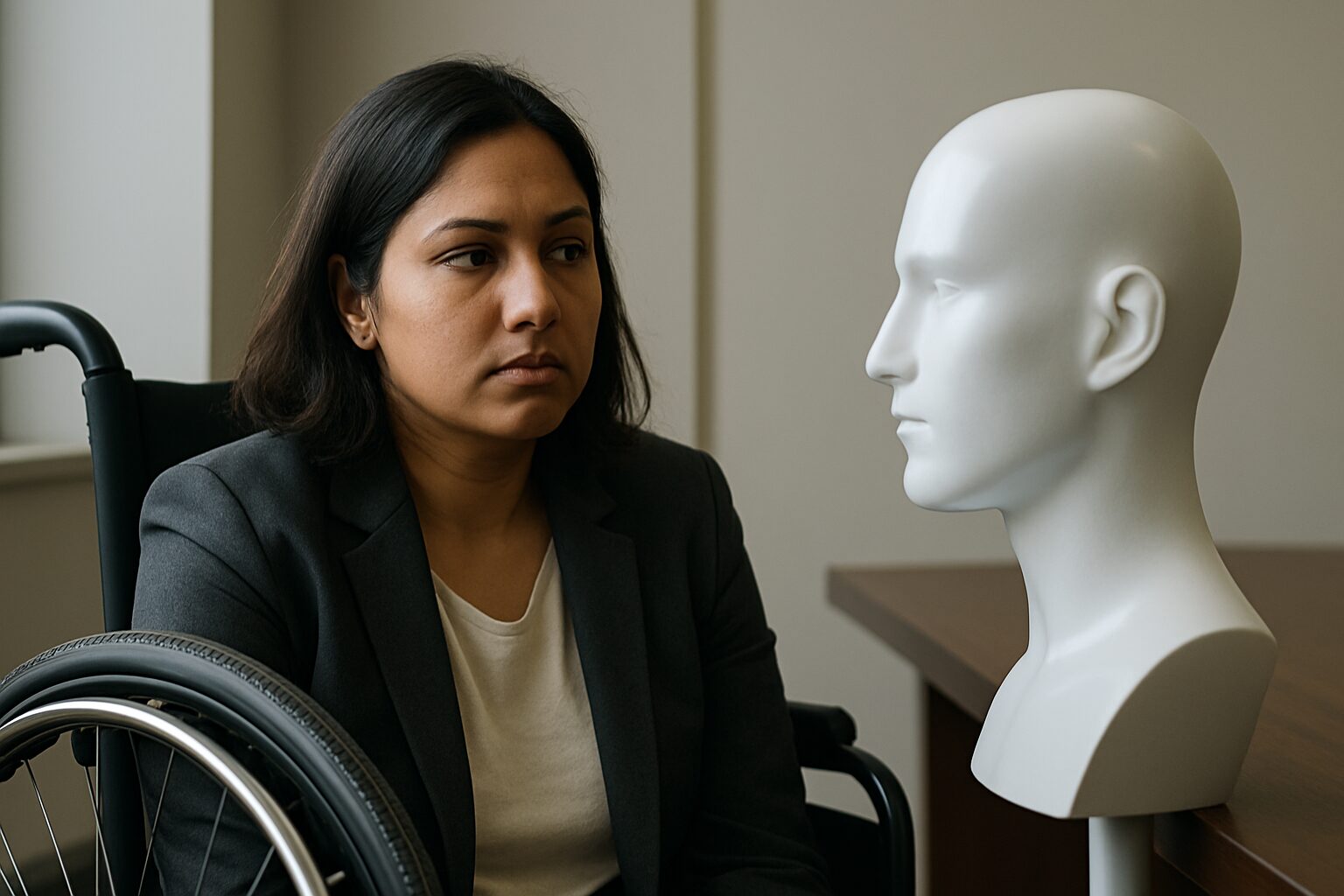
Breaking Barriers: How Tech Can Uphold Human Rights for All Abilities
AI systems can unintentionally discriminate against people with disabilities if their design, data, or deployment fail to account for diverse needs. This raises human rights concerns, as biased algorithms may limit access to essential services, employment, or opportunities. Addressing these risks requires ensuring fairness and inclusivity in AI development to prevent harm and uphold equitable treatment.
Why It Matters - Real-world impact
AI systems that inadvertently discriminate against people with disabilities can have severe real-world consequences, affecting access to essential services like healthcare, employment, education, and finance. For example, biased algorithms might screen out qualified job applicants who use assistive technologies, or inaccessible AI-driven interfaces could deny individuals with visual or hearing impairments equal opportunities. These failures not only perpetuate systemic exclusion but also violate fundamental human rights, such as dignity, autonomy, and participation in society. Regular people should care because disability discrimination in AI reflects broader societal biases—what harms marginalized groups today could evolve into unchecked inequities for anyone tomorrow. Ensuring fairness in AI is not just a technical challenge but a moral imperative to build inclusive systems that serve all of humanity.
Ethical Concerns - What’s wrong or risky?
AI and Disability Discrimination: A Human Rights Perspective
As artificial intelligence becomes more integrated into society, it poses significant ethical risks for people with disabilities. These systems, often trained on biased data or designed without inclusive input, can perpetuate or even exacerbate discrimination, undermining fundamental human rights.
Key Ethical Risks
One major concern is fairness. AI used in hiring, healthcare, or public services may not account for the diverse needs of individuals with disabilities, leading to unfair outcomes. For example, resume-screening algorithms might disadvantage applicants who have employment gaps due to disability.
Closely related is the risk of discrimination. Facial recognition software often fails to accurately identify people with certain physical disabilities, which can lead to exclusion from secure spaces or denial of services. Predictive tools in healthcare might overlook conditions common among disabled populations, resulting in inadequate care.
Transparency is another critical issue. Many AI systems operate as "black boxes," making it difficult for users to understand how decisions are made. For a person with a disability denied benefits or accommodations by an algorithm, the lack of explainability can prevent recourse and reinforce inequity.
There are also concerns about economic impact. If AI-driven automation replaces jobs without considering accessible redesign, people with disabilities could face heightened unemployment and economic marginalization.
Differing Perspectives
Not all stakeholders view these risks uniformly. Some argue that AI can enhance accessibility—for instance, through speech-to-text tools or smart assistants—and that focusing solely on risks overlooks its potential benefits. Others contend that without stringent ethical safeguards, any advantages may be overshadowed by systemic harm. Companies might prioritize innovation and efficiency, while disability advocates emphasize the need for participatory design and human rights compliance.
Additionally, there is debate over whether existing legal frameworks, such as the Americans with Disabilities Act or the UN Convention on the Rights of Persons with Disabilities, are sufficient to address AI-specific challenges. Some believe these laws can adapt, while others call for new, technology-specific regulations.
Solutions - What’s being done or proposed?
Implementing Inclusive Design Principles
One approach to addressing AI-driven disability discrimination is the adoption of inclusive design principles during the development phase. This involves actively involving people with disabilities in the design and testing processes to ensure that AI systems are accessible and equitable. For example, developers can incorporate diverse datasets that represent a wide range of disabilities, ensuring that algorithms do not inadvertently exclude or misrepresent individuals with disabilities. Companies like Microsoft have pioneered inclusive design frameworks that prioritize accessibility from the outset.
Strengthening Legal Protections
Legal frameworks such as the Americans with Disabilities Act (ADA) and the European Union's General Data Protection Regulation (GDPR) have been expanded or reinterpreted to address AI-related discrimination. Advocates suggest updating these laws to explicitly cover algorithmic bias, ensuring that AI systems used in hiring, healthcare, and public services do not discriminate against people with disabilities. Some jurisdictions are also exploring the idea of 'algorithmic accountability' laws that mandate transparency and fairness audits for AI systems.
Bias Audits and Transparency
Conducting regular bias audits on AI systems is another proposed solution. These audits involve third-party evaluations to identify and mitigate discriminatory patterns in AI decision-making. Transparency initiatives, such as publishing the methodologies and data sources used in AI training, can help stakeholders understand potential biases. For instance, the AI Now Institute recommends mandatory bias audits for high-stakes AI applications, particularly those affecting marginalized groups like people with disabilities.
Education and Awareness Campaigns
Raising awareness about AI and disability discrimination through education campaigns is a social solution. Workshops, training programs, and public forums can educate developers, policymakers, and the general public about the risks and ethical considerations of AI. Organizations like the Disability Rights Education & Defense Fund (DREDF) have launched initiatives to highlight how AI can perpetuate bias and how to counteract it through informed design and usage.
Creating Ethical AI Guidelines
Institutions and industry groups have developed ethical AI guidelines to address disability discrimination. For example, the IEEE's Ethically Aligned Design framework includes recommendations for ensuring AI respects human rights, including those of people with disabilities. These guidelines often emphasize the need for diverse teams in AI development, continuous monitoring for bias, and mechanisms for redress when discrimination occurs.
Promoting Collaborative Research
Collaborative research between AI developers, disability advocates, and academic institutions has been suggested as a way to bridge gaps in understanding. Joint projects can explore how AI impacts people with disabilities and develop solutions tailored to their needs. For instance, partnerships like those between OpenAI and disability organizations aim to create more inclusive AI models and applications.
Examples and Real Cases
Facial Recognition Fails to Recognize People with Down Syndrome
In 2019, researchers at the University of Cambridge found that facial recognition systems had error rates up to 34.7% for people with Down syndrome, compared to just 0.7% for those without disabilities. This disparity highlights how AI can exacerbate discrimination against individuals with certain disabilities.
AI Hiring Tools Discriminate Against Candidates with Autism
In 2018, Reuters reported that Amazon scrapped an AI recruiting tool after discovering it penalized resumes containing words like 'disabled veterans' or 'autism society.' The system learned biases from historical hiring data, disadvantaging qualified candidates with disabilities.
Hypothetical: Voice Assistants Unable to Understand Speech Impairments
While no major public case has been documented, it's plausible that voice-activated AI assistants like Siri or Alexa struggle to understand users with speech impairments such as cerebral palsy or ALS. This could deny access to technology that many rely on for daily tasks.
Algorithmic Welfare Systems Wrongly Deny Benefits
In 2020, the Dutch government faced backlash when an algorithm used to detect welfare fraud disproportionately targeted people with disabilities. Many were wrongly accused, leading to financial hardship and psychological distress for vulnerable populations.
Autonomous Vehicles Lack Accessibility Features
As of 2023, most self-driving car prototypes lack accommodations for wheelchair users or those with visual impairments. This oversight could perpetuate transportation barriers if not addressed before widespread adoption.
Frequently Asked Questions
What is AI disability discrimination?
AI disability discrimination occurs when artificial intelligence systems unfairly treat people with disabilities, often due to biased data or design. This can happen in areas like hiring algorithms, facial recognition, or accessibility tools that don't account for diverse needs.
Why is fairness in AI important for people with disabilities?
Fair AI ensures equal opportunities for people with disabilities in education, employment, and services. Without fairness, AI systems might automatically reject job applicants with disabilities or fail to provide accessible digital experiences, reinforcing existing inequalities.
How can AI be biased against people with disabilities?
AI can be biased when trained on data that underrepresents people with disabilities, when it doesn't account for different ways people interact with technology, or when designers don't consider diverse accessibility needs during development.
What are some examples of AI discriminating against disabled people?
Examples include: resume screening tools rejecting applicants who mention disabilities, facial recognition failing to identify people with certain facial differences, or voice assistants not understanding speech patterns of people with speech impairments.
How can we make AI more inclusive for people with disabilities?
We can improve AI by: including diverse disability data in training sets, involving people with disabilities in design processes, testing for accessibility, and implementing human rights principles in AI development to prevent discrimination.