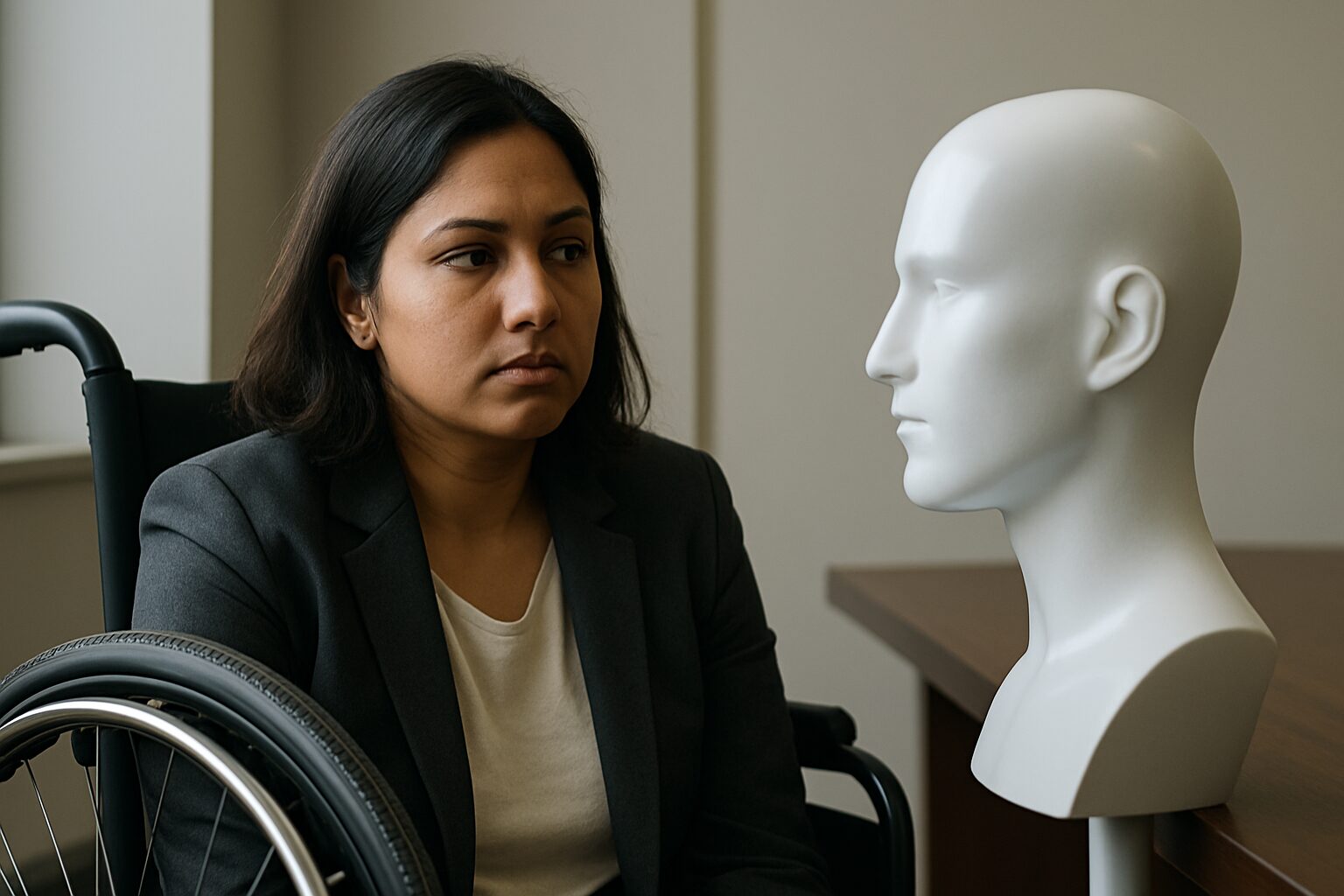
How AI Fails the Disabled: Uncovering Hidden Biases in Tech
AI systems can unintentionally discriminate against people with disabilities when their design or data fails to account for diverse needs. This may occur in areas like hiring algorithms, facial recognition, or accessibility tools that overlook certain impairments. Such biases can reinforce existing barriers, limiting equal access to opportunities and services.
Why It Matters - Real-world impact
AI-driven disability discrimination has real-world consequences for millions of people, particularly those with physical, sensory, or cognitive impairments. When AI systems—like hiring algorithms, facial recognition, or voice assistants—fail to account for diverse abilities, they can exclude qualified candidates, deny access to services, or misidentify users. For example, a resume screening tool might penalize employment gaps caused by medical leave, or a self-driving car might lack interfaces for blind passengers. These failures reinforce systemic barriers rather than dismantling them. Regular people should care because accessible design benefits everyone—aging populations, temporary injuries, or situational limitations—and because unchecked bias in AI normalizes exclusion in increasingly automated spaces.
Ethical Concerns - What’s wrong or risky?
AI and Disability Discrimination in Practice
Artificial Intelligence systems, while promising efficiency and innovation, can inadvertently perpetuate or even amplify disability discrimination. This raises significant ethical risks that demand careful scrutiny.
Fairness Concerns
AI models trained on datasets that underrepresent people with disabilities may produce outcomes that are systematically unfair. For example, facial recognition software often fails to accurately identify individuals with certain physical disabilities, leading to exclusion from services. This violates principles of fairness, as the technology does not equitably serve all user groups.
Discrimination Risks
Algorithmic decision-making in areas like hiring, lending, or healthcare can embed biases that disadvantage people with disabilities. An AI resume screener might penalize employment gaps due to medical leave, indirectly discriminating against qualified candidates. Such practices highlight urgent discrimination concerns, as they reinforce existing societal inequities.
Transparency Issues
Many AI systems operate as "black boxes," making it difficult to understand how decisions affecting disabled individuals are made. Without clarity, those harmed cannot challenge biased outcomes. Improving transparency is essential to ensure accountability and empower users to identify and rectify discriminatory patterns.
Economic and Employment Impacts
AI-driven automation might disproportionately affect job sectors where people with disabilities are employed, risking economic marginalization. While some argue AI creates new opportunities, others worry about exacerbated economic impact and potential job loss, particularly if retraining programs are inaccessible.
Worker Rights Considerations
Workplace AI tools, such as productivity monitoring software, may fail to accommodate disabilities, penalizing workers for needs related to their condition. This intersects with worker rights, as equitable treatment and reasonable adjustments are not always prioritized in algorithmic management.
Differing Perspectives
Not all stakeholders view these risks uniformly. Some technologists argue that AI can reduce human bias and improve accessibility when designed inclusively. Others caution that without proactive measures, AI will deepen existing disparities. Critics also note that regulatory approaches vary—some advocate for strict oversight, while others emphasize innovation and self-regulation.
Additional moral concerns include privacy violations, as AI often relies on sensitive health data, and autonomy issues, if automated systems override individual preferences without consent. Addressing these challenges requires multidisciplinary collaboration and a commitment to ethical design principles.
Solutions - What’s being done or proposed?
Implementing Inclusive Design Principles
One approach to reducing AI-driven disability discrimination is incorporating inclusive design principles from the outset. This involves actively involving people with disabilities in the development process, ensuring diverse datasets represent various disabilities, and designing interfaces that accommodate different needs. Companies like Microsoft have pioneered this approach with tools like Seeing AI, which was developed with input from blind and low-vision users.
Strengthening Legal Protections and Compliance
Governments and organizations have proposed updating anti-discrimination laws to explicitly cover AI systems. For example, the Americans with Disabilities Act (ADA) could be expanded to address algorithmic bias. Some jurisdictions are requiring AI impact assessments that specifically evaluate potential harm to disabled communities before deployment.
Developing Bias Detection and Mitigation Tools
Researchers are creating technical solutions to identify and correct disability-related biases in AI systems. This includes developing fairness metrics that account for disability status, creating synthetic datasets to fill representation gaps, and building tools that audit models for discriminatory patterns. IBM's AI Fairness 360 toolkit includes some disability-related fairness measures.
Establishing Disability Advisory Boards
Some organizations are forming permanent disability advisory boards to provide ongoing guidance on AI development and deployment. These boards typically consist of disability advocates, accessibility experts, and people with lived experience who can identify potential issues and recommend solutions throughout a product's lifecycle.
Improving Accessibility in AI Development Tools
Efforts are underway to make the tools used to build AI systems more accessible, enabling more developers with disabilities to participate in creating these technologies. This includes making machine learning frameworks, data annotation tools, and testing platforms compatible with screen readers, voice control, and other assistive technologies.
Creating Standardized Accessibility Benchmarks
Industry groups and standards organizations are working to establish clear metrics for evaluating how well AI systems serve users with disabilities. These benchmarks would allow for consistent testing and comparison of different systems' accessibility performance, similar to how WCAG guidelines work for web accessibility.
Enhancing Transparency and Explainability
Making AI decision-making processes more transparent can help identify and address disability discrimination. This includes providing clear explanations when AI systems make decisions affecting disabled users (like job application screenings) and documenting what disability-related factors were considered during system development.
Examples and Real Cases
Facial Recognition Fails to Recognize People with Down Syndrome
In 2019, researchers found that facial recognition systems from major tech companies like IBM and Microsoft had error rates up to 34.7% for people with Down Syndrome, compared to just 0.8% for those without disabilities. This disparity was highlighted in a study published by the University of Cambridge, showing how AI can exclude people with certain disabilities.
AI Hiring Tools Discriminate Against Candidates with Autism
In 2018, Reuters reported that Amazon scrapped an AI recruiting tool that showed bias against women and likely also disadvantaged candidates with autism. The system downgraded resumes that contained words like 'disability' or mentioned autism-related organizations, effectively filtering out qualified candidates.
Hypothetical: Voice Assistants Unable to Understand Speech Impairments
A realistic hypothetical scenario involves voice-activated AI assistants like Siri or Alexa failing to understand users with speech impairments such as cerebral palsy or ALS. Without proper training on diverse speech patterns, these systems could effectively lock out entire groups of users from accessing technology.
Algorithmic Bias in Disability Benefits Systems
In 2020, the UK's Department for Work and Pensions faced criticism when its AI system for assessing disability benefits was found to disproportionately deny claims from people with mental health conditions and invisible disabilities. The algorithm's design favored more easily quantifiable physical disabilities.
Autonomous Vehicles Lack Accessibility Features
As of 2023, most autonomous vehicle prototypes from companies like Waymo and Cruise lack adequate accessibility features for wheelchair users or those with mobility impairments. This oversight could perpetuate transportation barriers if not addressed before widespread deployment.
Frequently Asked Questions
What is AI disability discrimination?
AI disability discrimination occurs when artificial intelligence systems unfairly treat people with disabilities, often due to biased data or design that doesn't account for diverse needs. This can happen in areas like hiring algorithms, facial recognition, or automated decision-making systems.
Why is fairness in AI important for people with disabilities?
Fair AI is crucial because many technologies now make important decisions affecting lives. If AI systems are biased against disabilities, they could deny equal opportunities in jobs, healthcare, or services. Fair AI ensures technology works for everyone, not just the majority.
How can AI be biased against people with disabilities?
AI can be biased when trained on data that underrepresents people with disabilities, or when systems aren't designed to recognize diverse abilities. For example, speech recognition might struggle with speech impairments, or image AI might misclassify mobility devices.
What are real-world examples of AI discriminating against disabilities?
Examples include: job application algorithms filtering out resumes mentioning disabilities, facial recognition failing to recognize people with certain facial differences, or voice assistants not understanding speech patterns of users with speech disabilities.
How can we make AI more inclusive for people with disabilities?
We can improve AI by: including diverse disability data in training sets, involving people with disabilities in design processes, testing systems with diverse users, and creating accessibility standards for AI development.