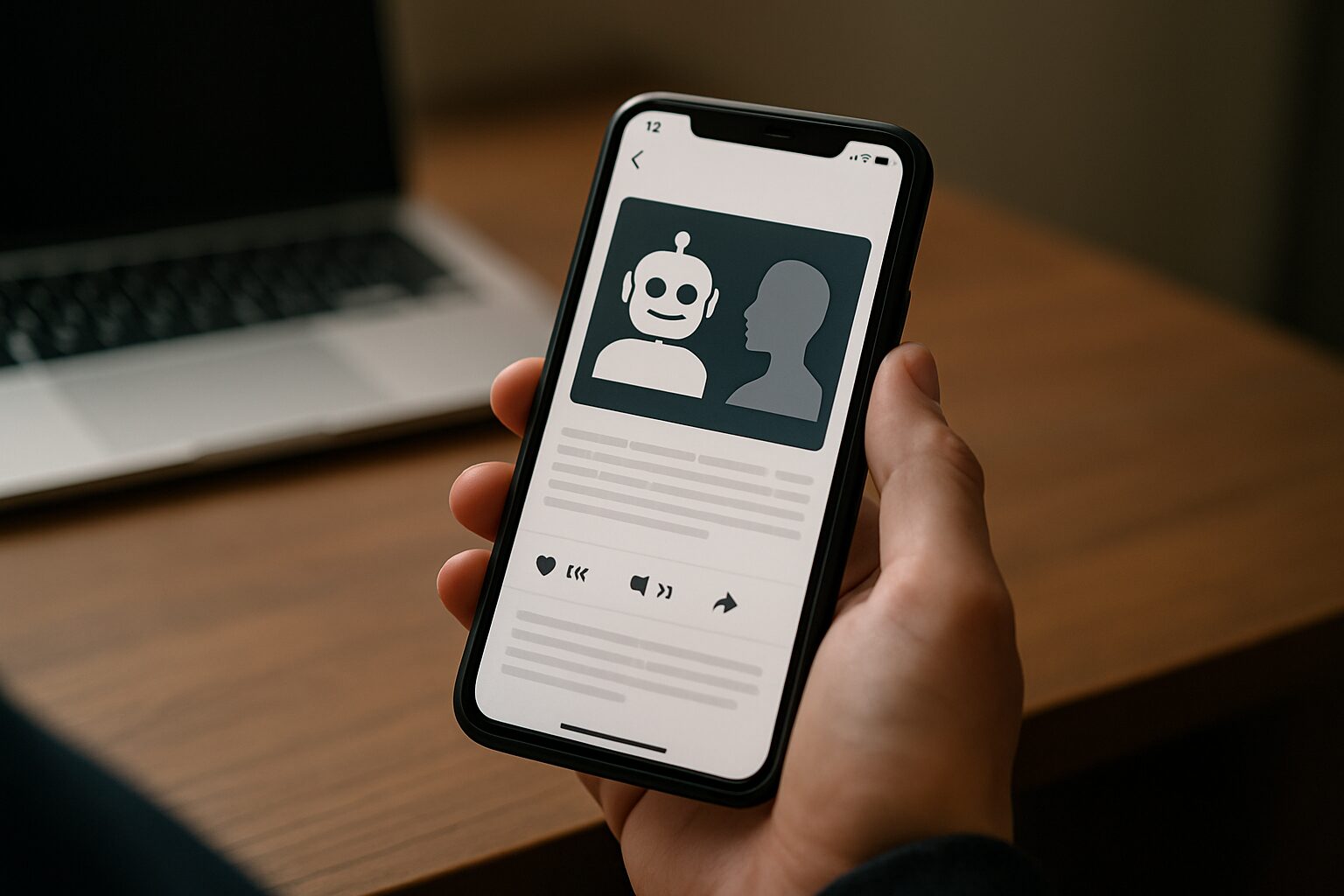
How Algorithmic News Feeds Shape Public Opinion and Policy
AI-curated news platforms use algorithms to personalize content based on user preferences, potentially reinforcing existing beliefs by filtering out opposing viewpoints. This can create echo chambers, where individuals are exposed only to information that aligns with their perspectives, limiting diverse discourse. The governance of these systems raises ethical concerns about transparency, accountability, and the societal impact of algorithmic bias in information distribution.
Why It Matters - Real-world impact
AI-curated news and the resulting echo chambers pose significant risks to individuals and society at large. When algorithms prioritize content based on user preferences, they can reinforce existing biases, isolate people from diverse perspectives, and deepen societal polarization. This affects everyone—from voters influenced by one-sided political narratives to consumers misled by skewed information—potentially undermining democratic processes and informed decision-making. Without proper governance, these systems can amplify misinformation, erode trust in media, and manipulate public opinion. Regular people should care because the unchecked spread of AI-driven content shapes not just what they see online, but how they perceive reality, interact with others, and engage with critical issues.
Ethical Concerns - What’s wrong or risky?
AI-Curated News and Echo Chambers: An Ethical Minefield
AI-curated news platforms, while efficient, present significant ethical risks. One major concern is the reinforcement of echo chambers, where algorithms prioritize content aligning with users' existing beliefs, limiting exposure to diverse perspectives and polarizing societies.
Fairness and Discrimination
These systems can perpetuate or even amplify discrimination by disproportionately featuring or suppressing voices based on demographics, political leanings, or socioeconomic status. This ties closely to issues of fairness, as the curation may not equitably represent all viewpoints or communities.
Transparency and Accountability
A lack of transparency in how algorithms select and prioritize news makes it difficult for users to understand biases or motivations behind content delivery. This opacity challenges accountability, especially when misinformation spreads unchecked.
Economic and Societal Impacts
There are broader ethical implications, such as the economic impact on traditional journalism, which may struggle to compete with algorithm-driven platforms, potentially reducing quality and diversity in news reporting.
Differing Perspectives
Not everyone views these risks uniformly. Some argue that personalized news increases engagement and accessibility, while others emphasize the dangers of societal fragmentation and eroded trust in media.
Other moral concerns include privacy violations, manipulation of public opinion, and the erosion of democratic processes, though these are not covered by the provided linking options.
Solutions - What’s being done or proposed?
Algorithmic Transparency Requirements
Some governments and organizations have proposed or implemented laws requiring AI news curation systems to disclose their ranking and selection criteria. The idea is that if users understand why certain stories are prioritized, they can better evaluate potential biases. For example, the EU's Digital Services Act includes some transparency mandates for recommender systems. However, challenges remain in making these disclosures actually meaningful to average users rather than just legal checkboxes.
Diversity-by-Design Technical Approaches
Researchers have developed technical solutions that intentionally surface ideologically diverse content. These include 'serendipity algorithms' that occasionally inject contrasting viewpoints, and 'diversity metrics' that evaluate recommendation systems based on how broad a range of perspectives they show users. While promising in lab settings, these approaches often struggle with real-world implementation due to difficulties in accurately classifying content viewpoints at scale.
Media Literacy Education Programs
Many institutions have invested in educational initiatives to help people recognize algorithmic curation and evaluate news sources critically. Schools, libraries, and nonprofits have developed curricula about how recommendation algorithms work and techniques for seeking out diverse information sources. These programs show moderate success but face challenges in reaching broad adult populations and keeping pace with rapidly evolving AI systems.
Public Service Recommendation Alternatives
Some countries have explored creating non-commercial, public interest alternatives to corporate news recommendation algorithms. For instance, France's public broadcaster has experimented with AI tools designed to prioritize civic value rather than engagement metrics. These projects often struggle with funding and adoption when competing with slick commercial platforms, but offer proof-of-concepts for different governance models.
Cross-Platform Data Sharing Requirements
Regulators have debated requiring major platforms to share certain data with researchers and smaller competitors to prevent any single company's algorithm from dominating information ecosystems. The theory is that more players with access to data could develop diverse curation approaches. Implementation faces significant technical and privacy hurdles, along with resistance from dominant platforms.
User Control Customization Standards
Several proposals suggest standardizing user interface elements that let people adjust algorithmic curation, like sliders for 'diversity vs. relevance' or explicit filters for political leaning. While some platforms offer limited versions of these controls, standardization could make them more widespread and intuitive. Adoption has been slow due to concerns about overwhelming users with choices and potential business impacts.
Independent Algorithm Auditing
Some jurisdictions now require or encourage independent audits of news recommendation algorithms for bias and societal impact. These audits, conducted by accredited third parties, aim to identify harmful patterns without revealing proprietary code. Early implementations struggle with developing meaningful audit criteria and metrics that all stakeholders accept as valid.
Examples and Real Cases
Facebook's News Feed Algorithm (2016)
In 2016, Facebook's algorithm was found to prioritize engaging content, leading to the spread of sensationalist and polarizing news. This contributed to echo chambers, as users were shown more of what they already agreed with, exacerbating political divides during the U.S. presidential election.
YouTube's Recommendation System (2018)
A 2018 study by Mozilla and the Guardian revealed YouTube's algorithm often recommended conspiracy theories and extremist content. For example, users watching mainstream news were gradually funneled toward radical viewpoints, reinforcing echo chambers.
China's AI-Curated News App 'Jinri Toutiao' (2019)
In 2019, China's 'Jinri Toutiao' app, which uses AI to personalize news, was criticized for amplifying misinformation and sensationalism. The government intervened, forcing the platform to install human editors to mitigate the spread of harmful content.
Hypothetical: AI-Driven Local News Polarization
Imagine a local news app using AI to prioritize crime stories in certain neighborhoods based on user engagement. Over time, residents in those areas see only negative news, fostering fear and division, while other community issues are ignored.
Frequently Asked Questions
What is an AI-curated news echo chamber?
An AI-curated news echo chamber is when artificial intelligence algorithms personalize news feeds so much that users only see content reinforcing their existing beliefs, creating a 'bubble' where opposing views are excluded.
Why are AI echo chambers dangerous for society?
AI echo chambers can deepen political polarization, spread misinformation, and reduce critical thinking by limiting exposure to diverse perspectives, making it harder for people to agree on facts or find common ground.
How does AI manipulation influence public opinion?
AI can manipulate public opinion by prioritizing sensational or biased content, amplifying divisive messages, and targeting users with tailored propaganda, often without their awareness.
What role should governments play in regulating AI-curated news?
Governments can enforce transparency in algorithms, require accountability for harmful content, and promote media literacy to help users recognize and resist AI-driven manipulation.
How can individuals avoid AI-created echo chambers?
People can diversify news sources, fact-check information, adjust social media settings to limit algorithmic filtering, and actively seek out opposing viewpoints to break free from echo chambers.