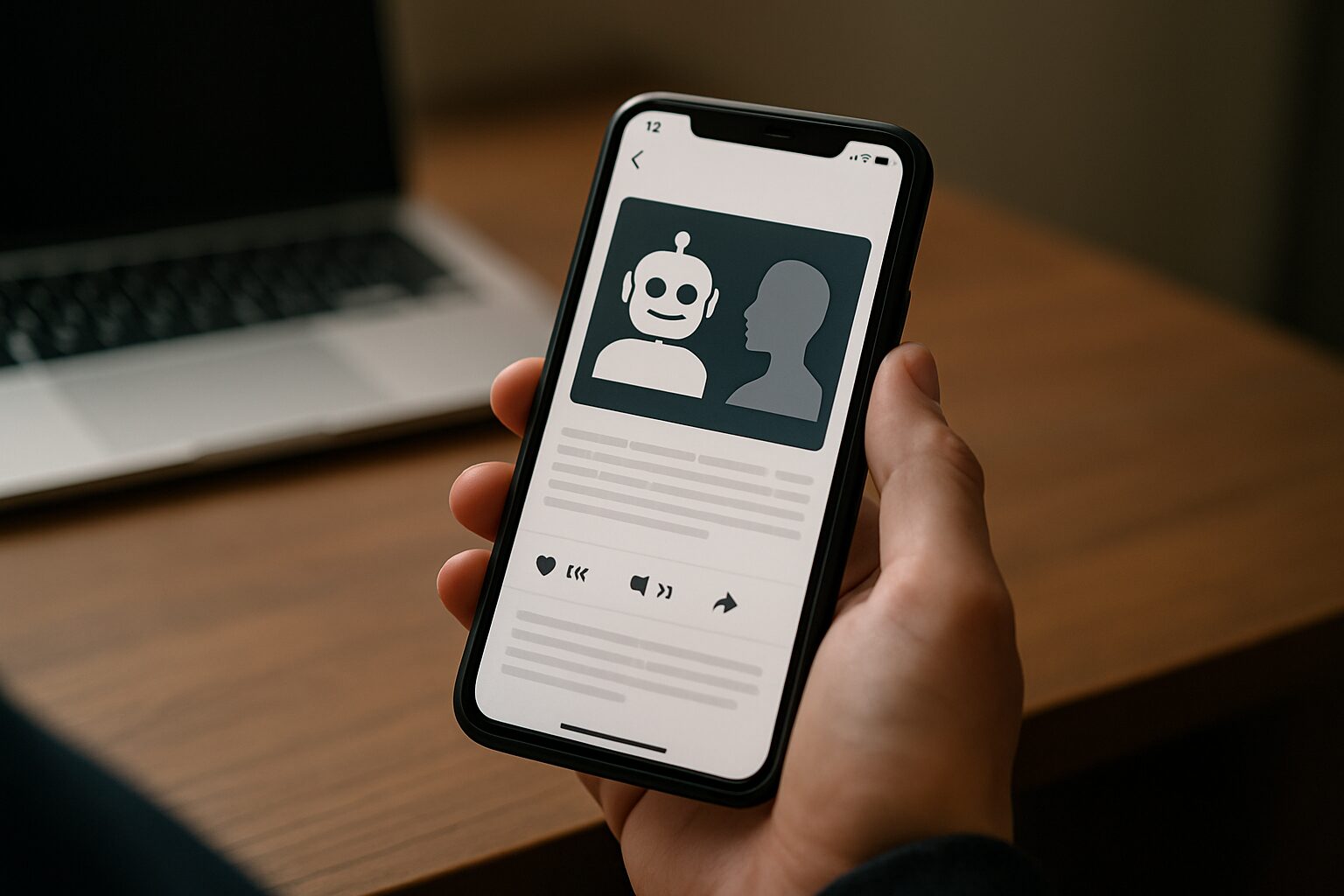
How Algorithmic News Feeds Shape Opinions and Legal Boundaries
AI-curated news platforms use algorithms to personalize content based on user preferences, potentially reinforcing existing beliefs by filtering out opposing viewpoints. This can create echo chambers, where individuals are exposed only to information that aligns with their perspectives, limiting diverse discourse. Legal frameworks struggle to address these challenges, as they intersect with free speech, algorithmic transparency, and the responsibility of tech companies in shaping public opinion.
Why It Matters - Real-world impact
AI-curated news and echo chambers have profound real-world implications, shaping public opinion, political discourse, and even democratic processes. When algorithms prioritize engagement over accuracy, they can amplify polarizing content, reinforcing biases and isolating individuals within ideological bubbles. This affects everyone—voters making decisions based on skewed information, marginalized groups targeted by divisive narratives, and societies grappling with eroded trust in media. Left unchecked, such systems risk deepening societal divisions, enabling misinformation to spread, and undermining informed civic participation. Regular people should care because these dynamics influence the quality of public debate, the fairness of elections, and the very fabric of shared reality.
Ethical Concerns - What’s wrong or risky?
AI-Curated News and Echo Chambers: Ethical Risks
AI-curated news platforms, while efficient, pose significant ethical risks by reinforcing echo chambers and manipulating public discourse. These systems often prioritize engagement over balanced information, leading to moral concerns that demand scrutiny.
Fairness in Information Access
One major ethical risk is the erosion of fairness. AI algorithms may disproportionately surface content that aligns with users' pre-existing beliefs, creating an uneven playing field where diverse perspectives are suppressed. This undermines democratic ideals of informed public debate.
Discrimination Through Targeting
These systems can inadvertently or intentionally perpetuate discrimination by tailoring news based on demographic data. For example, certain groups might receive more sensational or divisive content, exacerbating social divides and marginalizing vulnerable communities.
Lack of Transparency
The opacity of AI curation algorithms raises concerns about transparency. Users are often unaware of how or why specific stories are highlighted, making it difficult to hold platforms accountable for biased or manipulative practices.
Economic and Societal Impacts
Beyond individual harms, there are broader ethical issues, such as the economic impact on traditional journalism. AI-driven news aggregation can divert revenue from credible sources, potentially reducing investment in investigative reporting and eroding trust in media.
Differing Perspectives
Not everyone views these risks uniformly. Some argue that personalized news enhances user experience and efficiency, while others emphasize the dangers of homogenized thought. Regulatory approaches also vary, with some advocating for strict oversight and others favoring industry self-regulation.
Additional concerns include the potential for job displacement in journalism and related fields, though this is debated. Worker rights in the context of AI-driven media transformations also warrant attention, as automation reshapes roles and responsibilities.
Solutions - What’s being done or proposed?
Algorithmic Transparency Regulations
Some governments and organizations have proposed or implemented regulations requiring transparency in how AI algorithms curate news content. These laws mandate that platforms disclose the criteria and data sources used for content selection, allowing users to understand potential biases. For example, the EU's Digital Services Act includes provisions for algorithmic accountability, though enforcement remains a challenge.
Diverse Source Promotion Tools
Technical solutions include browser extensions or platform features that actively promote diverse news sources. These tools analyze a user's reading habits and suggest articles from opposing viewpoints or lesser-known outlets. While effective in theory, adoption rates are often low due to user preference for familiar content and the 'filter bubble' effect.
Media Literacy Education Programs
Educational institutions and nonprofits have launched media literacy campaigns to help users recognize algorithmic curation and identify echo chambers. These programs teach critical thinking skills and source evaluation techniques. However, their impact is limited by uneven implementation and the difficulty of changing entrenched consumption patterns.
Public Service Algorithm Alternatives
Some countries have experimented with publicly-funded news curation algorithms as an alternative to commercial systems. These aim to prioritize factual accuracy and diversity over engagement metrics. While promising, they face challenges in scaling, avoiding government bias, and competing with private platforms' convenience.
Cross-Platform Content Exposure Standards
Industry consortiums have proposed technical standards that would require platforms to expose users to a minimum percentage of content outside their usual preferences. Implementation would involve shared definitions of 'diverse content' and verification mechanisms, raising complex questions about who sets these standards and how they're enforced globally.
Liability for Algorithmic Harm
Legal scholars have suggested holding platforms liable for societal harms caused by their curation algorithms, similar to product liability laws. This would require proving direct causation between algorithmic design and specific damages - a high legal barrier that may inadvertently incentivize over-censorship rather than thoughtful design changes.
Examples and Real Cases
Facebook's News Feed Algorithm (2016)
During the 2016 U.S. presidential election, Facebook's algorithm was found to prioritize sensational and polarizing content, creating echo chambers. A study by Pew Research Center showed that 62% of U.S. adults got news from social media, with many exposed only to ideologically aligned perspectives.
YouTube's Recommendation System (2019)
In 2019, The Wall Street Journal found YouTube's AI recommendations pushed users toward increasingly extreme content. For example, users watching mainstream conservative news were gradually steered toward conspiracy theories and far-right propaganda.
China's Toutiao AI News App (2018)
China's Jinri Toutiao, an AI-curated news app, was fined in 2018 for spreading misinformation and sensationalism. The app's algorithm prioritized clickbait, deepening ideological divides by reinforcing users' existing beliefs with hyper-partisan content.
Hypothetical: Local News AI Filter Bubble (2025)
In a hypothetical scenario, a city deploys an AI-driven news aggregator for public alerts. Over time, residents in affluent neighborhoods receive more crime reports, while lower-income areas see fewer updates, exacerbating perceptions of safety disparities without factual basis.
Frequently Asked Questions
What is an AI-curated news echo chamber?
An AI-curated news echo chamber is when artificial intelligence algorithms personalize and filter news content so much that users only see information that aligns with their existing beliefs, reinforcing their views without exposure to differing perspectives.
Why are AI echo chambers a problem for society?
AI echo chambers can deepen societal divisions by limiting exposure to diverse viewpoints, making it harder for people to understand opposing perspectives and increasing polarization, which can influence public opinion and even elections.
How does AI-curated news contribute to manipulation?
AI-curated news can be manipulated by prioritizing sensational or biased content that keeps users engaged, sometimes spreading misinformation or amplifying extreme views, which can be exploited by bad actors to influence public behavior.
Are there laws regulating AI-curated news and echo chambers?
Currently, laws regulating AI-curated news are limited, but some countries are exploring transparency requirements for algorithms and accountability for platforms that spread harmful misinformation, though enforcement remains a challenge.
What can individuals do to avoid AI-driven echo chambers?
Individuals can diversify their news sources, fact-check information, use platforms with transparent algorithms, and consciously seek out opposing viewpoints to break free from AI-driven echo chambers.