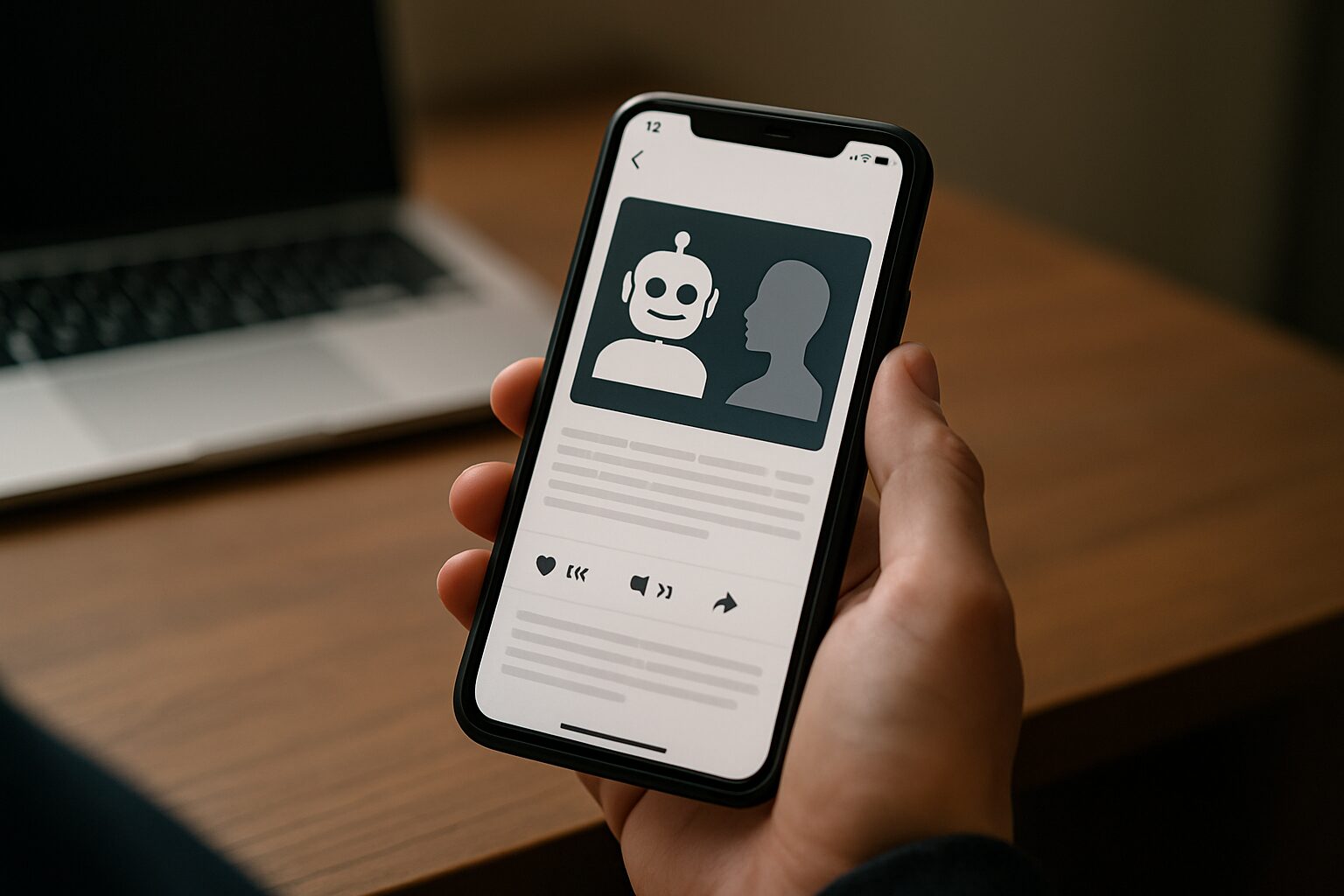
How AI-Generated Fake Reviews Threaten Consumer Trust
Generative AI can create realistic but fake reviews, posing risks to consumers and businesses. These AI-generated reviews may manipulate purchasing decisions by appearing genuine while promoting or discrediting products unfairly. The issue raises concerns about trust, transparency, and the ethical use of AI in influencing consumer behavior.
Why It Matters - Real-world impact
The proliferation of AI-generated fake reviews poses real-world risks that undermine trust in digital platforms and harm both consumers and businesses. Shoppers relying on reviews to make purchasing decisions may be misled into buying inferior products or overpaying for services, while honest businesses lose out to competitors gaming the system. The issue extends beyond commerce—fake reviews can distort perceptions of healthcare providers, restaurants, and even public services, with potentially dangerous consequences. For regular people, this erosion of trust makes everyday decisions harder and forces skepticism toward seemingly authentic feedback. Left unchecked, the problem could degrade the reliability of online information altogether, leaving everyone vulnerable to manipulation.
Ethical Concerns - What’s wrong or risky?
Generative AI and the Proliferation of Fake Reviews
Generative AI tools can create highly persuasive fake reviews, posing significant ethical risks. These risks span multiple domains, including fairness, discrimination, and transparency, which demand urgent attention from developers, businesses, and regulators.
Economic Impact
Fake reviews generated by AI can distort market dynamics, misleading consumers and unfairly benefiting or harming businesses. This manipulation can lead to financial losses for honest companies and misallocated consumer spending. For more on this, see our page on Ethical Concern: Economic Impact.
Fairness
When AI-generated reviews favor certain products or services without merit, it undermines fair competition. Smaller businesses or those without resources to deploy such tools may suffer, creating an uneven playing field. Learn about related issues at Ethical Concerns: Fairness.
Discrimination
If biased data trains generative AI, fake reviews could perpetuate stereotypes or unfairly target businesses based on ownership, location, or other protected characteristics. This raises serious concerns about discrimination in digital marketplaces. Explore this further on our Ethical Concerns: Discrimination page.
Transparency
Consumers often rely on reviews to make informed decisions. AI-generated fake reviews, indistinguishable from genuine ones, erode trust and transparency, making it difficult to discern authentic feedback. For insights into why transparency matters, visit Ethical Concerns: Transparency.
Job Loss
As AI automates the creation of deceptive content, it may reduce demand for human-generated reviews, impacting jobs in marketing and content creation. This shift could have broader implications for employment in these sectors. Details are available at Ethical Concerns: Job Loss.
Worker Rights
Workers tasked with generating or moderating content may face ethical dilemmas or increased pressure to manage AI-driven fake reviews, potentially compromising their rights and well-being. More on this can be found at Ethical Concerns: Worker Rights.
Differing Perspectives
Some argue that generative AI can enhance creativity and efficiency in marketing, provided it is used ethically and disclosed transparently. Others contend that any use of AI for generating reviews is inherently deceptive and should be restricted. Balancing innovation with ethical safeguards remains a point of debate.
Additional Ethical Concerns
Beyond the linked categories, issues like consumer autonomy, informed consent, and the erosion of social trust are also pertinent. Without clear regulations, generative AI could exacerbate these problems, calling for proactive measures from all stakeholders.
Solutions - What’s being done or proposed?
Legal Regulations and Penalties
Some governments and regulatory bodies have proposed or implemented laws that penalize the creation and dissemination of fake reviews using generative AI. These laws often include hefty fines for businesses caught manipulating consumer opinions. For example, the U.S. Federal Trade Commission (FTC) has taken action against companies for fake reviews, and the EU's Digital Services Act (DSA) includes provisions to combat such deceptive practices. Legal frameworks aim to deter bad actors by making the consequences severe enough to outweigh potential gains.
AI Detection Tools
Technical solutions include the development of AI-powered detection tools that analyze reviews for signs of being AI-generated. These tools use linguistic patterns, metadata analysis, and behavioral signals to flag suspicious content. Platforms like Amazon and Yelp have started integrating such tools to identify and remove fake reviews. While not foolproof, they add a layer of defense against large-scale manipulation.
Verified Purchase Systems
Many e-commerce platforms now require reviewers to verify that they actually purchased the product before posting a review. This system, often tied to user accounts and transaction histories, makes it harder for fake reviewers to operate at scale. While not perfectu2014verified purchases can still be incentivized or manipulatedu2014it reduces the ease with which generative AI can flood platforms with fake content.
Transparency and Disclosure Requirements
Some platforms and regulators are pushing for transparency, requiring users or AI systems to disclose when content is AI-generated. This could involve labeling synthetic reviews or forcing businesses to reveal if they used AI to generate feedback. The idea is to empower consumers to make informed judgments, though enforcement remains a challenge.
Community Reporting and Moderation
Encouraging users to report suspicious reviews and employing human moderators to assess flagged content is another approach. While resource-intensive, combining crowd-sourced vigilance with expert oversight can help identify subtle patterns of manipulation that automated systems might miss. Reddit and other platforms have used similar methods to combat disinformation.
Ethical AI Development Standards
Industry groups and researchers advocate for ethical guidelines in AI development to prevent misuse in generating fake reviews. This includes self-regulation by tech companies, watermarking AI-generated content, or restricting access to powerful generative models. While voluntary, these measures aim to foster accountability among developers and deployers of AI systems.
Consumer Education Initiatives
Educating consumers about the prevalence and risks of fake reviews helps them become more critical evaluators of online content. Campaigns by consumer protection agencies and nonprofits teach people to spot red flags, such as overly generic language or sudden spikes in ratings. An informed user base is less likely to be swayed by manipulated content.
Examples and Real Cases
Amazon's Fake Review Problem (2021-Present)
Amazon has struggled with fake reviews for years, with reports as early as 2011. In 2021, a Which? investigation found that AI-generated reviews were being sold in bulk, with some sellers offering thousands of positive reviews for their products.
TripAdvisor's AI Review Scandal (2019)
In 2019, TripAdvisor faced criticism after a BBC investigation revealed that some businesses were using AI tools to generate fake positive reviews. One hotel was found to have over 100 suspicious 5-star reviews boosting its rating artificially.
Hypothetical: AI-Generated Political Endorsements
In a potential future scenario, a political campaign could use generative AI to create thousands of fake social media reviews praising their candidate. These could appear as authentic voter testimonials while actually being mass-produced propaganda.
Fiverr's Fake Review Services (2020)
A 2020 investigation by the Washington Post found freelancers on Fiverr offering AI-generated fake review services. Some sellers advertised the ability to create hundreds of human-like positive reviews for products or businesses within days.
Hypothetical: AI-Generated Restaurant Reviews
A struggling restaurant might use generative AI to create dozens of fake 5-star reviews mentioning specific menu items and dining experiences. These could temporarily boost their ratings until platforms detect the pattern of artificial content.
Frequently Asked Questions
What is generative AI and how can it create fake reviews?
Generative AI is a type of artificial intelligence that can create text, images, or other content based on patterns it learns from data. It can be used to generate fake reviews by mimicking human writing styles, making it hard to tell if a review is real or AI-generated. This can mislead consumers and manipulate opinions.
Why are fake reviews created by AI a problem?
Fake reviews created by AI can deceive customers into buying low-quality products or services, harm honest businesses by giving competitors an unfair advantage, and erode trust in online platforms. They manipulate public perception and influence purchasing decisions unfairly.
How can I spot a fake review generated by AI?
Look for overly generic language, repetitive phrases, or unnatural perfection in reviews. AI-generated reviews might lack personal details or specific experiences. Tools and browser extensions are also emerging to help detect AI-written content.
What are companies doing to stop AI-generated fake reviews?
Many platforms use AI-detection tools, human moderators, and reporting systems to flag or remove suspicious reviews. Some are also implementing stricter verification processes, like requiring proof of purchase, to reduce fake reviews.
How does generative AI influence public opinion beyond fake reviews?
Generative AI can spread misinformation, create fake social media accounts, or generate persuasive content to sway opinions on politics, products, or trends. This raises concerns about manipulation in advertising, news, and online discourse.