The Hidden Dangers of AI Mistakes in Medical Diagnoses
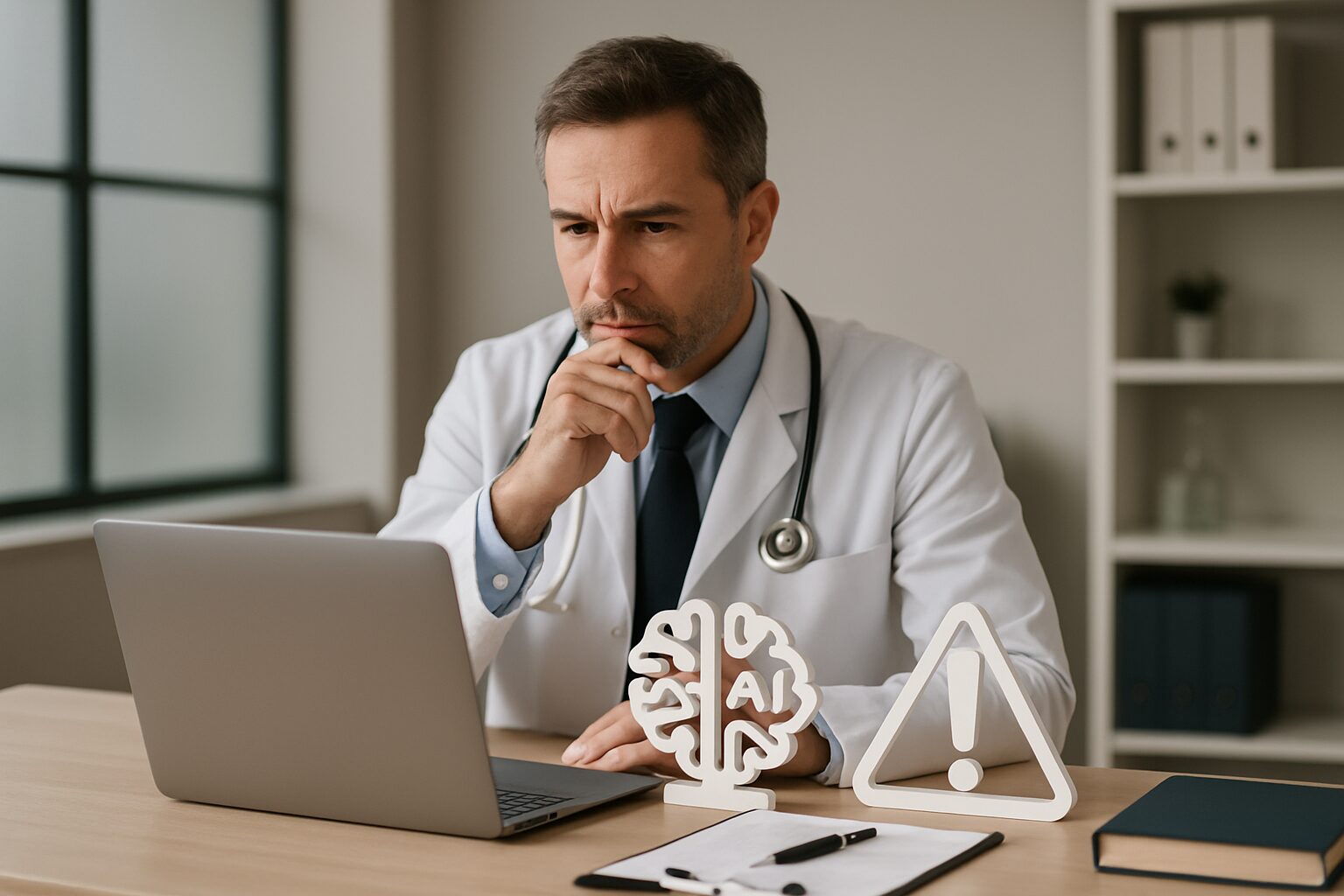
AI decision errors in healthcare refer to mistakes made by artificial intelligence systems when diagnosing conditions, recommending treatments, or predicting patient outcomes. These errors can arise from flawed data, biased algorithms, or unexpected interactions in complex medical scenarios. Such inaccuracies may lead to incorrect clinical decisions, posing risks to patient safety and care quality. Addressing these risks requires understanding how AI systems fail and implementing safeguards to minimize harm.
Why It Matters - Real-world impact
AI decision errors in healthcare carry profound real-world consequences, directly impacting patients, medical professionals, and healthcare systems. When diagnostic algorithms fail or treatment recommendation systems err, patients may receive incorrect diagnoses, delayed treatments, or harmful interventions—potentially leading to worsened health outcomes or even loss of life. Healthcare providers face ethical dilemmas and liability risks when relying on flawed AI outputs, while institutions grapple with eroded trust and financial repercussions. For the general public, these risks matter because anyone could become a patient relying on AI-assisted care, and systemic errors could degrade overall healthcare quality. The issue extends beyond individual cases, as widespread AI failures might exacerbate healthcare disparities or create new safety crises—making this a societal concern requiring urgent attention from developers, regulators, and medical communities alike.
Ethical Concerns - What’s wrong or risky?
Types of Ethical Risks in AI Decision Errors
When AI systems make errors in healthcare, several ethical concerns arise. One major issue is fairness, as algorithms may not perform equally well across different patient demographics, leading to unequal care quality. Another concern is discrimination, where biased training data can result in AI disproportionately misdiagnosing or undertreating certain racial, gender, or socioeconomic groups.
Transparency and Accountability
Lack of transparency in AI decision-making processes makes it difficult for healthcare providers and patients to understand or challenge erroneous outcomes, raising accountability issues. Additionally, errors might have significant economic impact, such as increased costs for corrective treatments or legal liabilities, which can strain healthcare systems and affect resource allocation.
Differing Perspectives
Not everyone agrees on the severity or prioritization of these risks. Some argue that AI's overall benefits in efficiency and accuracy outweigh occasional errors, while others emphasize that any margin of error is unacceptable when patient lives are at stake. There is also debate over whether responsibility lies with developers, healthcare institutions, or regulatory bodies.
Other Moral Considerations
Beyond the linked concerns, AI errors can erode patient trust in medical technology and professionals. There are also worries about dehumanization, as over-reliance on AI might reduce empathetic patient-provider interactions. Job displacement fears among healthcare workers, though not the primary focus here, add another layer of ethical unease regarding the integration of AI in clinical settings.
Solutions - What’s being done or proposed?
Regulatory Frameworks and Compliance Standards
Governments and regulatory bodies have proposed stricter compliance standards for AI systems in healthcare. These frameworks mandate rigorous testing, validation, and transparency requirements before deployment. For example, the FDA in the U.S. has introduced guidelines for AI-based medical devices, requiring continuous monitoring and updates to ensure safety and accuracy.
Explainable AI (XAI) for Transparency
Technical solutions like Explainable AI (XAI) aim to make AI decision-making processes more interpretable for healthcare professionals. By providing clear explanations for AI-generated diagnoses or treatment recommendations, XAI helps clinicians understand and verify outcomes, reducing reliance on opaque 'black-box' systems.
Human-in-the-Loop Systems
Integrating human oversight into AI systems ensures that critical decisions are reviewed by healthcare professionals before implementation. This hybrid approach combines AI efficiency with human judgment, mitigating risks of errors while maintaining the benefits of automation.
Bias Mitigation Techniques
To address biases in AI algorithms, researchers have developed techniques such as fairness-aware machine learning and diverse dataset curation. These methods aim to reduce disparities in healthcare outcomes by ensuring AI models are trained on representative data and evaluated for equitable performance across demographic groups.
Ethics Review Boards for AI Deployment
Institutions have established ethics review boards to evaluate the societal and ethical implications of AI in healthcare. These boards assess potential risks, patient consent protocols, and long-term impacts, ensuring AI applications align with ethical principles and prioritize patient welfare.
Continuous Monitoring and Feedback Loops
Implementing real-time monitoring systems allows for the detection and correction of AI errors as they occur. Feedback loops enable healthcare providers to report discrepancies, which are then used to refine algorithms and improve accuracy over time.
Patient Education and Informed Consent
Educating patients about the role of AI in their care and obtaining informed consent is a social solution gaining traction. Transparent communication helps manage expectations and fosters trust, ensuring patients understand the limitations and benefits of AI-assisted healthcare decisions.
Collaborative Industry Standards
Healthcare organizations and tech companies are collaborating to establish industry-wide standards for AI development and deployment. These standards promote best practices, data sharing, and interoperability, reducing fragmentation and enhancing system reliability.
Examples and Real Cases
IBM Watson's Incorrect Cancer Treatment Recommendations (2018)
In 2018, IBM Watson Health was reported to have given incorrect and unsafe cancer treatment advice. Internal documents revealed that Watson recommended 'unsafe and incorrect' treatments for cancer patients, such as suggesting drugs that could worsen bleeding in patients with severe bleeding risks.
Epic's Sepsis Prediction Model Missed Cases (2021)
A 2021 study published in JAMA Internal Medicine found that Epic's sepsis prediction model, used in hundreds of U.S. hospitals, missed 67% of sepsis cases. The AI system frequently failed to alert clinicians, potentially delaying critical treatment for this life-threatening condition.
Hypothetical: AI Radiology Misdiagnosis Leading to Delayed Treatment
In a realistic hypothetical scenario, an AI radiology system could misclassify a malignant tumor as benign due to training data bias toward certain demographics. This error might delay critical treatment by months, worsening patient outcomes before human doctors catch the mistake.
Google Health's AI for Diabetic Retinopathy (2020)
Google Health's 2020 diabetic retinopathy detection AI showed lower accuracy in real-world deployment compared to lab tests. In Thailand clinics, the system rejected 20% of patient scans as 'unreadable,' forcing overworked staff to manually review cases the AI was designed to assist with.
Hypothetical: Medication Interaction AI Failure
A medication interaction AI might fail to flag a dangerous combination between a newly approved drug and a common blood thinner if its training data predates the new drug's release. This gap could lead to preventable adverse drug events in elderly patients with complex prescriptions.
Frequently Asked Questions
What are AI decision errors in healthcare?
AI decision errors in healthcare occur when artificial intelligence systems make incorrect diagnoses, treatment recommendations, or predictions about patient outcomes. These errors can happen due to flawed data, biased algorithms, or unexpected situations the AI wasn't trained to handle.
Why are AI mistakes in healthcare dangerous?
AI mistakes in healthcare are dangerous because they can lead to misdiagnoses, inappropriate treatments, or delayed care - all of which may harm patients. Unlike human errors, AI mistakes can affect thousands of patients simultaneously if the flawed system is widely deployed.
How common are AI errors in medical decisions?
While exact rates vary by system, studies show AI can make errors in 5-20% of cases depending on the application. Some errors are minor, but others can be life-threatening. Continuous monitoring and human oversight help catch and correct these mistakes.
What causes AI to make wrong medical decisions?
Common causes include: training on incomplete or biased patient data, algorithms that don't account for rare conditions, technical glitches, and situations where the AI encounters cases very different from its training examples. Human factors like improper system use also contribute.
How can we reduce AI errors in healthcare?
Key strategies include: rigorous testing before deployment, using diverse and representative training data, maintaining human oversight of AI recommendations, continuous monitoring for errors, and keeping humans 'in the loop' for critical decisions. Transparency about system limitations also helps manage risks.