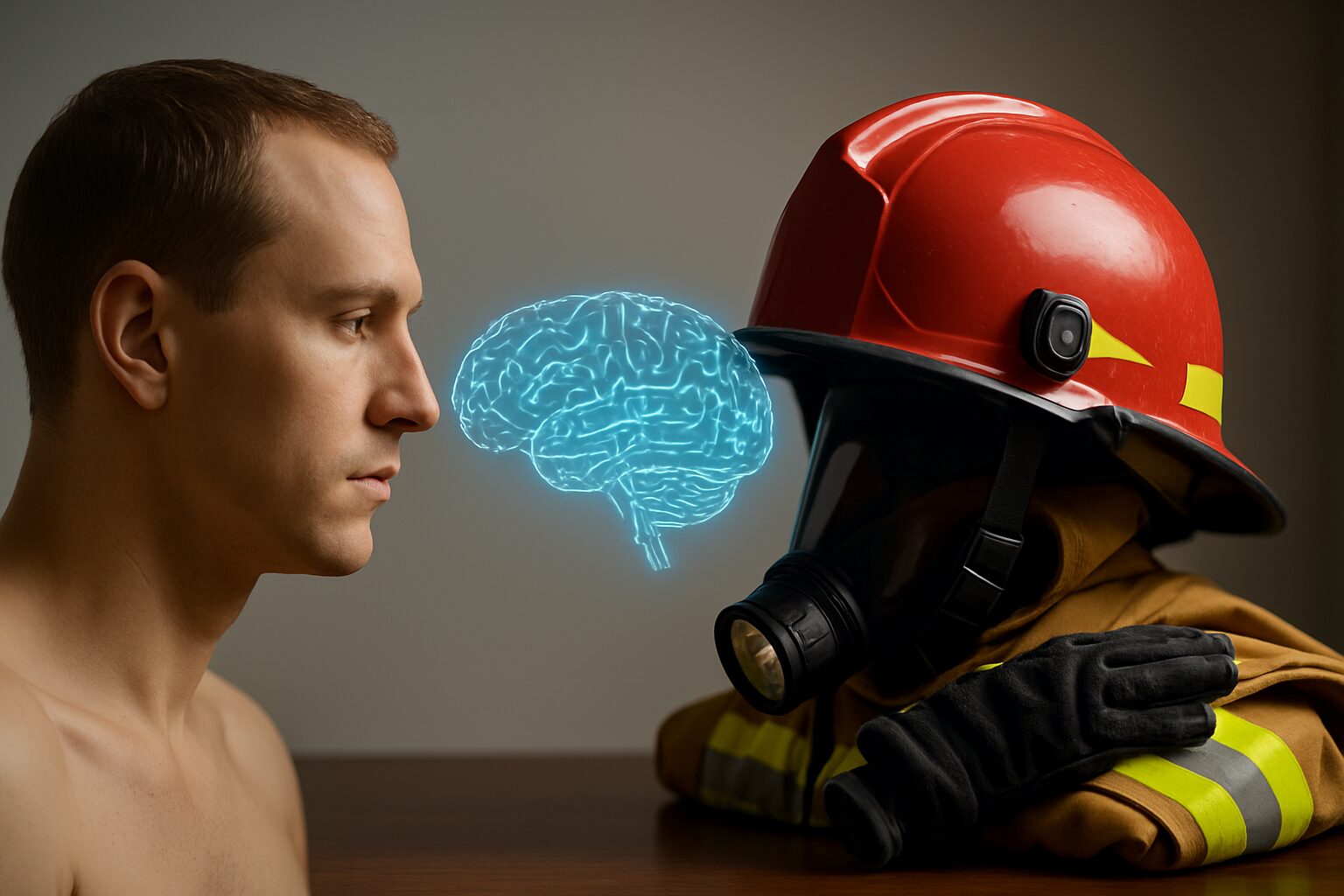
Who's to Blame When AI Gets It Wrong in Healthcare?
AI decision errors in healthcare occur when algorithms provide incorrect diagnoses, treatment recommendations, or other clinical guidance. These errors raise critical questions about accountability, as responsibility may be unclear among developers, healthcare providers, and institutions. Addressing these concerns is essential to ensure patient safety and maintain trust in AI-assisted medical decision-making.
Why It Matters - Real-world impact
AI decision errors in healthcare have real-world consequences that directly impact patients, providers, and entire communities. When diagnostic algorithms fail or treatment recommendations err, patients may suffer misdiagnoses, delayed care, or harmful interventions—potentially worsening outcomes or costing lives. Healthcare providers face ethical dilemmas when relying on flawed AI outputs, while institutions risk liability and eroded trust. These errors disproportionately affect vulnerable populations where biases in training data compound existing disparities. For regular people, this matters because anyone could become a patient relying on AI-assisted care—whether through routine screenings, emergency triage, or chronic disease management. The stakes demand rigorous accountability to ensure AI enhances rather than undermines healthcare safety.
Ethical Concerns - What’s wrong or risky?
Types of Ethical Risks in AI Decision Errors
When AI systems make errors in healthcare, several ethical concerns arise. One major issue is fairness, as algorithms may not perform equally well across diverse patient populations, leading to inequitable outcomes. For example, if training data underrepresents certain demographics, diagnostic accuracy could suffer for those groups.
Discrimination and Bias
Closely related is the risk of discrimination, where AI tools might perpetuate or even amplify existing biases in healthcare. An algorithm prioritizing resources might inadvertently disadvantage patients based on race, socioeconomic status, or geographic location, raising serious moral and legal questions.
Lack of Transparency
Another critical concern is transparency. Many AI models, especially deep learning systems, operate as "black boxes," making it difficult for clinicians and patients to understand how decisions are made. This opacity can erode trust and complicate accountability when errors occur.
Economic and Broader Impacts
Errors can also have significant economic impact, such as unnecessary treatments, extended hospital stays, or legal costs, which strain healthcare systems and affect resource allocation. Some argue that AI, despite its risks, can reduce long-term costs and improve efficiency, though this perspective is contested.
Differing Viewpoints
Not all stakeholders agree on where accountability should lie. Some emphasize developer responsibility for robust and unbiased algorithms, while others highlight healthcare providers' duty to oversee AI-assisted decisions. Patients and advocacy groups may push for stricter regulations and redress mechanisms, underscoring the need for a balanced approach to ethical risk management.
Solutions - What’s being done or proposed?
Implementing Explainable AI (XAI) Systems
One technical approach to address AI decision errors in healthcare is the development and deployment of Explainable AI (XAI) systems. These systems are designed to provide transparent and interpretable decision-making processes, allowing healthcare professionals to understand how the AI arrived at a particular recommendation. By making AI decisions more understandable, XAI can help identify errors, improve trust, and enable better human oversight.
Establishing Legal Liability Frameworks
Legal solutions have been proposed to clarify accountability when AI systems make errors in healthcare. These frameworks aim to define who is responsibleu2014whether it's the developers, healthcare providers, or institutionsu2014when AI-driven decisions lead to harm. Some jurisdictions are exploring strict liability rules for AI systems, while others advocate for shared responsibility models that consider the roles of all stakeholders in the deployment process.
Creating Multi-Disciplinary Oversight Committees
Institutional solutions include forming multi-disciplinary oversight committees composed of clinicians, ethicists, data scientists, and legal experts. These committees review AI system performance, investigate errors, and recommend corrective actions. By involving diverse perspectives, they ensure that AI deployments align with ethical standards and clinical best practices, reducing the risk of harmful outcomes.
Enhancing AI Training with Diverse Datasets
Technical improvements in AI training processes can mitigate decision errors. Using diverse and representative datasets helps reduce biases that may lead to incorrect or unfair recommendations. Additionally, continuous monitoring and updating of AI models with real-world data ensure they remain accurate and relevant across different patient populations and evolving medical knowledge.
Adopting Human-in-the-Loop (HITL) Systems
Social and technical hybrid solutions like Human-in-the-Loop (HITL) systems integrate human judgment into AI decision-making processes. In healthcare, this means AI provides recommendations, but final decisions are made or validated by clinicians. This approach leverages AI's analytical strengths while maintaining human oversight to catch and correct potential errors before they affect patient care.
Promoting Transparency and Public Engagement
Social solutions focus on increasing transparency and public engagement around AI use in healthcare. This includes openly sharing information about how AI systems are developed, tested, and used, as well as involving patients and communities in discussions about AI's role in their care. Greater transparency builds trust and ensures that societal values are reflected in AI implementations.
Developing Robust Auditing and Certification Programs
Institutional and technical solutions include establishing independent auditing and certification programs for AI systems in healthcare. These programs would evaluate AI tools for safety, accuracy, and fairness before deployment and conduct periodic reviews post-deployment. Certification by trusted bodies can provide assurance that AI systems meet high standards and are less likely to produce harmful errors.
Examples and Real Cases
IBM Watson's Incorrect Cancer Treatment Recommendations (2018)
In 2018, IBM Watson Health was found to have provided incorrect and unsafe cancer treatment recommendations. Internal documents revealed that the AI system suggested treatments that were contrary to standard medical practices, including giving a patient with severe bleeding a drug that could worsen the condition.
Epic Systems' Sepsis Prediction Model Failure (2021)
A 2021 study published in JAMA Internal Medicine found that Epic Systems' sepsis prediction model had a high false-positive rate, missing two-thirds of sepsis cases. This led to alert fatigue among healthcare providers and delayed critical interventions for some patients.
Hypothetical: AI-Powered Radiology Misdiagnosis
In a realistic hypothetical scenario, an AI radiology system fails to detect early-stage lung cancer in 15% of cases due to training primarily on data from younger patients. This leads to delayed diagnoses for elderly patients whose cancer presentations differ from the training data patterns.
Google Health's AI for Diabetic Retinopathy (2020)
Google Health's AI system for detecting diabetic retinopathy showed decreased accuracy when deployed in real-world Thai clinics compared to controlled trials. The system struggled with lower-quality images and different camera types, potentially missing critical cases of the eye disease.
Hypothetical: Mental Health Chatbot Harm
A hypothetical mental health chatbot, trained primarily on data from mild depression cases, could potentially give dangerous advice to severely depressed patients by underestimating their symptoms, failing to recognize suicidal ideation patterns outside its training data.
Frequently Asked Questions
What are AI decision errors in healthcare?
AI decision errors in healthcare occur when artificial intelligence systems make incorrect diagnoses, treatment recommendations, or predictions about patient outcomes. These mistakes can happen due to flawed algorithms, biased training data, or unexpected situations the AI wasn't programmed to handle.
Why are AI errors in healthcare dangerous?
AI errors in healthcare are dangerous because they can lead to misdiagnoses, inappropriate treatments, or delayed care - all of which may harm patients. Since AI is often used for critical decisions, even small mistakes can have serious consequences for people's health and lives.
Who is responsible when AI makes a medical mistake?
Responsibility for AI medical mistakes is complex and may involve multiple parties: the healthcare providers using the system, the AI developers, the hospital administrators who approved its use, or sometimes a combination. Current laws are still catching up to determine clear accountability.
How can we prevent AI errors in healthcare?
Preventing AI errors involves thorough testing, using diverse and representative training data, having human oversight of AI decisions, continuous monitoring of system performance, and maintaining clear protocols for when and how AI should be used in patient care.
Are AI systems in healthcare regulated for safety?
Healthcare AI systems are increasingly regulated, but oversight varies by country. In the U.S., the FDA reviews some medical AI tools, but many systems fall into regulatory gaps. There's growing recognition that stronger safety standards are needed as AI becomes more common in medicine.