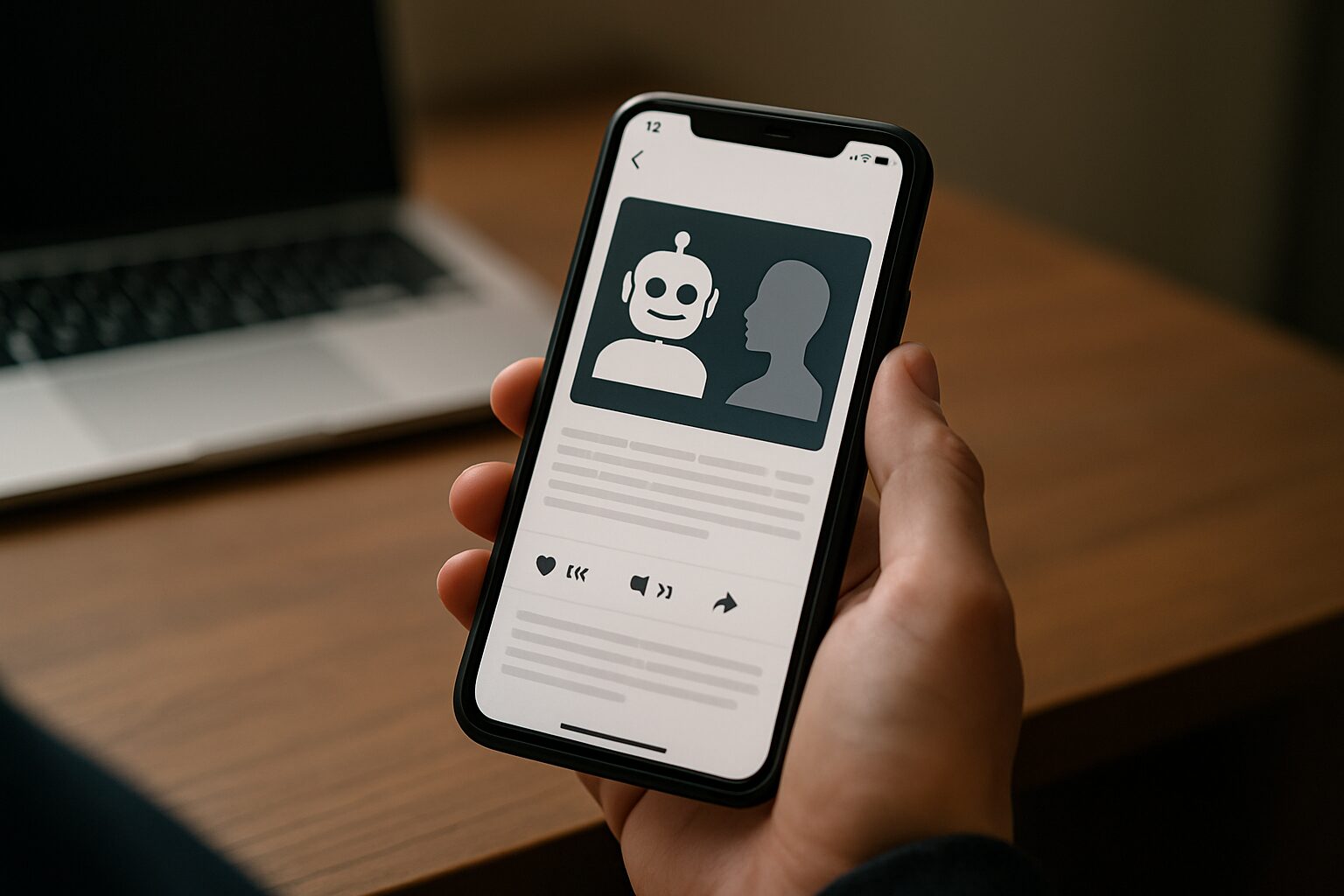
How AI-Generated Feedback Is Shaping Consumer Trust Online
Generative AI can create realistic but fake reviews for products or services, posing ethical challenges. These AI-generated reviews may deceive consumers and manipulate purchasing decisions without disclosure. The issue raises concerns about transparency, trust, and fairness in online marketplaces.
Why It Matters - Real-world impact
Fake reviews generated by AI undermine trust in online platforms, distort consumer decisions, and harm businesses that rely on honest feedback. Consumers may waste money on inferior products, while legitimate companies lose sales to competitors who game the system with fabricated praise. Small businesses and independent creators are particularly vulnerable, as they lack the resources to combat AI-generated defamation or artificially inflated rival ratings. Over time, this erosion of authenticity degrades the entire digital marketplace, making it harder for anyone to discern truth from manipulation. Regular people should care because their choices—from purchases to travel plans—are increasingly shaped by reviews, and unchecked AI fakery turns these supposedly democratic tools into weapons of deception.
Ethical Concerns - What’s wrong or risky?
Generative AI and the Proliferation of Fake Reviews
Generative AI tools can produce highly convincing fake reviews at scale, posing significant ethical risks. These risks span multiple domains, including fairness, as businesses using AI-generated reviews gain an unjust advantage over competitors who rely on authentic customer feedback.
Discrimination and Bias
AI models may inadvertently perpetuate or amplify biases present in their training data. For instance, fake reviews generated by AI could disproportionately target or favor certain products, services, or demographics, raising concerns about discrimination.
Transparency and Accountability
The use of generative AI for reviews challenges transparency, as it becomes difficult for consumers and platforms to distinguish between human and AI-generated content. This lack of clarity undermines trust and accountability in review systems.
Economic and Social Ramifications
Beyond fairness and transparency, fake reviews can distort market dynamics, leading to an economic impact where consumer choices are manipulated. Some argue that this practice could also contribute to job loss if AI replaces human content creators or moderators.
Differing Perspectives
Not all stakeholders view these risks uniformly. Proponents of generative AI may argue that fake reviews, when used ethically (e.g., for generating placeholder content), can streamline processes. Critics, however, emphasize the potential harm to consumer trust and market integrity.
Worker Rights Considerations
The rise of AI-generated content also intersects with worker rights, particularly if human reviewers or content creators are displaced without adequate safeguards or transition plans.
Solutions - What’s being done or proposed?
Legal Regulations and Penalties
Some governments and regulatory bodies have proposed or enacted laws to penalize the creation and dissemination of fake reviews generated by AI. These laws often include hefty fines for businesses caught using such tactics, as well as requirements for platforms to disclose how they detect and handle fake content. Enforcement remains a challenge, but legal frameworks aim to deter misuse by holding both creators and platforms accountable.
AI Detection Tools
Technical solutions include developing AI-powered tools specifically designed to detect AI-generated fake reviews. These tools analyze linguistic patterns, metadata, and behavioral signals to identify synthetic content. While not foolproof, they provide a first line of defense for platforms and consumers. Continuous improvement is necessary as generative AI becomes more sophisticated.
Platform Accountability and Transparency
Consumer advocacy groups have pushed for platforms to take greater responsibility for policing fake reviews. Suggested measures include transparent reporting on the volume of detected fake reviews, clear labeling of verified purchases, and stricter verification processes for reviewers. Some platforms have implemented these measures, though consistency and effectiveness vary widely.
Public Awareness Campaigns
Educational initiatives aim to inform consumers about the prevalence of fake reviews and how to spot them. Tips include checking for overly generic language, unrealistic praise, or a high volume of reviews posted in a short time. While awareness alone doesn't stop fake reviews, it empowers consumers to make more informed decisions.
Ethical AI Development Standards
Industry groups and researchers advocate for ethical guidelines in AI development to prevent misuse for generating fake content. These standards encourage developers to build safeguards into generative AI models, such as watermarking AI-generated text or limiting their use in deceptive contexts. Adoption is voluntary but growing among responsible AI practitioners.
Community-Based Verification
Some platforms have experimented with community-driven systems where users flag suspicious reviews for human moderation. This crowdsourced approach leverages the collective judgment of real users but requires robust mechanisms to prevent abuse and ensure fairness. It works best in tandem with automated tools.
Examples and Real Cases
Amazon's Fake Review Problem (2021)
In 2021, Amazon faced widespread issues with fake reviews generated by AI. The company deleted over 200 million suspected fake reviews before they could be posted, many of which were created using generative AI tools to mimic human writing patterns.
TripAdvisor AI-Generated Hotel Reviews (2020)
TripAdvisor identified and removed a network of AI-generated fake reviews in 2020 that were boosting ratings for small hotels in Italy. The reviews showed unusual linguistic patterns that were later traced to generative AI tools.
Hypothetical: AI-Generated Product Launch Buzz
A hypothetical scenario could involve a tech company using generative AI to create hundreds of positive reviews for a new product launch. The AI could generate varied but uniformly positive comments across multiple platforms to create false consensus before the product even reaches consumers.
Fiverr's Fake Review Services (2022)
In 2022, researchers found numerous Fiverr gigs offering AI-generated fake reviews as a service. Sellers used language models to create convincing reviews for businesses, with some offering bulk packages of 100+ reviews at discounted rates.
Hypothetical: Political Campaign Manipulation
A realistic concern would be political campaigns using generative AI to create fake grassroots support. AI could generate thousands of social media posts and review-style comments praising a candidate while attacking opponents, all appearing to come from diverse real users.
Frequently Asked Questions
What is generative AI and how can it create fake reviews?
Generative AI is a type of artificial intelligence that can create text, images, or other content based on patterns it learns from data. It can generate fake reviews by mimicking human writing styles, making them seem real even though they're not written by actual customers.
Why are fake reviews created by AI a problem?
Fake reviews created by AI can mislead consumers into buying poor-quality products or services, harm honest businesses by giving unfair advantages to competitors, and erode trust in online platforms where people rely on reviews to make decisions.
How can I spot fake reviews generated by AI?
Look for overly generic language, perfect grammar with no mistakes, repetitive phrases, or reviews that seem too emotional or exaggerated. Also check if multiple reviews use similar wording or if the reviewer has no other activity on the platform.
What are companies doing to stop AI-generated fake reviews?
Many platforms are using AI detection tools to identify and remove fake reviews, requiring verification for reviewers, and implementing stricter policies against review manipulation. Some are also working with researchers to develop better detection methods.
How does AI-generated content affect our trust in online information?
As AI becomes better at creating realistic content, it becomes harder to distinguish what's real from what's fake. This challenges our ability to trust online information, requiring us to be more critical and verify sources before believing what we read.