The Hidden Flaws in Face Recognition Technology
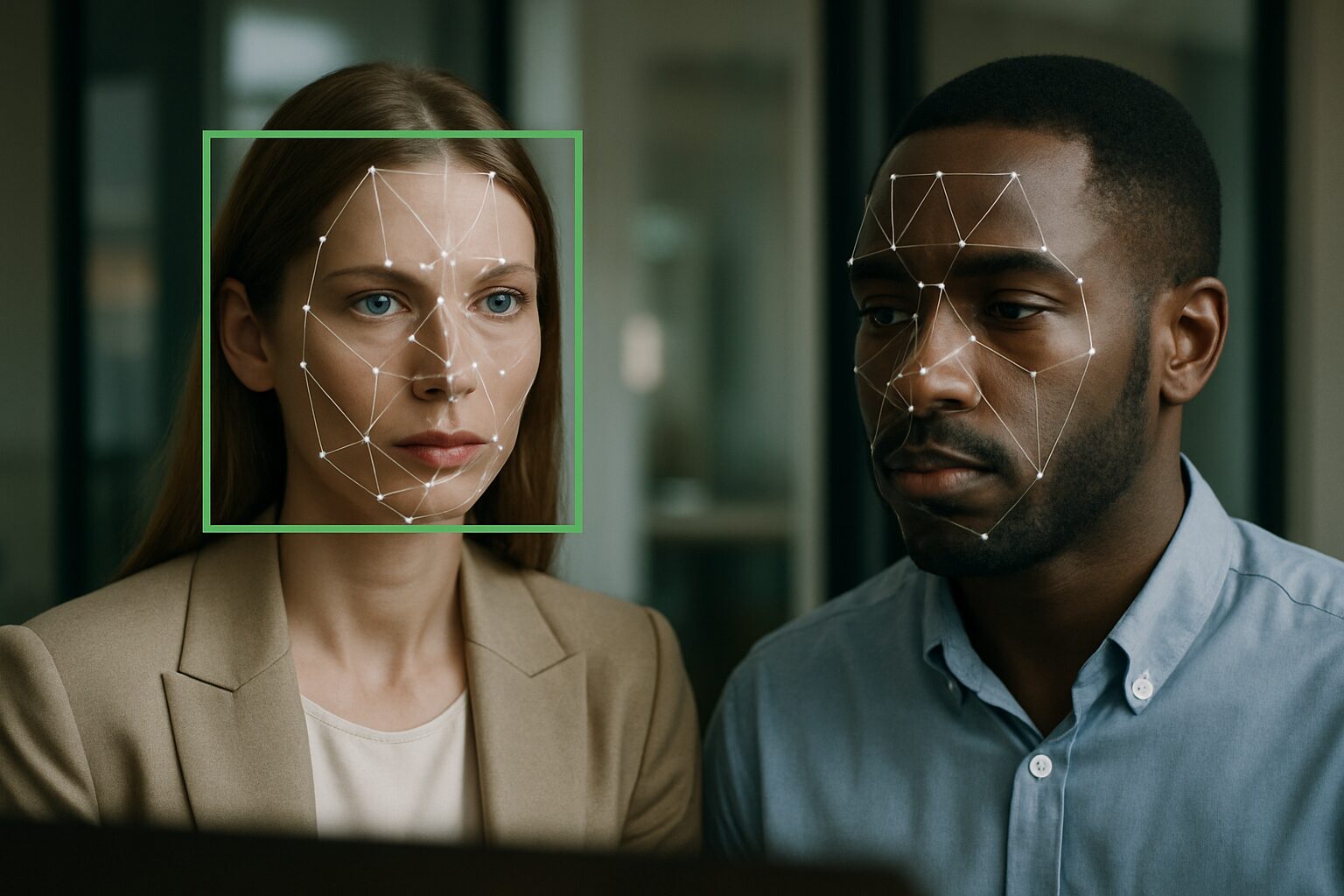
Facial recognition systems are AI-powered tools designed to identify or verify individuals based on facial features. These systems can exhibit bias, leading to unequal accuracy across different demographic groups such as race, gender, or age. Bias arises from imbalanced training data, flawed algorithms, or other technical limitations, resulting in higher error rates for certain populations. Addressing these disparities is critical to ensuring fair and equitable outcomes in real-world applications.
Why It Matters - Real-world impact
Bias in facial recognition systems has serious real-world consequences, disproportionately affecting marginalized communities. Studies show these systems misidentify people of color, women, and non-binary individuals at significantly higher rates, leading to wrongful arrests, denied services, and reinforced discrimination. When deployed in policing, hiring, or banking, flawed algorithms can perpetuate systemic inequities under a false veneer of objectivity. Everyday people should care because these technologies increasingly govern access to jobs, housing, and even freedom—often without transparency or recourse. The normalization of biased surveillance also erodes privacy rights for all citizens, creating societies where your face could become grounds for automated injustice.
Ethical Concerns - What’s wrong or risky?
Ethical Risks in Facial Recognition Bias
Facial recognition systems, while technologically advanced, carry significant ethical risks due to inherent biases. These biases often stem from unrepresentative training data and flawed algorithms, leading to harmful real-world consequences.
Discrimination
One of the most pressing issues is discrimination, where systems misidentify individuals based on race, gender, or age. This can result in unjust treatment by authorities, employers, or service providers, reinforcing existing societal inequalities.
Fairness
Questions of fairness arise when these technologies are deployed in critical areas like law enforcement or hiring. Biased outcomes undermine the principle of equal treatment, as certain groups face higher error rates and subsequent disadvantages.
Transparency
Lack of transparency in how these systems operate makes it difficult to audit or challenge biased decisions. Without clear insight into algorithmic processes, accountability is weakened, and trust erodes.
Economic Impact
There is also concern about the economic impact, as biased systems may limit opportunities for marginalized groups in sectors like finance or housing, exacerbating economic disparities.
Differing Perspectives
Not all stakeholders view these risks uniformly. Proponents argue that with improved data and algorithms, biases can be minimized, emphasizing the technology's benefits in security and efficiency. Critics, however, caution against rapid deployment without robust safeguards, highlighting the potential for irreversible harm to vulnerable populations. Some also raise issues about privacy and consent, which, while not linked here, remain central to the ethical debate.
Solutions - What’s being done or proposed?
Improved Training Datasets
One technical approach to reducing bias in facial recognition systems is to use more diverse and representative training datasets. By ensuring that datasets include a wide range of ethnicities, genders, ages, and other demographic factors, developers can minimize disparities in accuracy. This requires intentional effort to collect and curate data from underrepresented groups, as well as ongoing audits to identify and address gaps.
Algorithmic Audits and Transparency
Regular audits of facial recognition algorithms by independent third parties can help identify and mitigate biases. Transparency in how these systems are developed and tested is crucial. Some organizations have called for mandatory disclosure of accuracy rates across different demographic groups, enabling policymakers and the public to hold developers accountable for biased outcomes.
Legal and Regulatory Frameworks
Governments and regulatory bodies have begun implementing laws to address bias in facial recognition. For example, some jurisdictions have banned or restricted its use in law enforcement due to concerns about racial bias. Others have proposed requiring impact assessments before deployment. Legal frameworks can enforce accountability and set standards for fairness, though enforcement remains a challenge.
Bias Mitigation Techniques
Researchers have developed technical methods to reduce bias, such as reweighting training data, adversarial debiasing, and post-processing adjustments. These techniques aim to balance performance across groups without sacrificing overall accuracy. While promising, they require careful implementation and testing to ensure they don't introduce new unintended biases.
Community Engagement and Ethical Guidelines
Engaging with affected communities and stakeholders can help identify biases and develop more equitable systems. Some organizations have established ethical guidelines for AI development, emphasizing inclusivity and fairness. These efforts often involve multidisciplinary teams, including ethicists, social scientists, and advocacy groups, to ensure diverse perspectives are considered.
Limiting High-Stakes Applications
Some experts advocate for restricting the use of facial recognition in high-stakes scenarios, such as hiring, policing, or border control, where errors can have severe consequences. Instead, they suggest using it only in low-risk applications or as a supplementary tool with human oversight. This approach acknowledges the technology's limitations while still allowing for beneficial uses.
Examples and Real Cases
Gender Shades Study (2018)
In 2018, Joy Buolamwini and Timnit Gebru published the Gender Shades study, which tested facial recognition systems from IBM, Microsoft, and Face++. They found these systems had error rates up to 34.7% for darker-skinned women compared to 0.8% for lighter-skinned men.
Wrongful Arrest of Robert Williams (2020)
In January 2020, Robert Williams, a Black man, was wrongfully arrested in Detroit due to a false facial recognition match. The system misidentified him as a shoplifting suspect, highlighting racial bias in law enforcement use of the technology.
Clearview AI and Racial Profiling Concerns (2021)
Clearview AI's facial recognition tool was found to be disproportionately used by law enforcement in minority neighborhoods. A 2021 BuzzFeed investigation revealed the company's clients included agencies with histories of racial profiling.
UK School Facial Recognition Trial (2021)
In 2021, a school in North Ayrshire, Scotland trialed facial recognition for cafeteria payments. The system reportedly had higher error rates for students of color, causing delays and embarrassment during lunch service.
Hypothetical: Hiring Algorithm Rejection Bias
A hypothetical AI-powered hiring system might reject qualified candidates from certain ethnic groups if trained primarily on resumes from historically homogenous workforces. This could perpetuate exclusion if facial analysis is used during video interviews.
Frequently Asked Questions
What is bias in facial recognition systems?
Bias in facial recognition systems refers to errors or unfair outcomes that occur when the technology performs worse for certain groups of people, often due to imbalanced training data or flawed algorithms. For example, it may misidentify individuals with darker skin tones or women more frequently than others.
Why is bias in facial recognition a problem?
Bias in facial recognition can lead to discrimination, wrongful arrests, or unequal treatment in areas like law enforcement, hiring, or security. Since these systems are increasingly used in critical decisions, unfair accuracy gaps can harm marginalized groups and reinforce societal inequalities.
How does bias happen in facial recognition technology?
Bias often occurs because the datasets used to train these systems lack diversity (e.g., more light-skinned male faces than others) or because the algorithms aren't designed to account for variations in skin tone, gender, or age. Poor testing across different demographics can also contribute.
Can biased facial recognition systems be fixed?
Yes, improvements can be made by using more diverse training data, testing systems across different demographic groups, and developing fairness-aware algorithms. However, ongoing monitoring and ethical oversight are needed to prevent new biases from emerging.
Where is biased facial recognition used today?
Facial recognition is used in many areas, including law enforcement (e.g., identifying suspects), airports (security checks), smartphones (unlocking devices), and retail (personalized ads). Bias in these systems can affect people's rights, privacy, and opportunities in daily life.