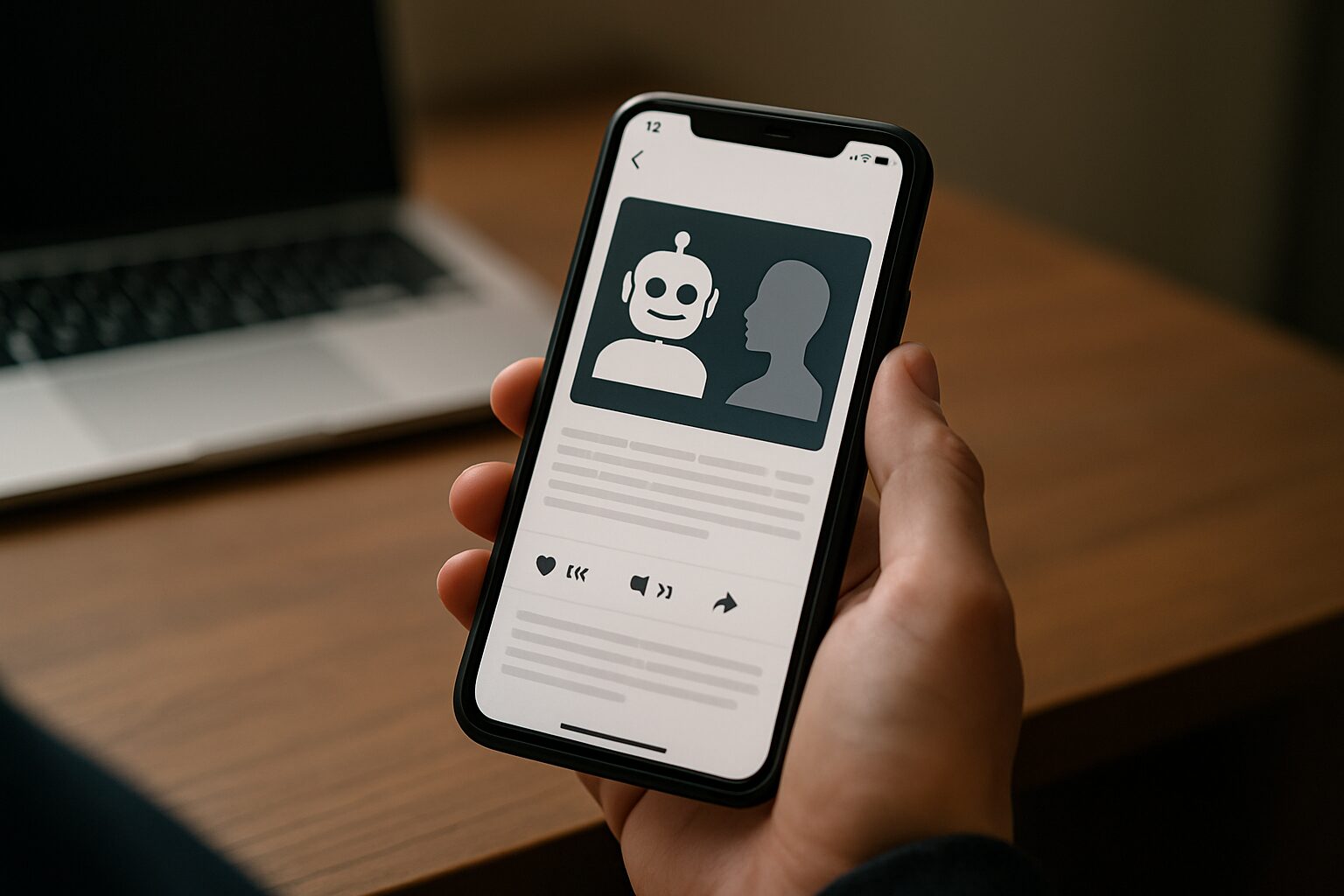
The Dark Side of AI: How Fake Reviews Threaten Trust and Ethical Boundaries
Generative AI can create realistic fake reviews that mimic human writing, making it difficult to distinguish between genuine and fabricated feedback. This raises ethical concerns about deception, consumer trust, and the potential manipulation of purchasing decisions. The use of AI-generated reviews challenges existing accountability frameworks and highlights the need for transparency in online platforms.
Why It Matters - Real-world impact
The rise of generative AI in creating fake reviews poses serious ethical and practical challenges for consumers, businesses, and society at large. Misleading reviews can distort purchasing decisions, leading consumers to buy inferior products or services while harming honest businesses that lose sales to competitors gaming the system. Small businesses and independent creators are particularly vulnerable, as they lack the resources to combat AI-generated defamation or artificially inflated rival ratings. Beyond commerce, the erosion of trust in online platforms undermines the very foundation of digital marketplaces and public discourse. Regular people should care because everyone becomes a potential victim—whether through wasted money, manipulated choices, or the gradual degradation of shared information spaces we all rely on.
Ethical Concerns - What’s wrong or risky?
Generative AI and Fake Reviews: An Ethical Minefield
The rise of generative AI has introduced powerful tools capable of creating highly persuasive fake reviews, raising significant ethical concerns across multiple domains. These systems can mimic human writing styles with alarming accuracy, enabling large-scale manipulation of consumer opinions, business reputations, and market dynamics.
Transparency and Deception
A core ethical issue lies in the lack of transparency. When AI generates reviews without disclosure, it deceives consumers and undermines trust in digital platforms. Users cannot distinguish between genuine feedback and AI-generated content, leading to misinformed decisions and eroding the integrity of review ecosystems.
Fairness in Market Competition
Generative AI exacerbates unfair advantages in commerce. Businesses using AI to fabricate positive reviews or sabotage competitors gain an unethical edge, distorting market competition. This violates principles of fairness, as smaller enterprises or honest actors may suffer despite offering superior products or services.
Discrimination and Bias Amplification
If trained on biased data, generative AI can produce fake reviews that perpetuate stereotypes or unfairly target certain groups, businesses, or products. For instance, AI might generate negative reviews for minority-owned businesses more frequently, amplifying societal discrimination under the guise of organic feedback.
Economic and Labor Implications
The automation of review generation could contribute to job loss for human content moderators or freelance writers engaged in legitimate review creation. Moreover, the economic impact of manipulated reviews can misallocate consumer spending, harm authentic businesses, and destabilize markets. There are also concerns about worker rights, as those tasked with training or overseeing these AI systems may face exploitative conditions or unclear accountability.
Differing Perspectives
Not all stakeholders view these risks uniformly. Some argue that generative AI can enhance productivity by assisting in drafting authentic reviews, provided it is used transparently. Others believe that the benefits of AI-driven content generation outweigh the risks, emphasizing its potential for personalization and efficiency. However, critics caution that without strict ethical guidelines, the harms—such as eroded trust and unfair practices—could far outweigh any advantages.
Other Moral Concerns
Beyond the linked categories, issues like accountability (who is responsible for AI-generated deceit?), autonomy (how do manipulated reviews impair consumer choice?), and the erosion of social trust deserve attention. The scalability of AI-driven fake reviews makes these problems particularly urgent and difficult to regulate.
Solutions - What’s being done or proposed?
Legal Regulations and Penalties
Some governments and regulatory bodies have proposed or implemented laws that specifically target the use of AI-generated fake reviews. These laws often include hefty fines for companies caught using such tactics, as well as requirements for platforms to disclose when content is AI-generated. For example, the European Union's Digital Services Act includes provisions to combat deceptive practices, including fake reviews.
AI Detection Tools
Technical solutions such as AI detection tools have been developed to identify and flag fake reviews generated by AI. These tools analyze writing patterns, metadata, and other indicators to distinguish between human and AI-generated content. Platforms like Amazon and Yelp have started integrating such tools to maintain the integrity of their review systems.
Transparency and Disclosure Requirements
Advocates have pushed for transparency measures that require companies to disclose when AI is used to generate reviews or other content. This could involve labeling AI-generated content or providing clear disclaimers. The goal is to ensure consumers are aware of the origin of the content they are engaging with, allowing them to make more informed decisions.
Community Reporting and Moderation
Some platforms have empowered their user communities to report suspicious reviews. Coupled with human moderation teams, this approach leverages the collective vigilance of users to identify and remove fake content. While not foolproof, it adds an additional layer of scrutiny to combat AI-generated manipulation.
Ethical AI Development Guidelines
Organizations and industry groups have proposed ethical guidelines for AI development, emphasizing the responsibility of developers to prevent misuse. These guidelines often include principles like fairness, accountability, and transparency, encouraging developers to build safeguards against generating deceptive content like fake reviews.
Consumer Education Campaigns
Educational initiatives aim to inform consumers about the prevalence of AI-generated fake reviews and how to spot them. By raising awareness, these campaigns help consumers develop critical thinking skills when evaluating online reviews, reducing the overall impact of deceptive practices.
Platform Accountability Measures
Some solutions focus on holding platforms accountable for hosting fake reviews. This includes requiring platforms to implement stricter verification processes for reviewers or face penalties. By shifting responsibility to the platforms, these measures aim to create a stronger incentive for proactive content moderation.
Examples and Real Cases
Amazon's Fake Review Problem (2021)
In 2021, Amazon faced widespread criticism for failing to curb fake reviews generated by AI tools. A report by Which? found thousands of suspicious 5-star reviews for products like headphones and smartwatches, many likely written by AI text generators.
TripAdvisor AI-Generated Hotel Reviews (Hypothetical)
A luxury hotel chain could use generative AI to create hundreds of fake positive reviews on TripAdvisor. These AI-written reviews would mimic human writing patterns while consistently praising the chain's properties and disparaging competitors.
Fiverr's AI Review Services (2022)
In 2022, researchers discovered sellers on Fiverr offering AI-generated fake review services. These services used language models to create believable product testimonials, with some sellers promising 'human-like' reviews at scale for e-commerce platforms.
AI-Generated Book Reviews Scandal (2023)
Several self-published authors were caught in 2023 using ChatGPT to generate fake 5-star reviews for their books on Goodreads and Amazon. The AI created detailed but generic praise that followed similar patterns across multiple accounts.
Yelp's AI Detection Challenges (Ongoing)
Yelp has reported increasing difficulty in detecting AI-generated fake reviews since 2022. The platform noted sophisticated language models can now mimic regional dialects and personal anecdotes that bypass traditional detection methods.
Frequently Asked Questions
What is generative AI and how can it create fake reviews?
Generative AI is a type of artificial intelligence that can create text, images, or other content based on patterns it learns from data. It can generate fake reviews by mimicking human writing styles, making them appear genuine even though they are fabricated to manipulate opinions.
Why are fake reviews created by AI a problem?
Fake reviews created by AI can mislead consumers into buying low-quality products or services, harm honest businesses, and erode trust in online platforms. They manipulate public perception unfairly and can influence decisions based on false information.
How can I spot a fake review generated by AI?
Look for overly generic language, repetitive phrases, or unnatural perfection in reviews. AI-generated reviews may lack personal details or specific experiences. Tools and browser extensions can also help detect patterns common in fake reviews.
What ethical concerns does AI-generated fake content raise?
AI-generated fake content raises concerns about deception, loss of trust in digital spaces, and unfair manipulation of markets or opinions. It challenges ethical boundaries by enabling large-scale misinformation without accountability.
How are companies and platforms fighting AI-generated fake reviews?
Companies use AI detection tools, human moderators, and stricter review policies to identify and remove fake content. Some platforms also verify purchases before allowing reviews or encourage users to report suspicious activity.