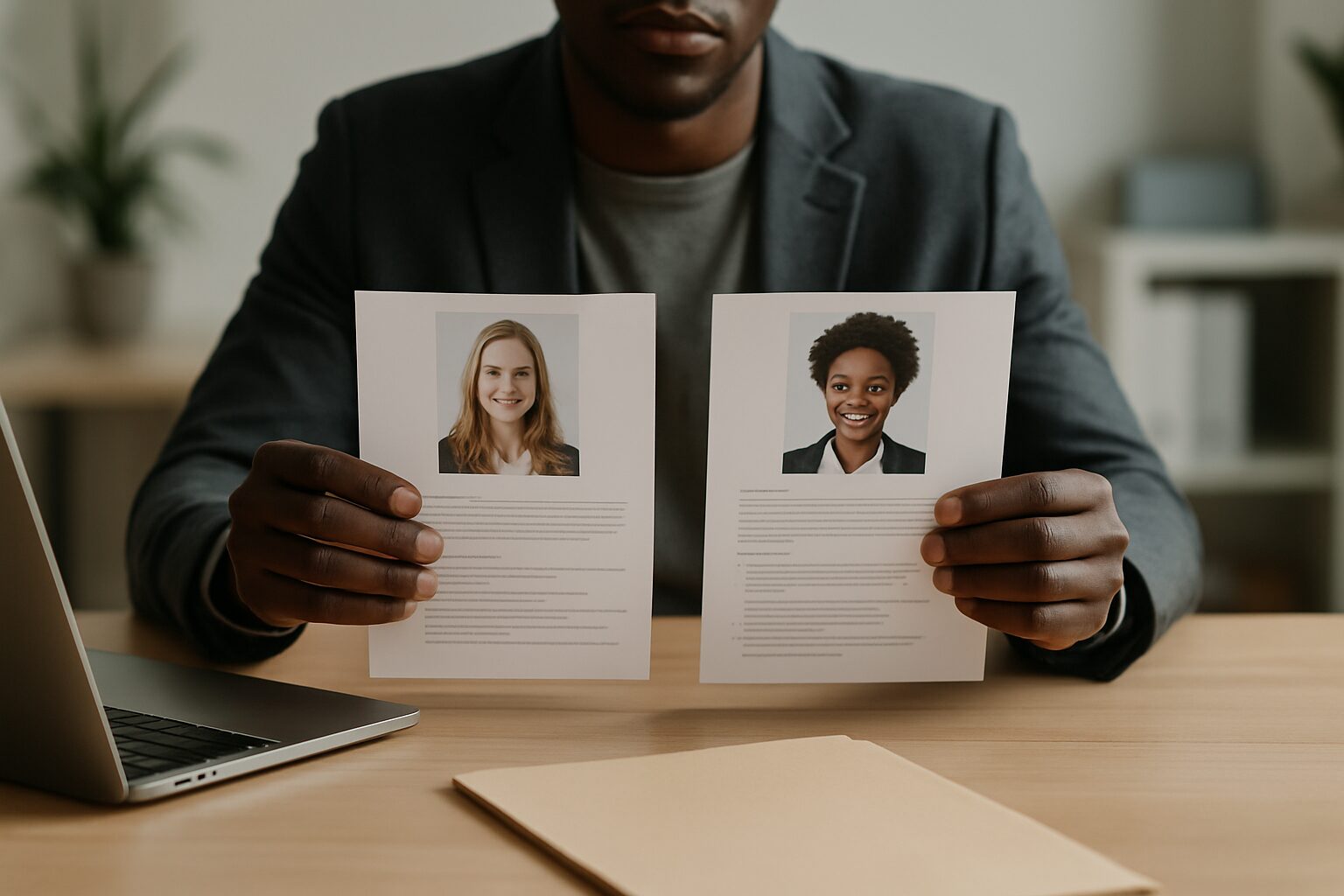
Hidden Biases in Hiring: How AI Screens Resumes Unfairly
Resume screening algorithms are automated tools designed to evaluate job applicants by analyzing their resumes. These systems can inadvertently perpetuate bias if they are trained on historical hiring data that reflects human prejudices or if their design fails to account for fairness. When biased, they may disadvantage certain groups based on gender, race, age, or other protected characteristics. Addressing these biases is critical to ensuring equitable hiring practices.
Why It Matters - Real-world impact
Bias in resume screening algorithms has real-world consequences that extend far beyond technical flaws. Job seekers from underrepresented groups—such as women, people of color, or individuals with non-traditional career paths—often face systemic exclusion when biased AI tools deprioritize their applications based on historical hiring patterns. Employers miss out on qualified talent, perpetuating workplace homogeneity and reinforcing inequities. For society, this deepens economic disparities and limits diversity in critical fields like healthcare, finance, and technology. Regular people should care because these tools shape who gets opportunities, influencing everything from career mobility to fair access to livelihoods. Left unchecked, algorithmic bias risks codifying discrimination into the hiring process, making it harder to dismantle long-standing barriers.
Ethical Concerns - What’s wrong or risky?
Bias in Resume Screening Algorithms: Ethical Risks
Resume screening algorithms, while efficient, introduce significant ethical risks that demand scrutiny. One primary concern is discrimination, where algorithms may perpetuate or amplify biases based on gender, race, age, or other protected characteristics, leading to unjust hiring outcomes.
Fairness and Transparency
Issues of fairness arise when algorithms favor candidates from certain backgrounds or institutions, disadvantaging equally qualified individuals from diverse or non-traditional paths. Lack of transparency in how these algorithms make decisions compounds the problem, as candidates and employers cannot understand or challenge biased outcomes.
Economic and Social Implications
There are also concerns about economic impact, such as widening inequality if biased tools limit opportunities for marginalized groups. Some argue these technologies could contribute to job loss for human recruiters, though others believe they create new roles in AI oversight. Additionally, worker rights may be undermined if automated decisions lack accountability or avenues for appeal.
Differing Perspectives
Not everyone views these risks uniformly. Proponents argue that algorithms can reduce human bias if designed carefully, while critics emphasize that without rigorous auditing, they risk entrenching discrimination. Some stakeholders prioritize efficiency and cost savings, whereas others advocate for ethical frameworks that prioritize equity and justice in hiring practices.
Solutions - What’s being done or proposed?
Algorithmic Auditing and Transparency
One approach to addressing bias in resume screening algorithms is implementing regular algorithmic audits. These audits involve independent third parties reviewing the algorithm's decision-making processes to identify and mitigate biases. Transparency in how the algorithm weights different resume components can also help employers understand and correct any unfair biases. For example, some companies now publish reports detailing their algorithm's performance across different demographic groups.
Diverse Training Data
Ensuring that the training data used for resume screening algorithms is diverse and representative is another key solution. If historical hiring data is biased, the algorithm may perpetuate those biases. By incorporating data from a wide range of demographics and backgrounds, developers can reduce the risk of the algorithm favoring certain groups over others. Some organizations have partnered with diversity-focused hiring platforms to improve their datasets.
Human Oversight and Hybrid Systems
Combining algorithmic screening with human oversight can help catch and correct biases. Hybrid systems allow human reviewers to intervene when the algorithm's decisions seem questionable or unfair. For instance, some companies use algorithms to narrow down a pool of candidates but leave the final selection to human recruiters who are trained to recognize and avoid bias.
Legal and Regulatory Frameworks
Governments and regulatory bodies have begun to propose and enforce laws aimed at reducing bias in AI systems, including resume screening tools. For example, the EU's proposed AI Act includes provisions for high-risk AI systems, which would require stricter oversight and accountability. In the U.S., some states have introduced bills mandating bias audits for hiring algorithms used by employers.
Bias Mitigation Techniques in Algorithm Design
Developers are incorporating bias mitigation techniques directly into the design of resume screening algorithms. Methods such as adversarial debiasing, reweighting training data, and fairness constraints aim to reduce discriminatory outcomes. For example, some algorithms now explicitly penalize decisions that disproportionately disadvantage protected groups, encouraging more equitable hiring practices.
Education and Awareness for Employers
Educating employers about the potential biases in resume screening algorithms is crucial. Many organizations are unaware of how these tools might disadvantage certain candidates. Workshops, guidelines, and certification programs can help hiring managers and HR professionals make informed decisions about which tools to use and how to interpret their outputs fairly.
Alternative Hiring Practices
Some companies are moving away from traditional resume screening altogether to avoid algorithmic bias. Practices like blind recruitment, skills-based assessments, and structured interviews focus on candidates' abilities rather than their backgrounds. These methods can help level the playing field and reduce reliance on potentially biased algorithms.
Examples and Real Cases
Amazon's AI Recruitment Tool (2018)
In 2018, Reuters reported that Amazon scrapped an AI recruitment tool after discovering it discriminated against women. The algorithm penalized resumes that included the word 'womenu2019s' (like 'womenu2019s chess club captain') and downgraded graduates from all-womenu2019s colleges.
HireVueu2019s Facial Analysis (2019)
HireVue, a video interview platform, used AI to assess candidates' facial expressions and tone in 2019. Critics argued this could disadvantage neurodivergent applicants or those from cultures with different nonverbal norms, leading to lawsuits and scrutiny from regulators like the Illinois Biometric Information Privacy Act.
Hypothetical: University Name Bias
A hypothetical resume-screening AI trained on historical hiring data might favor applicants from elite universities (e.g., Harvard or Stanford), disproportionately excluding qualified candidates from less prestigious schools, perpetuating class and geographic biases in hiring.
Gender Decoder Tool Findings (2021)
A 2021 study by Gender Decoder revealed job ads using masculine-coded words (e.g., 'competitive,' 'dominant') attracted fewer female applicants. If an AI was trained on such biased ad responses, it could replicate this exclusion in resume screening.
Frequently Asked Questions
What is bias in resume screening algorithms?
Bias in resume screening algorithms refers to unfair or discriminatory outcomes where certain groups (e.g., based on gender, race, or age) are systematically disadvantaged when AI tools analyze resumes for hiring decisions.
Why is bias in resume screening a problem?
It reinforces inequality by favoring certain candidates over others for reasons unrelated to job performance, limiting diversity in workplaces and perpetuating systemic discrimination.
How does bias enter resume screening algorithms?
Bias can enter through historical hiring data used to train AI, biased keyword choices, or overlooked factors like names, schools, or hobbies that may correlate with protected attributes.
Can bias in resume screening algorithms be fixed?
Yes, methods like auditing training data, removing identifying information (e.g., names), and using fairness-aware AI techniques can reduce bias, but ongoing monitoring is needed.
How does bias in hiring algorithms affect job seekers today?
Qualified candidates may be unfairly filtered out by AI tools, making it harder for underrepresented groups to get interviews and worsening workplace diversity gaps.