When AI Gets It Wrong: Understanding Healthcare Mistakes and Risks
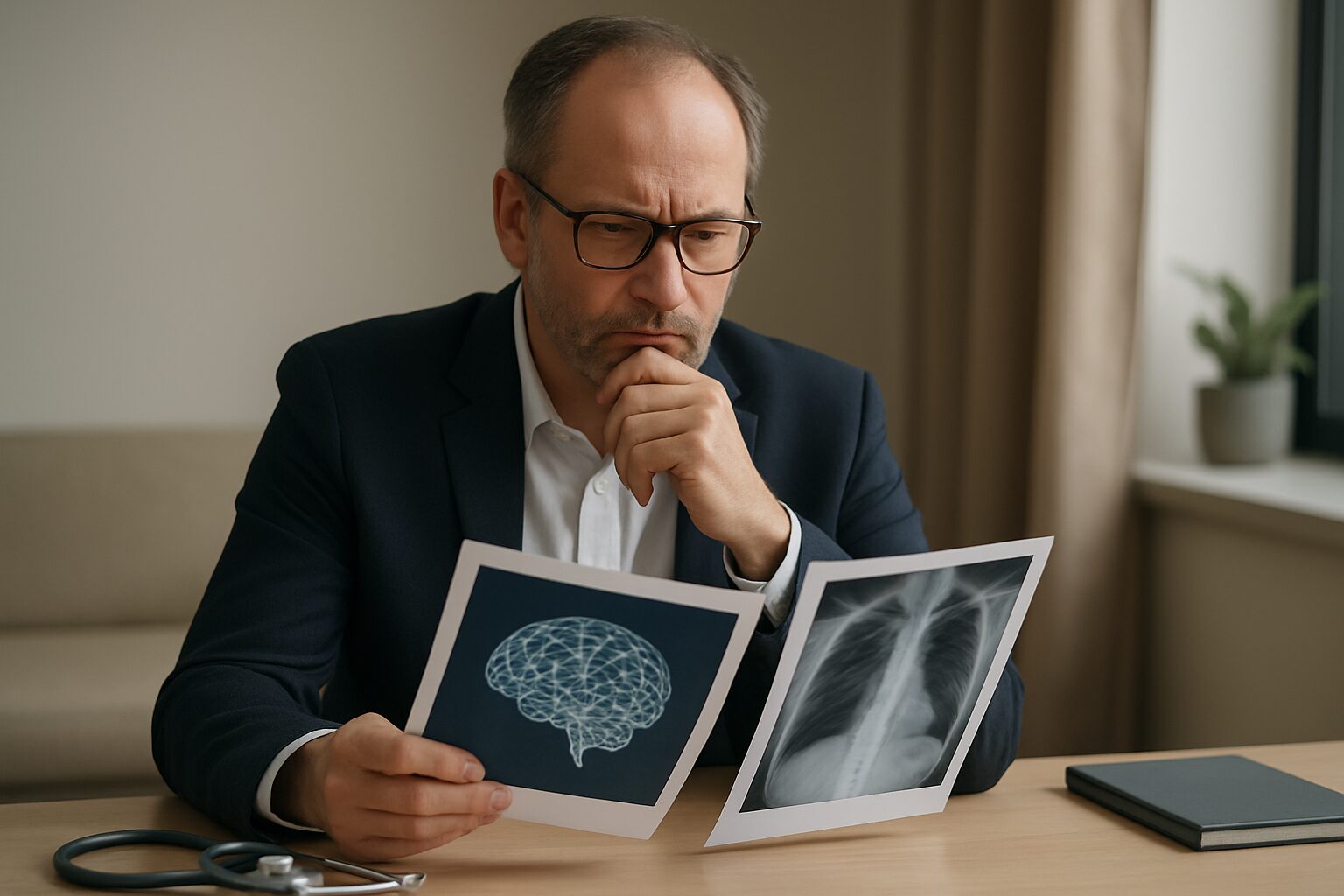
AI decision errors in healthcare occur when algorithms provide incorrect, biased, or unsafe recommendations for diagnosis, treatment, or patient management. These errors can stem from flawed data, design limitations, or unexpected real-world complexities. Addressing such mistakes is critical to ensuring patient safety and maintaining trust in AI-assisted medical systems.
Why It Matters - Real-world impact
AI decision errors in healthcare have real-world consequences for patients, providers, and healthcare systems. Misdiagnoses, incorrect treatment recommendations, or biased algorithms can lead to worsened health outcomes, unnecessary procedures, or even loss of life. Vulnerable populations may be disproportionately affected if training data reflects existing healthcare disparities. Regular people should care because these systems increasingly influence diagnoses, insurance approvals, and treatment plans—decisions that directly impact personal health and financial wellbeing. The integration of AI into critical healthcare decisions makes understanding its potential failures an urgent matter for everyone who may someday need medical care.
Ethical Concerns - What’s wrong or risky?
Ethical Risks of AI Decision Errors in Healthcare
When AI systems make errors in healthcare decisions, the consequences can be severe, raising numerous ethical concerns. One major issue is fairness, as biased algorithms may favor certain demographic groups over others, leading to unequal treatment outcomes. Similarly, errors can exacerbate discrimination, particularly if historical data used to train AI reflects existing societal biases, resulting in misdiagnoses or inadequate care for marginalized populations.
Another critical concern is transparency. Many AI models operate as "black boxes," making it difficult for clinicians and patients to understand how decisions are reached. This lack of clarity can erode trust and complicate accountability when errors occur.
Beyond these, errors may also have broader ethical implications, such as economic burdens on patients and healthcare systems due to incorrect treatments, or impacts on worker rights if healthcare professionals are held responsible for AI mistakes beyond their control. Some argue that AI can reduce human error and improve efficiency, while others emphasize that over-reliance on AI might lead to job loss or deskilling among medical staff.
Not everyone agrees on the severity of these risks; proponents of AI highlight its potential to enhance precision and reduce costs, whereas critics caution against unintended moral and social consequences.
Solutions - What’s being done or proposed?
Enhanced Transparency and Explainability
One approach to mitigating AI decision errors in healthcare is improving the transparency and explainability of AI systems. This involves developing models that provide clear, understandable explanations for their decisions, enabling clinicians to verify and trust the outputs. Techniques like interpretable machine learning and decision trees are being explored to make AI decisions more accessible to non-experts. Regulatory bodies are also pushing for standards that require AI systems to disclose their decision-making processes.
Robust Testing and Validation Protocols
Implementing rigorous testing and validation protocols is critical to reducing AI errors in healthcare. This includes pre-deployment testing on diverse datasets to identify biases or inaccuracies, as well as continuous monitoring post-deployment. Institutions are adopting frameworks like 'sandbox environments' to test AI systems in controlled settings before real-world application. Peer reviews and third-party audits are also becoming common to ensure reliability.
Human-AI Collaboration Frameworks
To minimize errors, many advocate for a collaborative approach where AI supports rather than replaces human decision-making. This involves designing systems that flag uncertainties or low-confidence predictions for human review. Clinicians are trained to use AI as a tool, combining their expertise with AI insights. Such frameworks ensure that critical decisions always involve human oversight, reducing the risk of unchecked AI errors.
Legal and Ethical Guidelines
Governments and organizations are developing legal and ethical guidelines to govern AI use in healthcare. These include liability frameworks to determine accountability for AI errors, as well as ethical standards for data usage and patient consent. For example, the EU's AI Act proposes strict regulations for high-risk AI applications, including healthcare. Such measures aim to ensure that AI is used responsibly and that patients are protected from harm.
Bias Mitigation Strategies
Addressing biases in AI systems is essential to prevent discriminatory outcomes. Solutions include using diverse training datasets that represent varied demographics and employing algorithms designed to detect and correct biases. Institutions are also investing in bias audits and fairness metrics to evaluate AI performance across different groups. Ongoing research focuses on developing techniques to minimize bias at every stage of the AI lifecycle.
Continuous Education and Training
Educating healthcare professionals and developers about AI's limitations and potential pitfalls is another key solution. Training programs teach clinicians how to interpret AI outputs critically and recognize when to override them. Similarly, AI developers are encouraged to learn about healthcare contexts to build more effective and safer systems. Continuous education ensures that all stakeholders are equipped to handle AI-related challenges.
Patient-Centric AI Design
Designing AI systems with a patient-centric focus helps reduce errors by prioritizing patient safety and outcomes. This involves incorporating patient feedback into AI development and ensuring systems align with clinical needs. Features like real-time error reporting by patients and clinicians can help identify and rectify issues quickly. Patient-centric design also emphasizes transparency, allowing patients to understand how AI influences their care.
Examples and Real Cases
IBM Watson Oncology Misdiagnoses (2018)
In 2018, IBM's Watson for Oncology reportedly provided unsafe and incorrect cancer treatment recommendations. Doctors at Memorial Sloan Kettering Cancer Center found that the AI system suggested erroneous therapies due to training on synthetic data rather than real patient cases.
Epic's Sepsis Prediction Model Failure (2021)
A 2021 study in JAMA Internal Medicine revealed that Epic's sepsis prediction model had a high false alarm rate, missing 67% of sepsis cases. The AI tool's poor performance led to alert fatigue among healthcare workers and delayed critical interventions.
Hypothetical: Radiology AI Overlooks Rare Condition
In a realistic scenario, an AI radiology system trained primarily on common conditions fails to flag a rare form of lung fibrosis in a 45-year-old patient. The oversight delays diagnosis by 8 months, allowing irreversible damage to occur.
Google Health's Diabetic Retinopathy Detection Errors (2020)
Google Health's AI system for detecting diabetic retinopathy showed significant performance drops when tested in real-world Thai clinics in 2020. The model struggled with lower-quality images and diverse patient populations compared to its training data.
Hypothetical: Pediatric Dosage Algorithm Miscalculation
An AI medication dosing system incorrectly calculates chemotherapy doses for pediatric patients due to flawed weight-based algorithms. Several children receive dangerously high doses before the error is discovered during manual verification.
Frequently Asked Questions
What are AI decision errors in healthcare?
AI decision errors in healthcare occur when artificial intelligence systems make incorrect diagnoses, treatment recommendations, or predictions about patient outcomes. These mistakes can happen due to flawed data, biased algorithms, or unexpected situations the AI wasn't trained to handle.
Why are AI mistakes in healthcare dangerous?
AI mistakes in healthcare are dangerous because they can lead to wrong treatments, delayed care, or missed diagnoses that directly impact patient health and safety. Unlike some other fields where errors might be minor, healthcare AI mistakes can have life-or-death consequences.
What causes AI to make wrong decisions in medicine?
Common causes include biased training data that doesn't represent all patient groups, technical glitches, incomplete patient information, or situations where the AI encounters cases very different from its training examples. Sometimes the AI may also be overconfident in its incorrect predictions.
How can we prevent AI errors in healthcare?
Prevention methods include using diverse and high-quality training data, continuous testing and monitoring of AI systems, keeping human doctors involved in final decisions, implementing safety checks, and being transparent about how the AI makes its decisions.
Are AI systems replacing doctors because of these errors?
No, AI systems are designed to assist doctors, not replace them. The current approach is called 'human-in-the-loop' where AI provides suggestions but human experts make final decisions. This helps catch potential AI errors while still benefiting from AI's analytical capabilities.