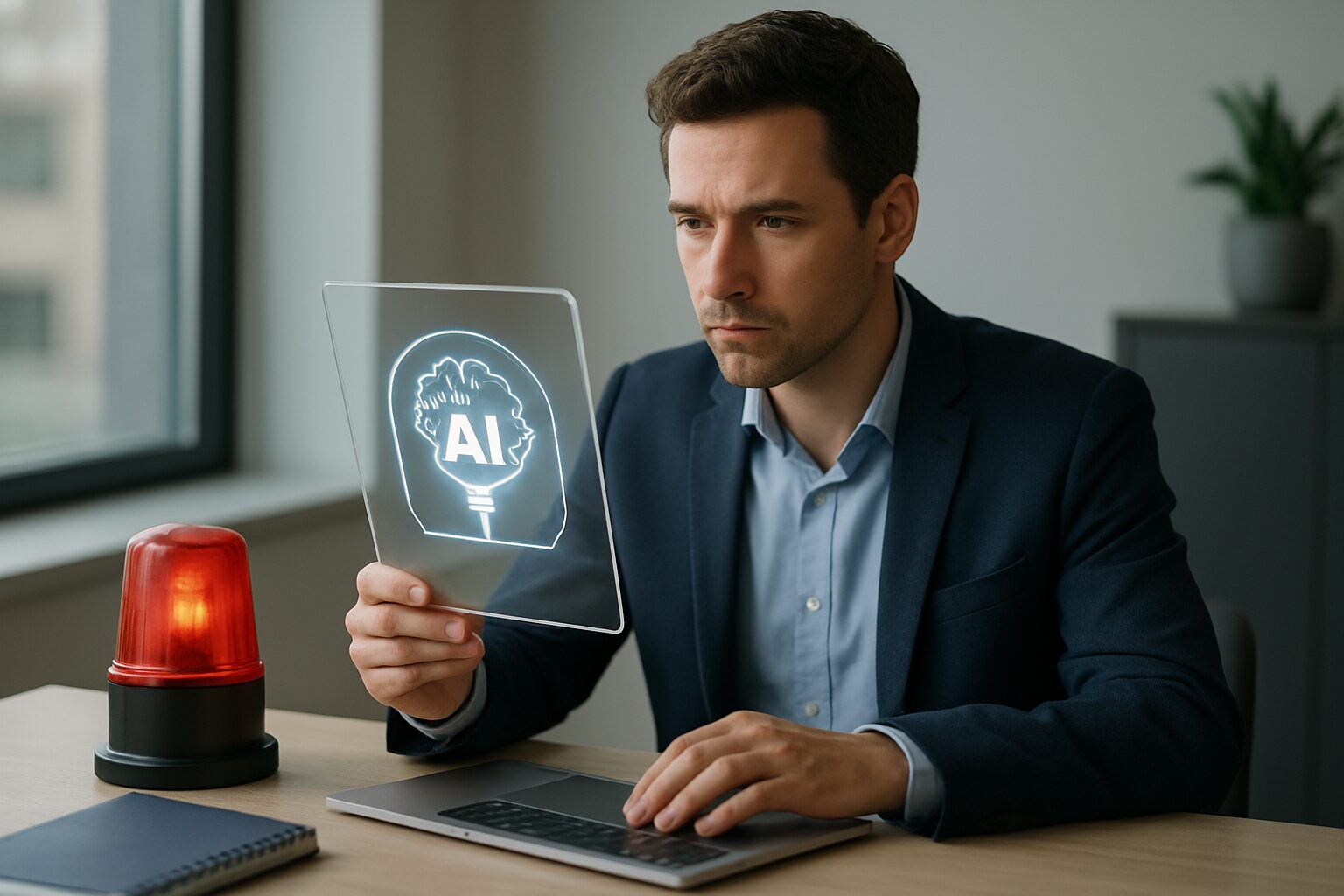
AI Cyber Threats: How Hackers Exploit Artificial Intelligence
Artificial intelligence (AI) systems can be exploited by hackers to carry out harmful activities, such as automated cyberattacks, data breaches, or the spread of misinformation. The increasing sophistication of AI tools lowers the barrier for malicious actors to scale and enhance their attacks. This misuse poses significant risks to cybersecurity, privacy, and trust in digital systems. Addressing these vulnerabilities requires understanding how AI can be weaponized and implementing safeguards to prevent abuse.
Why It Matters - Real-world impact
The misuse of AI by hackers poses tangible threats to individuals, businesses, and society at large. Cybercriminals could leverage AI to automate phishing attacks, create deepfake scams, or exploit vulnerabilities in critical infrastructure, leading to financial losses, privacy breaches, or even physical harm. Everyday citizens are at risk—whether through identity theft, manipulated media, or disruptions to essential services like healthcare or transportation. Beyond personal consequences, widespread AI-driven attacks could erode trust in digital systems, destabilize economies, and amplify societal divisions. This isn't a hypothetical future concern; as AI tools become more accessible, the potential for harm grows exponentially, making vigilance and proactive safeguards urgent priorities for everyone.
Ethical Concerns - What’s wrong or risky?
AI Misuse by Hackers: Ethical Risks Beyond Security Breaches
When hackers misuse AI, the immediate focus often centers on security and privacy violations. However, the ethical implications run much deeper, affecting core societal values and raising profound moral questions.
Discrimination Amplified
Hackers can weaponize AI to automate and scale discriminatory practices, such as using biased algorithms to target vulnerable populations for fraud or exclusion. This exacerbates existing societal divides and violates principles of equal treatment. For more on this, see our page on Ethical Concerns: Discrimination.
Threats to Fairness
AI-driven attacks can manipulate systems—like financial markets or public services—to benefit malicious actors unfairly, undermining trust in institutions and processes meant to be equitable. Learn about broader issues at Ethical Concerns: Fairness.
Lack of Transparency
Hackers often use AI in opaque ways, making it difficult to trace attacks or understand their mechanisms. This erodes accountability and hinders efforts to prevent future misuse. Explore why clarity matters in Ethical Concerns: Transparency.
Economic Disruption
AI-powered cyberattacks can cause widespread economic harm, from disrupting supply chains to enabling large-scale theft, disproportionately affecting small businesses and low-income communities. Delve into the consequences at Ethical Concern: Economic Impact.
Erosion of Worker Rights
If hackers compromise AI systems managing workplaces, they could manipulate schedules, productivity metrics, or even replace human roles abruptly, violating labor protections and dignity. Read more at Ethical Concerns: Worker Rights.
Job Loss Concerns
Beyond direct attacks, the fear of AI-driven automation fueled by malicious actors could accelerate job displacement without societal preparedness, raising ethical questions about responsibility and support. For insights, visit Ethical Concerns: Job Loss.
Differing Perspectives
Some argue that focusing on hacker misuse overlooks the broader responsibility of developers and regulators to build safer AI. Others contend that emphasizing ethical risks may stifle innovation or divert resources from technical safeguards. Balancing these views is key to holistic risk management.
Solutions - What’s being done or proposed?
Enhanced Cybersecurity Measures
Organizations and governments have invested in advanced cybersecurity frameworks to protect AI systems from hacking attempts. This includes implementing multi-factor authentication, encryption protocols, and intrusion detection systems specifically designed to safeguard AI infrastructure. Regular security audits and penetration testing are also conducted to identify vulnerabilities before they can be exploited.
AI Ethics and Governance Frameworks
Institutions have proposed ethical guidelines and governance frameworks to ensure responsible AI development and deployment. These frameworks often include principles like transparency, accountability, and fairness, aiming to prevent misuse. Organizations such as the IEEE and the EU have published standards and regulations, like the AI Act, to enforce compliance and mitigate risks associated with AI misuse.
Public Awareness and Education
Efforts have been made to educate the public and professionals about the risks of AI misuse. Workshops, online courses, and awareness campaigns highlight how AI can be exploited by hackers and what steps individuals and organizations can take to protect themselves. By fostering a culture of vigilance, these initiatives aim to reduce the likelihood of successful attacks.
Collaboration Between Stakeholders
Governments, tech companies, and academic institutions have formed partnerships to address AI misuse collectively. Information-sharing platforms and joint task forces enable quicker responses to emerging threats. For example, the Partnership on AI brings together diverse stakeholders to develop best practices and share knowledge on mitigating risks associated with AI technologies.
Legal Penalties and Regulations
Governments have introduced stricter laws and penalties for those caught misusing AI for malicious purposes. Legislation such as the Computer Fraud and Abuse Act (CFAA) in the U.S. has been updated to include AI-related offenses. International cooperation, like the Budapest Convention on Cybercrime, also aims to create a unified legal framework to combat cross-border AI misuse.
AI Red Teaming and Adversarial Testing
To proactively identify weaknesses, organizations employ red teaming exercises where ethical hackers simulate attacks on AI systems. Adversarial testing involves deliberately attempting to deceive or manipulate AI models to uncover flaws. These practices help developers strengthen AI systems against real-world exploitation by malicious actors.
Decentralized AI Systems
Some experts advocate for decentralized AI architectures to reduce single points of failure. Blockchain technology, for instance, has been explored to create tamper-proof AI systems where control is distributed across multiple nodes. This approach makes it harder for hackers to compromise the entire system through a single attack vector.
Examples and Real Cases
Deepfake Audio Used in CEO Fraud
In March 2019, hackers used AI-generated deepfake audio to impersonate a CEO's voice and successfully convinced a UK-based energy firm's employee to transfer u20ac220,000 to a fraudulent account. The AI voice mimicked the German CEO's accent and tone with high accuracy.
AI-Powered Phishing Campaigns
In 2021, cybersecurity firm Darktrace reported detecting AI-generated phishing emails that adapted language and style based on the recipient's responses. These campaigns showed significantly higher success rates than traditional phishing attempts.
Automated Vulnerability Discovery
Hypothetical: In 2023, hackers could deploy AI systems that continuously scan millions of websites for vulnerabilities at unprecedented speeds, dramatically increasing the scale of potential attacks before patches can be developed.
GPT-3 Used for Fake News Generation
In 2020, researchers demonstrated how GPT-3 could be used to generate highly convincing fake news articles. One test produced a false story about COVID-19 that was indistinguishable from legitimate reporting to most readers.
AI-Assisted Password Cracking
In 2018, cybersecurity experts demonstrated PassGAN, an AI system that could guess passwords 10-100 times faster than traditional methods by learning from real password leaks and generating likely variations.
Frequently Asked Questions
What is AI misuse by hackers?
AI misuse by hackers refers to the use of artificial intelligence by cybercriminals to carry out attacks more efficiently, such as creating advanced phishing scams, automating hacking attempts, or bypassing security systems.
Why is AI misuse by hackers a growing concern?
It's a growing concern because AI can make cyberattacks faster, more sophisticated, and harder to detect. Hackers can use AI to scale attacks, personalize scams, and exploit vulnerabilities at an unprecedented rate.
How can AI be used maliciously by hackers today?
Today, hackers use AI for deepfake scams, automated password cracking, spreading disinformation, and evading cybersecurity defenses. AI tools can also generate realistic fake content to trick people or systems.
What can individuals do to protect themselves from AI-powered cyber threats?
Individuals can stay safe by using strong passwords, enabling multi-factor authentication, being cautious of suspicious messages, keeping software updated, and staying informed about new AI-driven scams.
How does AI misuse impact cybersecurity defenses?
AI misuse forces cybersecurity teams to adapt quickly, as traditional defenses may not catch AI-driven attacks. Companies now use AI-powered security tools to detect and counter these evolving threats in real time.