
When Algorithms Misdiagnose: Legal Pitfalls of AI in Healthcare
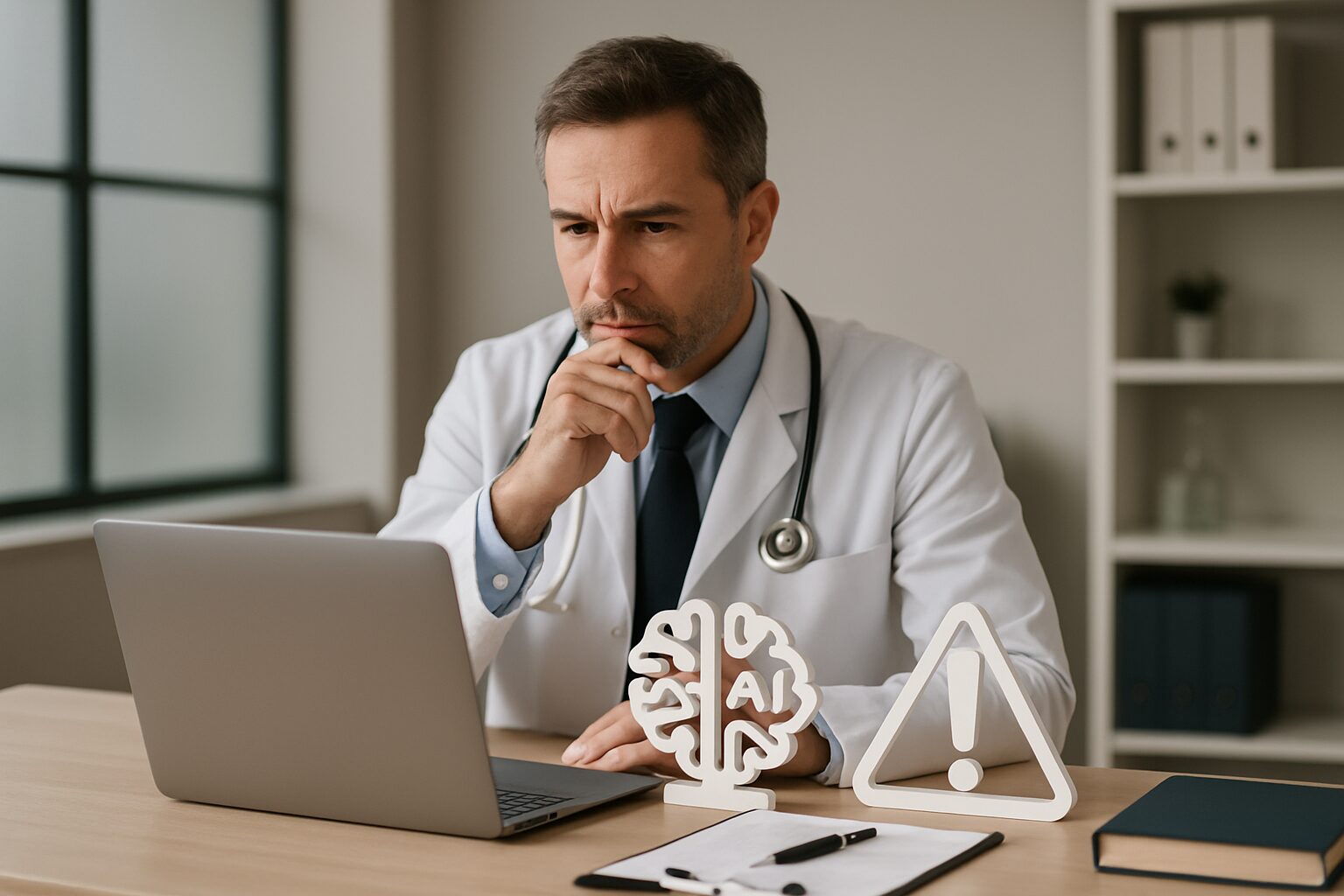
AI decision errors in healthcare and the law occur when automated systems produce incorrect or harmful outcomes, such as misdiagnoses or biased legal judgments. These errors raise concerns about patient safety, legal fairness, and accountability when algorithms influence critical decisions. As AI becomes more integrated into these high-stakes fields, understanding and mitigating such risks is essential to prevent harm.
Why It Matters - Real-world impact
AI decision errors in healthcare and the law have profound real-world consequences, affecting patients, medical professionals, legal defendants, and society at large. In healthcare, flawed algorithms could misdiagnose conditions, recommend harmful treatments, or exacerbate biases in patient care—potentially costing lives. Within the legal system, biased or inaccurate AI tools might influence sentencing, parole decisions, or predictive policing, disproportionately impacting marginalized communities. These errors erode trust in critical institutions and deepen existing inequalities. Regular people should care because these systems increasingly shape access to justice and medical care—areas where mistakes carry irreversible human costs.
Ethical Concerns - What’s wrong or risky?
AI Decision Errors in Healthcare and the Law
When AI systems make errors in healthcare or legal contexts, the consequences can be severe, ranging from misdiagnosis to wrongful convictions. These errors raise significant ethical risks that must be addressed to ensure responsible deployment.
Fairness and Discrimination
One of the most pressing concerns is fairness. If AI models are trained on biased data, they may perpetuate or even amplify existing inequalities. For example, in healthcare, an AI diagnostic tool might underperform for minority groups if training data is not representative. Similarly, in the legal system, risk assessment algorithms could disproportionately flag individuals from certain demographics, leading to unjust outcomes. This ties directly into issues of discrimination, where systemic biases embedded in AI can result in unequal treatment.
Transparency and Accountability
Another critical issue is transparency. Many AI systems, especially deep learning models, operate as "black boxes," making it difficult to understand how decisions are reached. In healthcare, a doctor might struggle to explain an AI-recommended treatment plan to a patient, undermining trust. In law, a judge or lawyer may be unable to scrutinize the reasoning behind a predictive algorithm, raising concerns about due process and accountability.
Economic and Social Ramifications
Errors can also have broader economic impacts. For instance, incorrect AI-driven diagnoses may lead to unnecessary treatments, increasing healthcare costs for individuals and systems. In legal contexts, flawed AI recommendations could result in costly appeals or settlements. Some argue that over-reliance on AI might lead to job loss among professionals like radiologists or paralegals, though others contend AI will augment rather than replace human roles.
Worker Rights and Moral Responsibility
The integration of AI also implicates worker rights. Healthcare providers or legal professionals might face pressure to adhere to AI recommendations, even when they disagree, potentially compromising their professional judgment and ethical obligations. This raises questions about moral responsibility: if an AI error causes harm, who is liable—the developer, the institution, or the human overseer?
Differing Perspectives
Not everyone agrees on the severity or solutions for these risks. Some technologists argue that AI, despite its flaws, overall improves accuracy and efficiency in high-stakes fields. They advocate for iterative improvements rather than restraint. Critics, however, emphasize that without rigorous oversight, AI could erode public trust and exacerbate social inequities. Balancing innovation with ethical safeguards remains a contentious and vital debate.
Solutions - What’s being done or proposed?
Regulatory Frameworks for AI Accountability
Governments and regulatory bodies have proposed establishing clear legal frameworks to hold AI developers and healthcare providers accountable for errors. These frameworks include mandatory audits of AI systems, transparency requirements for decision-making processes, and penalties for negligence. For example, the EU's AI Act categorizes high-risk AI applications, such as those in healthcare, and imposes strict compliance measures to ensure safety and accountability.
Human-in-the-Loop Systems
To mitigate risks, many institutions have adopted human-in-the-loop (HITL) systems, where AI recommendations are reviewed by human experts before implementation. This approach ensures that critical decisions, such as diagnoses or treatment plans, are validated by professionals. HITL systems balance the efficiency of AI with human judgment, reducing the likelihood of harmful errors while maintaining the benefits of automation.
Bias Mitigation in Training Data
Technical solutions focus on addressing biases in AI training data to prevent discriminatory outcomes. Researchers advocate for diverse and representative datasets, along with algorithmic fairness techniques, to ensure equitable decision-making. Tools like fairness audits and bias-correction algorithms are being developed to identify and rectify disparities in AI models, particularly in healthcare where biased decisions can have life-altering consequences.
Ethics Review Boards for AI Deployment
Institutions are forming ethics review boards to oversee the deployment of AI in healthcare and legal settings. These boards evaluate the ethical implications of AI systems, ensuring they align with societal values and patient rights. By involving ethicists, clinicians, and legal experts, these boards provide multidisciplinary oversight to prevent harm and promote responsible AI use.
Transparency and Explainability Standards
There is a growing push for AI systems to meet transparency and explainability standards, especially in high-stakes domains. Techniques like interpretable machine learning and decision logs help users understand how AI arrives at its conclusions. Regulatory proposals often mandate that AI systems provide clear, accessible explanations for their decisions, enabling healthcare providers and patients to trust and verify outcomes.
Redress Mechanisms for Affected Individuals
Legal and institutional solutions include establishing redress mechanisms for individuals harmed by AI errors. This could involve compensation funds, expedited legal pathways, or independent review panels to investigate grievances. Such mechanisms aim to provide justice and restitution while discouraging reckless AI deployment by holding stakeholders accountable for preventable harms.
Continuous Monitoring and Feedback Loops
Technical solutions emphasize continuous monitoring of AI systems in real-world settings. Feedback loops allow for ongoing performance evaluation and rapid correction of errors. By integrating user feedback and real-time data, AI systems can adapt and improve over time, reducing the risk of repeated mistakes and enhancing reliability in healthcare applications.
Public Education and Stakeholder Engagement
Social solutions include public education campaigns and stakeholder engagement to build trust and awareness around AI in healthcare. Educating patients, providers, and policymakers about AI's capabilities and limitations fosters informed decision-making. Community involvement in AI development and deployment ensures that diverse perspectives are considered, reducing the risk of unintended consequences.
Examples and Real Cases
IBM Watson's Cancer Treatment Recommendations (2018)
In 2018, IBM Watson Health was found to give unsafe and incorrect cancer treatment advice in several cases. Internal documents revealed examples where Watson suggested giving a patient with severe bleeding a drug that could cause bleeding, contradicting oncologists' expertise.
Epic Systems' Sepsis Prediction Model (2021)
A 2021 study in JAMA Internal Medicine found Epic Systems' widely used sepsis prediction model had poor accuracy, missing two-thirds of sepsis cases. The AI frequently triggered false alarms, potentially leading to alert fatigue among healthcare providers.
Algorithmic Racial Bias in Healthcare (2019)
A 2019 Science study revealed a commercial algorithm used by US hospitals to allocate care management programs systematically discriminated against Black patients. The algorithm falsely concluded Black patients were healthier than equally sick white patients due to historical spending disparities.
Hypothetical: AI-Powered Triage System Error
In a realistic hypothetical scenario, an AI emergency room triage system could prioritize younger patients over elderly ones due to training data emphasizing long-term outcomes. This might lead to delayed care for seniors with time-sensitive conditions like strokes or heart attacks.
UK A-Level Grading Algorithm Scandal (2020)
In August 2020, the UK's algorithm for determining A-level grades disproportionately downgraded students from disadvantaged schools. The flawed model caused widespread protests and forced the government to abandon the AI-generated results, reverting to teacher-assessed grades.
Frequently Asked Questions
What are AI decision errors in healthcare?
AI decision errors in healthcare occur when artificial intelligence systems make incorrect diagnoses, treatment recommendations, or predictions about patient outcomes. These mistakes can happen due to flawed algorithms, biased training data, or unexpected situations the AI wasn't programmed to handle.
Why are AI mistakes in healthcare dangerous?
AI mistakes in healthcare are dangerous because they can lead to wrong treatments, delayed care, or missed diagnoses that directly impact patient health and safety. Unlike human errors, AI errors might affect thousands of patients simultaneously if the flawed system is widely used.
Who is legally responsible when AI makes a medical error?
Legal responsibility for AI medical errors is complex and may involve the healthcare provider using the system, the AI developer, or both. Current laws are still catching up to these situations, making this an important area of legal development in healthcare technology.
How can we prevent AI errors in healthcare?
Preventing AI errors involves thorough testing, diverse training data, human oversight of AI decisions, continuous monitoring for mistakes, and clear protocols for when and how AI should be used. Keeping humans 'in the loop' for critical decisions is currently the best safety practice.
What real-world examples show why AI errors matter in healthcare?
Real examples include AI systems that underestimated cancer risks in certain populations due to biased data, or tools that recommended incorrect drug doses. These cases demonstrate how AI errors can create serious health risks and why proper safeguards are essential.