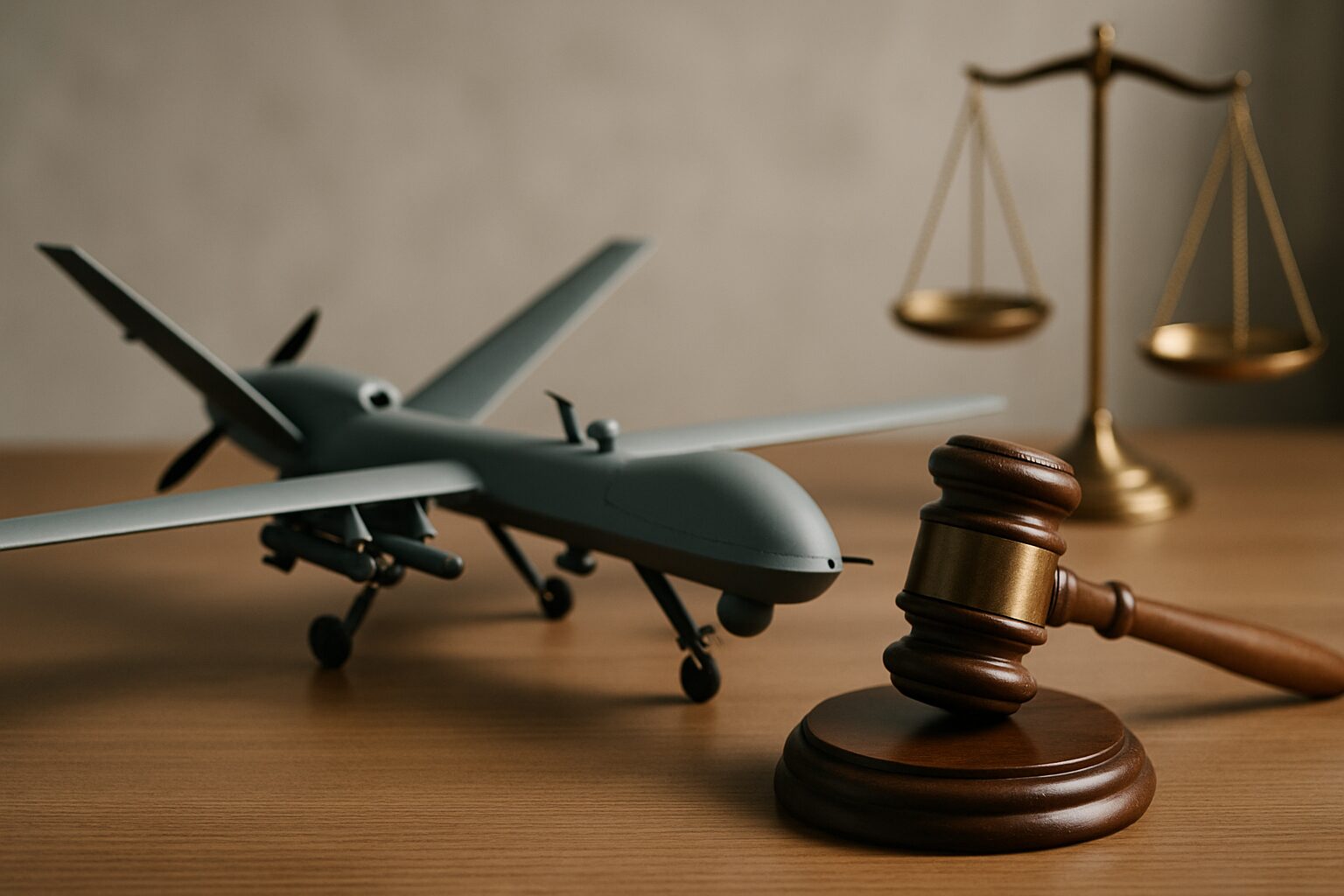
The Future of Warfare: Navigating Ethical Dilemmas and Regulatory Challenges in AI Combat
Autonomous weapons are systems capable of selecting and engaging targets without direct human control. The ethical concerns surrounding their use include accountability for harm, the potential for misuse, and the erosion of human decision-making in life-and-death situations. Regulation of these weapons remains a contentious issue, with debates focusing on whether existing laws are sufficient or if new international frameworks are needed to address the risks.
Why It Matters - Real-world impact
The rise of autonomous weapons poses urgent ethical and practical risks, affecting civilians, militaries, and global stability. These systems, capable of selecting and engaging targets without human intervention, could escalate conflicts, cause unintended civilian casualties, or fall into the hands of malicious actors. Vulnerable populations in war zones face the greatest immediate danger, but the broader proliferation of such technology threatens international security by lowering the threshold for warfare. Regular people should care because unchecked development risks normalizing machines making life-and-death decisions, eroding accountability, and potentially triggering arms races. Without strict regulation, the consequences could destabilize societies and redefine the ethics of warfare for generations.
Ethical Concerns - What’s wrong or risky?
Ethical Risks of Autonomous Weapons
Autonomous weapons systems, capable of selecting and engaging targets without human intervention, raise profound ethical questions. One major concern is fairness, as these systems may not apply lethal force equitably across different scenarios or populations, potentially violating principles of just warfare.
Discrimination and Bias
Another critical issue is the risk of discrimination. If trained on biased data, autonomous weapons could disproportionately target certain ethnic, social, or political groups, exacerbating conflicts and causing unintended harm to civilians.
Lack of Accountability and Transparency
The transparency of decision-making processes in autonomous weapons is often limited. Without clear insight into how targets are selected, it becomes challenging to assign responsibility for errors or unethical actions, undermining accountability.
Economic and Social Repercussions
Some argue that the proliferation of autonomous weapons could lead to significant economic impact, such as diverting resources from social programs to military budgets. Others worry about job loss in traditional military roles, though this is debated.
Worker Rights in Development
Ethical considerations also extend to those involved in creating these systems. Issues around worker rights may arise if engineers and developers are pressured to work on projects that conflict with their moral beliefs, without adequate safeguards or consent.
Differing Perspectives
Not all experts agree on the severity of these risks. Proponents argue that autonomous weapons could reduce human casualties by making more precise decisions, while critics emphasize the moral dangers of delegating life-and-death choices to machines. The debate often centers on whether regulation can mitigate these ethical concerns or if a preemptive ban is necessary.
Solutions - What’s being done or proposed?
International Treaties and Legal Bans
Several countries and organizations have proposed international treaties to ban or restrict the development and use of autonomous weapons. The Campaign to Stop Killer Robots, for example, advocates for a legally binding instrument to prohibit fully autonomous weapons. The United Nations has held multiple discussions on the topic, though consensus has been difficult to achieve. Legal frameworks aim to establish clear accountability and prevent an arms race in AI-powered weaponry.
Ethical Design Principles
Some researchers and institutions advocate for embedding ethical principles into the design of autonomous systems. This includes implementing fail-safes, human oversight mechanisms, and strict rules of engagement within the AI's programming. Organizations like the IEEE have published guidelines for ethically aligned design, emphasizing transparency, accountability, and human control over lethal decisions.
Human-in-the-Loop Requirements
A widely suggested technical solution is mandating a 'human-in-the-loop' for all critical decisions, particularly those involving lethal force. This ensures that a human operator must approve any action taken by an autonomous system. While this doesnu2019t eliminate risks entirely, it reduces the likelihood of unintended harm due to algorithmic errors or misinterpretations.
Public Awareness and Advocacy
Civil society groups and activists have worked to raise public awareness about the risks of autonomous weapons. Campaigns, documentaries, and educational programs aim to inform policymakers and the general public, creating pressure for regulation. Public backlash has previously led to moratoriums on certain technologies, and advocates hope similar efforts can curb the proliferation of autonomous weapons.
Industry Self-Regulation
Some tech companies and defense contractors have adopted self-imposed bans on developing autonomous weapons. For instance, Google published AI principles that include a pledge not to design or deploy AI for weapons. While voluntary, these measures set industry norms and discourage unethical applications. However, critics argue that self-regulation is insufficient without enforceable legal standards.
Testing and Certification Standards
Proposals have been made for rigorous testing and certification processes for autonomous weapons before deployment. Similar to aviation safety standards, these protocols would evaluate the reliability, ethical compliance, and fail-safes of AI systems. Independent oversight bodies could be established to enforce these standards, ensuring systems meet strict criteria before use in real-world scenarios.
Moratoriums on Development
Some nations and organizations have called for temporary moratoriums on the development of autonomous weapons to allow for deeper ethical and legal analysis. The European Parliament, for example, has urged globalu6682u505c on lethal autonomous systems. Such pauses could provide time to establish robust governance frameworks and avoid rushed deployments with unforeseen consequences.
Examples and Real Cases
The Use of AI in the Libyan Civil War (2020)
In 2020, a Turkish-made Kargu-2 autonomous drone was reportedly used to hunt down and attack human targets during the Libyan civil war. This marked one of the first documented cases of an AI-powered lethal autonomous weapon system (LAWS) being used in combat without direct human control.
The UN Debate on Autonomous Weapons (2013u2013Present)
Since 2013, the United Nations has held multiple meetings under the Convention on Certain Conventional Weapons (CCW) to discuss banning or regulating autonomous weapons. Countries like Austria and Brazil advocate for a preemptive ban, while others, including the U.S. and Russia, resist strict regulations.
The Hypothetical 'Slaughterbots' Scenario
A 2017 short film by the Future of Life Institute depicted a hypothetical scenario where swarms of AI-powered micro-drones assassinate political dissidents. While fictional, it highlighted the risks of unregulated autonomous weapons falling into the hands of malicious actors.
Israel's Harop Loitering Munition (2009u2013Present)
Israel's Harop drone, used since 2009, can autonomously identify and attack radar targets without human intervention. Critics argue such systems blur the line between human accountability and machine decision-making in warfare.
The U.S. Navy's Sea Hunter (2016u2013Present)
The Sea Hunter, an autonomous naval ship developed by DARPA, is designed for anti-submarine warfare. While currently unarmed, its deployment raises ethical concerns about future weaponization and the potential for unintended escalation in maritime conflicts.
Frequently Asked Questions
What are autonomous weapons?
Autonomous weapons are military systems that can select and engage targets without human intervention, using artificial intelligence to make decisions on their own.
Why are autonomous weapons considered risky?
They are risky because they could malfunction, be hacked, or make unpredictable decisions, leading to unintended harm or escalation of conflicts without human oversight.
How are autonomous weapons regulated today?
Currently, there is no global treaty specifically banning autonomous weapons, but discussions at the UN and other forums aim to establish ethical guidelines and potential restrictions.
What ethical concerns do autonomous weapons raise?
Key concerns include accountability (who is responsible for mistakes?), loss of human control over life-and-death decisions, and the potential for these weapons to lower the threshold for going to war.
Can autonomous weapons distinguish between civilians and combatants?
Current AI lacks the nuanced judgment of humans, making reliable distinction difficult in complex scenarios, which raises serious humanitarian and legal concerns under international law.