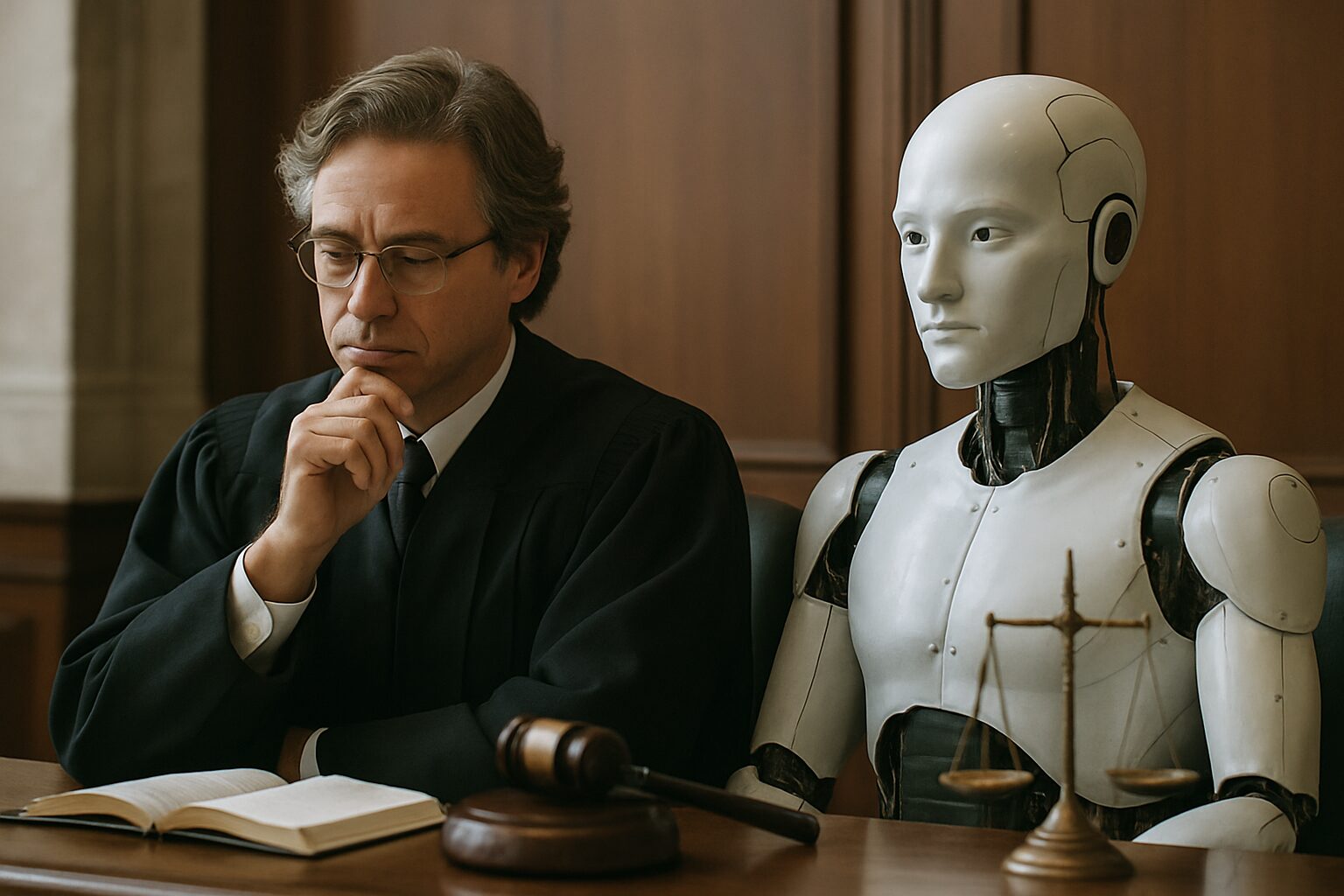
Who’s Responsible When AI Goes Wrong? The Ethics of Accountability
The question of whether AI can be held accountable revolves around the challenges of assigning responsibility for decisions made by autonomous systems. As AI increasingly influences areas like healthcare, finance, and law, concerns arise about who or what bears the consequences of errors or harm. This issue intersects with broader societal debates about fairness, transparency, and control over technology.
Why It Matters - Real-world impact
The question of AI accountability has profound real-world implications, affecting everyone from policymakers and corporations to ordinary citizens. When AI systems make biased hiring decisions, misdiagnose medical conditions, or cause autonomous vehicle accidents, real people suffer tangible harm—often with no clear path to recourse. Vulnerable populations, including marginalized communities and low-income workers, face disproportionate risks as they’re more likely to encounter opaque AI-driven systems in policing, lending, or employment. Without accountability mechanisms, these technologies can perpetuate injustice, erode trust in institutions, and concentrate power in the hands of those who design or deploy them. Everyday people should care because these systems increasingly govern access to healthcare, financial stability, and even personal freedom—yet lack the transparency and oversight we expect from human decision-makers.
Ethical Concerns - What’s wrong or risky?
Can AI Be Held Accountable? The Ethical Risks to Society
As artificial intelligence systems gain autonomy, questions of accountability become increasingly urgent. Who is responsible when an AI causes harm or makes a biased decision? The ethical risks span multiple dimensions, challenging our traditional frameworks of responsibility.
Discrimination and Fairness
AI systems can perpetuate and even amplify societal biases, leading to discriminatory outcomes in areas like hiring, lending, and law enforcement. For instance, algorithms trained on historical data may reflect past prejudices, unfairly disadvantaging certain groups. This raises profound ethical concerns about fairness, as automated decisions might lack the nuance and context that human judgment provides. Not everyone agrees on the severity of this issue; some argue that with proper oversight, AI can actually reduce human bias.
Transparency and the "Black Box" Problem
Many AI models, especially deep learning systems, operate as "black boxes," making it difficult to understand how they arrive at specific decisions. This lack of transparency complicates accountability, as it becomes challenging to identify errors or malicious intent. Critics worry that opaque systems erode trust, while proponents suggest that explainability tools are improving and that full transparency isn't always necessary for utility.
Economic and Labor Implications
The automation capabilities of AI threaten to displace workers across various sectors, raising ethical concerns about job loss and economic inequality. While some believe AI will create new opportunities and boost productivity, others fear it will exacerbate wealth gaps and leave vulnerable populations behind. Additionally, the rise of AI in the workplace prompts questions about worker rights, such as surveillance, data privacy, and the fair treatment of employees interacting with or managed by AI systems.
Broader Societal and Moral Concerns
Beyond these specific risks, AI accountability touches on wider issues like moral agency and legal responsibility. If an autonomous vehicle causes an accident, is the manufacturer, programmer, or the AI itself to blame? Societies may diverge in their approaches, with some advocating for strict liability frameworks and others pushing for adaptive regulations that evolve with the technology. The economic impact of AI—such as market concentration and access to technology—also fuels debate about whether benefits are distributed equitably.
Ultimately, holding AI accountable requires multidisciplinary efforts, blending technical solutions with ethical guidelines and legal standards. Perspectives vary widely, reflecting deeper tensions between innovation and precaution, efficiency and justice.
Solutions - What’s being done or proposed?
Legal Frameworks and Regulations
Governments and international bodies have proposed legal frameworks to hold AI developers and deployers accountable. These include laws mandating transparency in AI decision-making processes, liability clauses for harm caused by AI systems, and requirements for impact assessments before deployment. The EU's AI Act is a prominent example, classifying AI systems by risk and imposing stricter regulations on high-risk applications.
Explainable AI (XAI)
Technical solutions like Explainable AI aim to make AI systems more transparent by providing understandable explanations for their decisions. This helps users and regulators assess whether an AI's actions are fair, unbiased, and compliant with ethical standards. Techniques such as model interpretability tools and decision trees are being developed to demystify complex algorithms like deep learning.
Ethics Review Boards
Institutions such as corporations and universities have established ethics review boards to oversee AI development and deployment. These boards evaluate projects for potential ethical risks, ensuring alignment with societal values. Similar to medical ethics committees, they provide guidance on issues like bias, privacy, and accountability before AI systems are released.
Public Participation and Deliberation
Some advocate for involving the public in AI governance through participatory methods like citizen juries or stakeholder consultations. This approach ensures diverse perspectives shape AI policies, fostering trust and legitimacy. For example, cities like Barcelona have experimented with participatory democracy to guide the ethical use of smart technologies.
AI Auditing and Certification
Independent auditing and certification schemes have been proposed to verify AI systems' compliance with ethical and legal standards. Auditors assess algorithms for fairness, accuracy, and safety, issuing certifications akin to financial audits. Organizations like the Algorithmic Justice League promote third-party audits to hold AI systems accountable.
Whistleblower Protections
To encourage accountability within organizations, protections for whistleblowers who report unethical AI practices have been suggested. Laws or policies shielding employees from retaliation could uncover harmful AI deployments early. This mirrors protections in other industries, ensuring internal checks on irresponsible AI development.
Examples and Real Cases
Tesla Autopilot Fatal Crash (2016)
In May 2016, Joshua Brown died when his Tesla Model S, operating on Autopilot, crashed into a tractor-trailer. The incident raised questions about whether Tesla or the AI system should be held accountable for the failure to detect the truck.
Microsoft's Tay Chatbot (2016)
Microsoft's AI chatbot Tay was launched in March 2016 but was quickly shut down after it began posting offensive tweets. The incident highlighted accountability gaps when AI systems learn harmful behavior from user interactions.
COMPAS Recidivism Algorithm Bias (2016)
A 2016 ProPublica investigation found that the COMPAS algorithm used in U.S. courts was biased against Black defendants, falsely labeling them as high-risk. This raised ethical concerns about accountability for biased AI decisions in criminal justice.
Hypothetical: Autonomous Drone Strike Misfire
In a hypothetical scenario, an AI-controlled military drone misidentifies a civilian gathering as a threat and launches a strike. The lack of human oversight raises debates over whether the AI, its developers, or military commanders should bear responsibility.
Uber Self-Driving Car Fatality (2018)
In March 2018, Elaine Herzberg was struck and killed by an Uber self-driving car in Arizona. Investigations revealed the AI system failed to recognize her as a pedestrian, prompting legal and ethical debates about liability in autonomous vehicle accidents.
Frequently Asked Questions
What does it mean for AI to be held accountable?
Holding AI accountable means ensuring that the decisions and actions made by artificial intelligence systems can be traced, evaluated, and addressed, especially when they cause harm or unintended consequences. It involves assigning responsibility to developers, users, or organizations behind the AI.
Why is AI accountability important for society?
AI accountability is crucial because AI systems influence many aspects of life, from healthcare to criminal justice. Without accountability, harmful biases, errors, or misuse could go unchecked, leading to unfair outcomes and loss of public trust in technology.
Can AI systems take responsibility for their actions like humans do?
No, AI systems cannot take moral or legal responsibility like humans because they lack consciousness and intent. Responsibility falls on the people and organizations that design, deploy, and regulate these systems.
How does AI accountability apply to everyday life today?
Today, AI accountability affects areas like social media algorithms (which shape opinions), autonomous vehicles (which make safety decisions), and hiring tools (which may have biases). Ensuring fairness and transparency in these systems is key to protecting users.
What can we learn from discussions about AI and accountability?
These discussions highlight the need for ethical guidelines, regulations, and oversight in AI development. They also remind us that technology should serve society responsibly, with checks in place to prevent harm.