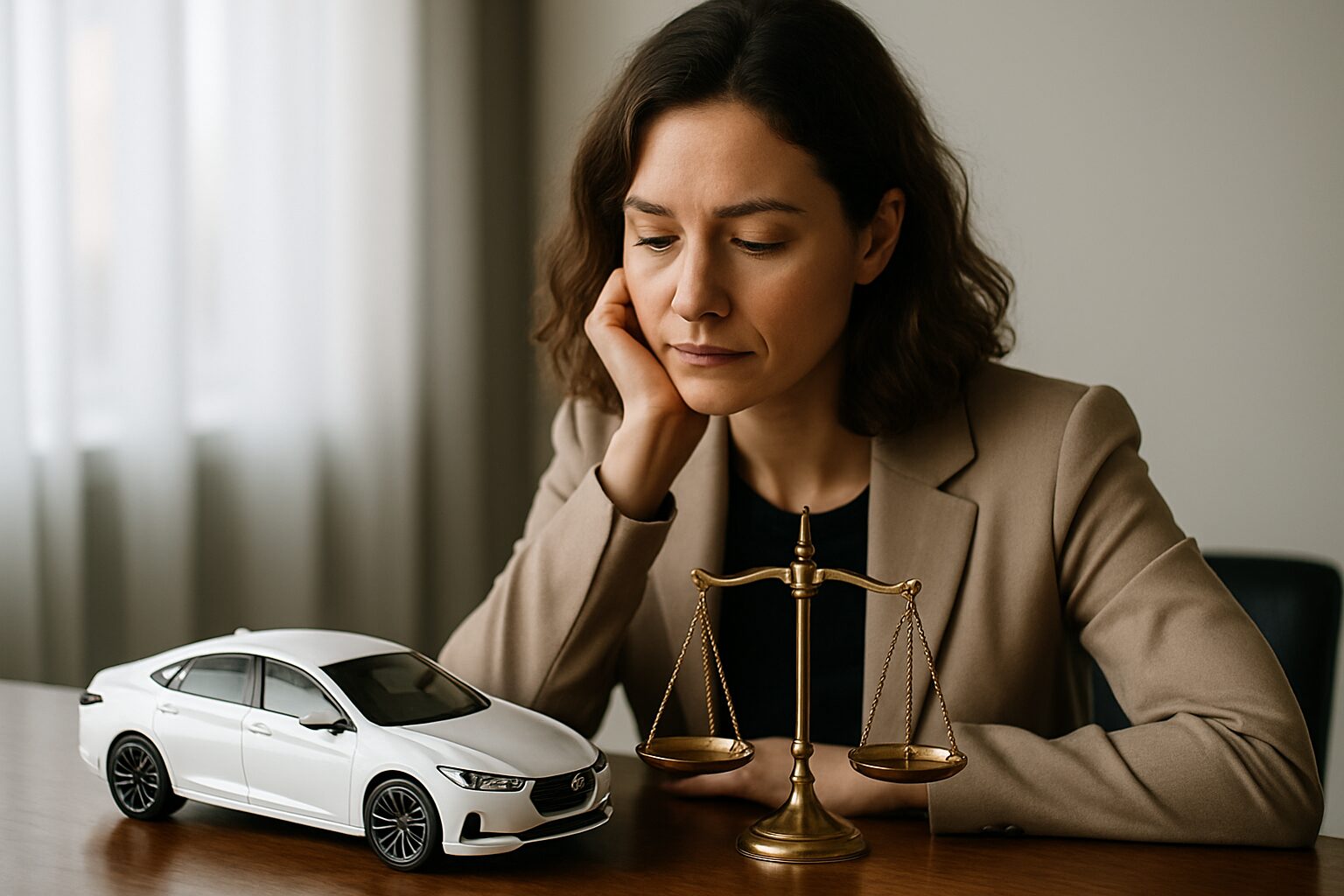
Who's at Fault When Self-Driving Cars Crash? Legal and Ethical Dilemmas
As self-driving cars become more common, questions arise about who is responsible when accidents occur. Unlike traditional vehicles, where liability typically falls on the human driver, autonomous systems shift accountability to manufacturers, software developers, or even regulators. This debate centers on whether existing legal frameworks can adapt to accidents involving AI decision-making. Determining liability in these cases is crucial for ensuring fairness and safety in the era of automated transportation.
Why It Matters - Real-world impact
The question of liability in self-driving car accidents has profound real-world implications for public safety, legal systems, and societal trust in AI. When autonomous vehicles are involved in collisions, victims—whether pedestrians, passengers, or other drivers—face physical harm and financial uncertainty, while manufacturers, insurers, and regulators grapple with accountability gaps in existing laws. Without clear liability frameworks, victims may struggle to receive compensation, companies may evade responsibility, or innovation could be stifled by excessive litigation. Everyday people should care because the outcomes of these debates will shape transportation safety standards, insurance costs, and the ethical boundaries of AI decision-making in life-or-death scenarios. The resolution—or lack thereof—could either reinforce public confidence in autonomous technology or expose dangerous vulnerabilities in its adoption.
Ethical Concerns - What’s wrong or risky?
Liability in Self-Driving Car Accidents: An Ethical Minefield
As self-driving cars become more prevalent, the question of liability in accidents raises complex ethical risks. Determining who is at fault—manufacturers, software developers, vehicle owners, or even pedestrians—involves navigating issues of fairness, transparency, and potential discrimination.
Fairness in Accountability
One major ethical concern is ensuring fairness in assigning blame. Traditional accident liability falls on human drivers, but autonomous systems shift responsibility to developers and corporations. This raises questions about whether it is fair to hold companies accountable for unpredictable real-world scenarios, or if users should share responsibility for system monitoring. For more on this, see our discussion on Ethical Concerns: Fairness.
Risk of Discrimination
Algorithmic decision-making in self-driving cars could inadvertently perpetuate discrimination. If accident-avoidance algorithms are trained on biased data, they might prioritize certain demographics over others in no-win scenarios, leading to unjust outcomes. Explore this further in our article on Ethical Concerns: Discrimination.
Transparency and Explainability
Another ethical risk involves the lack of transparency in AI decision-making. When an accident occurs, it may be difficult to ascertain why the vehicle made a particular choice, complicating liability claims and eroding public trust. Learn more about the importance of clarity in our coverage of Ethical Concerns: Transparency.
Economic and Social Ramifications
Beyond immediate accident liability, debates extend to broader economic impacts, such as potential job loss in driving professions and shifts in insurance models. These changes could disproportionately affect vulnerable communities. For insights into these wider effects, refer to our analysis of Ethical Concern: Economic Impact, Ethical Concerns: Job Loss, and Ethical Concerns: Worker Rights.
Divergent Perspectives
Not everyone agrees on how to approach these ethical risks. Some argue that strict manufacturer liability will drive innovation in safety, while others worry it could stifle technological progress. There are also debates about whether ethical frameworks for decision-making (e.g., utilitarian vs. rights-based approaches) should be standardized or left to market forces.
Solutions - What’s being done or proposed?
Strict Liability Laws for Manufacturers
Some legal experts propose applying strict liability laws to manufacturers of self-driving cars. Under this framework, manufacturers would be automatically held responsible for any accidents caused by their vehicles, regardless of fault. This approach aims to incentivize companies to prioritize safety and ensure rigorous testing before deployment. Critics argue it could stifle innovation, but proponents believe it places accountability where the technical expertise lies.
Black Box Data Recorders
Technical solutions like black box data recorders have been suggested to provide clear evidence in the event of an accident. These devices would log all vehicle decisions, sensor inputs, and environmental data before and during a collision. This transparency could help determine whether the AI, human operator, or external factors were at fault. However, concerns about data privacy and potential misuse of recorded information remain unresolved.
Hybrid Insurance Models
Insurance companies are exploring hybrid models that split liability between manufacturers, software providers, and human operators. Policies could adjust based on the level of autonomy engaged during an accident (e.g., full self-driving vs. human override). This approach attempts to fairly distribute risk but requires complex new frameworks to assess varying degrees of human and machine responsibility in dynamic situations.
Federal Safety Standards for AI Decision-Making
Institutional solutions include calls for federal agencies to establish mandatory safety standards for AI decision-making in vehicles. These would define acceptable risk thresholds, required fail-safes, and standardized testing protocols across the industry. While this could create consistency, challenges include keeping regulations current with rapidly evolving technology and avoiding one-size-fits-all rules that may not suit all use cases.
Public Awareness Campaigns
Social solutions involve comprehensive public education about self-driving car capabilities and limitations. Clear communication about when human intervention is required could reduce accidents caused by overreliance on automation. However, the effectiveness depends on widespread participation and the ability to overcome psychological tendencies to trust or distrust automation disproportionately.
Ethical Review Boards for AI Systems
Some propose institutional review boards similar to those in medical research to evaluate the ethical programming of autonomous vehicles. These boards would assess how AI systems prioritize decisions in unavoidable harm scenarios and ensure alignment with societal values. Implementation challenges include defining universal ethics standards and preventing corporate influence over review processes.
Examples and Real Cases
Uber's Fatal Crash in Arizona (2018)
In March 2018, an Uber self-driving car struck and killed pedestrian Elaine Herzberg in Tempe, Arizona. The incident raised questions about liability as the safety driver was distracted, and the car's sensors detected Herzberg but failed to stop.
Tesla Autopilot Fatality in Florida (2016)
In May 2016, Joshua Brown died when his Tesla Model S, operating in Autopilot mode, crashed into a tractor-trailer in Williston, Florida. The NHTSA investigation found Tesla's system lacked safeguards, but liability debates centered on driver responsibility versus manufacturer oversight.
Waymo's Near-Miss in California (2022)
In February 2022, a Waymo autonomous vehicle abruptly stopped and caused a multi-car collision in San Francisco. While no fatalities occurred, the incident reignited debates about whether Waymo or local traffic laws should bear liability for algorithmic decision-making errors.
Hypothetical: Autonomous Delivery Truck Malfunction
In a hypothetical scenario, an autonomous delivery truck swerves to avoid a pedestrian but damages parked vehicles. The debate would focus on whether the AI's programming (prioritizing life over property) justifies holding the manufacturer liable for collateral damage.
Frequently Asked Questions
Who is responsible if a self-driving car gets into an accident?
Liability in self-driving car accidents is still debated, but it often depends on the level of autonomy. If the car was in full autonomous mode, the manufacturer or software developer might be liable. If a human driver was supposed to monitor the car, they could share responsibility.
Why is liability in self-driving car accidents important to discuss?
This debate is important because it affects safety regulations, insurance policies, and public trust in autonomous vehicles. Clear liability rules help ensure accountability and encourage responsible development of self-driving technology.
How do current laws handle self-driving car accidents?
Laws vary by country and state, but many places are still adapting traditional vehicle liability laws to self-driving cars. Some regions have started creating specific regulations, but there's no universal standard yet.
Can a self-driving car's AI be held legally responsible for an accident?
No, AI itself cannot currently be held legally responsible. Liability would fall on the human or company behind the AI system, such as the manufacturer, programmer, or vehicle owner, depending on the circumstances.
What can we learn from past self-driving car accidents?
Past accidents highlight the need for better safety protocols, clearer liability frameworks, and improved AI decision-making. They also show the importance of human oversight in semi-autonomous vehicles and the challenges of mixing self-driving and human-driven cars on roads.