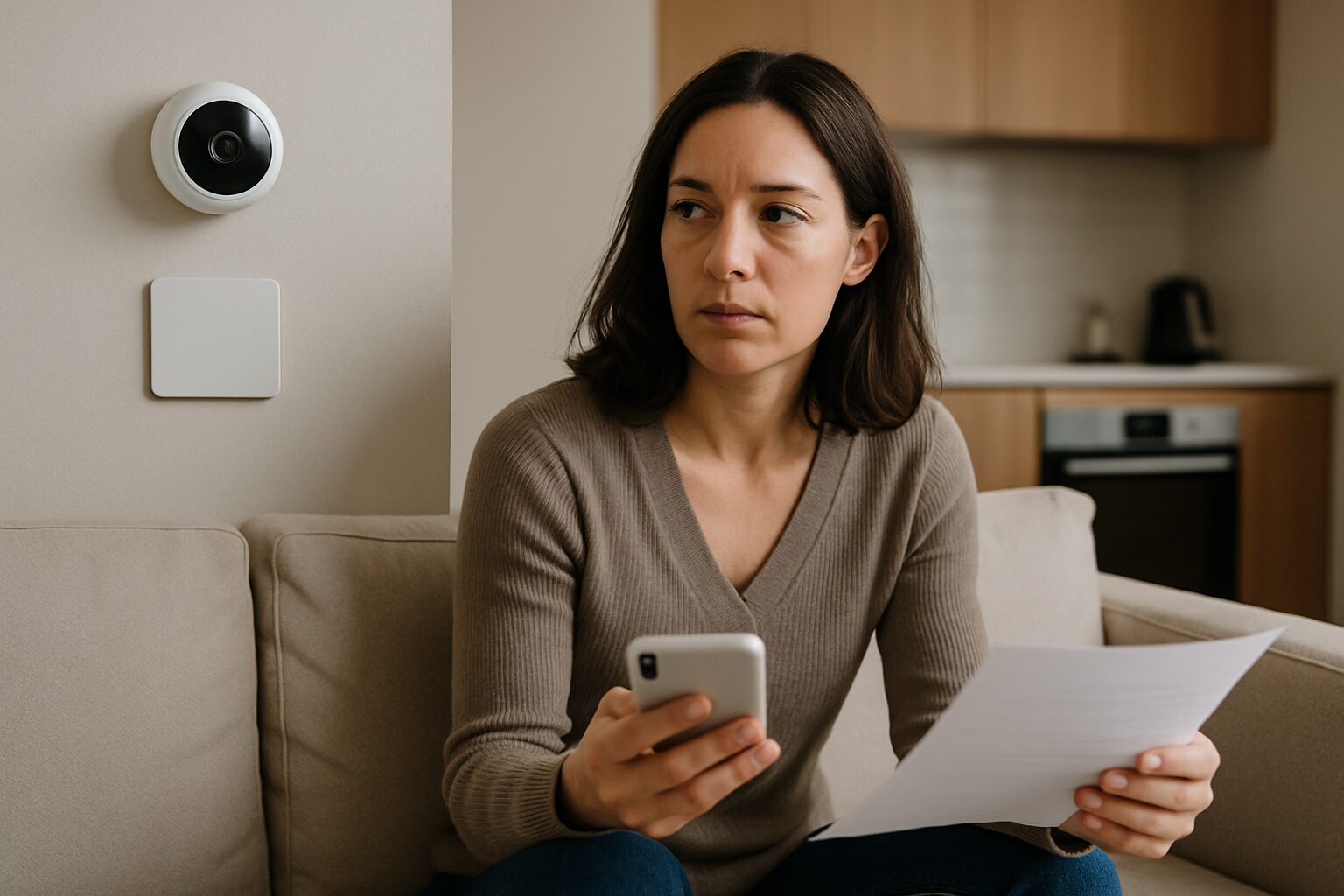
Smart Home AI: Separating Fact from Fiction on Privacy and Tech
AI tracking in smart homes refers to the use of artificial intelligence to monitor activities, behaviors, and preferences within connected living spaces. While this technology offers convenience, it raises concerns about privacy and consent, as data collection often occurs without clear user awareness. The debate centers on separating exaggerated fears from legitimate risks regarding how personal information is gathered, stored, and used.
Why It Matters - Real-world impact
AI tracking in smart homes isn't just a theoretical privacy concern—it has tangible consequences for individuals and families. From voice assistants recording private conversations to smart cameras storing vulnerable moments, the data collected can be exploited by hackers, misused by corporations, or even weaponized in legal disputes. Renters, children, and marginalized communities are particularly at risk, as they often have little control over the devices monitoring their spaces. Without proper safeguards, intimate details of daily life can be aggregated into invasive profiles, influencing everything from insurance rates to employment opportunities. Regular people should care because once data is collected, it's nearly impossible to retract, creating permanent vulnerabilities in what should be the safety of one's home.
Ethical Concerns - What’s wrong or risky?
Myth: AI tracking in smart homes is purely for convenience
Reality: While convenience is a major selling point, AI systems in smart homes often collect and analyze vast amounts of personal data, raising significant ethical concerns. This data can be used in ways that impact users beyond simple automation, sometimes without their full awareness or consent.
Transparency Issues
Many users are unaware of the extent of data collection or how it is used. Lack of clear communication from manufacturers about data practices can lead to uninformed consent. For more on this, see our page on Ethical Concerns: Transparency.
Discrimination Risks
AI algorithms may inadvertently reinforce biases, for example by offering different services or pricing based on inferred socioeconomic status. This can lead to unequal treatment of residents. Learn about related issues at Ethical Concerns: Discrimination.
Fairness in Data Use
Data collected might be used to make decisions that affect users' opportunities, such as insurance premiums or credit scores, based on behavior patterns observed in the home. This challenges notions of fairness, as discussed in Ethical Concerns: Fairness.
Economic and Social Impacts
The aggregation of smart home data could influence market dynamics or social structures, potentially disadvantaging certain groups. For insights into broader effects, visit Ethical Concern: Economic Impact.
Worker and Privacy Rights
If data is accessed by third parties, such as employers, it might be used to monitor worker behavior outside of work hours, infringing on privacy and Worker Rights.
Differing Perspectives
Some argue that the benefits of personalized automation outweigh privacy risks, while privacy advocates stress the need for stricter regulations. There is also debate over whether users should have more control over their data versus leaving it to companies to innovate responsibly.
Additional Ethical Considerations
Other concerns include the potential for increased surveillance, data security vulnerabilities, and the environmental impact of maintaining always-on devices. These issues highlight the complex ethical landscape of AI in smart homes.
Solutions - What’s being done or proposed?
Legislative Regulations and Data Protection Laws
Governments and regulatory bodies have introduced laws like the General Data Protection Regulation (GDPR) in the EU and the California Consumer Privacy Act (CCPA) in the US to protect user data. These laws mandate transparency in data collection, require user consent, and give individuals the right to access or delete their data. While effective in theory, enforcement remains a challenge, and many users are unaware of their rights under these laws.
Local Data Processing and Edge Computing
To minimize privacy risks, some smart home manufacturers have adopted local data processing, where AI computations occur on the device itself rather than in the cloud. This reduces the amount of personal data transmitted externally. However, this approach can limit functionality and may not be feasible for all AI applications, as some require extensive cloud-based processing for optimal performance.
Opt-In Consent and Transparent Data Policies
Companies are increasingly adopting opt-in consent models, where users must explicitly agree to data collection. Transparent data policies that clearly explain what data is collected and how it is used are also becoming more common. While this empowers users, many still accept default settings without reading the fine print, undermining the effectiveness of these measures.
Open-Source and Auditable AI Systems
Some advocates propose using open-source AI systems that allow users and third parties to audit the code for privacy violations or biases. This transparency can build trust, but open-source solutions often lack the resources and polish of proprietary systems, making them less accessible to the average consumer.
Decentralized Data Ownership Models
Blockchain and other decentralized technologies have been suggested as ways to give users control over their data. In these models, users could grant or revoke access to their data dynamically. While promising, these solutions are still in early stages and face scalability and usability challenges.
Consumer Education and Awareness Campaigns
Nonprofits and advocacy groups run campaigns to educate consumers about smart home privacy risks and best practices, such as regularly updating devices and reviewing privacy settings. However, the technical complexity of these systems can make it difficult for average users to fully grasp the implications, limiting the impact of such initiatives.
Industry Self-Regulation and Ethical Guidelines
Some tech companies have formed consortiums to establish ethical guidelines for AI in smart homes, such as the Fair Information Practices. While these voluntary standards promote best practices, they lack enforcement mechanisms, and compliance varies widely across the industry.
Examples and Real Cases
Amazon Ring's Police Partnerships
In 2019, Amazon Ring faced criticism for its partnerships with over 400 police departments across the U.S., allowing law enforcement to request user footage without a warrant. Privacy advocates argued this created a de facto surveillance network, with data often shared without explicit user consent.
Google Nest's Hidden Microphone
In February 2019, Google admitted its Nest Secure home security system had an undisclosed microphone in its design. Users were unaware of this capability until a software update enabled voice commands, raising concerns about transparency in smart home devices.
Hypothetical: Smart Fridge Data Leak
A hypothetical scenario where a smart refrigerator's usage data (purchase history, meal times) is sold to health insurance companies without clear disclosure. This could lead to premium adjustments based on inferred dietary habits, demonstrating how mundane devices enable intrusive profiling.
Roomba's Floor Plan Mapping
In 2017, iRobotu2019s CEO suggested Roomba vacuum mapping data could be sold to tech giants like Amazon or Google. While later walked back, this revealed how innocuous devices might contribute to detailed home surveillance networks without residentsu2019 full understanding.
Hypothetical: AI Baby Monitor Exploit
A realistic but unconfirmed risk: hackers accessing an AI-powered baby monitoru2019s cry-detection data to determine when homes are unoccupied. Such breaches could expose how sensitive audio analytics create unforeseen security vulnerabilities in smart homes.
Frequently Asked Questions
Does AI tracking in smart homes spy on me without consent?
No, reputable smart home devices with AI tracking require user consent before collecting data. Always check privacy settings and only use devices from trusted brands that comply with privacy laws.
Can AI tracking in smart homes be hacked to invade my privacy?
While no system is 100% hack-proof, using strong passwords, regular updates, and secure networks minimizes risks. Most AI tracking systems prioritize encryption to protect your data from unauthorized access.
Do smart home devices with AI tracking record everything I say or do?
Not necessarily. Many devices only activate when triggered by specific commands or motions. You can usually adjust settings to limit data collection to only what's necessary for functionality.
Is AI tracking in smart homes legal?
Yes, when implemented with proper user consent and compliance with privacy laws like GDPR or CCPA. Manufacturers must disclose data collection practices and allow users to control their information.
How can I benefit from AI tracking without sacrificing privacy?
Use devices with transparent privacy policies, disable unnecessary tracking features, regularly review collected data, and take advantage of opt-out options to balance convenience with privacy.