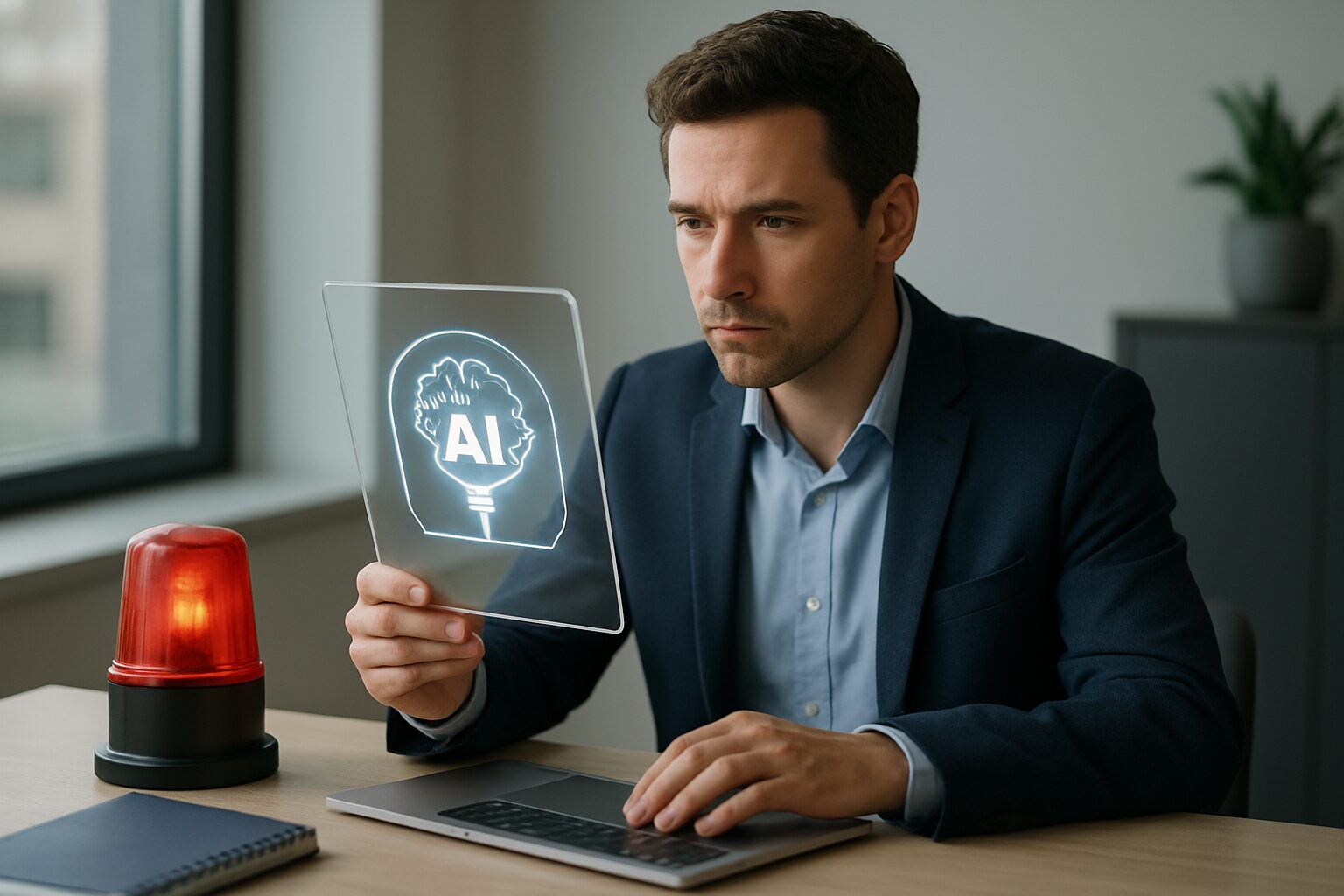
Rising Threat: How Hackers Are Weaponizing AI for Cyber Attacks
As artificial intelligence becomes more advanced, hackers are increasingly exploiting AI tools for malicious purposes. These risks include automating cyberattacks, evading security systems, and generating deceptive content at scale. The misuse of AI by malicious actors poses growing challenges for cybersecurity and digital trust.
Why It Matters - Real-world impact
The misuse of AI by hackers poses tangible threats to individuals, businesses, and society at large. Cybercriminals can leverage AI to automate phishing attacks, bypass security systems, or generate deepfakes for fraud, eroding trust in digital communications. Critical infrastructure, such as healthcare or financial systems, could be disrupted, endangering lives and economies. Everyday internet users face heightened risks of identity theft, financial loss, or manipulation through hyper-personalized scams. Beyond immediate harm, unchecked AI misuse could destabilize democratic processes by spreading disinformation at scale. This isn't a hypothetical future—it's an evolving reality demanding proactive solutions.
Ethical Concerns - What’s wrong or risky?
Rising Threats: How Hackers Exploit AI for Unethical Gains
As artificial intelligence becomes more integrated into critical systems, malicious actors are finding new ways to misuse it, raising significant ethical concerns. One major risk involves discrimination, where hackers could manipulate AI algorithms to target vulnerable groups unfairly, reinforcing societal biases on a massive scale.
Undermining Fairness and Transparency
Hackers might deploy AI to create deceptive content or automate attacks that bypass security, directly challenging principles of fairness by giving malicious parties an undue advantage. Additionally, when AI systems are compromised, it becomes nearly impossible to trace decisions back to their source, eroding transparency and accountability.
Broader Ethical Implications
Beyond these, misuse can lead to severe economic impact, such as destabilizing markets or enabling large-scale fraud. There are also concerns about job loss if AI-driven automation is weaponized to disrupt industries, and potential violations of worker rights if monitoring or productivity tools are hacked to exploit employees.
Differing Perspectives on AI Misuse Risks
Some experts argue that fears are overblown, emphasizing that existing security measures and ethical AI frameworks can mitigate these risks. Others believe the pace of technological advancement outstrips our ability to regulate, calling for preemptive restrictions on certain AI applications.
Solutions - What’s being done or proposed?
Enhanced Cybersecurity Measures
Organizations and governments have invested in advanced cybersecurity frameworks to protect AI systems from being hacked or misused. This includes implementing robust encryption, multi-factor authentication, and continuous monitoring for unusual activities. Ethical hackers are also employed to identify vulnerabilities before malicious actors can exploit them.
AI Ethics and Governance Frameworks
Institutions have developed ethical guidelines and governance frameworks to ensure responsible AI development and deployment. These frameworks often include principles like transparency, accountability, and fairness. Regulatory bodies and industry groups collaborate to enforce these standards, reducing the risk of AI misuse by setting clear boundaries.
Legal and Regulatory Actions
Governments worldwide are introducing laws to criminalize the malicious use of AI, such as deepfake fraud or AI-powered cyberattacks. These regulations impose penalties on offenders and require companies to adhere to strict compliance measures. International cooperation is also being pursued to address cross-border AI-related crimes.
Public Awareness and Education
Educational campaigns aim to inform the public and businesses about the risks of AI misuse and how to mitigate them. Workshops, online courses, and media outreach help people recognize malicious AI applications, such as phishing scams or manipulated content, and encourage responsible usage.
Collaborative Threat Intelligence Sharing
Industries and governments are establishing platforms for sharing threat intelligence related to AI misuse. By pooling knowledge about emerging risks and attack patterns, stakeholders can respond more effectively to potential threats. This collaborative approach helps in early detection and prevention of large-scale AI-driven attacks.
Development of AI Detection Tools
Researchers and tech companies are creating tools to detect AI-generated content or malicious AI activities. For example, algorithms can identify deepfakes or AI-assisted hacking attempts. These tools empower organizations and individuals to verify authenticity and take preventive actions.
Red Teaming and Stress Testing
Before deploying AI systems, organizations conduct red teaming exercises where ethical hackers simulate adversarial attacks to identify weaknesses. Stress testing ensures AI models can withstand adversarial attempts to manipulate them. This proactive approach helps in building more resilient AI systems.
Examples and Real Cases
Deepfake Audio Used in CEO Fraud Scam (2019)
In March 2019, hackers used AI-generated deepfake audio to impersonate a CEO's voice and successfully tricked a UK-based energy firm into transferring $243,000. The audio mimicked the German CEO's accent and speech patterns with high accuracy.
ChatGPT-Generated Phishing Emails (2023)
In early 2023, cybersecurity firm Darktrace reported a 135% increase in phishing emails leveraging ChatGPT to create highly personalized and grammatically flawless messages. One campaign targeted employees at a Fortune 500 company with fake HR updates.
AI-Powered Password Guessing (2022)
Researchers at ETH Zurich demonstrated in 2022 how AI could guess passwords 50% faster than traditional methods by analyzing patterns in leaked password databases. Their model, PassGAN, successfully cracked 51% of common passwords within a minute.
Hypothetical: Autonomous Drone Swarms for Infrastructure Attacks
A realistic concern involves hackers using AI to coordinate swarms of drones to simultaneously disrupt power grids. While not yet documented, security experts warn such attacks could leverage off-the-shelf drones and open-source swarm algorithms.
AI-Generated Fake IDs for Cybercrime (2021)
In 2021, Europol reported cases where criminals used AI to generate fake passport photos that bypassed facial recognition systems. The synthetic images combined features from multiple real people to create undetectable forgeries.
Frequently Asked Questions
What is AI misuse by hackers?
AI misuse by hackers refers to the use of artificial intelligence by cybercriminals to carry out attacks more efficiently, such as creating sophisticated phishing emails, automating hacking attempts, or bypassing security systems.
Why is AI misuse by hackers a growing concern?
It's a growing concern because AI can make cyberattacks faster, harder to detect, and more scalable, posing greater risks to individuals, businesses, and governments as defenses struggle to keep up.
How can AI be used maliciously by hackers today?
Today, hackers use AI for deepfake scams, automated password cracking, spreading disinformation, or even developing malware that adapts to evade detection by security software.
What can individuals do to protect themselves from AI-powered cyber threats?
Individuals can use strong, unique passwords, enable multi-factor authentication, stay cautious of suspicious messages, and keep software updated to reduce risks from AI-driven attacks.
How does AI misuse affect cybersecurity trends?
AI misuse is shifting cybersecurity trends by forcing faster adoption of AI-based defenses, increasing focus on detecting AI-generated threats, and highlighting the need for ethical AI guidelines to prevent abuse.