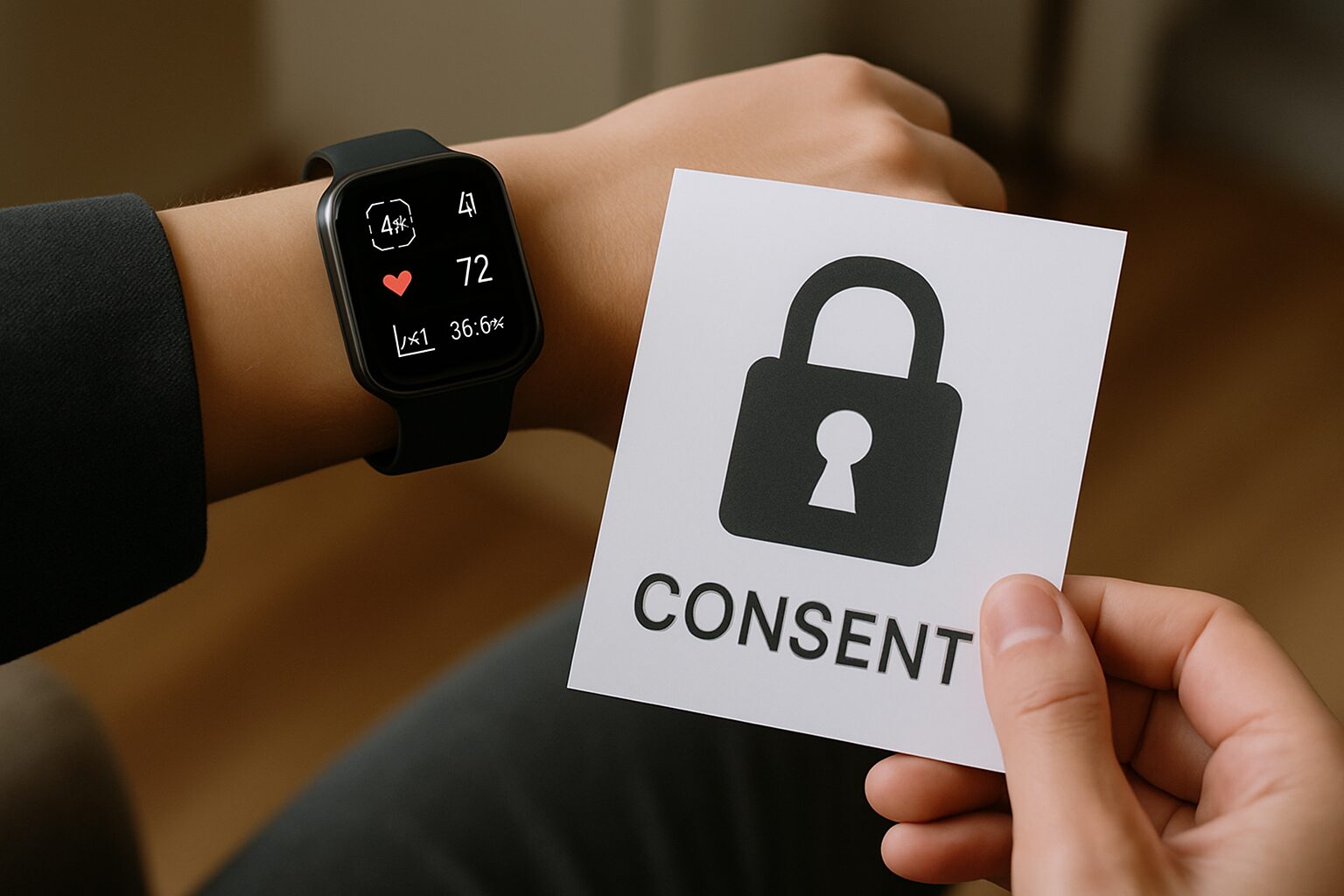
Smart Health Monitors: Who’s Responsible When Tech Fails?
Health monitoring devices increasingly rely on AI to collect and analyze sensitive personal data, such as heart rate, sleep patterns, and activity levels. This raises concerns about how data is stored, who has access to it, and whether users fully understand the implications of sharing their health information. Accountability becomes a key issue when determining responsibility for data breaches, misuse, or incorrect health insights generated by AI systems.
Why It Matters - Real-world impact
The ethical use of AI in health monitoring devices has profound real-world implications, affecting patients, healthcare providers, and society at large. If accountability mechanisms fail, inaccurate data analysis or biased algorithms could lead to misdiagnoses, delayed treatments, or privacy breaches—putting lives at risk. Vulnerable populations, such as the elderly or those with chronic conditions, are particularly susceptible to harm if these technologies malfunction or are misused. Regular people should care because these devices collect highly sensitive personal data, raising concerns about who accesses it and how it’s used. Without proper oversight, the very tools designed to improve health could erode trust in medical systems or exacerbate existing inequalities.
Ethical Concerns - What’s wrong or risky?
Accountability in AI Health Monitoring
As AI-powered health devices become more integrated into daily life, questions of accountability grow increasingly complex. When an algorithm fails to detect a critical health event, who bears responsibility—the device manufacturer, the software developer, the healthcare provider, or the user? This ambiguity can lead to significant ethical risks, particularly when harm occurs.
Transparency and Explainability
Many AI health monitoring systems operate as "black boxes," making it difficult for users or even professionals to understand how decisions are made. This lack of transparency can erode trust and complicate accountability, especially if a device provides incorrect data or recommendations. Patients and providers may struggle to challenge or verify outcomes, raising concerns about informed consent and recourse in cases of error.
Fairness in Data and Outcomes
AI models are only as unbiased as the data they are trained on. If training data underrepresents certain demographics, devices may perform poorly for those groups, leading to disparities in health outcomes. This ties directly into issues of fairness, as unequal accuracy can exacerbate existing healthcare inequities. For example, a heart rate monitor less accurate for people with darker skin tones could miss critical events, disproportionately affecting some communities.
Discrimination and Bias
Beyond fairness, AI health devices can inadvertently perpetuate or amplify discrimination. Algorithms might associate certain health patterns with higher risk based on flawed correlations, potentially affecting insurance eligibility or medical treatment. If a device labels a user as "high-risk" due to biased data, it could lead to stigmatization or denial of care.
Privacy and Autonomy
Continuous health monitoring generates vast amounts of sensitive data, creating risks beyond those covered by the linked categories. Users may not fully understand how their data is used or shared, undermining autonomy. While not all ethical concerns have dedicated pages here, issues like data ownership, consent for secondary uses, and potential surveillance are critical to the discussion.
Differing Perspectives
Some argue that AI health devices, by democratizing access to data, empower users and improve proactive care. Others caution that over-reliance on technology might dehumanize healthcare or shift too much responsibility onto individuals. There is also debate about whether existing regulatory frameworks are sufficient to address these novel challenges or if new, AI-specific accountability structures are needed.
Solutions - What’s being done or proposed?
Enhanced Data Encryption and Anonymization
Technical solutions have been proposed to strengthen data security in health monitoring devices. This includes end-to-end encryption to protect data during transmission and storage, as well as advanced anonymization techniques to ensure that personal identifiers are removed or obscured. By implementing these measures, the risk of data breaches and unauthorized access can be significantly reduced, thereby protecting user privacy.
Clear and Transparent Consent Mechanisms
Institutional and legal approaches emphasize the need for clear, informed consent processes. Users should be provided with straightforward explanations of how their data will be used, who will have access to it, and for what purposes. This includes granular consent options, allowing users to opt in or out of specific data uses. Transparency builds trust and ensures that users are fully aware of their rights and choices.
Regulatory Frameworks and Compliance Standards
Governments and regulatory bodies have introduced frameworks like GDPR and HIPAA to enforce accountability in AI-driven health monitoring. These regulations mandate strict data handling practices, require breach notifications, and impose penalties for non-compliance. By adhering to these standards, companies can be held accountable for misuse or negligence, ensuring ethical AI deployment.
Independent Audits and Oversight Committees
Social and institutional solutions include the establishment of independent oversight bodies to audit AI systems in health monitoring. These committees evaluate algorithms for bias, accuracy, and fairness, ensuring that they meet ethical guidelines. Regular audits and public reporting foster accountability and provide assurance that AI systems are functioning as intended without compromising user rights.
User-Controlled Data Portability
Technical and legal solutions advocate for user-controlled data portability, allowing individuals to access, transfer, or delete their health data as they see fit. This empowers users to manage their information across different platforms and services, reducing dependency on single providers and enhancing personal autonomy over sensitive data.
Public Awareness and Education Campaigns
Social initiatives focus on educating the public about the benefits and risks of AI in health monitoring. Awareness campaigns can inform users about their rights, how to protect their data, and what to expect from AI-driven devices. An informed user base is better equipped to make decisions and hold providers accountable for ethical lapses.
Examples and Real Cases
Fitbit Data Used in Court Cases
In 2018, Fitbit data was used as evidence in a personal injury case in Canada. The plaintiff's activity data contradicted their claims of limited mobility, influencing the court's decision.
Google's Project Nightingale (2019)
Google partnered with Ascension to collect health data from millions of patients without their knowledge. The project raised concerns about patient privacy and the ethical use of AI in processing sensitive health information.
Apple Watch ECG Feature and FDA Approval
In 2018, Apple received FDA clearance for its ECG feature on the Apple Watch. While innovative, it sparked debates about accountability when AI-driven health alerts lead to unnecessary medical interventions.
Hypothetical: AI Misdiagnosis in Wearable Devices
Imagine a scenario where a wearable device's AI incorrectly flags a user's heart rhythm as dangerous, leading to an unnecessary ER visit. The lack of clear accountability between device manufacturers and healthcare providers could leave the patient with hefty medical bills.
23andMe Data Breach (2023)
In October 2023, 23andMe suffered a data breach exposing genetic data of 6.9 million users. This incident highlighted risks of AI-driven health platforms storing highly sensitive biometric data.
Frequently Asked Questions
What is AI in health monitoring devices?
AI in health monitoring devices refers to artificial intelligence technology that analyzes health data (like heart rate or sleep patterns) to provide insights or alerts. It helps track and predict health issues, often using wearable devices like smartwatches.
Why is privacy important in AI health monitoring?
Privacy is crucial because these devices collect sensitive personal health data. Without proper safeguards, this information could be misused, shared without consent, or exposed in data breaches, leading to potential harm or discrimination.
Do I need to give consent for AI to use my health data?
Yes, consent is required. Companies must clearly explain how your data will be used and get your permission before collecting or analyzing it. Always review privacy policies before using health monitoring devices.
How is AI in health devices being used today?
Today, AI helps detect irregular heartbeats, monitor blood sugar levels, track fitness goals, and even predict potential health risks. Itu2019s commonly found in wearables and mobile apps for personalized health insights.
Who is accountable if AI health devices make a mistake?
Accountability depends on the situation. Manufacturers may be responsible for device errors, while healthcare providers could be liable for misinterpreting AI data. Clear regulations are still evolving in this area.