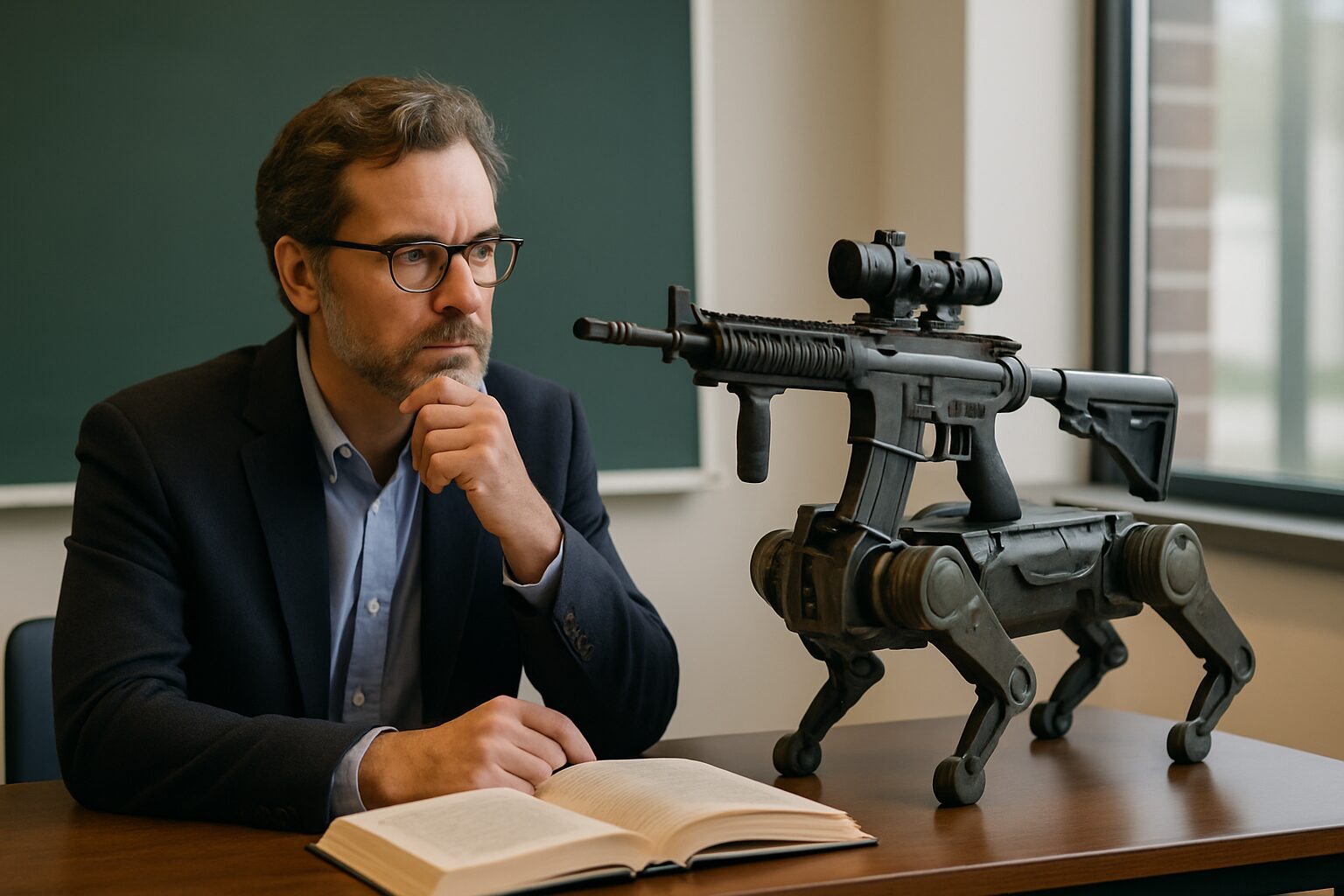
The Future of Warfare: How Autonomous Weapons Are Shaping Defense Education
The military use of autonomous weapons in education raises ethical questions about the role of AI in training and decision-making for warfare. As institutions explore integrating these technologies into curricula, concerns emerge about accountability, moral desensitization, and the normalization of automated violence. This intersection of education and military technology challenges traditional boundaries between learning and ethical responsibility.
Why It Matters - Real-world impact
The military use of autonomous weapons in education raises profound ethical and societal concerns that extend far beyond theoretical debate. Students, educators, and future generations are directly affected, as normalizing these technologies in academic settings risks desensitizing society to their lethal potential while shaping young minds to uncritically accept automated warfare. If improperly governed, such programs could accelerate arms races, erode human accountability in conflict, and inadvertently train personnel to develop systems that violate international humanitarian law. Regular people should care because the outcomes—whether increased global instability, unintended civilian harm, or the unchecked proliferation of AI-driven weapons—will impact global security and moral norms. This issue demands public scrutiny to ensure education serves ethical progress rather than unchecked militarization.
Ethical Concerns - What’s wrong or risky?
Ethical Risks in Military Autonomous Weapons Education
Integrating autonomous weapons systems into military education raises profound ethical questions, particularly around responsibility and moral agency. One key concern is fairness, as algorithms may be trained on biased data, leading to unjust outcomes in target selection or engagement rules. Similarly, issues of discrimination arise if systems disproportionately misidentify or target groups based on ethnicity, gender, or other protected characteristics, perpetuating historical biases in conflict scenarios.
Transparency and Accountability
A lack of transparency in how autonomous systems make life-or-death decisions complicates accountability. If an autonomous weapon causes unintended harm, it may be unclear whether responsibility lies with developers, military personnel, or the institution providing the education. This opacity challenges traditional chains of command and moral responsibility.
Economic and Social Considerations
While not the primary focus, the economic impact of automating military roles could divert resources from humanitarian or diplomatic solutions. Some argue that reliance on autonomous systems might lead to job loss for roles traditionally filled by humans, though others contend it could create new technical and oversight positions. Additionally, concerns about worker rights may extend to military personnel who must interact with or maintain these systems, potentially under high-stress conditions without adequate training or safeguards.
Diverse Perspectives
Proponents argue that autonomous weapons can reduce human error and emotional bias, potentially making conflicts more precise and less deadly for civilians. They may also claim that education in this area is necessary to stay competitive globally. Critics, however, warn that delegating lethal decisions to machines undermines human dignity and could lead to an arms race with catastrophic consequences. Ethical frameworks vary widely, with some advocating for strict regulation or bans, while others support cautious integration with robust oversight.
Solutions - What’s being done or proposed?
International Treaties and Legal Frameworks
Several nations and organizations have proposed international treaties to ban or restrict the use of autonomous weapons in military and educational contexts. For example, the Campaign to Stop Killer Robots advocates for a preemptive ban on fully autonomous weapons. Legal frameworks could mandate human oversight, ensuring that any use of AI in military education adheres to ethical guidelines and international humanitarian law.
Ethical AI Design Principles
Technical solutions include embedding ethical principles into the design of autonomous systems. Researchers suggest implementing 'value alignment' to ensure AI systems adhere to human ethical standards. This could involve creating fail-safes, transparency mechanisms, and accountability protocols to prevent misuse in educational settings where military applications are taught.
Educational Reforms and Curriculum Development
Institutions have proposed integrating ethics courses into military and engineering curricula to address the implications of autonomous weapons. By teaching future developers and operators about the moral and societal impacts, educators aim to foster responsible innovation. Workshops and interdisciplinary collaborations can also help bridge gaps between technologists and ethicists.
Public Awareness and Advocacy Campaigns
Social solutions include raising public awareness about the risks of autonomous weapons through media campaigns and grassroots movements. Organizations like the International Committee for Robot Arms Control work to inform policymakers and the public, encouraging societal pressure to regulate or prohibit such technologies in military education and beyond.
Institutional Oversight and Review Boards
Some universities and military academies have established ethics review boards to oversee research and development involving autonomous weapons. These boards evaluate projects for compliance with ethical standards, ensuring that educational programs do not inadvertently promote harmful applications of AI. Independent audits and transparency reports can further enhance accountability.
Examples and Real Cases
US Military's Project Maven and University Partnerships
In 2017, the US Department of Defense launched Project Maven, which used AI to analyze drone footage. Several universities, including Carnegie Mellon and MIT, initially partnered with the project but faced backlash from students and faculty over ethical concerns, leading some to withdraw by 2019.
South Korea's AI Military Research with KAIST
In 2018, South Korea's KAIST University partnered with Hanwha Systems to develop AI for autonomous weapons. This sparked protests from academics globally, including a boycott threat from over 50 AI researchers, citing risks of an AI arms race.
Hypothetical: Autonomous Drone Training in Military Academies
A military academy introduces a course in 2025 where cadets train AI systems to identify and engage targets in simulated environments. Critics argue this normalizes autonomous killing without sufficient ethical oversight, though proponents claim it prepares soldiers for future warfare.
China's PLA and AI Education Initiatives
In 2020, China's People's Liberation Army (PLA) expanded collaborations with universities like Tsinghua to integrate AI into military strategy courses. Reports suggest these programs include research on autonomous systems, though details remain classified, raising transparency concerns.
Frequently Asked Questions
What are autonomous weapons in the military?
Autonomous weapons are advanced military systems that can identify, target, and engage threats without direct human control. They use AI and sensors to make decisions, raising questions about ethics and responsibility.
Why is the military use of autonomous weapons important to study?
Studying autonomous weapons helps us understand their ethical, legal, and societal impacts. Itu2019s crucial for ensuring responsible use, preventing misuse, and shaping future policies on warfare and technology.
How do autonomous weapons affect responsibility in warfare?
Autonomous weapons blur the lines of accountability since decisions are made by machines. This raises concerns about who is responsible for mistakes or unintended harmu2014human operators, developers, or the systems themselves.
What can students learn from military autonomous weapons in education?
Students can explore topics like AI ethics, international law, and the balance between innovation and safety. It encourages critical thinking about technologyu2019s role in society and the need for regulations.
Are autonomous weapons being used in conflicts today?
While fully autonomous weapons are rare, some militaries use semi-autonomous systems (like drones with limited AI). The debate continues over their deployment, with calls for global guidelines to prevent uncontrolled use.