Ensuring the Future of Autonomous Vehicles: Key Testing Challenges and Solutions
Safety testing for self-driving cars involves evaluating how autonomous vehicles perform in real-world scenarios to minimize risks to passengers, pedestrians, and other road users. The process raises ethical questions about how to define acceptable safety standards and who bears responsibility if testing fails to prevent harm. As self-driving technology advances, regulators and developers must balance innovation with rigorous safety protocols to ensure public trust and protection.
Why It Matters - Real-world impact
The safety testing of self-driving cars has profound real-world implications, affecting not just early adopters but all road users—pedestrians, cyclists, and passengers in human-driven vehicles alike. If rigorous testing is neglected, flawed algorithms or sensor failures could lead to catastrophic accidents, eroding public trust in autonomous technology and potentially costing lives. Regulatory bodies, manufacturers, and urban planners are also deeply involved, as their decisions shape the infrastructure and policies governing these vehicles. For regular people, this issue matters because the widespread adoption of self-driving cars promises to reduce traffic fatalities, but only if safety standards are uncompromising. Without proper testing, the risks could outweigh the benefits, making public awareness and scrutiny essential.
Ethical Concerns - What’s wrong or risky?
Ethical Risks in Self-Driving Car Safety Testing
Safety testing for autonomous vehicles raises profound ethical questions that extend beyond technical reliability. One major concern involves fairness in how these vehicles are programmed to respond during unavoidable accidents. Algorithms may need to make split-second decisions that prioritize certain lives over others, posing moral dilemmas about whose safety is valued more highly.
Discrimination in Algorithmic Decision-Making
Another critical issue is the potential for discrimination. If safety systems are trained on biased data, they might disproportionately fail to recognize or protect certain demographics, such as pedestrians with darker skin tones or unusual body shapes. This could perpetuate existing societal inequities under the guise of objective machine judgment.
Transparency and Accountability
Transparency is essential for public trust, yet the proprietary nature of many self-driving algorithms often shrouds decision-making processes in secrecy. Without clear insight into how safety decisions are made, it becomes difficult to hold manufacturers accountable for failures or to ensure that ethical standards are consistently applied.
Economic and Labor Implications
Widespread adoption of self-driving technology could lead to significant job loss in sectors like transportation and logistics, raising ethical questions about societal responsibility toward displaced workers. Additionally, concerns about worker rights emerge for those involved in testing these systems, who may face unsafe conditions with inadequate protections.
Differing Perspectives
Not all stakeholders agree on how to balance these ethical risks. Some argue that rigorous testing and gradual implementation can mitigate most concerns, while others advocate for stricter regulatory frameworks to preempt harm. There is also debate over whether efficiency and safety gains justify potential job losses or if society should prioritize human employment over automation.
Other moral concerns include privacy issues from data collection during testing, environmental justice if benefits are unevenly distributed, and the long-term societal impact of relegating life-and-death decisions to machines. Each of these areas requires careful ethical scrutiny as self-driving technology evolves.
Solutions - What’s being done or proposed?
Regulatory Frameworks and Standards
Governments and international bodies have proposed regulatory frameworks to standardize safety testing for self-driving cars. These include mandatory crash tests, software validation protocols, and real-world scenario simulations. For example, the NHTSA in the U.S. has issued guidelines requiring manufacturers to submit safety assessment reports before deployment. Such frameworks aim to ensure consistency and accountability across the industry.
Simulation-Based Testing
To address the limitations of physical testing, companies have developed advanced simulation platforms. These virtual environments allow developers to test self-driving systems against millions of scenarios, including rare or dangerous situations that would be impractical or unethical to recreate in real life. Simulations can accelerate testing while reducing risks to human testers and the public.
Public-Private Partnerships
Collaborations between governments, academia, and tech companies have been formed to pool resources and expertise. Initiatives like the Partnership for Automated Vehicle Education (PAVE) work to educate stakeholders and develop best practices for safety testing. These partnerships help align technical advancements with public safety goals and foster transparency.
Ethical Risk Assessment Committees
Some organizations have established independent ethics boards to evaluate the decision-making algorithms of self-driving cars. These committees assess how vehicles handle moral dilemmas, such as the 'trolley problem,' and ensure alignment with societal values. While controversial, such assessments aim to embed ethical considerations into the design process.
Real-World Test Tracks
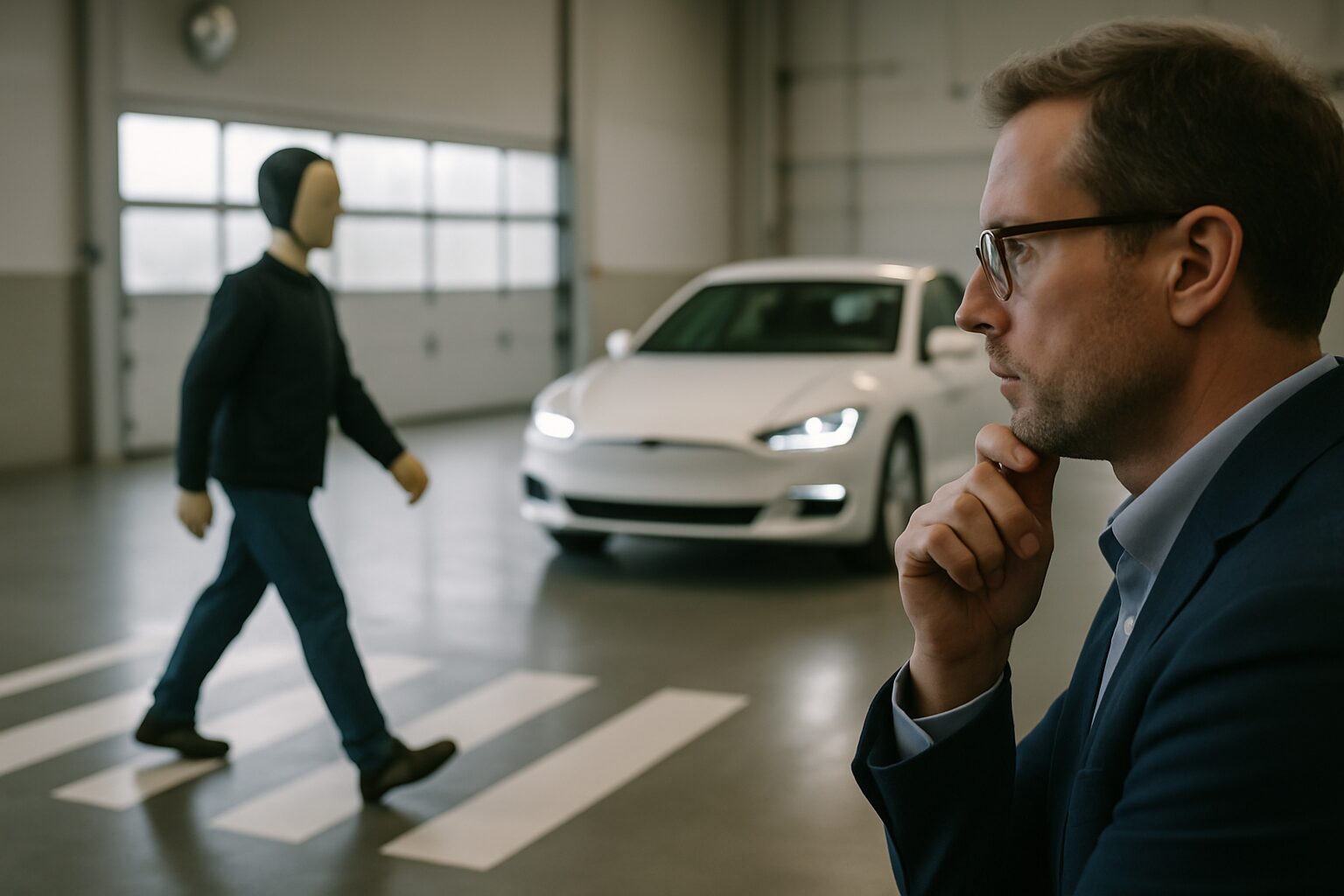
Dedicated test facilities, like Mcity at the University of Michigan, provide controlled environments for real-world testing. These tracks mimic urban and highway conditions, allowing developers to observe vehicle performance without endangering public roads. Such facilities bridge the gap between simulations and full-scale deployment.
Transparency and Public Reporting
Advocates have called for mandatory disclosure of safety data, such as disengagement rates (instances where human intervention was required) and accident reports. California already requires companies testing autonomous vehicles to submit annual disengagement reports. Transparency builds public trust and enables independent evaluation of safety claims.
Gradual Deployment with Human Oversight
A phased approach to deployment has been suggested, where self-driving cars are initially introduced in limited, low-risk environments (e.g., geofenced areas or good weather conditions). Human safety drivers or remote operators remain present to intervene if needed. This method allows for iterative improvements based on real-world feedback while minimizing hazards.
Examples and Real Cases
Uber's Self-Driving Car Fatality (2018)
In March 2018, an Uber self-driving car struck and killed Elaine Herzberg in Tempe, Arizona. The incident highlighted gaps in safety testing, as the car's sensors detected Herzberg but failed to classify her as a pedestrian needing to stop.
Tesla Autopilot Crashes (Multiple Instances)
Several Tesla vehicles operating on Autopilot have been involved in fatal crashes, including a 2016 incident in Florida where Joshua Brown died after his Model S collided with a truck. Investigations revealed the system did not recognize the truck's white trailer against a bright sky.
Waymo's Pedestrian Detection Failure (Hypothetical Scenario)
In a hypothetical scenario, a Waymo self-driving car could misidentify a cyclist signaling a turn as a stationary object due to limited training data. Without proper safety testing for rare gestures, the car might proceed unsafely, risking a collision.
Cruise's Malfunction in San Francisco (2022)
In June 2022, multiple Cruise autonomous vehicles stalled in San Francisco, blocking traffic for hours. The incident raised concerns about real-world testing reliability, as the cars failed to handle unexpected network connectivity issues.
Hypothetical: Snowstorm Sensor Blindness
A self-driving car in a heavy snowstorm might fail to detect road markings or obstacles due to snow-covered sensors. Without rigorous winter-condition testing, the AI could make dangerous navigation errors in such environments.
Frequently Asked Questions
What is safety testing for self-driving cars?
Safety testing for self-driving cars involves evaluating how well autonomous vehicles perform in various scenarios to ensure they operate safely without human intervention. This includes testing in simulated environments, controlled tracks, and real-world conditions to identify and fix potential risks.
Why is safety testing important for self-driving cars?
Safety testing is crucial because self-driving cars must make split-second decisions that could impact human lives. Proper testing helps prevent accidents, ensures compliance with regulations, and builds public trust in autonomous vehicle technology.
What are the biggest risks of self-driving cars without proper safety testing?
Without thorough safety testing, self-driving cars could misjudge traffic situations, fail to detect pedestrians or obstacles, or malfunction due to software errors. These risks could lead to accidents, injuries, or even fatalities, undermining the technology's potential benefits.
How is safety testing for self-driving cars different from regular cars?
Unlike regular cars, which rely on human drivers, self-driving cars depend on sensors, AI, and software. Safety testing for autonomous vehicles focuses on validating these systems under diverse conditions, such as extreme weather, unpredictable human behavior, and complex road layouts.
Can self-driving cars ever be 100% safe?
While no technology can be 100% risk-free, rigorous safety testing aims to make self-driving cars significantly safer than human-driven vehicles. Continuous improvements in AI, sensors, and regulations help minimize risks, but ongoing testing and updates are necessary to address new challenges.