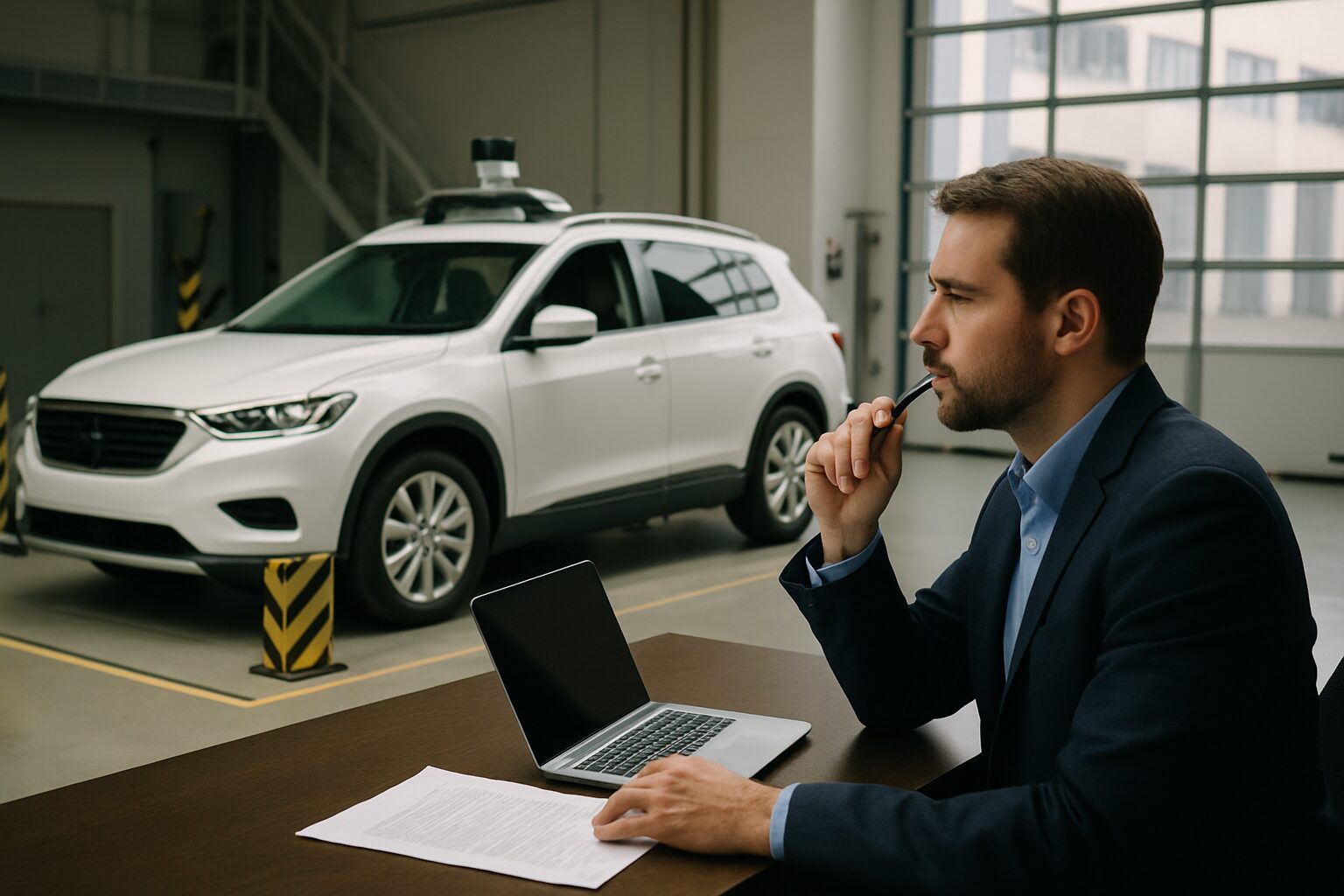
Ensuring the Future: How Self-Driving Cars Navigate Safety and Policy Challenges
Self-driving cars promise significant benefits, but their deployment raises critical safety concerns that require rigorous testing. Public policy must address how these vehicles are evaluated to ensure they meet safety standards before sharing roads with human drivers. The challenge lies in balancing innovation with risk management, particularly in defining what constitutes sufficient testing under uncertain real-world conditions.
Why It Matters - Real-world impact
The safety testing of self-driving cars is a critical public policy issue because these vehicles will share roads with pedestrians, cyclists, and human drivers—putting millions of lives at stake. If testing standards are inadequate or rushed, malfunctions or ethical failures in AI decision-making could lead to preventable accidents, injuries, or fatalities. Vulnerable road users, such as children or the elderly, may face disproportionate risks if systems are not rigorously evaluated for edge cases. Beyond physical harm, public trust in autonomous technology could erode, slowing adoption of innovations that might otherwise reduce traffic deaths. Regular people should care because these policies will shape not only their safety but also the fairness and accountability of AI systems integrated into daily life.
Ethical Concerns - What’s wrong or risky?
Ethical Risks in Self-Driving Car Safety Testing
Safety testing for autonomous vehicles raises several ethical concerns that must be addressed through thoughtful public policy. One major issue is fairness, as testing protocols may disproportionately impact certain communities if tests are conducted primarily in affluent areas, leaving underrepresented neighborhoods unprepared for real-world deployment.
Discrimination in Algorithmic Decision-Making
Another critical risk involves potential discrimination embedded in AI systems. If training data lacks diversity, self-driving cars might not recognize pedestrians of all races, ages, or disabilities equally, leading to unequal safety outcomes.
Transparency and Public Trust
A lack of transparency in safety validation processes can erode public trust. When companies withhold data on failures or near-misses, it becomes difficult for regulators and the public to assess true risk levels or hold developers accountable.
Economic and Labor Implications
Widespread adoption could lead to significant job loss among professional drivers, raising ethical questions about societal responsibility toward displaced workers. Additionally, the economic impact may concentrate benefits among tech companies while externalizing costs to the public, such as infrastructure adaptations or increased insurance burdens. The transition also highlights concerns about worker rights, particularly for those in transportation sectors who may face abrupt unemployment without adequate support systems.
Divergent Perspectives
Not all stakeholders agree on how to balance these risks. Some argue that rapid innovation justifies limited transparency to protect proprietary technology, while others advocate for strict regulation to ensure equitable safety standards. Similarly, debates persist about whether economic efficiency outweighs the moral imperative to protect jobs or ensure fair outcomes across diverse populations.
Solutions - What’s being done or proposed?
Regulatory Frameworks and Standards
Governments and regulatory bodies have proposed establishing comprehensive frameworks to govern the testing and deployment of self-driving cars. These frameworks include mandatory safety standards, certification processes, and periodic audits to ensure compliance. For example, the NHTSA in the U.S. has issued guidelines for autonomous vehicle testing, requiring companies to submit safety assessment reports. Such regulations aim to create a baseline for safety while allowing innovation to flourish.
Simulation-Based Testing
To mitigate risks associated with real-world testing, companies and researchers have heavily invested in advanced simulation environments. These simulations replicate countless driving scenarios, including edge cases, to evaluate how self-driving systems perform under various conditions. By relying on virtual testing, developers can identify and address potential safety issues before physical prototypes hit the road, reducing the likelihood of accidents during real-world trials.
Public-Private Partnerships
Collaborations between governments, tech companies, and automotive manufacturers have been suggested as a way to pool resources and expertise. These partnerships can facilitate shared testing facilities, data exchange, and joint research initiatives. For instance, some cities have allowed limited testing of self-driving cars in designated areas, with oversight from local authorities. This approach balances innovation with public safety by fostering transparency and accountability.
Ethical Decision-Making Algorithms
Researchers have proposed embedding ethical frameworks into the AI systems of self-driving cars to handle moral dilemmas, such as the 'trolley problem.' These algorithms are designed to make split-second decisions that prioritize human safety while minimizing harm. Though controversial, this approach seeks to standardize ethical reasoning in unpredictable scenarios, ensuring that autonomous vehicles act in a manner consistent with societal values.
Transparency and Public Engagement
To build public trust, some advocates emphasize the importance of transparency in the development and testing of self-driving cars. This includes publishing safety data, holding public forums, and involving community stakeholders in decision-making processes. By engaging the public, companies and policymakers can address concerns, gather feedback, and ensure that the technology aligns with societal expectations and needs.
Insurance and Liability Reforms
Legal experts have suggested updating insurance and liability laws to accommodate the unique risks posed by autonomous vehicles. Proposed solutions include no-fault insurance models or assigning liability to manufacturers in cases of system failures. These reforms aim to clarify responsibility and ensure that victims of accidents involving self-driving cars are fairly compensated, while also incentivizing companies to prioritize safety.
Gradual Deployment with Human Oversight
A phased approach to deployment has been recommended, where self-driving cars are introduced incrementally, starting with controlled environments like highways or geofenced urban areas. During initial phases, human operators or safety drivers remain present to intervene if necessary. This method allows for real-world testing while minimizing risks, providing valuable data to improve the technology before full autonomy is achieved.
Examples and Real Cases
Uber's Fatal Crash in Arizona (2018)
In March 2018, an Uber self-driving car struck and killed Elaine Herzberg in Tempe, Arizona. The incident raised questions about the adequacy of safety testing and the role of human backup drivers, as the system failed to recognize Herzberg crossing the street.
Tesla Autopilot Accidents (Multiple Instances)
Several Tesla vehicles operating on Autopilot have been involved in fatal crashes, including a 2016 incident in Florida where Joshua Brown died after his Model S collided with a truck. These cases highlight gaps in real-world testing and regulatory oversight for semi-autonomous systems.
Waymo's Extended Testing in Phoenix
Waymo has conducted extensive public testing in Phoenix since 2017, logging millions of autonomous miles. Their cautious rollout and collaboration with local authorities demonstrate how phased testing can inform safer deployment policies.
Hypothetical: Autonomous School Bus Failure
In a hypothetical scenario, an autonomous school bus fails to detect icy road conditions, leading to a minor accident. This underscores the need for specialized testing protocols for different vehicle types and environments.
GM Cruise's San Francisco Suspension (2023)
In October 2023, California regulators suspended GM Cruise's permit to operate driverless cars after incidents where vehicles interfered with emergency responders. This shows how real-world testing can reveal unforeseen safety issues requiring policy adjustments.
Frequently Asked Questions
What is safety testing for self-driving cars?
Safety testing for self-driving cars involves evaluating how well autonomous vehicles perform in real-world scenarios to ensure they operate safely. This includes testing how the car detects obstacles, follows traffic rules, and reacts to unexpected situations to minimize risks to passengers and pedestrians.
Why is public policy important for self-driving car safety?
Public policy helps set safety standards, regulations, and guidelines for self-driving cars to ensure they are tested and deployed responsibly. Without clear policies, there could be inconsistencies in safety measures, leading to higher risks for public safety.
What are the biggest safety risks with self-driving cars?
The biggest risks include software failures, sensor errors, and unpredictable human behavior in mixed traffic. These can lead to accidents if the car doesnu2019t respond correctly to sudden changes, like pedestrians crossing or other vehicles breaking traffic rules.
How do self-driving cars get tested for safety before hitting the road?
Self-driving cars undergo rigorous testing in controlled environments, simulations, and real-world trials. Companies use virtual scenarios, closed test tracks, and supervised public road tests to identify and fix safety issues before full deployment.
What can we learn from past accidents involving self-driving cars?
Past accidents help identify weaknesses in technology or policy, such as sensor limitations or gaps in regulations. Analyzing these incidents leads to improvements in safety testing, software updates, and better laws to prevent future accidents.