Can AI Be Trusted with Life-or-Death Safety Calls? The Rising Debate
The increasing reliance on artificial intelligence for safety-critical decisions raises ethical concerns about accountability and human oversight. When AI systems are tasked with evaluating risks or making life-or-death choices, questions arise about their reliability, transparency, and potential biases. This debate centers on whether delegating such decisions to algorithms undermines human judgment and responsibility.
Why It Matters - Real-world impact
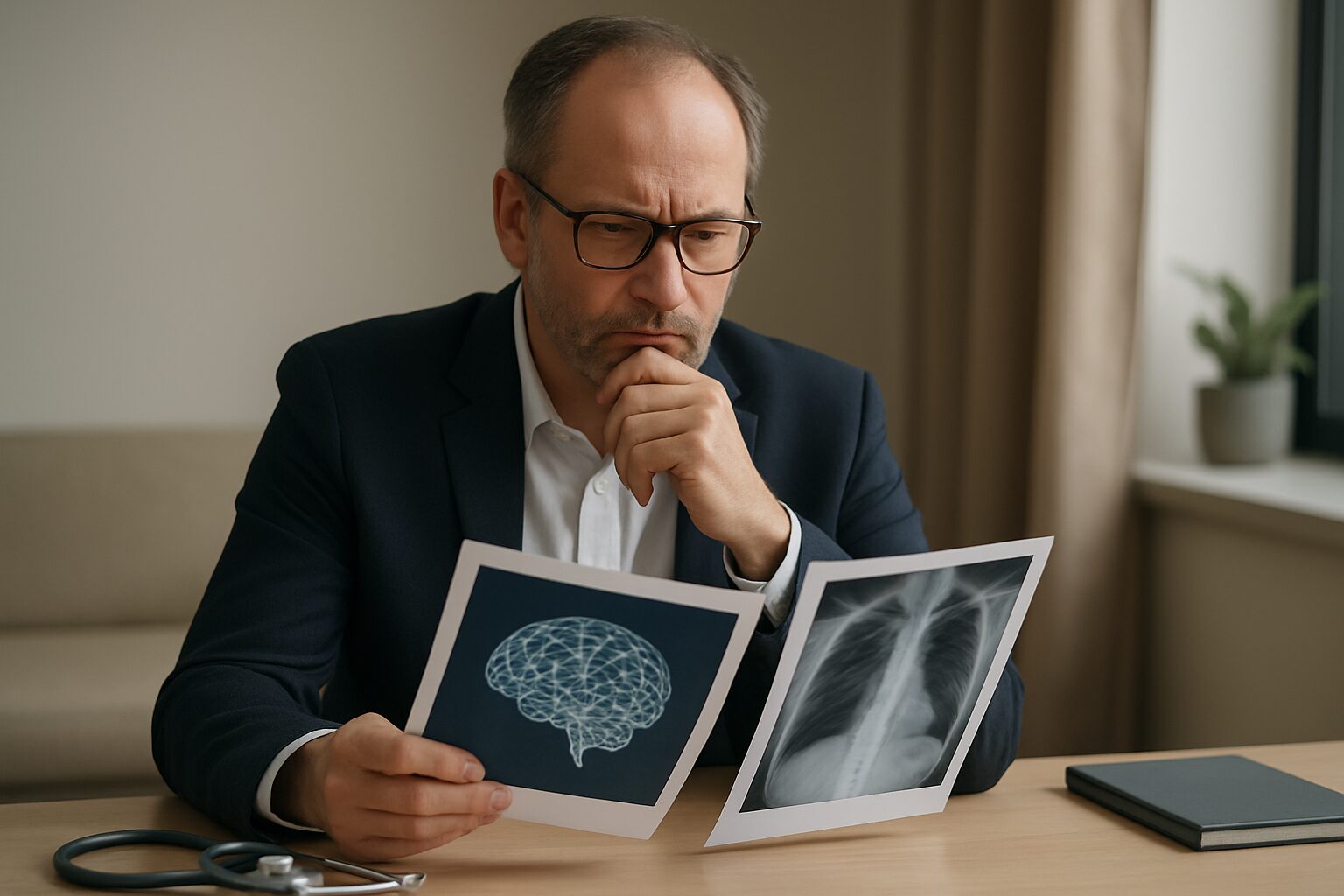
Overreliance on AI for safety-critical decisions poses tangible risks to individuals and society. From autonomous vehicles making split-second choices to medical diagnostics or criminal justice algorithms, flawed or biased AI systems can lead to life-altering consequences—accidents, misdiagnoses, or unjust incarcerations. Vulnerable populations, including marginalized communities often underrepresented in training data, face disproportionate harm. Even everyday scenarios, like workplace safety monitoring or child protection screenings, become ethically fraught when human judgment is sidelined. The stakes are high: unchecked trust in AI erodes accountability, leaving victims without recourse while normalizing systemic failures as technical glitches.
Ethical Concerns - What’s wrong or risky?
Overreliance on AI for Safety Decisions: Key Ethical Risks
As artificial intelligence increasingly governs safety-critical domains—from autonomous vehicles to medical diagnostics—overreliance on these systems introduces profound ethical risks. One major concern is fairness, as AI models may prioritize certain groups or scenarios unfairly due to biased training data or flawed objective functions. For example, an AI making emergency vehicle routing decisions might systematically disadvantage neighborhoods with less historical data.
Discrimination and Transparency Challenges
Closely related is the risk of discrimination, where AI systems perpetuate or amplify societal biases. In safety contexts, this could mean certain demographics face higher rates of false positives or negatives in threat assessments. Compounding this is the issue of transparency; many advanced AI systems operate as "black boxes," making it difficult to audit or understand why a particular safety decision was made, eroding accountability.
Economic and Labor Implications
Overdependence on AI can also lead to significant economic impact, such as inflated costs for system failures or liability disputes. Moreover, automation of safety roles may contribute to job loss among human experts, whose nuanced judgment is replaced by algorithms. This ties into broader worker rights issues, as employees might be forced to comply with AI directives without adequate training or recourse.
Differing Perspectives
Not all experts view these risks uniformly. Proponents argue that AI can enhance safety by processing data faster and more consistently than humans, reducing errors caused by fatigue or subjectivity. Critics, however, emphasize that delegating life-and-death decisions to algorithms without sufficient safeguards is morally reckless. Some advocate for a hybrid approach, where AI supports but does not supplant human judgment.
Other moral concerns include the potential for erosion of human skills and the delegation of moral responsibility to machines, which lack consciousness or intent. These issues underscore the need for rigorous ethical frameworks and continuous oversight in AI-driven safety systems.
Solutions - What’s being done or proposed?
Implementing Strict Regulatory Frameworks
Governments and international bodies have proposed strict regulatory frameworks to oversee AI's role in safety-critical decisions. These regulations mandate transparency, accountability, and human oversight, ensuring AI systems are auditable and decisions can be reviewed by humans. For example, the EU's AI Act classifies high-risk AI applications and imposes stringent requirements for their deployment.
Developing Hybrid Human-AI Decision Systems
To mitigate overreliance, hybrid systems where AI provides recommendations but humans make final decisions have been implemented. This approach leverages AI's analytical capabilities while retaining human judgment for nuanced or ethical considerations. Industries like aviation and healthcare use such systems to balance efficiency with safety.
Enhancing AI Explainability and Transparency
Technical solutions focus on improving AI explainability, ensuring systems provide clear, understandable reasons for their decisions. Techniques like interpretable machine learning models and decision logs help users trust and verify AI outputs. This is critical in fields like autonomous driving, where understanding AI decisions can prevent accidents.
Establishing Ethical Review Boards
Institutions have created ethical review boards to evaluate AI systems' safety and ethical implications before deployment. These boards, composed of multidisciplinary experts, assess potential risks and biases, ensuring AI aligns with societal values. Universities and corporations increasingly adopt this model for AI research and applications.
Promoting Public Awareness and Education
Social initiatives aim to educate the public and professionals about AI's limitations and appropriate use cases. Campaigns, workshops, and curricula emphasize critical thinking and discourage blind trust in AI. For instance, media literacy programs now include AI awareness to help people discern reliable from unreliable AI-generated content.
Creating Redundancy and Fail-Safe Mechanisms
Technical redundancy, such as backup systems or multiple AI models cross-verifying decisions, reduces risks of overreliance. Fail-safe mechanisms automatically halt AI operations if anomalies are detected. Nuclear power plants and financial systems employ such strategies to prevent catastrophic failures.
Encouraging Industry Standards and Best Practices
Professional organizations and consortia develop industry standards for AI safety, promoting best practices like regular testing, validation, and human-in-the-loop protocols. These standards help harmonize approaches across sectors, ensuring consistent safety measures. The IEEE and ISO have published guidelines for ethical AI development.
Examples and Real Cases
Boeing 737 Max Crashes (2018-2019)
The Boeing 737 Max crashes in 2018 and 2019, which killed 346 people, were partly attributed to overreliance on the MCAS (Maneuvering Characteristics Augmentation System) AI system. Boeing assumed the system would compensate for design flaws without adequate pilot training or fail-safes.
Tesla Autopilot Fatalities (2016-Present)
Multiple fatal crashes involving Tesla's Autopilot system, such as the 2016 Joshua Brown case, highlight risks of overtrusting AI for safety decisions. Drivers often disengage from monitoring the road, assuming the AI can handle all scenarios, leading to preventable accidents.
Uber Self-Driving Car Fatality (2018)
In 2018, an Uber self-driving car struck and killed Elaine Herzberg in Arizona. The AI failed to recognize her as a pedestrian, and the human backup driver was distracted, showing the dangers of assuming AI can fully replace human vigilance.
Hypothetical: AI-Powered Medical Triage Misdiagnosis
In a hypothetical scenario, a hospital relies solely on an AI triage system during a mass casualty event. The AI prioritizes patients incorrectly due to biased training data, leading to preventable deaths while human oversight was deprioritized.
Facebook's Algorithmic Content Moderation (2017-Present)
Facebook's reliance on AI for content moderation has led to erroneous bans on critical safety information, such as COVID-19 updates in 2020. Overautomation without human review risks suppressing vital public health communications.
Frequently Asked Questions
What does overreliance on AI for safety decisions mean?
Overreliance on AI for safety decisions means depending too much on artificial intelligence systems to make critical safety-related choices without sufficient human oversight or validation, which can lead to risks if the AI fails or makes errors.
Why is overreliance on AI for safety decisions a concern?
It's a concern because AI systems can have biases, errors, or limitations that humans might miss. Relying solely on AI for safety decisions could result in accidents, unfair outcomes, or overlooked risks if the technology isn't perfectly reliable.
What are examples of overreliance on AI in safety today?
Examples include self-driving cars making split-second decisions without human intervention, AI-powered medical diagnostics replacing doctor judgments, or automated systems controlling industrial safety protocols without backup checks.
How can we balance AI and human judgment in safety decisions?
A balanced approach involves using AI as a tool to assist human decision-makers rather than replace them entirely. Humans should validate AI recommendations, especially in high-stakes scenarios, and systems should have fail-safes for unexpected situations.
What can we learn from debates about AI and safety risks?
These debates highlight the importance of transparency, accountability, and human oversight in AI systems. They remind us that while AI can improve safety, it should complementu2014not replaceu2014human expertise and ethical judgment.