Ensuring Autonomous Vehicle Reliability: Cutting-Edge Safety Checks
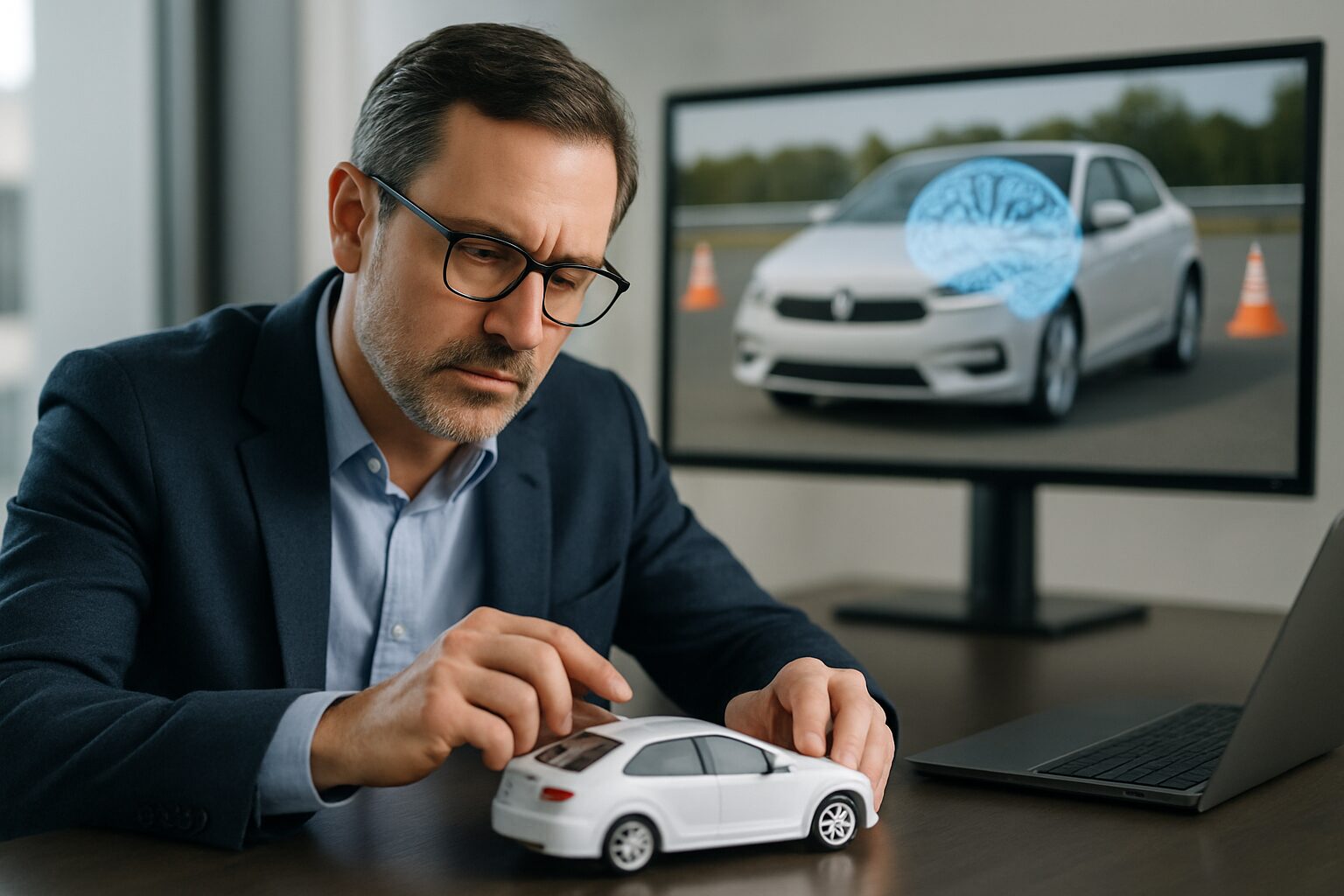
Safety testing for self-driving cars involves evaluating how autonomous vehicles perform in real-world scenarios to minimize risks to passengers, pedestrians, and other road users. The process aims to identify potential failures in perception, decision-making, and control systems before widespread deployment. Ensuring rigorous testing is critical because errors in AI-driven vehicles can have serious safety consequences.
Why It Matters - Real-world impact
The safety of self-driving cars isn't just a technical challenge—it's a matter of public trust and human lives. Pedestrians, cyclists, passengers, and other drivers are all affected by the decisions these AI systems make in real-time. A single flaw in perception, judgment, or response could lead to collisions, injuries, or fatalities, with marginalized communities often bearing disproportionate risks due to biased training data. Regular people should care because these vehicles will share roads with human drivers and vulnerable road users, blurring lines of accountability when accidents occur. Without rigorous safety testing, we risk normalizing preventable harm for the sake of technological progress. The stakes are nothing less than redefining how society manages risk in public spaces.
Ethical Concerns - What’s wrong or risky?
Ethical Risks in Safety Testing for Self-Driving Cars
Safety testing for self-driving cars raises profound ethical questions that extend beyond technical reliability. One major concern is fairness in how these vehicles are tested and validated. If testing primarily occurs in affluent, low-risk areas, the resulting algorithms may not perform equitably in diverse or underserved communities, potentially endangering marginalized populations.
Discrimination and Bias in Testing
Another critical issue is the potential for discrimination embedded in AI decision-making. Self-driving cars rely on data that may reflect historical biases, such as underrepresenting certain demographics in training scenarios. This could lead to systems that are less safe for pedestrians or drivers from specific racial or socioeconomic groups.
Transparency and Accountability
A lack of transparency in safety testing protocols poses ethical risks as well. When companies withhold testing data or methodologies, it becomes difficult for regulators and the public to assess true safety levels, undermining trust and accountability in the event of failures or accidents.
Economic and Social Implications
Some argue that rigorous safety testing could delay deployment, impacting economic benefits like reduced traffic and pollution. Conversely, others emphasize that haste might compromise safety, disproportionately affecting vulnerable road users. There are also concerns about job displacement for drivers, though this intersects less directly with testing ethics.
Divergent Perspectives
Not all stakeholders agree on these risks. Some technologists prioritize innovation and efficiency, viewing extensive ethical scrutiny as an impediment. Advocates for public safety, however, argue that ethical lapses in testing could erode public trust and lead to preventable harm, emphasizing precaution over speed.
Solutions - What’s being done or proposed?
Regulatory Frameworks and Standards
Governments and industry bodies have proposed and implemented regulatory frameworks to ensure self-driving cars meet safety standards before deployment. For example, the U.S. Department of Transportation has issued Federal Automated Vehicles Policies, which include safety assessment guidelines for manufacturers. These frameworks often require rigorous testing, data sharing, and certification processes to ensure compliance with safety benchmarks.
Simulation-Based Testing
To address the limitations of real-world testing, companies have developed advanced simulation environments where self-driving cars can be tested in millions of virtual scenarios. These simulations include edge cases, such as rare weather conditions or unpredictable pedestrian behavior, which are difficult to replicate in physical testing. This approach allows for scalable and repeatable safety evaluations without real-world risks.
Real-World Test Fleets with Safety Drivers
Many companies deploy test fleets of self-driving cars with human safety drivers who can take control if the system fails. This hybrid approach allows for real-world data collection while mitigating risks. Over time, as the technology proves reliable, the role of the safety driver can be phased out, transitioning to fully autonomous operation.
Ethical Decision-Making Algorithms
Researchers have explored embedding ethical decision-making frameworks into AI systems to handle moral dilemmas, such as the 'trolley problem.' These algorithms are designed to prioritize safety and minimize harm, though debates continue about how to encode ethical principles fairly. Transparency in these decision-making processes is also a key focus to build public trust.
Public Transparency and Reporting
Some advocates argue for mandatory public reporting of self-driving car performance metrics, including accident rates and disengagement statistics. Transparency initiatives aim to hold manufacturers accountable and provide data for independent analysis. For instance, California requires companies testing autonomous vehicles to submit annual reports on disengagements and incidents.
Collaborative Industry Partnerships
To pool knowledge and resources, companies and research institutions have formed partnerships like the Autonomous Vehicle Safety Consortium (AVSC). These collaborations focus on developing best practices, shared safety protocols, and standardized testing methodologies to accelerate innovation while maintaining safety as a priority.
Redundant Sensor Systems
Technical solutions include equipping self-driving cars with redundant sensor systems (e.g., LiDAR, radar, and cameras) to ensure reliability even if one system fails. By cross-validating data from multiple sensors, the vehicle can make safer decisions in complex environments, reducing the likelihood of accidents caused by sensor errors.
Gradual Deployment in Controlled Environments
Some suggest a phased rollout of self-driving technology, starting in controlled environments like geofenced urban areas or dedicated lanes. This allows for incremental testing and refinement under less risky conditions before expanding to more complex scenarios. Cities like Phoenix have served as early testing grounds for autonomous ride-hailing services.
Public Education and Engagement
Efforts to educate the public about self-driving technology aim to build trust and set realistic expectations. Campaigns and demonstrations help people understand how the cars operate, their limitations, and safety features. Engaging communities in the testing process can also provide valuable feedback and foster public acceptance.
Insurance and Liability Reforms
Legal and insurance frameworks are being adapted to address liability in accidents involving self-driving cars. Some proposals suggest no-fault insurance models or assigning liability to manufacturers in cases of system failure. Clear liability rules are seen as essential to ensure accountability and protect consumers.
Examples and Real Cases
Uber's Fatal Crash in Arizona (2018)
In March 2018, an Uber self-driving car struck and killed Elaine Herzberg in Tempe, Arizona. The incident revealed gaps in safety testing, as the car's sensors detected Herzberg but failed to classify her as a pedestrian needing to stop.
Tesla Autopilot Accidents (Multiple Instances)
Several Tesla vehicles operating on Autopilot have been involved in fatal crashes, including a 2016 incident in Florida where Joshua Brown died after his Model S collided with a truck. Investigations highlighted limitations in Tesla's safety testing protocols for edge-case scenarios.
Waymo's Controlled Testing Approach
Waymo has conducted over 20 million miles of real-world testing and billions of simulated miles as of 2022. Their rigorous safety testing includes extreme weather conditions and rare traffic scenarios to minimize risks.
Hypothetical: Autonomous Ambulance Dilemma
Imagine a self-driving ambulance rushing a patient to the hospital encounters a sudden road blockage. The AI must decide between risking the patient's life by stopping or violating traffic laws to find an alternate routeu2014a scenario rarely tested in current safety protocols.
Cruise's San Francisco Incidents (2022-2023)
GM's Cruise autonomous vehicles caused traffic disruptions in San Francisco, including a 2022 incident where multiple cars stalled simultaneously. These events prompted scrutiny of whether real-world testing adequately prepared for urban gridlock scenarios.
Frequently Asked Questions
What is safety testing for self-driving cars?
Safety testing for self-driving cars involves evaluating the vehicle's ability to operate safely in various real-world and simulated scenarios. This includes testing how the car detects obstacles, follows traffic rules, and responds to unexpected situations to ensure it minimizes risks to passengers and others on the road.
Why is safety testing important for autonomous vehicles?
Safety testing is crucial because self-driving cars must make split-second decisions without human intervention. Proper testing helps identify potential failures, improve reliability, and build public trust in autonomous technology, reducing the risk of accidents caused by software or hardware errors.
How do companies test self-driving cars for safety?
Companies use a mix of simulations, closed-track testing, and real-world driving to evaluate safety. Simulations recreate millions of driving scenarios, while real-world tests validate performance in actual traffic conditions. Sensors and software are continuously monitored to ensure safe operation.
What are the biggest safety risks for self-driving cars?
Key risks include software malfunctions, sensor failures (e.g., in bad weather), unpredictable human drivers, and ethical decision-making in emergencies. Testing aims to address these by improving the car's ability to handle edge cases and unexpected events.
Can self-driving cars be 100% safe?
No technology is 100% safe, but rigorous safety testing aims to make self-driving cars significantly safer than human-driven ones. The goal is to minimize errors and ensure the car responds as safely as possible in all situations, even if rare risks remain.