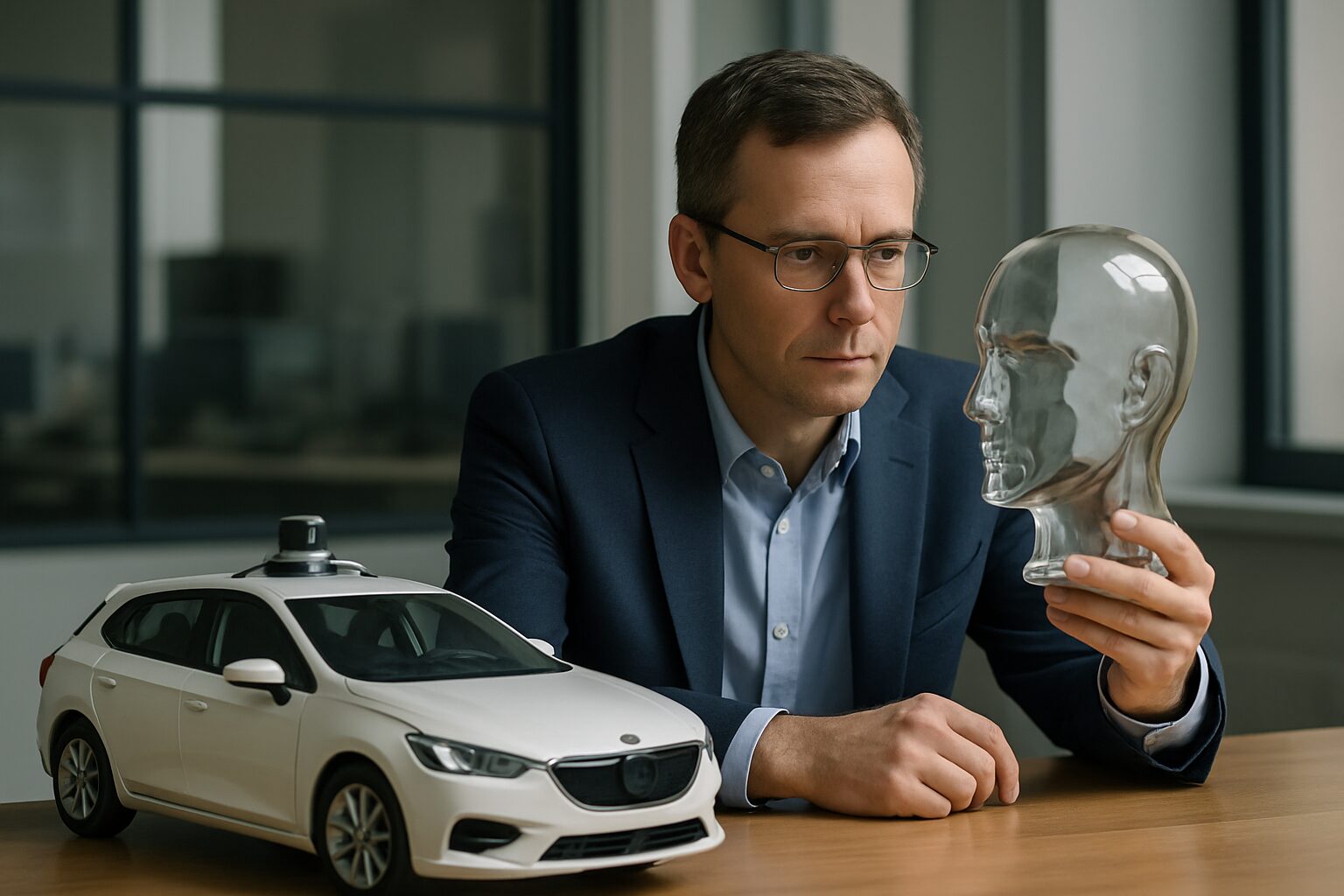
Ensuring Trust in Autonomous Vehicles: The Role of Rigorous Testing and Open Data
Safety testing for self-driving cars involves evaluating how autonomous vehicles perform in real-world scenarios to minimize risks to passengers, pedestrians, and other road users. Transparency in this process means openly sharing data about testing methods, performance metrics, and any incidents that occur during trials. The lack of standardized reporting or public disclosure raises concerns about accountability and trust in the technology. Addressing these issues is critical to ensuring public safety and fostering informed discussions about the deployment of autonomous vehicles.
Why It Matters - Real-world impact
The safety testing and transparency of self-driving cars directly impacts public safety, urban infrastructure, and legal accountability. Pedestrians, cyclists, passengers, and other drivers are all affected by how these vehicles are tested and deployed—flaws in the system could lead to accidents, injuries, or even fatalities. Without rigorous testing and clear disclosure of safety data, manufacturers and regulators risk eroding public trust in autonomous technology. Regular people should care because widespread adoption of self-driving cars could reshape transportation, but only if safety is prioritized over corporate or governmental expediency. The consequences of cutting corners could be catastrophic, making transparency not just an ethical obligation but a societal necessity.
Ethical Concerns - What’s wrong or risky?
Ethical Risks in Safety Testing for Self-Driving Cars
Safety testing for self-driving cars raises several ethical concerns, particularly around transparency. Without clear disclosure of testing methodologies, data, and decision-making processes, the public and regulators cannot assess risks or hold developers accountable.
Fairness and Discrimination
Testing scenarios may unintentionally embed biases, leading to fairness issues in how vehicles respond to different road users. For example, if test data underrepresents certain demographics or environments, the AI may perform poorly for those groups, raising concerns about discrimination.
Economic and Social Implications
Widespread adoption of self-driving cars could lead to significant job loss in driving professions, while also affecting economic impact through shifts in industries like insurance and logistics. Additionally, the rights of workers involved in manufacturing and maintaining these systems, such as worker rights, must be considered.
Differing Perspectives
Some argue that rapid deployment of self-driving technology prioritizes innovation over safety, while others believe rigorous testing and transparency can mitigate risks without stifling progress. There is also debate over whether ethical frameworks should prioritize occupant safety over pedestrians in unavoidable accidents.
Additional Moral Concerns
Beyond the linked categories, issues like accountability for accidents, data privacy, and environmental sustainability also arise. For instance, who is liable when a self-driving car causes harm—the manufacturer, software developer, or owner?
Solutions - What’s being done or proposed?
Standardized Safety Testing Protocols
Governments and industry groups have proposed standardized safety testing protocols for self-driving cars. These protocols include rigorous scenario-based testing in controlled environments, real-world road testing, and simulations of edge cases. The goal is to ensure that autonomous vehicles can handle a wide range of driving conditions before being deployed publicly. Organizations like the NHTSA in the U.S. and the EU's European New Car Assessment Programme (Euro NCAP) are working on frameworks to evaluate and certify these systems.
Transparency Through Data Sharing
Some advocates suggest that self-driving car manufacturers should share anonymized data from accidents and near-misses to improve industry-wide safety. This transparency would allow researchers and regulators to identify common failure modes and develop better safety measures. However, concerns about proprietary technology and privacy have slowed widespread adoption of this approach.
Ethical Decision-Making Frameworks
Researchers have proposed ethical frameworks to guide how self-driving cars should make decisions in unavoidable accident scenarios. These frameworks often draw from philosophical principles like utilitarianism or rights-based ethics. While useful for discussion, implementing these frameworks in real-time driving algorithms remains technically and ethically challenging.
Mandatory Safety Disclosures
Some jurisdictions are considering laws that would require self-driving car manufacturers to disclose safety performance data to regulators and potentially the public. This could include metrics like disengagement rates (how often human drivers must take over) and accident rates compared to human drivers. The challenge is balancing transparency with the risk of misleading comparisons due to differing testing conditions.
Independent Third-Party Auditing
To build public trust, some propose that self-driving systems should undergo regular audits by independent third parties. These auditors would verify safety claims and test systems without conflicts of interest. This model is inspired by financial auditing practices, but adapting it to complex AI systems presents new technical challenges.
Gradual Deployment with Human Oversight
Many companies are pursuing gradual deployment strategies where self-driving cars initially operate in limited, well-mapped areas with ideal conditions. Human safety drivers or remote operators provide oversight that can be phased out as the technology proves itself. This approach allows for real-world learning while maintaining safety safeguards.
Public Awareness and Education Campaigns
Some cities and companies have initiated public education efforts to help people understand self-driving car capabilities and limitations. These campaigns aim to set realistic expectations and teach safe interaction behaviors (for pedestrians, cyclists, and human drivers). Better public understanding could reduce accidents caused by unrealistic assumptions about the technology.
Examples and Real Cases
Uber's Fatal Crash in Arizona (2018)
In March 2018, an Uber self-driving car struck and killed Elaine Herzberg in Tempe, Arizona. The incident revealed gaps in safety testing, as the car's sensors detected Herzberg but failed to classify her as a pedestrian needing to stop.
Tesla Autopilot Accidents (Multiple Cases)
Multiple Tesla vehicles operating on Autopilot have been involved in fatal crashes, including a 2016 incident in Florida where Joshua Brown died after his Model S collided with a truck. Investigations often highlight the lack of transparency in Tesla's safety testing protocols.
Waymo's Safety Disclosures (Hypothetical)
If Waymo were to release incomplete data on disengagement rates (instances where human drivers had to take over), it could mislead the public about the system's readiness. This hypothetical scenario underscores the need for standardized, transparent reporting in safety testing.
Cruise's Pedestrian Dragging Incident (2023)
In October 2023, a Cruise autonomous vehicle dragged a pedestrian in San Francisco after an initial collision. The company faced criticism for not fully disclosing the incident's details to regulators promptly.
Volvo's Ethical AI Testing (Hypothetical)
If Volvo were to publicly share all edge-case scenarios tested (e.g., children darting into roads), it could set a transparency benchmark. This hypothetical example shows how openness in testing builds public trust.
Frequently Asked Questions
What is safety testing for self-driving cars?
Safety testing for self-driving cars involves evaluating how well autonomous vehicles perform in various real-world and simulated scenarios to ensure they operate safely without human intervention. This includes testing for obstacle detection, decision-making, and emergency responses.
Why is transparency important in self-driving car safety?
Transparency is crucial because it builds public trust and allows regulators, developers, and users to understand how self-driving cars make decisions. Clear reporting of safety data helps identify risks and improve the technology responsibly.
How are self-driving cars tested for safety risks?
Self-driving cars undergo rigorous testing, including simulations, closed-track trials, and real-world driving in controlled environments. These tests assess how the car handles unexpected situations, like pedestrians crossing or adverse weather conditions.
What can we learn from self-driving car accidents?
Accidents involving self-driving cars provide valuable data to improve safety systems. Analyzing these incidents helps developers refine algorithms, enhance sensor reliability, and update regulations to prevent future failures.
Are self-driving cars safe to use today?
While self-driving technology has advanced, it is not yet fully risk-free. Current systems often require human oversight, and safety testing continues to address limitations before widespread adoption can occur.