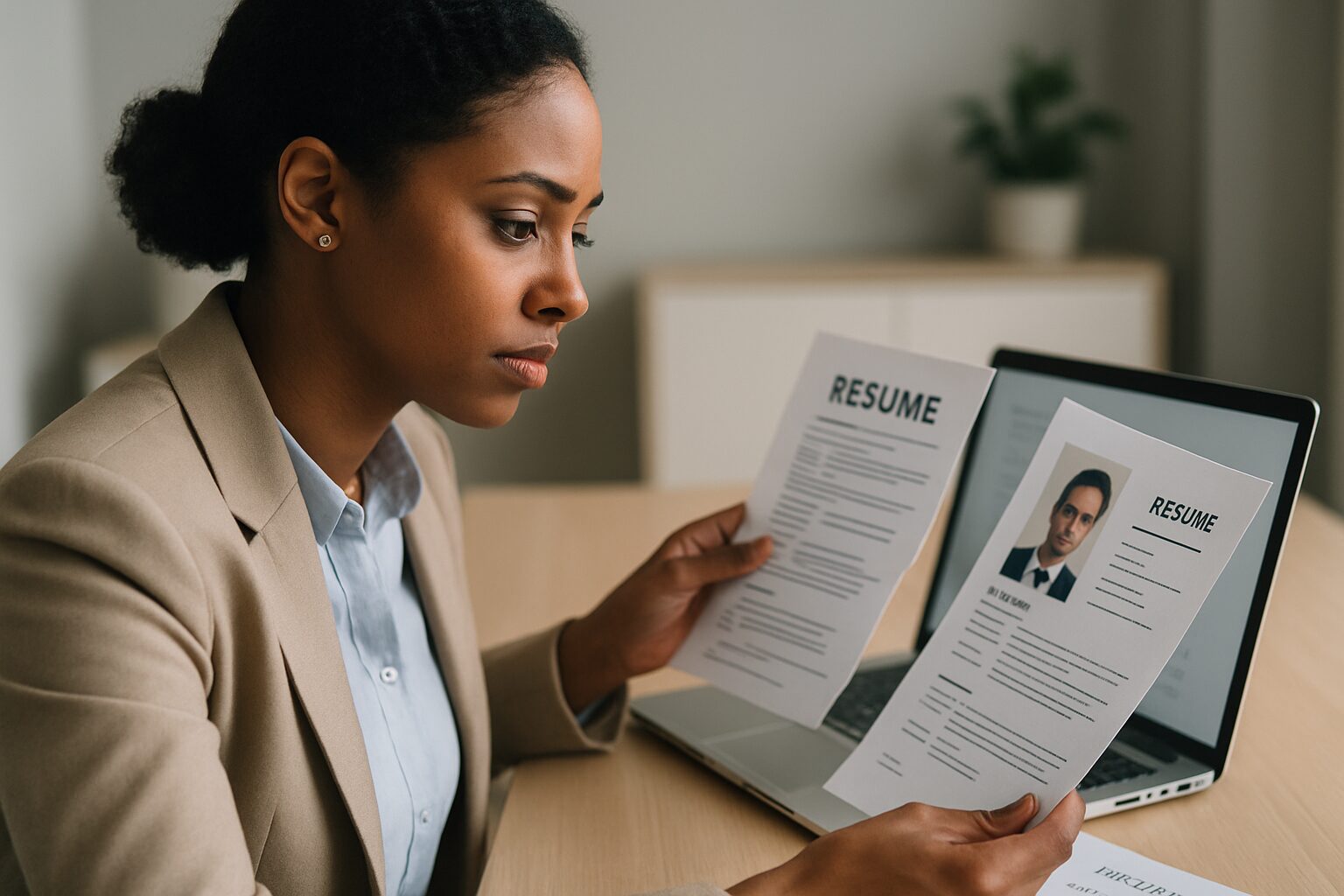
Hidden Hiring Hurdles: How AI Skews Resume Screening in the Workplace
Resume screening algorithms used in hiring processes aim to automate candidate selection by analyzing qualifications, experience, and other factors. However, these systems can inherit or amplify biases present in historical hiring data, leading to unfair discrimination against certain groups. Issues arise when algorithms favor or penalize applicants based on gender, race, age, or other protected characteristics. Addressing these biases is critical to ensuring fair and equitable hiring practices.
Why It Matters - Real-world impact
Bias in resume screening algorithms has real-world consequences that perpetuate systemic inequalities in employment. Job seekers from underrepresented groups—including women, racial minorities, and people with disabilities—are disproportionately affected when biased AI filters out their applications based on proxies for protected characteristics. Companies miss out on qualified talent, reinforcing homogenous workplaces and limiting diversity of thought. For regular people, this means fewer fair opportunities to compete for jobs, exacerbating economic disparities. Left unchecked, these systems can deepen societal divides by automating discrimination under the guise of neutrality, making ethical AI in hiring a critical issue for both individuals and organizations.
Ethical Concerns - What’s wrong or risky?
Ethical Risks in Resume Screening Algorithms
Resume screening algorithms, while efficient, introduce significant ethical risks. One major concern is discrimination, as these systems may perpetuate biases present in historical hiring data, disadvantaging candidates based on gender, race, or age. This ties directly into issues of fairness, where the algorithm might not provide equal opportunities, favoring certain demographics over others without justifiable reasons.
Transparency and Accountability
Another critical issue is transparency. Many of these algorithms operate as "black boxes," making it difficult for applicants or even employers to understand why a candidate was rejected. This lack of clarity can obscure biased decision-making and hinder accountability.
Economic and Employment Concerns
There are also worries about the economic impact, as biased algorithms could limit economic mobility for underrepresented groups by systematically filtering them out. Additionally, while not directly causing job loss, these tools might shift hiring dynamics in ways that reduce human oversight, potentially leading to unfair dismissals or overlooked talent.
Worker Rights and Perspectives
From the perspective of worker rights, automated screening can undermine dignity and due process if candidates cannot appeal algorithm-driven decisions. Not everyone agrees on the severity of these risks; some argue that algorithms, if properly designed, can reduce human bias, while others emphasize that without stringent oversight, they may exacerbate existing inequalities.
Other moral concerns include privacy issues, as algorithms often process vast amounts of personal data, and the potential for dehumanization in the hiring process, where candidates are reduced to data points rather than being evaluated holistically.
Solutions - What’s being done or proposed?
Algorithmic Audits and Transparency
One approach to addressing bias in resume screening algorithms is conducting regular algorithmic audits. These audits involve independent reviews of the algorithm's decision-making processes to identify and mitigate biases. Companies can also increase transparency by disclosing the criteria and data used to train these algorithms, allowing stakeholders to understand and challenge potential biases. While this doesn't eliminate bias entirely, it creates accountability and opportunities for improvement.
Diverse Training Data
Ensuring that the training data used for resume screening algorithms is diverse and representative is another proposed solution. By including resumes from a wide range of demographics, industries, and backgrounds, the algorithm can learn to evaluate candidates more fairly. However, collecting and maintaining such datasets can be challenging, and biases in historical hiring data may still influence outcomes if not carefully addressed.
Human-in-the-Loop Systems
Some organizations have implemented human-in-the-loop systems, where AI assists human reviewers rather than making final decisions. This hybrid approach allows humans to oversee and correct algorithmic biases while still benefiting from the efficiency of automation. The effectiveness of this solution depends on the awareness and training of the human reviewers to recognize and counteract biases.
Bias Mitigation Techniques in AI Development
Technical solutions like fairness constraints, adversarial debiasing, and reweighting training data have been suggested to reduce bias in AI models. These methods aim to adjust the algorithm's behavior to prioritize fairness metrics alongside accuracy. While promising, these techniques require expertise to implement and may not address all forms of bias, especially those embedded in the underlying data.
Legal and Regulatory Frameworks
Governments and regulatory bodies have begun exploring laws to prevent discriminatory AI practices. For example, the EU's proposed AI Act includes provisions for high-risk AI systems, including those used in hiring. Such frameworks can mandate fairness assessments and penalties for biased outcomes. However, enforcement and the global consistency of these regulations remain challenges.
Bias Awareness Training for Developers
Educating AI developers and data scientists about bias and its societal impacts is another strategy. By fostering awareness, teams can proactively design systems with fairness in mind. Training programs and ethical guidelines can help, but their success depends on organizational commitment and the integration of ethical considerations into the development lifecycle.
Alternative Hiring Practices
Some companies have opted to reduce reliance on resume screening algorithms altogether, instead using structured interviews, skills assessments, or blind recruitment processes. These methods focus on evaluating candidates based on demonstrated abilities rather than background or demographics. While effective in some cases, they may not scale as easily as automated systems for large organizations.
Examples and Real Cases
Amazon's AI Recruitment Tool (2018)
In 2018, Reuters reported that Amazon scrapped an AI recruitment tool after discovering it discriminated against women. The algorithm penalized resumes that included the word 'womenu2019s' (e.g., 'womenu2019s chess club captain') and downgraded graduates from all-womenu2019s colleges.
HireVueu2019s Facial Analysis Algorithm (2019)
In 2019, HireVue used facial recognition software to assess job candidatesu2019 suitability based on tone, word choice, and facial expressions. Critics argued the system could disadvantage neurodivergent applicants or those from different cultural backgrounds, leading to bias in hiring decisions.
Hypothetical: University Name Bias in Tech Screening
A hypothetical AI resume screener trained on historical hiring data from a tech firm might favor candidates from elite universities (e.g., MIT, Stanford), even if equally qualified applicants from less prestigious schools exist. This could perpetuate socioeconomic disparities in hiring.
Gender Decoder in Job Descriptions (2017)
Tools like Gender Decoder revealed how gendered language in job postings (e.g., 'competitive' or 'dominant' favoring male applicants) could skew applicant pools. If integrated into screening algorithms without oversight, such biases could further exclude underrepresented groups.
Frequently Asked Questions
What is bias in resume screening algorithms?
Bias in resume screening algorithms refers to when these automated systems unfairly favor or discriminate against certain groups of candidates based on factors like gender, race, age, or other protected characteristics, often due to biased training data or flawed design.
Why is bias in resume screening a problem?
Bias in resume screening can perpetuate inequality by excluding qualified candidates from underrepresented groups, reinforcing workplace discrimination, and limiting diversity in hiring. This harms both job seekers and companies seeking the best talent.
How does bias get into resume screening algorithms?
Bias can enter algorithms through historical hiring data that reflects past discrimination, poorly chosen evaluation criteria, or by overlooking how certain words or features might disadvantage specific groups (e.g., gender-coded language or school names).
What are some examples of bias in resume screening?
Examples include algorithms downgrading resumes with women's names, penalizing candidates who attended historically Black colleges, or favoring applicants with 'white-sounding' names, even when qualifications are equal.
How can companies reduce bias in resume screening algorithms?
Companies can audit their algorithms for bias, use diverse training data, remove identifying information like names, test for fairness across groups, and combine AI tools with human oversight to ensure fair hiring practices.