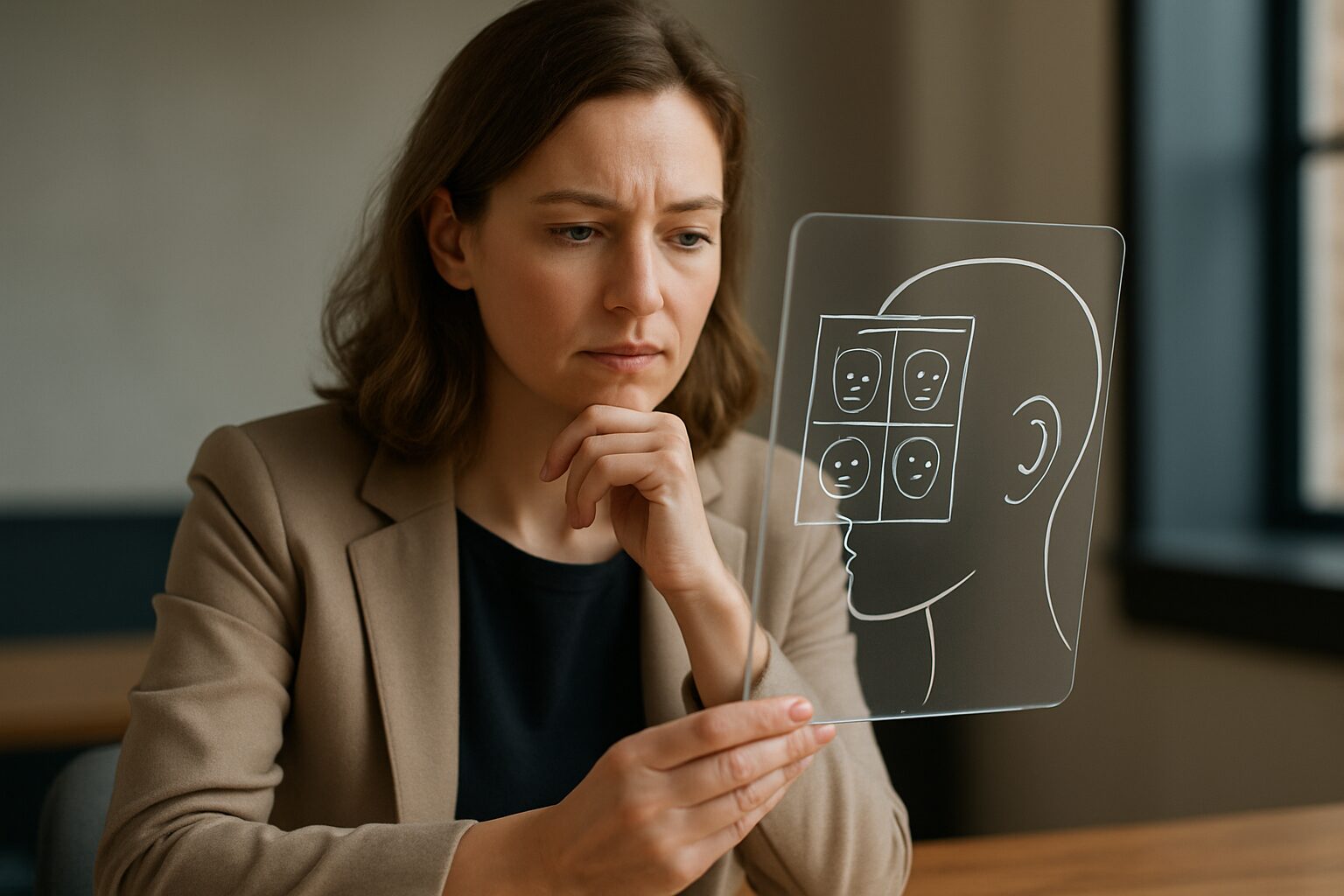
The Hidden Truth: How Emotion AI Reads Your Feelings and Why Transparency Matters
Emotion recognition AI analyzes facial expressions, voice tones, or other cues to infer human emotions, raising ethical concerns about bias and fairness. A lack of transparency in how these systems are trained and deployed can obscure potential inaccuracies or discriminatory outcomes. The ethical challenge lies in ensuring these technologies are developed and used responsibly, without reinforcing harmful stereotypes or violating privacy.
Why It Matters - Real-world impact
Emotion recognition AI has real-world consequences affecting vulnerable groups disproportionately. Job applicants may be unfairly screened by algorithms misinterpreting facial expressions, students could face biased evaluations in education settings, and marginalized communities often bear the brunt of inaccurate or culturally biased emotional analysis. When deployed in policing, healthcare, or hiring without transparency, these systems risk reinforcing stereotypes, denying opportunities, or making flawed judgments about people's mental states. Regular people should care because these opaque systems increasingly make decisions that shape lives—from workplace promotions to mental health assessments—without accountability for errors. The normalization of emotion surveillance also threatens personal autonomy, as involuntary emotional data could be exploited by corporations or governments. Without ethical safeguards, we risk building a society where misunderstood facial cues dictate life outcomes.
Ethical Concerns - What’s wrong or risky?
Emotion Recognition AI: The Transparency Dilemma
Emotion recognition AI (ERAI) systems analyze facial expressions, vocal tones, and physiological signals to infer human emotions. While promising for applications in healthcare, marketing, and security, these technologies raise significant ethical concerns, particularly around fairness, discrimination, and transparency.
Fairness and Bias in Emotion Interpretation
ERAI systems often rely on datasets that may not represent global diversity, leading to inaccurate interpretations across different cultures, genders, and age groups. For instance, expressions considered "angry" in one culture might be neutral in another. This lack of cultural nuance can result in unfair treatment, reinforcing stereotypes and marginalizing underrepresented groups. For more on this, see our post on Ethical Concerns: Fairness.
Discrimination Risks
When deployed in hiring, law enforcement, or customer service, biased ERAI can perpetuate discrimination. If the system misreads emotions based on race or gender, it could lead to unjust outcomes, such as rejecting qualified job candidates or falsely flagging individuals as suspicious. This ties directly into issues of Ethical Concerns: Discrimination.
The Transparency Gap
Many ERAI systems operate as "black boxes," with unclear decision-making processes. Users and subjects often don’t know how their data is being analyzed or used, undermining informed consent. Transparency is critical for accountability, especially when these systems influence high-stakes decisions. Learn more about why this matters in our discussion on Ethical Concerns: Transparency.
Worker Rights and Autonomy
In workplace settings, ERAI might be used to monitor employee engagement or stress, potentially infringing on privacy and autonomy. Continuous surveillance could create pressure to perform emotionally, blurring the line between productivity and manipulation. This raises questions covered in Ethical Concerns: Worker Rights.
Economic and Employment Implications
Widespread adoption of ERAI could disrupt jobs in sectors like mental health, customer service, and security, where human emotional intelligence is valued. While it may create new roles in AI maintenance, the transition could be challenging for displaced workers. For a deeper look, explore Ethical Concerns: Job Loss and Ethical Concern: Economic Impact.
Differing Perspectives
Proponents argue that ERAI can enhance human decision-making, improve mental health diagnostics, and increase efficiency. Critics, however, warn against its potential for abuse, lack of regulatory frameworks, and the ethical risks of reducing complex human emotions to algorithmic outputs. Balancing innovation with ethical safeguards remains a contentious issue.
Solutions - What’s being done or proposed?
Regulatory Frameworks and Legal Standards
Governments and international bodies have proposed creating specific regulations to govern the use of emotion recognition AI. These frameworks aim to mandate transparency in how algorithms are trained, require audits for bias, and establish clear consent protocols for data collection. For example, the EU's AI Act includes provisions for high-risk AI systems, which could cover emotion recognition technologies, ensuring they meet strict fairness and accountability standards.
Algorithmic Audits and Bias Mitigation
Technical solutions include conducting regular algorithmic audits to identify and mitigate biases in emotion recognition systems. Researchers suggest using diverse datasets that represent varied demographics, cultures, and expressions to reduce inaccuracies. Tools like fairness metrics and adversarial testing are also employed to evaluate and improve the equity of these AI systems before deployment.
Transparency in Data Collection and Use
To build trust, companies are encouraged to be transparent about how they collect and use emotional data. This includes clear user agreements, opt-in mechanisms, and public disclosures about the purpose and scope of emotion recognition. Some organizations have adopted 'explainable AI' techniques to provide users with understandable insights into how their emotions are analyzed and interpreted.
Ethical Review Boards and Oversight
Institutions deploying emotion recognition AI are increasingly establishing ethical review boards to oversee development and implementation. These boards, composed of multidisciplinary experts, evaluate the societal impact, potential harms, and ethical implications of such technologies. They ensure that projects align with ethical guidelines and prioritize human dignity and rights.
Public Awareness and Education
Social solutions focus on raising public awareness about the capabilities and risks of emotion recognition AI. Educational campaigns and workshops aim to inform individuals about their rights, how their data might be used, and ways to protect their privacy. Empowering users with knowledge helps them make informed decisions and advocate for responsible AI practices.
Industry Self-Regulation and Best Practices
Some tech companies have adopted self-regulatory measures, such as developing industry-wide best practices for emotion recognition AI. These include voluntary guidelines on fairness, transparency, and accountability. Collaborative initiatives, like partnerships between AI developers and civil society groups, aim to create standards that go beyond legal requirements to foster ethical innovation.
Examples and Real Cases
HireVue's AI-Powered Emotion Recognition in Hiring (2019)
In 2019, HireVue used AI to analyze facial expressions and tone of voice in job interviews, claiming it could assess candidates' emotional states and suitability for roles. Critics argued the system lacked transparency and could be biased, as it might misinterpret emotions across different cultures and demographics.
Clearview AI's Emotion Detection for Law Enforcement (2020)
Clearview AI, known for its facial recognition technology, explored emotion detection tools for law enforcement in 2020. Privacy advocates raised concerns about the lack of transparency in how emotions were classified and the potential for misuse in profiling individuals.
Microsoft's Affectiva in Education (Hypothetical)
A hypothetical scenario involves Microsoft integrating Affectiva's emotion recognition AI into virtual classrooms to monitor student engagement. Educators might question the transparency of the algorithms, especially if the system disproportionately flags students from certain backgrounds as disengaged due to cultural differences in emotional expression.
China's Emotion Recognition in Surveillance (2018)
In 2018, China deployed emotion recognition AI in surveillance systems to identify 'unusual' emotional states in public spaces. The lack of transparency in the technology's criteria raised ethical concerns about mass surveillance and potential bias against minority groups.
Amazon's Rekognition Misidentifying Emotions (2020)
In 2020, researchers found that Amazon's Rekognition tool often misidentified emotions, particularly for people of color, labeling them as 'angry' more frequently than white individuals. This highlighted the risks of bias in emotion recognition systems without proper transparency or testing.
Frequently Asked Questions
What is emotion recognition AI?
Emotion recognition AI is a type of artificial intelligence that analyzes facial expressions, voice tones, or body language to identify human emotions like happiness, anger, or sadness. It's often used in customer service, marketing, and even hiring processes.
Why is transparency important in emotion recognition AI?
Transparency is crucial because it helps users understand how the AI makes decisions about emotions. Without it, people might not know if the system is biased, inaccurate, or misusedu2014leading to unfair outcomes in hiring, law enforcement, or mental health assessments.
Can emotion recognition AI be biased?
Yes, emotion recognition AI can be biased if it's trained on datasets that don't represent diverse cultures, genders, or expressions. For example, it might misread emotions in people of color or women if the training data mostly included white male faces.
How does emotion recognition AI affect privacy?
Emotion recognition AI raises privacy concerns because it often analyzes personal data (like facial images) without consent. People may not realize their emotions are being tracked, which can lead to misuse of sensitive information.
What are real-world examples of emotion recognition AI today?
Today, emotion recognition AI is used in job interviews (to assess candidates' reactions), retail stores (to gauge customer satisfaction), and even schools (to monitor student engagement). However, critics warn it may reinforce stereotypes or invade privacy.