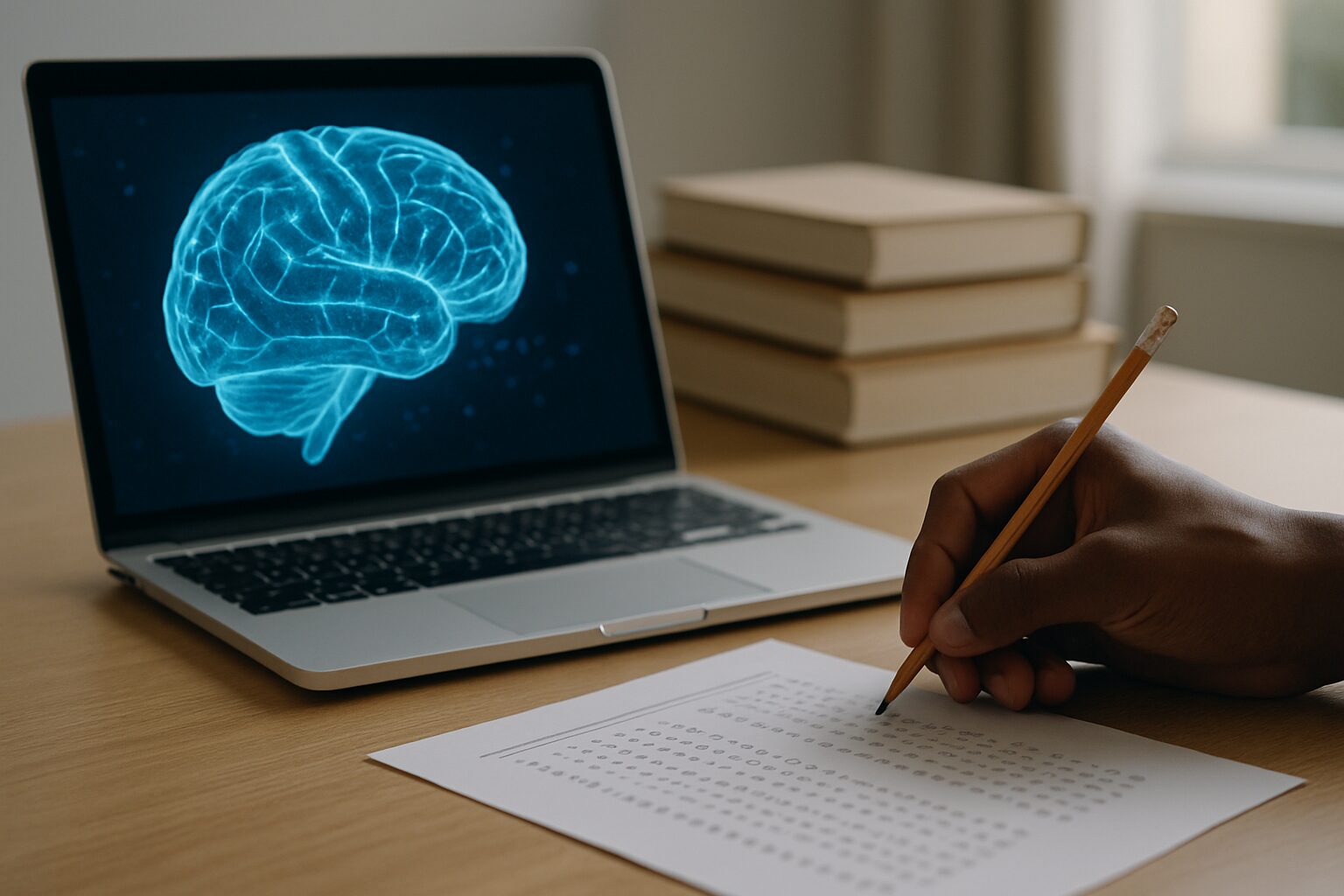
Balancing Tech and Trust: The Ethical Dilemma of Automated Exam Monitoring
AI proctoring refers to the use of artificial intelligence to monitor students during exams, often through video, audio, or screen recording. While it aims to prevent cheating, it raises concerns about student privacy due to the collection and storage of personal data. The widespread adoption of such technologies also prompts broader societal questions about surveillance, consent, and the balance between academic integrity and individual rights.
Why It Matters - Real-world impact
AI proctoring systems raise significant ethical concerns because they impact students' privacy, autonomy, and mental well-being. These tools often use invasive surveillance, such as eye-tracking and facial recognition, which can create anxiety and erode trust in educational institutions. Marginalized students, including those with disabilities or limited access to reliable technology, may face disproportionate harm due to biased algorithms or inflexible monitoring. If misused, collected data could be exploited by corporations or governments, leading to long-term privacy violations. Regular people should care because these technologies set precedents for how surveillance is normalized in education—and eventually, in workplaces and public spaces. The consequences extend beyond exams, shaping societal attitudes toward privacy and fairness in an increasingly monitored world.
Ethical Concerns - What’s wrong or risky?
AI Proctoring: A Privacy and Ethical Minefield
AI proctoring systems, which use algorithms to monitor students during exams, raise significant ethical risks related to privacy, fairness, and societal impact. These tools often collect sensitive biometric data, such as facial expressions, eye movements, and even ambient sounds, creating potential for misuse or data breaches.
Ethical Concerns: Discrimination
One major risk is discrimination. AI systems may exhibit bias against certain demographics—for example, misinterpreting cultural gestures, accents, or physical disabilities as suspicious behavior. This could unfairly penalize students from diverse backgrounds and perpetuate existing inequalities in education.
Ethical Concerns: Fairness
Questions of fairness arise when algorithms make high-stakes decisions without human oversight. For instance, a system might flag a student for "cheating" due to poor lighting or network issues, leading to unjust outcomes. The lack of nuanced judgment can undermine academic integrity rather than uphold it.
Ethical Concerns: Transparency
Another critical issue is transparency. Many AI proctoring tools operate as "black boxes," where students and institutions cannot scrutinize how decisions are made. This opacity erodes trust and makes it difficult to challenge errors, violating principles of accountability and informed consent.
Differing Perspectives
Proponents argue that AI proctoring expands access to education by enabling remote testing, thus promoting inclusivity. Critics, however, warn that the surveillance culture it fosters may discourage learning and creativity, prioritizing compliance over critical thinking. Some also raise concerns about the normalization of pervasive monitoring in society.
Other Moral Concerns
Beyond the linked categories, AI proctoring implicates student autonomy and mental health. Constant monitoring can induce anxiety and stress, potentially affecting performance. Additionally, the commodification of student data for commercial purposes poses ethical dilemmas about ownership and consent.
Solutions - What’s being done or proposed?
Implementing Stronger Data Protection Laws
Some advocates have called for stricter data protection laws specifically targeting AI proctoring tools. These laws would require explicit consent from students before their data is collected, mandate transparency about how the data is used, and impose penalties for misuse. The European Union's GDPR is often cited as a model, but tailored regulations for educational contexts could address unique concerns like biometric data collection during exams.
Developing Privacy-Preserving AI Algorithms
Technical solutions include designing AI proctoring systems that minimize data collection. For example, algorithms could be trained to detect cheating behaviors without storing video or audio recordings. Edge computingu2014where data is processed locally on the student's device rather than sent to a cloud serveru2014could also reduce privacy risks by limiting exposure to third parties.
Adopting Institutional Transparency Policies
Schools and universities can create policies that require clear communication about how AI proctoring tools work, what data they collect, and who has access to it. Institutions might also establish oversight committees to review these tools for bias or privacy violations. Transparency builds trust and allows students to make informed decisions about their participation.
Offering Alternative Assessment Methods
To reduce reliance on AI proctoring, educators can explore alternative assessment formats that are less invasive. Open-book exams, project-based evaluations, or oral presentations can assess learning without requiring surveillance. This approach shifts the focus from monitoring to fostering academic integrity through pedagogy rather than technology.
Encouraging Student Advocacy and Input
Student unions and organizations have pushed for greater involvement in decisions about AI proctoring. By including student representatives in discussions about tool selection and policy-making, institutions can ensure that privacy concerns are addressed. Protests and petitions have also been effective in some cases, leading schools to reconsider or abandon invasive proctoring systems.
Promoting Ethical AI Certification Programs
Independent organizations could certify AI proctoring tools that meet ethical standards for privacy, fairness, and accountability. Similar to Fair Trade labels, such certifications would help institutions choose tools aligned with societal values. Vendors might compete to earn these certifications, driving industry-wide improvements.
Examples and Real Cases
Proctorio's Data Collection Controversy (2020)
In 2020, Proctorio, an AI proctoring software, faced backlash when students discovered it collected excessive data, including eye movements, room scans, and keystrokes. The Electronic Frontier Foundation (EFF) filed a complaint alleging violations of student privacy under the Family Educational Rights and Privacy Act (FERPA).
ExamSoft and Facial Recognition Errors (2021 Bar Exam)
During the 2021 Bar Exam, ExamSoft's facial recognition software incorrectly flagged numerous test-takers, disproportionately affecting people of color. Many students reported being wrongfully accused of cheating due to algorithmic bias, delaying their exam results and causing emotional distress.
Hypothetical: University AI Proctoring Leak (2024)
In a realistic hypothetical scenario, a university's AI proctoring system could suffer a data breach in 2024, exposing sensitive biometric data (voice recordings, facial scans) of 50,000 students. Hackers might then use this data for identity theft or deepfake creation, highlighting systemic vulnerabilities.
Honorlock's 'Spoofing' Detection (2020-2022)
Honorlock's AI proctoring tool claimed to detect 'spoofing' (students using virtual machines to bypass monitoring), but falsely flagged legitimate test-takers. In 2022, researchers demonstrated its inaccuracy, showing it could be triggered by innocuous behaviors like adjusting glasses or lighting changes.
China's 'Smart Classroom' Surveillance (2018-Present)
China's 'Smart Classroom' initiative uses AI proctoring to analyze student engagement via facial expression tracking. Critics argue this normalizes surveillance and penalizes neurodivergent students whose facial cues may not match algorithmic expectations.
Frequently Asked Questions
What is AI proctoring?
AI proctoring is the use of artificial intelligence to monitor students during online exams. It can track eye movements, detect unusual behavior, and flag potential cheating without needing a human proctor.
Why is student privacy important in AI proctoring?
Student privacy is important because AI proctoring often collects personal data like video recordings and browsing activity. Protecting this data ensures students' rights aren't violated and builds trust in online education.
How does AI proctoring affect access to education?
AI proctoring can make exams more accessible for remote learners, but it may also create barriers for students with limited technology or privacy concerns, raising fairness questions in education.
What are the risks of AI proctoring for society?
Risks include over-surveillance normalizing reduced privacy, potential biases in AI algorithms disadvantaging certain groups, and creating a culture of distrust in education.
Can AI proctoring be used ethically?
Yes, if implemented transparently with clear privacy policies, minimal data collection, and alternatives for students uncomfortable with surveillance. Ethical use requires balancing security and student rights.