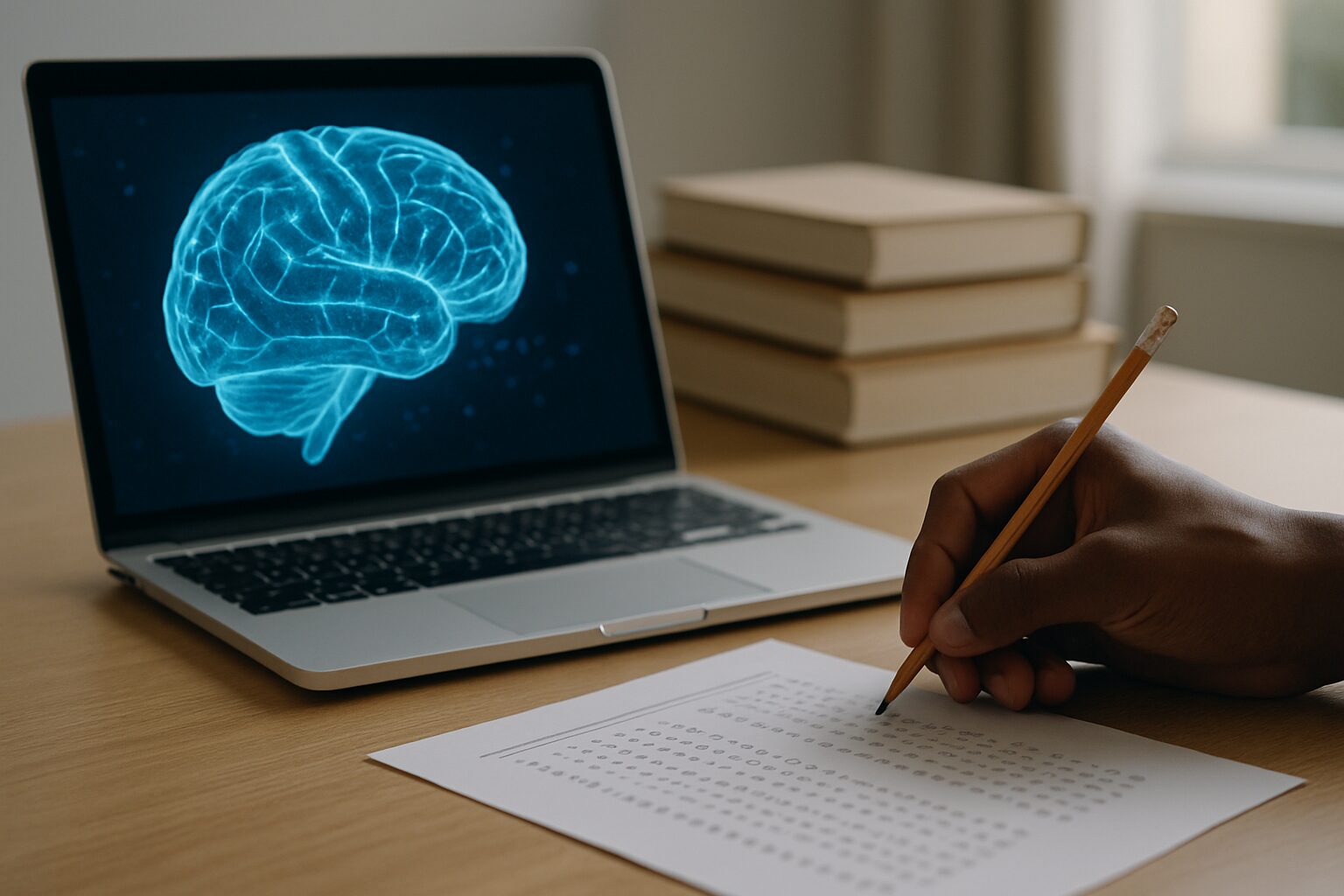
Revolutionizing Exams: How Smart Tech is Changing Education
AI is increasingly being used in standardized testing, from automated scoring to adaptive test designs. This raises ethical questions about fairness, bias, and transparency in assessments that impact educational opportunities. Concerns also center on how AI-driven testing affects access and equity for diverse student populations.
Why It Matters - Real-world impact
The ethical implications of AI in standardized testing affect students, educators, and society at large. If AI systems are biased or flawed, they could unfairly score exams, disadvantaging marginalized groups and perpetuating inequality in education. Overreliance on AI might also reduce human oversight, leading to errors that alter academic or career opportunities. For regular people, this matters because standardized tests often determine access to scholarships, college admissions, and jobs—key pathways to economic mobility. Without accountability, AI could deepen existing disparities, making fairness in education even harder to achieve.
Ethical Concerns - What’s wrong or risky?
AI and Standardized Testing: Navigating Ethical Risks
As artificial intelligence becomes more integrated into standardized testing, several ethical concerns arise that demand attention. One major issue is fairness, as AI systems may inadvertently favor certain demographic groups if training data is biased, leading to unequal outcomes.
Another critical risk is discrimination, where algorithms could perpetuate existing societal biases, disadvantaging students based on race, socioeconomic status, or disability.
Transparency is also a concern, as the "black box" nature of some AI models makes it difficult to understand how scores are determined, undermining accountability.
Additionally, the economic impact of AI-driven testing could widen resource gaps, as wealthier schools may afford better technology, exacerbating inequities.
Some argue that AI can reduce human bias and increase efficiency, offering more objective assessments. Others worry about over-reliance on technology, potentially devaluing teacher insights and holistic evaluation.
Worker rights may be affected if AI replaces roles in test administration or grading, though this is less prominent in education compared to other sectors.
Ultimately, balancing innovation with ethical safeguards is key to ensuring AI benefits all students equitably.
Solutions - What’s being done or proposed?
Algorithmic Transparency and Auditing
One proposed solution is to mandate transparency in the algorithms used for AI-driven standardized testing. This would involve making the decision-making processes of AI systems open to scrutiny by independent auditors. By ensuring that the algorithms are free from bias and operate fairly, stakeholders can have greater confidence in the results. Some institutions have started requiring third-party audits of AI systems before they are deployed in educational settings.
Diverse Data Sets for Training AI
To mitigate bias in AI-driven testing, experts suggest using more diverse and representative data sets during the training phase. This means including data from a wide range of demographics, socioeconomic backgrounds, and learning styles. By doing so, the AI system can better account for variations among test-takers and reduce disparities in outcomes. Some organizations are collaborating with global educational institutions to gather more inclusive data.
Human Oversight and Hybrid Systems
Another approach is to combine AI with human oversight, creating hybrid systems where educators and experts review AI-generated test results. This ensures that anomalies or potential biases flagged by the AI can be addressed by human judgment. For example, some testing agencies now employ panels of educators to validate AI-scored essays or complex responses, balancing efficiency with fairness.
Legal Frameworks to Prevent Discrimination
Governments and regulatory bodies are exploring legal measures to prevent AI-driven standardized testing from perpetuating discrimination. This includes laws that mandate equal treatment under AI systems and hold developers accountable for biased outcomes. In some regions, policymakers are drafting legislation that requires AI testing tools to meet strict fairness standards before being approved for use in schools.
Student and Educator Feedback Mechanisms
Incorporating feedback from students and educators into the development and refinement of AI testing systems is another suggested solution. By actively seeking input from those directly affected, developers can identify unintended consequences and make necessary adjustments. Some educational technology companies have established advisory boards consisting of teachers and students to guide AI testing innovations.
Alternative Assessment Methods
To reduce reliance on AI-driven standardized tests, some institutions are exploring alternative assessment methods. These include project-based evaluations, portfolios, and competency-based assessments that provide a more holistic view of a student's abilities. Such methods aim to complement or replace traditional testing, offering a more equitable way to measure learning outcomes without over-relying on AI.
Examples and Real Cases
ChatGPT's Performance on Standardized Tests
In January 2023, OpenAI revealed that ChatGPT scored in the 90th percentile on the Uniform Bar Exam and the 93rd percentile on the SAT Evidence-Based Reading and Writing test. This raised concerns about AI's ability to outperform human students on assessments designed to measure human aptitude.
AI-Generated College Admissions Essays
In 2022, Princeton University student Edward Tian developed GPTZero to detect AI-written college application essays after noticing ChatGPT could produce convincing personal statements. This highlighted ethical concerns about AI undermining the authenticity of student evaluations in admissions processes.
Hypothetical: AI Tutoring Bias in Test Prep
A realistic concern is that AI-powered test prep tools trained primarily on data from privileged student populations might develop biases that disadvantage underrepresented groups. For instance, an AI trained mostly on affluent suburban students' performance patterns might provide less effective guidance for urban or rural test-takers.
Proctorio's Automated Exam Monitoring
During the COVID-19 pandemic (2020-2022), Proctorio's AI-based exam proctoring system faced criticism for flagging neurodivergent students' behaviors as suspicious. The system's algorithms, trained on typical student behaviors, created disadvantages for students with ADHD or anxiety disorders during standardized tests.
Frequently Asked Questions
What is AI in standardized testing?
AI in standardized testing refers to the use of artificial intelligence technologies to create, administer, or score tests. It can help personalize questions, detect cheating, or provide instant feedback, making testing more efficient and fair.
Why is AI important in education and testing?
AI is important because it can make testing more accessible and adaptive. It can adjust questions based on a student's skill level, reduce grading bias, and provide quicker results, helping educators tailor learning to individual needs.
How does AI improve fairness in standardized tests?
AI can reduce human bias in grading, offer accommodations for students with disabilities (like text-to-speech), and adapt questions to different learning styles, ensuring a more equitable testing experience for all students.
Can AI replace human teachers in testing?
No, AI doesn't replace teachers but assists them. It handles repetitive tasks like grading, while teachers focus on interpreting results and providing personalized support based on AI-generated insights.
What are the risks of using AI in standardized testing?
Risks include data privacy concerns, over-reliance on technology, or AI biases if not properly trained. It's important to use AI as a tool alongside human oversight to ensure fairness and accuracy.