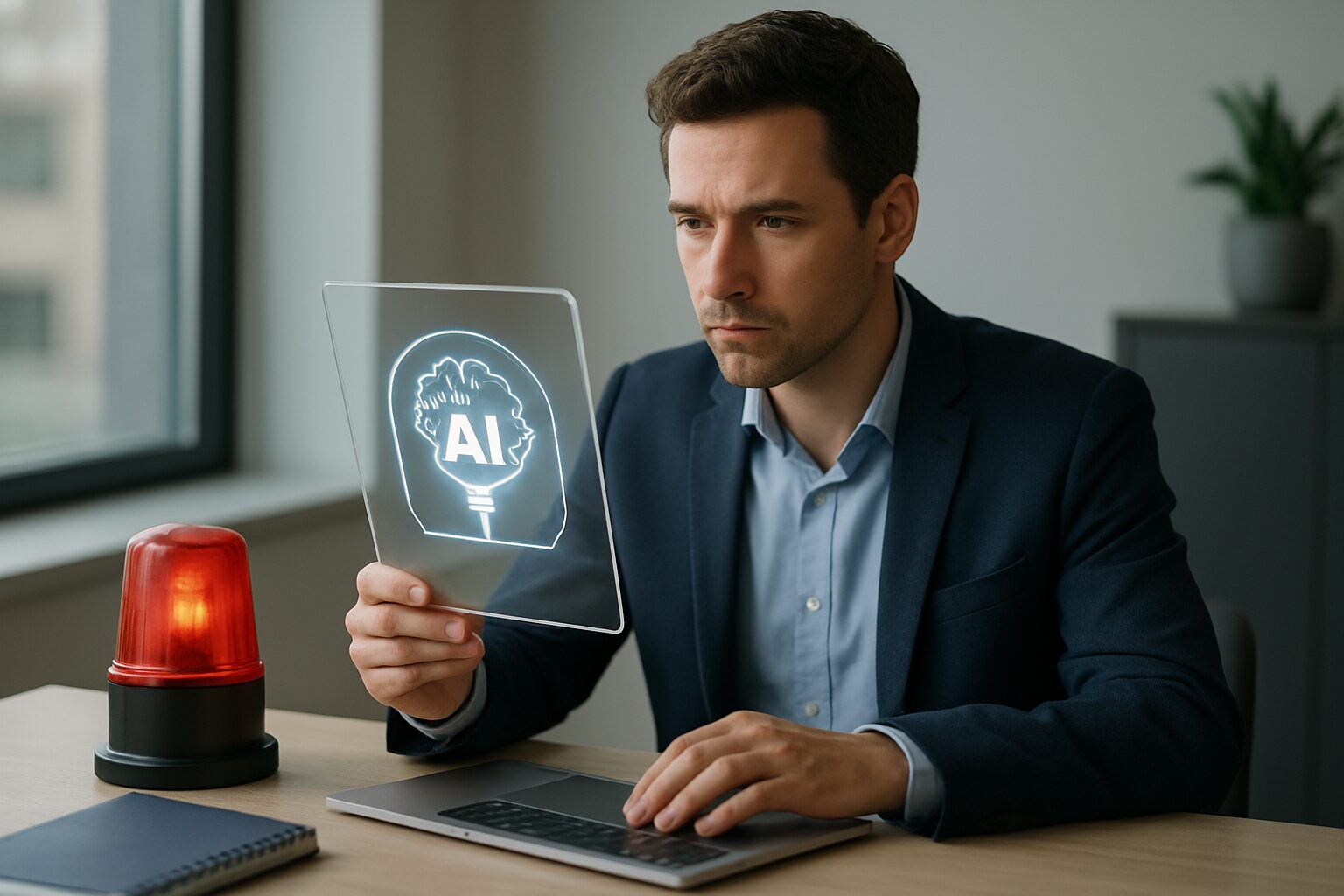
Navigating AI's Role in Disaster Forecasting and Governance
AI plays an increasingly critical role in predicting and managing disasters, from hurricanes to pandemics. However, its use raises ethical concerns about accuracy, accountability, and potential biases in decision-making. Questions also arise about how governments and organizations should regulate these systems to ensure public safety without overreach. Balancing innovation with ethical safeguards is key to responsible deployment.
Why It Matters - Real-world impact
The ethics of AI in disaster prediction and regulation have profound real-world implications, affecting governments, vulnerable communities, and entire ecosystems. Poorly designed or biased AI systems could misallocate emergency resources, overlook at-risk populations, or trigger unnecessary panic—worsening crises instead of mitigating them. For instance, flawed flood prediction models might prioritize wealthier urban areas over rural regions with fewer political advocates. Regular people should care because these technologies influence life-or-death decisions during hurricanes, wildfires, or pandemics, often with limited public oversight. When AI failures occur, marginalized groups typically bear the heaviest consequences, exacerbating existing inequalities. Ultimately, these systems don't just predict disasters—they shape our collective resilience to them.
Ethical Concerns - What’s wrong or risky?
Ethical Risks in AI Disaster Prediction and Regulation
AI systems for disaster prediction and regulation introduce several ethical risks that demand careful consideration. One major concern is fairness, as biased data or algorithms may lead to unequal protection for different communities, prioritizing some regions over others based on flawed inputs.
Discrimination and Economic Impact
AI models can inadvertently perpetuate or exacerbate discrimination, for example by under-serving marginalized or low-income areas that historically have less data. This ties into economic impact, where resource allocation based on AI predictions might favor economically prosperous zones, worsening inequality in disaster preparedness and response.
Transparency and Accountability
Lack of transparency in AI algorithms can make it difficult to understand or challenge disaster predictions, leading to public distrust or unjust regulatory actions. Opaque systems might hide errors or biases, preventing accountability when predictions fail.
Differing Perspectives
Not everyone agrees on the severity of these risks. Some argue that AI's potential to save lives outweighs ethical concerns, advocating for rapid deployment even with imperfect systems. Others emphasize caution, stressing that without addressing fairness and transparency, AI could cause more harm than good in disaster management.
Additional ethical worries include privacy issues, as disaster prediction often relies on vast personal data, and the potential for over-reliance on AI, reducing human oversight in critical decisions.
Solutions - What’s being done or proposed?
Establishing Ethical Guidelines for AI Development
Organizations and governments have proposed creating comprehensive ethical guidelines for AI development, particularly in disaster prediction. These guidelines emphasize transparency, accountability, and fairness in AI algorithms. For example, the European Union's AI Act includes provisions for high-risk AI systems, requiring rigorous testing and documentation to ensure they do not perpetuate biases or cause harm. Such frameworks aim to balance innovation with ethical considerations.
Implementing Regulatory Oversight
Some countries have introduced regulatory bodies to oversee AI applications in disaster prediction. These agencies evaluate the safety and efficacy of AI systems before deployment. For instance, the U.S. Federal Emergency Management Agency (FEMA) has explored partnerships with tech firms to audit AI tools used in disaster response. Regulatory oversight ensures that AI systems meet standardized safety protocols and are used responsibly.
Developing Explainable AI (XAI) Models
Researchers are working on Explainable AI (XAI) models to make disaster prediction systems more transparent. XAI allows users to understand how decisions are made, which is critical for gaining public trust. For example, meteorologists using AI for hurricane prediction can now access visualizations of the model's decision-making process. This transparency helps identify potential biases or errors before they lead to harmful outcomes.
Creating Public-Private Partnerships
Public-private partnerships have been formed to address ethical concerns in AI-driven disaster prediction. Governments collaborate with tech companies to share data and resources while ensuring ethical standards are met. For example, the United Nations has partnered with AI firms to develop disaster prediction tools that prioritize equity and accessibility. These partnerships aim to leverage private-sector innovation while maintaining public accountability.
Encouraging Community Involvement
Some initiatives focus on involving local communities in the development and deployment of AI disaster prediction tools. By engaging affected populations, developers can ensure that AI systems address real needs and avoid unintended consequences. For instance, in flood-prone regions, community feedback has been used to refine AI models for better accuracy and cultural sensitivity. This approach fosters trust and ensures more equitable outcomes.
Adopting Bias Mitigation Techniques
To address biases in AI disaster prediction, researchers have developed techniques to identify and mitigate skewed data. Methods like adversarial debiasing and fairness-aware algorithms are being tested to ensure predictions are equitable across different demographics. For example, AI models for earthquake risk assessment now undergo bias audits to prevent underrepresented regions from being overlooked. These techniques aim to create more inclusive and reliable systems.
Enhancing Data Privacy Protections
With AI systems relying on vast amounts of data, protecting privacy has become a priority. Solutions include anonymizing data and implementing strict access controls. For instance, the GDPR in Europe mandates that AI systems used in disaster prediction must comply with data protection laws. Such measures ensure that sensitive information is not misused while still enabling effective disaster response.
Examples and Real Cases
Google's Flood Forecasting Initiative in India (2018)
In 2018, Google launched its AI-powered flood forecasting system in India, aiming to provide early warnings. While it improved response times, critics raised concerns about data privacy and the potential for unequal access to alerts, favoring urban over rural areas.
Hurricane Harvey Prediction by IBM's Watson (2017)
IBM's Watson AI was used to predict Hurricane Harvey's path in 2017 with high accuracy. However, debates arose over whether the AI's proprietary nature limited transparency, preventing independent verification of its predictions.
Hypothetical: AI-Driven Wildfire Evacuation Orders
Imagine an AI system in California autonomously issuing evacuation orders during wildfires. If the AI prioritizes affluent neighborhoods due to biased training data, it could disproportionately endanger marginalized communities, raising ethical concerns.
China's Earthquake Early Warning System (2022)
China's AI-based earthquake warning system in Sichuan Province reduced casualties in 2022. However, questions emerged about government control over alerts, as critics feared suppression of warnings in politically sensitive areas.
Hypothetical: AI-Powered Tsunami Response in Indonesia
An AI system could optimize tsunami evacuation routes in Indonesia, but if it relies on outdated infrastructure data, it might direct evacuees to collapsed bridges, worsening the disaster's impact.
Frequently Asked Questions
What is AI ethics in disaster prediction?
AI ethics in disaster prediction refers to the moral principles guiding how artificial intelligence is used to forecast disasters like earthquakes or hurricanes. It ensures fairness, transparency, and accountability to prevent harm or bias in predictions that could affect vulnerable communities.
Why is regulating AI in disaster prediction important?
Regulating AI in disaster prediction is crucial to prevent misuse, false alarms, or biased outcomes that could endanger lives. Proper rules ensure AI systems are reliable, transparent, and used responsibly to aid emergency responses without causing panic or discrimination.
Can AI predictions about disasters be wrong?
Yes, AI predictions can sometimes be inaccurate due to flawed data, biases, or unexpected events. Ethical AI practices help minimize errors by improving transparency and accountability, ensuring predictions are as reliable as possible for public safety.
How does AI help in disaster risk reduction today?
Today, AI analyzes data like weather patterns or seismic activity to predict disasters faster and more accurately than traditional methods. Ethical use ensures these tools prioritize human safety, avoid bias, and support fair disaster preparedness and response.
What are the risks of using AI for disaster prediction?
Risks include false predictions causing unnecessary panic, biased algorithms favoring certain regions over others, or over-reliance on AI leading to human complacency. Ethical guidelines help address these risks to protect public trust and safety.