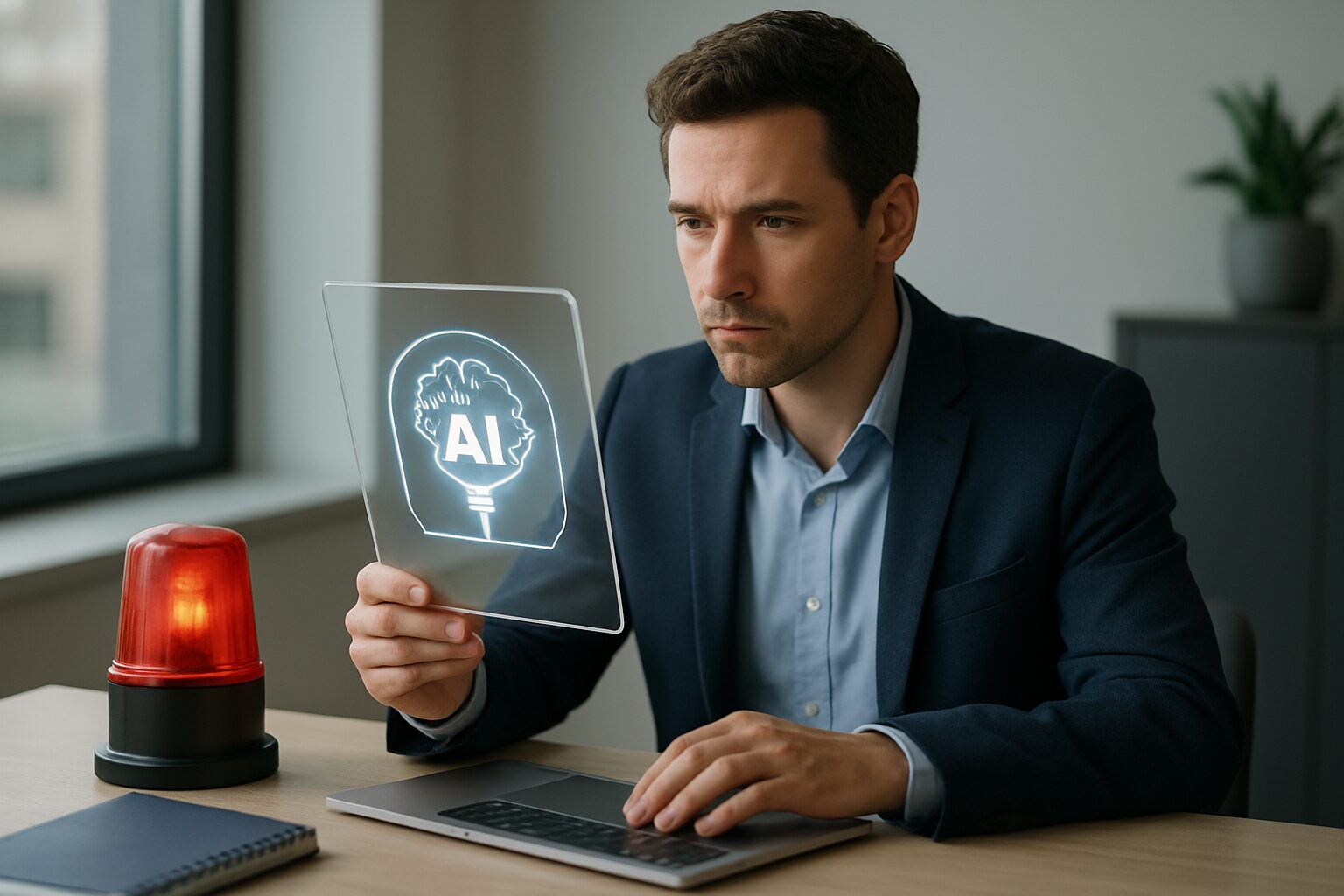
Balancing Innovation and Responsibility: AI in Disaster Forecasting
AI plays an increasingly critical role in predicting disasters such as hurricanes, earthquakes, and wildfires. However, ethical concerns arise around accuracy, accountability, and the potential consequences of false predictions. Decisions based on AI-driven forecasts can impact public safety, resource allocation, and trust in technology. Balancing innovation with ethical responsibility is essential to minimize risks and ensure reliable outcomes.
Why It Matters - Real-world impact
The ethics of AI in disaster prediction directly impact lives, infrastructure, and societal trust. Vulnerable communities, governments, and emergency responders rely on accurate, unbiased forecasts to prepare for hurricanes, earthquakes, or wildfires—failures could delay evacuations or misallocate resources. If AI systems are trained on incomplete data or prioritize profit over safety, marginalized groups may face disproportionate harm, while false alarms could erode public confidence in warnings. Regular people should care because these technologies influence survival odds, property security, and the fairness of crisis response. Ethical lapses—whether in transparency, accountability, or accessibility—turn theoretical risks into real-world tragedies.
Ethical Concerns - What’s wrong or risky?
Ethical Risks in AI Disaster Prediction
AI systems for disaster prediction, while potentially life-saving, introduce several ethical risks that demand careful consideration.
Fairness and Resource Allocation
AI models may prioritize certain regions or demographics based on biased training data, leading to unequal protection. For example, affluent urban areas might receive more accurate warnings than rural or low-income communities. This raises concerns about fairness in how predictive resources are distributed.
Discrimination in Predictive Outcomes
Historical data used to train AI can embed societal biases, potentially causing the system to undervalue risks in marginalized communities. This could result in slower response times or fewer preventative measures for vulnerable groups, highlighting issues of discrimination.
Transparency and Accountability
Many AI prediction models operate as "black boxes," making it difficult to understand how decisions are made. Lack of transparency can erode public trust and complicate accountability when predictions fail or cause harm.
Economic and Social Impacts
Over-reliance on AI predictions might lead to economic disruptions, such as devaluing properties in high-risk zones or triggering panic-driven market shifts. The economic impact of these systems must be weighed against their benefits.
Differing Perspectives
Some argue that AI-driven predictions, even with flaws, represent a net positive for public safety. Others caution that ethical risks, if unaddressed, could exacerbate existing inequalities or create new forms of injustice. Balancing innovation with ethical safeguards remains a contentious issue.
Solutions - What’s being done or proposed?
Implementing Transparent AI Algorithms
One approach to addressing ethical concerns in AI disaster prediction is ensuring transparency in the algorithms used. By making the decision-making processes of AI systems understandable to stakeholders, trust can be built. This involves open-sourcing code, publishing detailed documentation, and allowing third-party audits to verify fairness and accuracy. Transparent AI helps mitigate biases and ensures accountability in predictions that could impact vulnerable populations.
Establishing Ethical Guidelines and Standards
Organizations and governments have proposed creating ethical guidelines and standards for AI in disaster prediction. These frameworks outline principles such as fairness, accountability, and privacy protection. For example, the EU's AI Act includes provisions for high-risk AI applications, requiring rigorous testing and human oversight. Adopting such standards globally can help align AI development with societal values and prevent misuse.
Enhancing Data Privacy Protections
To address privacy concerns, solutions like differential privacy and federated learning have been suggested. These techniques allow AI models to learn from data without exposing sensitive individual information. Implementing strict data governance policies and obtaining informed consent from data subjects are also critical steps. Protecting privacy ensures that disaster prediction systems do not exploit or harm the communities they aim to serve.
Promoting Multi-Stakeholder Collaboration
Collaboration between governments, tech companies, NGOs, and local communities has been advocated to ensure AI disaster prediction systems are equitable. By involving diverse stakeholders in the design and deployment process, the systems can better address local needs and cultural contexts. This approach fosters inclusivity and helps prevent top-down solutions that may overlook marginalized groups.
Developing Robust Accountability Mechanisms
Legal and institutional accountability mechanisms, such as liability laws and oversight committees, have been proposed to hold developers and deployers of AI systems responsible for errors or harms. Clear lines of accountability ensure that when predictions fail or cause unintended consequences, there are pathways for redress. This includes establishing insurance schemes or compensation funds for affected individuals or communities.
Investing in Public Education and Awareness
Educating the public about AI's capabilities and limitations in disaster prediction can empower communities to engage critically with these technologies. Awareness campaigns and participatory workshops help demystify AI and encourage informed public discourse. An educated populace is better equipped to advocate for ethical practices and hold institutions accountable.
Prioritizing Human-in-the-Loop Systems
Integrating human oversight into AI disaster prediction systems ensures that final decisions consider contextual nuances and ethical implications. Human-in-the-loop designs combine AI's analytical power with human judgment, reducing the risk of automated errors. This hybrid approach is particularly important in high-stakes scenarios where purely algorithmic predictions could lead to harmful outcomes.
Examples and Real Cases
Google's Flood Forecasting in India (2018)
In 2018, Google launched its AI-powered flood forecasting initiative in India, aiming to provide early warnings. However, critics raised concerns about data privacy and the potential for unequal access to warnings, favoring urban areas over rural regions where floods are often more devastating.
Houston Flood Prediction During Hurricane Harvey (2017)
During Hurricane Harvey in 2017, AI models were used to predict flooding in Houston, Texas. While the predictions were largely accurate, ethical questions arose about how evacuation resources were allocated, with marginalized communities receiving fewer alerts and slower response times.
Hypothetical: AI Earthquake Prediction in California
Imagine an AI system predicts a major earthquake in California with 80% accuracy, leading to mass evacuations. If the prediction turns out to be false, the economic and social disruption could be severe, raising ethical questions about the threshold for triggering public alerts.
Wildfire Detection by AI in Australia (2019-2020)
During Australia's devastating 2019-2020 bushfire season, AI systems were deployed to detect and predict fire spread. Ethical concerns emerged when some Indigenous lands were prioritized lower for resource allocation, despite traditional knowledge being critical to fire management.
Hypothetical: AI-Powered Tsunami Warning System
An AI tsunami warning system might predict a disaster with high confidence but lack explainability, leaving officials unsure whether to evacuate coastal cities. This scenario highlights the ethical tension between acting on AI predictions and understanding their reasoning.
Frequently Asked Questions
What is AI ethics in disaster prediction?
AI ethics in disaster prediction refers to the moral principles and guidelines that ensure AI systems used for forecasting disasters (like earthquakes or hurricanes) are fair, transparent, and accountable. It focuses on minimizing harm, protecting privacy, and avoiding biases in predictions.
Why is ethical AI important in disaster prediction?
Ethical AI is crucial because flawed or biased predictions can lead to wrong decisions, putting lives at risk. It ensures that AI tools are reliable, unbiased, and used responsibly to aid emergency responses without exploiting data or causing panic.
What are the risks of using AI for disaster prediction?
Risks include false alarms causing unnecessary panic, biased algorithms favoring certain regions over others, data privacy violations, and over-reliance on AI without human oversight, which could delay critical actions.
How can AI improve disaster prediction safely?
By using diverse and accurate data, ensuring transparency in how predictions are made, involving human experts to validate results, and following strict ethical guidelines to protect affected communities.
Are there real-world examples of ethical AI in disaster prediction?
Yes. For example, some organizations use AI to predict floods while anonymizing location data to protect privacy, or collaborate with local governments to ensure predictions are fair and actionable for all communities.