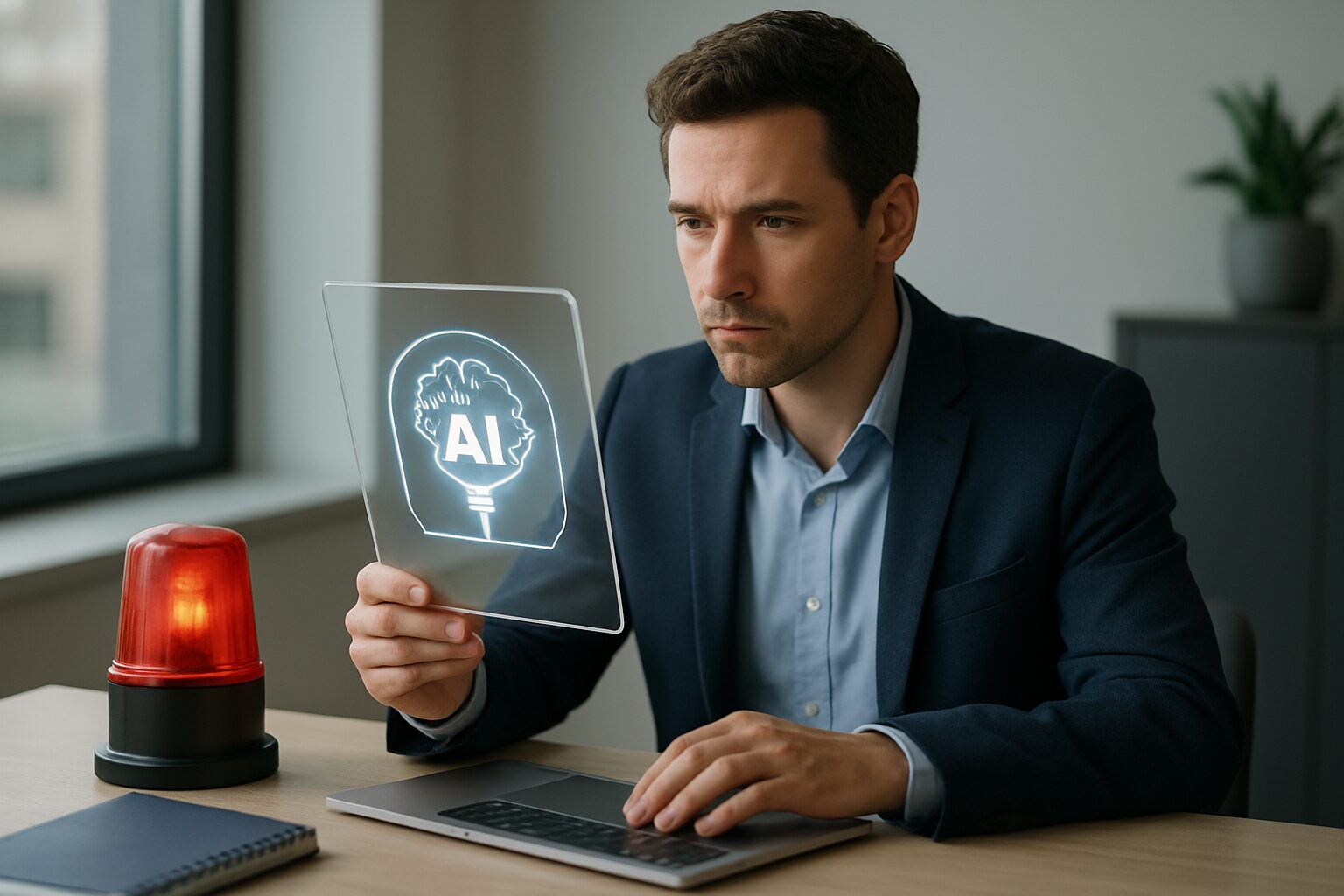
AI and Disaster Prediction: Legal Challenges and Moral Dilemmas
The use of artificial intelligence in disaster prediction raises ethical questions about accountability, transparency, and fairness. As AI systems increasingly inform emergency responses and legal frameworks, concerns emerge about who bears responsibility for errors or biases in predictions. Additionally, the integration of AI into disaster management may challenge existing laws and regulations, requiring updates to address new risks and liabilities.
Why It Matters - Real-world impact
The ethical implications of AI in disaster prediction and legal frameworks matter profoundly because they directly impact lives, property, and societal trust. Vulnerable communities, often disproportionately affected by disasters, rely on accurate and unbiased AI systems for timely warnings, while flawed or opaque algorithms could exacerbate inequalities or lead to preventable harm. Governments and corporations deploying these technologies face legal and moral accountability if failures occur, yet unclear regulations may leave victims without recourse. Regular people should care because AI-driven decisions—from evacuation orders to resource allocation—shape survival outcomes and justice in crises. Without ethical safeguards, these systems risk eroding public confidence or even causing harm under the guise of innovation.
Ethical Concerns - What’s wrong or risky?
Ethical Risks in AI Disaster Prediction Systems
AI systems for disaster prediction raise significant ethical concerns, particularly around fairness. If predictive models are trained on biased historical data, they may allocate resources unevenly, prioritizing affluent areas over vulnerable communities. This ties closely to issues of discrimination, as algorithms might inadvertently perpetuate systemic biases against marginalized groups based on geography, socioeconomic status, or ethnicity.
Transparency and Accountability Challenges
Another critical issue is transparency. Many AI models operate as "black boxes," making it difficult to understand how predictions are generated. This lack of explainability can erode public trust and complicate legal accountability when predictions fail or cause harm.
Economic and Social Implications
Widespread adoption of AI in disaster prediction could have unintended economic impact, such as diverting funding from traditional community-based preparedness programs. Some argue this might lead to job loss among emergency planners or meteorologists, though others contend AI will augment rather than replace human roles.
Differing Perspectives
Not all stakeholders agree on these risks. Proponents emphasize AI's potential to save lives through earlier warnings, arguing that perfection shouldn't be the enemy of progress. Critics, however, stress that without robust ethical safeguards, these systems could exacerbate existing inequalities and create new forms of injustice.
Worker rights advocates also highlight concerns about the conditions of those training and maintaining AI systems, though this relates more broadly to the tech industry than disaster prediction specifically.
Solutions - What’s being done or proposed?
Implementing Transparent AI Algorithms
One proposed solution is the development and use of transparent AI algorithms in disaster prediction. By ensuring that the decision-making processes of AI systems are explainable, stakeholders can better understand and trust the predictions. This involves creating models that provide clear reasoning for their outputs, allowing for scrutiny by experts and the public. Transparency can help mitigate biases and errors, ensuring that AI-driven predictions are both accurate and ethically sound.
Establishing Legal Frameworks for Accountability
Legal frameworks have been suggested to hold developers and organizations accountable for AI predictions in disaster management. These frameworks would define liability in cases where AI systems fail or provide incorrect predictions, ensuring that affected parties have recourse. Laws could mandate regular audits of AI systems, require adherence to ethical guidelines, and establish penalties for negligence. Such measures aim to balance innovation with responsibility, protecting public safety without stifling technological progress.
Creating Multi-Stakeholder Oversight Committees
To address ethical concerns, some have proposed forming multi-stakeholder oversight committees to monitor AI use in disaster prediction. These committees would include representatives from government, academia, industry, and civil society. Their role would be to review AI applications, assess risks, and ensure compliance with ethical standards. By involving diverse perspectives, these committees can help prevent misuse and promote equitable outcomes in disaster preparedness and response.
Enhancing Public Awareness and Education
Raising public awareness and education about AI's role in disaster prediction is another key solution. Informing communities about how AI systems work, their limitations, and their benefits can foster trust and collaboration. Educational campaigns and participatory workshops can empower individuals to engage with AI tools critically. This approach ensures that the public is not only a beneficiary but also an active participant in the ethical deployment of AI technologies.
Developing Ethical Guidelines for AI Deployment
Professional organizations and governments have suggested developing comprehensive ethical guidelines for AI deployment in disaster prediction. These guidelines would outline principles such as fairness, accountability, and privacy protection. They would also provide practical steps for implementing these principles in AI development and usage. By adhering to such guidelines, organizations can ensure that their AI systems align with societal values and minimize harm.
Investing in Robust Data Governance
Robust data governance frameworks are essential for ethical AI in disaster prediction. These frameworks would ensure that data used to train AI models is accurate, representative, and collected consensually. Measures include data anonymization, strict access controls, and regular updates to reflect changing conditions. Proper data governance can reduce biases and improve the reliability of AI predictions, ultimately enhancing public trust and safety.
Promoting International Collaboration
International collaboration has been proposed to address the global nature of disasters and AI ethics. By sharing knowledge, resources, and best practices, countries can develop harmonized standards for AI in disaster prediction. Collaborative efforts can also pool data and expertise, improving the accuracy and fairness of AI systems worldwide. This approach recognizes that disasters often transcend borders, requiring a united ethical response.
Examples and Real Cases
Hurricane Harvey (2017) and AI Predictions
In 2017, AI models were used to predict the path and intensity of Hurricane Harvey. While the predictions were largely accurate, ethical concerns arose when some AI systems prioritized affluent areas for early warnings due to biased training data, leaving marginalized communities with less time to prepare.
California Wildfires and AI Liability (2020)
During the 2020 California wildfires, an AI system incorrectly predicted the fire's spread direction, leading to misallocated evacuation resources. This raised legal questions about who is liableu2014the AI developers, the government agencies using the system, or the data providersu2014when such errors occur.
Hypothetical: AI Earthquake Prediction in Japan
In a hypothetical scenario, an AI system predicts a major earthquake in Tokyo with 90% accuracy, but the government hesitates to issue a public warning due to potential economic disruption. This creates an ethical dilemma between public safety and economic stability, with legal implications for decision-makers.
Flood Prediction in Pakistan (2022)
AI flood prediction models in Pakistan in 2022 underestimated the severity of monsoon rains, leading to inadequate preparations. Later investigations revealed the models were trained on outdated climate data, sparking debates about the ethical responsibility to update AI systems with current data.
Hypothetical: AI Tornado Warnings and False Alarms
Imagine an AI system in Tornado Alley that reduces false alarms by 50% but misses 5% of actual tornadoes. The ethical trade-off between public trust (reduced false alarms) and safety (missed warnings) could lead to lawsuits if injuries occur from un-warned tornadoes.
Frequently Asked Questions
What is AI disaster prediction and why is it important?
AI disaster prediction uses artificial intelligence to analyze data and forecast natural disasters like hurricanes, earthquakes, or floods. It's important because early warnings can save lives, reduce injuries, and minimize property damage by giving people more time to prepare or evacuate.
How can AI disaster prediction go wrong ethically?
AI disaster prediction can raise ethical concerns if the algorithms are biased, inaccurate, or used unfairly. For example, if warnings are only sent to certain communities or if false alarms cause unnecessary panic, it can lead to mistrust or unequal protection under the law.
Who is responsible if AI makes a wrong disaster prediction?
Responsibility can fall on multiple parties, including the AI developers, government agencies using the technology, or policymakers. Laws are still evolving, but accountability depends on whether negligence, flawed data, or misuse of the technology caused harm.
How does AI disaster prediction affect privacy and data rights?
AI systems often rely on large amounts of personal or location data to make predictions. This raises privacy concerns if data is collected without consent or used for purposes beyond disaster warnings, potentially violating data protection laws.
Can AI disaster prediction be trusted over human experts?
AI can process vast amounts of data faster than humans, but it shouldn't replace human judgment entirely. The best approach combines AI insights with expert review to ensure accuracy, fairness, and ethical decision-making in disaster response.