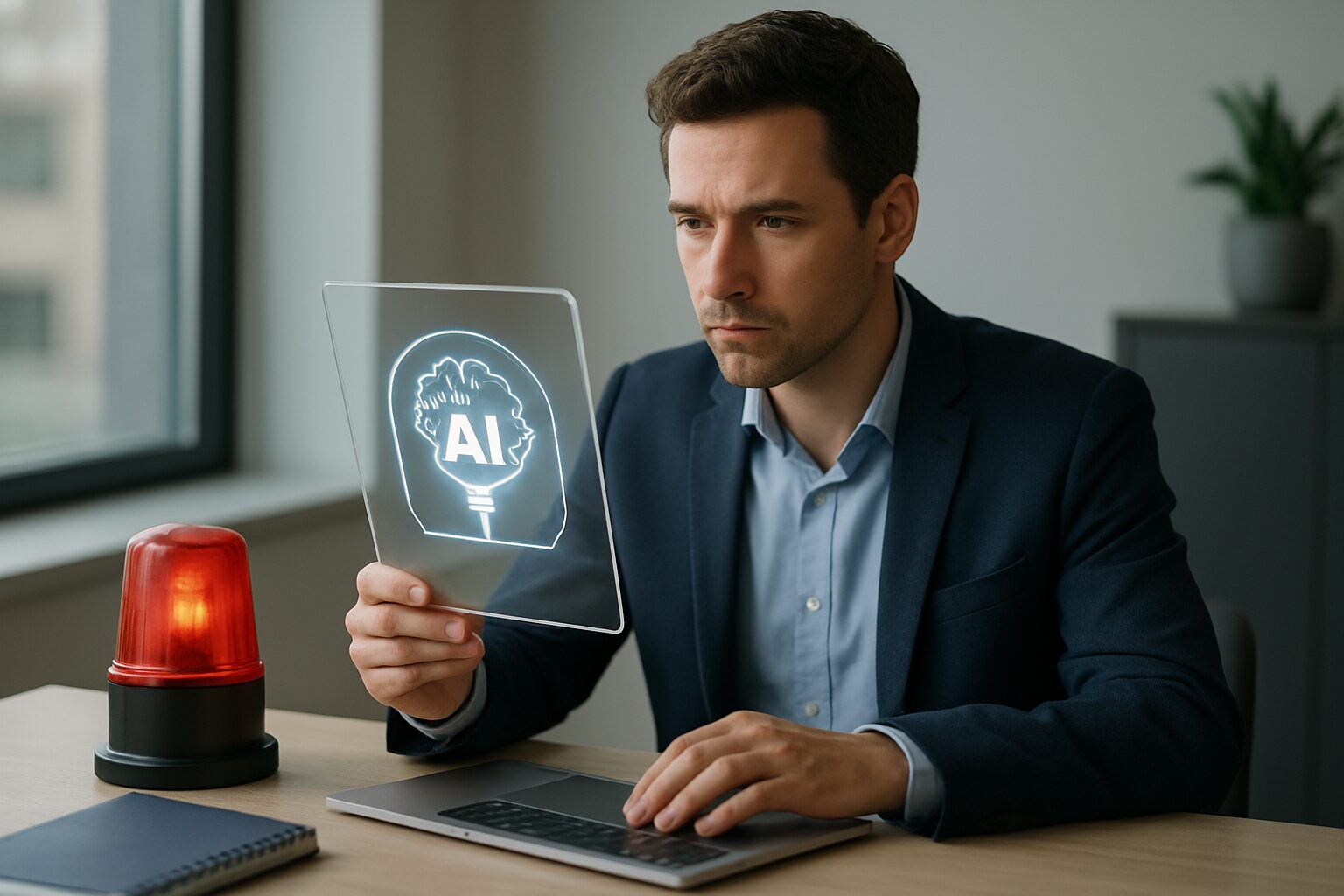
AI for Disaster Prediction: Balancing Innovation and Responsibility in Industry
The use of artificial intelligence in disaster prediction for industrial applications raises ethical questions about safety and risk. AI systems can improve early warning capabilities, but their deployment involves challenges such as accountability for errors, transparency in decision-making, and potential biases in data. Balancing technological benefits with ethical safeguards is critical to ensure these tools protect lives and infrastructure without unintended harm.
Why It Matters - Real-world impact
The ethical implications of AI in disaster prediction directly impact industries, workers, and surrounding communities. When AI systems fail to accurately forecast disasters—due to biased data, flawed algorithms, or corporate negligence—the consequences can be catastrophic, leading to loss of life, environmental harm, and economic devastation. Vulnerable populations, such as low-income workers in high-risk facilities or residents near industrial zones, often bear the brunt of these failures. Regular people should care because these technologies influence workplace safety, public health, and even insurance costs, shaping the risks they face daily. Without proper oversight, AI-driven predictions may prioritize profit over people, exacerbating inequality and eroding trust in critical safety systems.
Ethical Concerns - What’s wrong or risky?
Ethical Risks in AI for Disaster Prediction in Industry
Integrating AI into disaster prediction systems in industrial settings introduces several ethical challenges that must be carefully navigated. One primary concern is fairness, as biased data or algorithms could lead to unequal protection for different facilities or regions, disproportionately endangering some communities over others.
Another significant issue is discrimination, where predictive models might inadvertently favor certain types of industries or locations based on historical data, potentially neglecting marginalized or underrepresented areas.
Transparency is crucial, as opaque AI systems can make it difficult for stakeholders to understand how predictions are made, undermining trust and accountability, especially when false alarms or missed warnings occur.
The economic impact of AI predictions must also be considered; over-reliance on automated systems might lead to costly false positives or encourage neglect of human expertise, affecting financial stability and resource allocation.
Additionally, there are concerns about job loss if AI systems replace human roles in monitoring and response, though some argue that AI could augment rather than replace jobs, creating new opportunities for safety management.
Finally, worker rights may be impacted if AI-driven predictions are used to enforce unsafe working conditions or justify surveillance under the guise of safety, raising questions about consent and autonomy.
Not everyone agrees on the severity of these risks; some view AI as a net positive for enhancing safety and reducing human error, while others caution against overestimating its reliability and underscore the need for robust ethical frameworks.
Solutions - What’s being done or proposed?
Regulatory Frameworks for AI in Disaster Prediction
Governments and international bodies have proposed regulatory frameworks to ensure AI systems used in disaster prediction adhere to ethical standards. These frameworks often include requirements for transparency, accountability, and bias mitigation. For example, the EU's AI Act classifies disaster prediction systems as high-risk, mandating rigorous testing and human oversight before deployment.
Explainable AI (XAI) for Transparency
Technical solutions like Explainable AI (XAI) aim to make AI decision-making processes more transparent. In disaster prediction, XAI helps stakeholders understand how models arrive at conclusions, enabling better trust and accountability. Techniques such as SHAP (SHapley Additive exPlanations) and LIME (Local Interpretable Model-agnostic Explanations) are being adopted to provide interpretable insights.
Multi-Stakeholder Collaboration
Institutions have promoted collaboration between governments, tech companies, and local communities to address ethical concerns. By involving diverse stakeholders, AI systems can be designed with input from those most affected by disasters. Initiatives like the UN's AI for Good program facilitate such partnerships to ensure equitable and ethical AI deployment.
Bias Audits and Fairness Algorithms
To mitigate bias in AI-driven disaster prediction, organizations conduct regular bias audits and implement fairness algorithms. These audits assess whether models disproportionately impact certain groups, while fairness algorithms adjust predictions to ensure equitable outcomes. Tools like IBM's AI Fairness 360 help developers identify and correct biases in their models.
Public Awareness and Education Campaigns
Social solutions include public awareness campaigns to educate communities about AI's role in disaster prediction and its ethical implications. By fostering understanding, these campaigns aim to build trust and encourage informed public discourse. Workshops, media outreach, and school programs are common methods to achieve this goal.
Ethical Review Boards for AI Projects
Some industries have established ethical review boards to evaluate AI projects, including disaster prediction systems. These boards assess potential risks, biases, and societal impacts before deployment. Modeled after institutional review boards (IRBs) in research, they ensure AI applications align with ethical principles and human rights standards.
Examples and Real Cases
Google's Flood Forecasting Initiative in India
In 2018, Google launched its AI-powered flood forecasting system in India, aiming to provide accurate and timely flood warnings. While the system improved response times, concerns arose about data privacy and the potential exclusion of marginalized communities lacking digital access.
IBM's AI for Hurricane Prediction
IBM's AI model, developed in 2019, improved hurricane tracking accuracy by 200%. However, ethical debates emerged over the transparency of the AI's decision-making process and the potential for over-reliance on automated predictions in emergency responses.
Hypothetical: AI-Powered Earthquake Warning System in California
A hypothetical AI system deployed in 2025 could predict earthquakes with 85% accuracy 48 hours in advance. Ethical concerns would include false alarms causing panic, liability for missed predictions, and unequal access to evacuation resources based on socioeconomic status.
One Concern's AI for Urban Disaster Response
One Concern's AI platform, used after the 2018 California wildfires, helped prioritize rescue efforts. Critics questioned whether the algorithm's training data adequately represented vulnerable populations, potentially skewing resource allocation.
European Flood Awareness System (EFAS)
EFAS, operational since 2012, uses AI to predict floods across Europe. While effective, concerns persist about data sovereignty as sensitive hydrological information flows across national borders to centralized AI systems.
Frequently Asked Questions
What is AI in disaster prediction and why is it important?
AI in disaster prediction uses machine learning and data analysis to forecast natural or industrial disasters like earthquakes, floods, or chemical leaks. It's important because early warnings can save lives, reduce economic losses, and help communities prepare for emergencies.
What are the ethical concerns with using AI for disaster prediction?
Key ethical concerns include data privacy (how personal data is used), bias in AI models (which may overlook certain regions or groups), accountability (who is responsible if predictions fail), and transparency (how decisions are made). Ensuring fairness and trust is crucial.
How can AI in disaster prediction improve safety in industries?
AI can analyze vast amounts of data (like weather patterns or equipment sensors) to predict failures or hazards in industries like oil, mining, or manufacturing. This allows companies to take preventive actions, reducing workplace accidents and environmental risks.
What are the risks of relying too much on AI for disaster prediction?
Over-reliance on AI may lead to ignoring human expertise, system errors due to flawed data, or delayed responses if warnings are inaccurate. It's important to use AI as a tool alongside human judgment and traditional safety measures.
How is AI in disaster prediction being used today?
Today, AI helps predict wildfires (using satellite data), floods (via river level monitoring), and industrial accidents (through equipment sensors). Companies and governments use these insights for evacuation plans, infrastructure upgrades, and emergency response training.