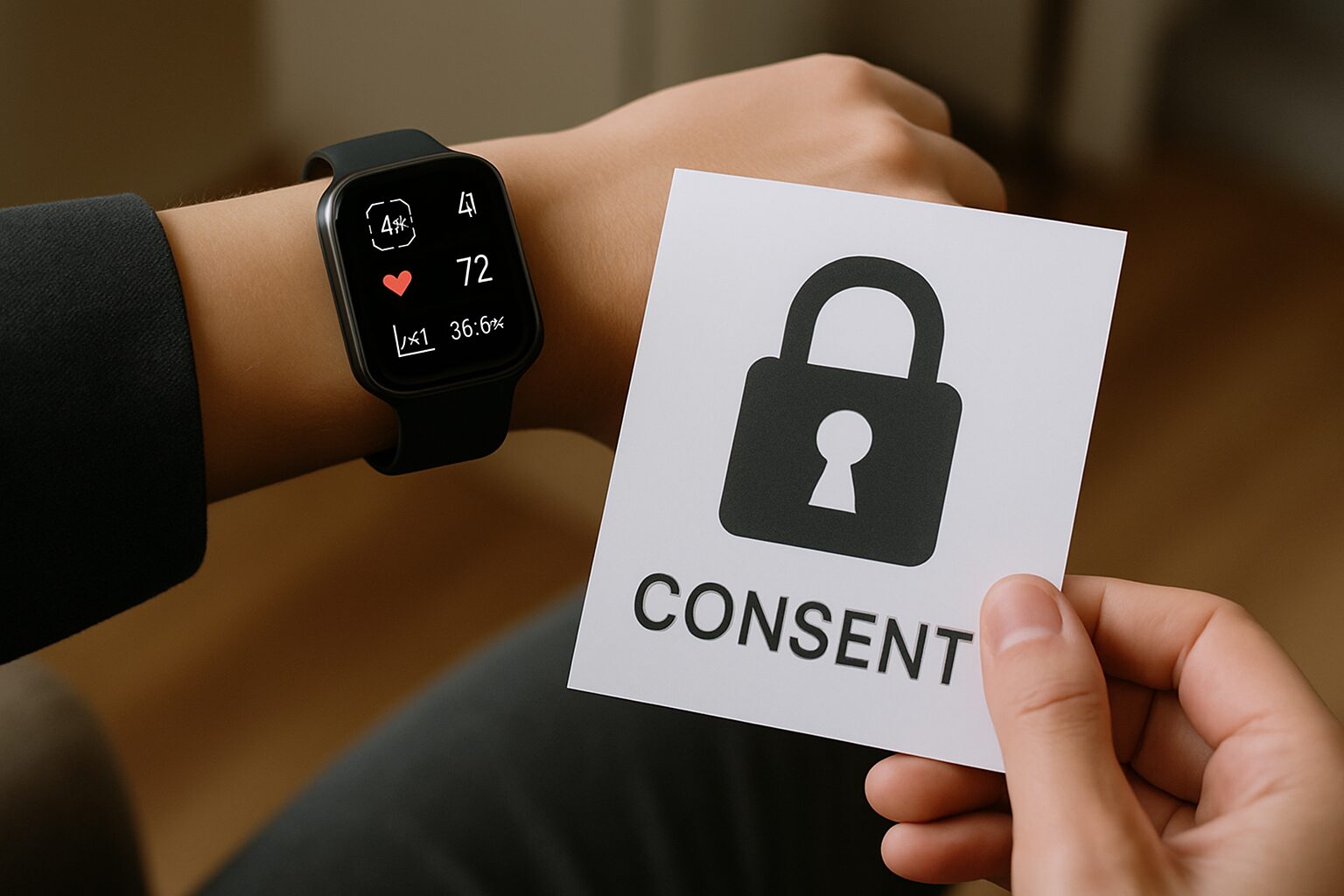
The Future of Identity Protection: Balancing Tech Innovation and Privacy Rights
AI systems increasingly rely on biometric data—such as fingerprints, facial recognition, or voice patterns—to identify and authenticate individuals. This raises concerns about how this sensitive information is collected, stored, and used, particularly regarding user consent and potential misuse. The ethical challenge lies in balancing technological innovation with robust privacy protections and clear accountability measures to prevent harm.
Why It Matters - Real-world impact
The ethical use of AI in handling biometric data—such as fingerprints, facial recognition, or voice patterns—has profound real-world implications for individuals and society. From employees subjected to workplace surveillance to citizens tracked by government systems, the misuse of this sensitive data can lead to identity theft, discrimination, or unjust surveillance. Vulnerable populations, including minorities and activists, often face heightened risks of bias or repression when biometric systems lack transparency. Even everyday interactions, like unlocking a phone or passing through airport security, hinge on trust in these technologies. Without strong privacy safeguards and accountability, the erosion of personal autonomy and civil liberties becomes a tangible threat. Regular people should care because once biometric data is compromised, it cannot be replaced—unlike a password—making the stakes irreversibly high.
Ethical Concerns - What’s wrong or risky?
AI and Biometric Data Privacy: Navigating Ethical Risks
As artificial intelligence integrates deeper into biometric systems—from facial recognition to fingerprint scanning—ethical concerns around privacy and accountability intensify. These technologies collect and process highly sensitive personal data, raising profound moral questions.
Discrimination and Fairness
AI systems trained on biased data can perpetuate or even amplify discrimination, particularly in law enforcement or hiring. For example, facial recognition has shown higher error rates for people of color, risking unjust outcomes. This ties directly to fairness, as equitable treatment is compromised when systems fail to perform uniformly across demographics. Similarly, concerns about discrimination arise when biometric AI reinforces societal biases, leading to exclusion or harm for marginalized groups.
Transparency and Accountability
Many AI algorithms operate as "black boxes," making it difficult to understand how decisions are made. This lack of transparency complicates accountability when errors occur—such as misidentification—leaving affected individuals with little recourse. Who is responsible when a biometric system fails: the developer, the user, or the AI itself?
Economic and Employment Implications
Widespread biometric surveillance could lead to workforce monitoring that infringes on worker rights, such as privacy and autonomy. Additionally, automation via AI might contribute to job loss in sectors like security or data entry, though some argue it creates new roles in tech and oversight.
Differing Perspectives
Not all stakeholders view these risks uniformly. Proponents argue that biometric AI enhances security and efficiency, justifying its use with proper safeguards. Critics emphasize the potential for abuse, such as mass surveillance or erosion of consent, advocating for stricter regulations and ethical frameworks to protect individual rights.
Other ethical worries include data security breaches, function creep (using data beyond original purposes), and informed consent challenges, especially in vulnerable populations. Balancing innovation with ethical guardrails remains a critical ongoing debate.
Solutions - What’s being done or proposed?
Stronger Legal Frameworks and Regulations
Governments and international bodies have proposed stricter laws to regulate the collection, storage, and use of biometric data by AI systems. Examples include the EU's General Data Protection Regulation (GDPR), which imposes heavy penalties for misuse, and the proposed AI Act, which specifically addresses biometric surveillance. These frameworks aim to ensure transparency, accountability, and user consent while limiting unethical practices like mass surveillance.
Privacy-Preserving AI Technologies
Technical solutions such as federated learning, differential privacy, and homomorphic encryption have been developed to process biometric data without exposing raw information. These methods allow AI systems to learn from data while minimizing privacy risks. For instance, federated learning enables model training across decentralized devices, ensuring data never leaves the user's control.
Decentralized Identity Systems
Some organizations advocate for decentralized identity solutions, where users retain ownership of their biometric data through blockchain or other distributed technologies. This approach reduces reliance on centralized databases, which are vulnerable to breaches. Users can grant temporary access to their data for specific purposes, enhancing control and reducing misuse.
Ethical AI Audits and Impact Assessments
Institutions and companies are increasingly adopting third-party audits and ethical impact assessments for AI systems handling biometric data. These evaluations assess fairness, bias, and privacy risks before deployment. For example, the Algorithmic Accountability Act in the U.S. proposes mandatory assessments for high-risk AI applications, promoting accountability and trust.
Public Awareness and Advocacy
Civil society groups and activists have pushed for greater public awareness about biometric data risks and rights. Campaigns educate individuals on how their data is used and how to demand accountability. Grassroots movements have also pressured corporations and governments to adopt ethical practices, such as banning facial recognition in certain jurisdictions.
Industry Self-Regulation and Standards
Tech companies and industry consortia have developed voluntary guidelines for ethical biometric data use. For instance, the Partnership on AI promotes best practices among member organizations, including transparency and bias mitigation. While not legally binding, these standards encourage responsible innovation and build public trust.
Examples and Real Cases
Clearview AI's Facial Recognition Controversy
In January 2020, Clearview AI faced widespread criticism for scraping billions of facial images from social media without consent to build its facial recognition database. The company's practices led to lawsuits and bans in multiple countries, including Canada and Australia, for violating privacy laws.
Amazon's Rekognition and Law Enforcement
In 2018, Amazon's Rekognition software was used by law enforcement agencies, raising concerns about racial bias and misuse. The ACLU reported false matches, particularly among people of color, prompting calls for stricter regulations on biometric surveillance.
Hypothetical: AI-Powered Employee Monitoring
A hypothetical company implements AI-driven biometric tracking to monitor employee productivity through keystrokes, facial expressions, and heart rate data. Without transparent policies, employees are unaware of the extent of data collection, leading to privacy violations and mistrust.
China's Social Credit System
China's Social Credit System, operational since 2014, uses AI and biometric data to monitor citizens' behavior. Critics argue it infringes on privacy and enables mass surveillance, with facial recognition cameras tracking individuals in public spaces.
Facebook's DeepFace and Tag Suggestions
Facebook's DeepFace algorithm, introduced in 2014, automatically tagged users in photos using facial recognition. The feature was opt-out rather than opt-in, leading to a $650 million settlement in 2021 for violating Illinois' Biometric Information Privacy Act.
Frequently Asked Questions
What is biometric data in AI?
Biometric data in AI refers to unique physical or behavioral characteristics like fingerprints, facial recognition, or voice patterns that AI systems use to identify individuals. It's often collected for security, authentication, or personalization purposes.
Why is privacy important for biometric data?
Privacy is crucial for biometric data because it's highly personal and permanentu2014unlike passwords, you can't change your fingerprints or face. If misused or leaked, it could lead to identity theft, surveillance, or discrimination, making strong protections necessary.
Do companies need my consent to use my biometric data?
Yes, in most regions, companies legally require your explicit consent before collecting or using your biometric data. Laws like GDPR (Europe) or BIPA (Illinois, USA) mandate transparency about how data is stored, used, and shared.
How is AI used with biometric data today?
AI powers everyday applications like phone face-unlock, airport security scans, or banking voice verification. While convenient, these systems raise privacy concerns, so regulations and ethical guidelines are evolving to ensure accountability.
What happens if my biometric data is stolen?
Unlike passwords, stolen biometric data can't be reset, making breaches severe. Companies must use encryption and secure storage, while users should monitor where they share such data and opt for multi-factor authentication when possible.