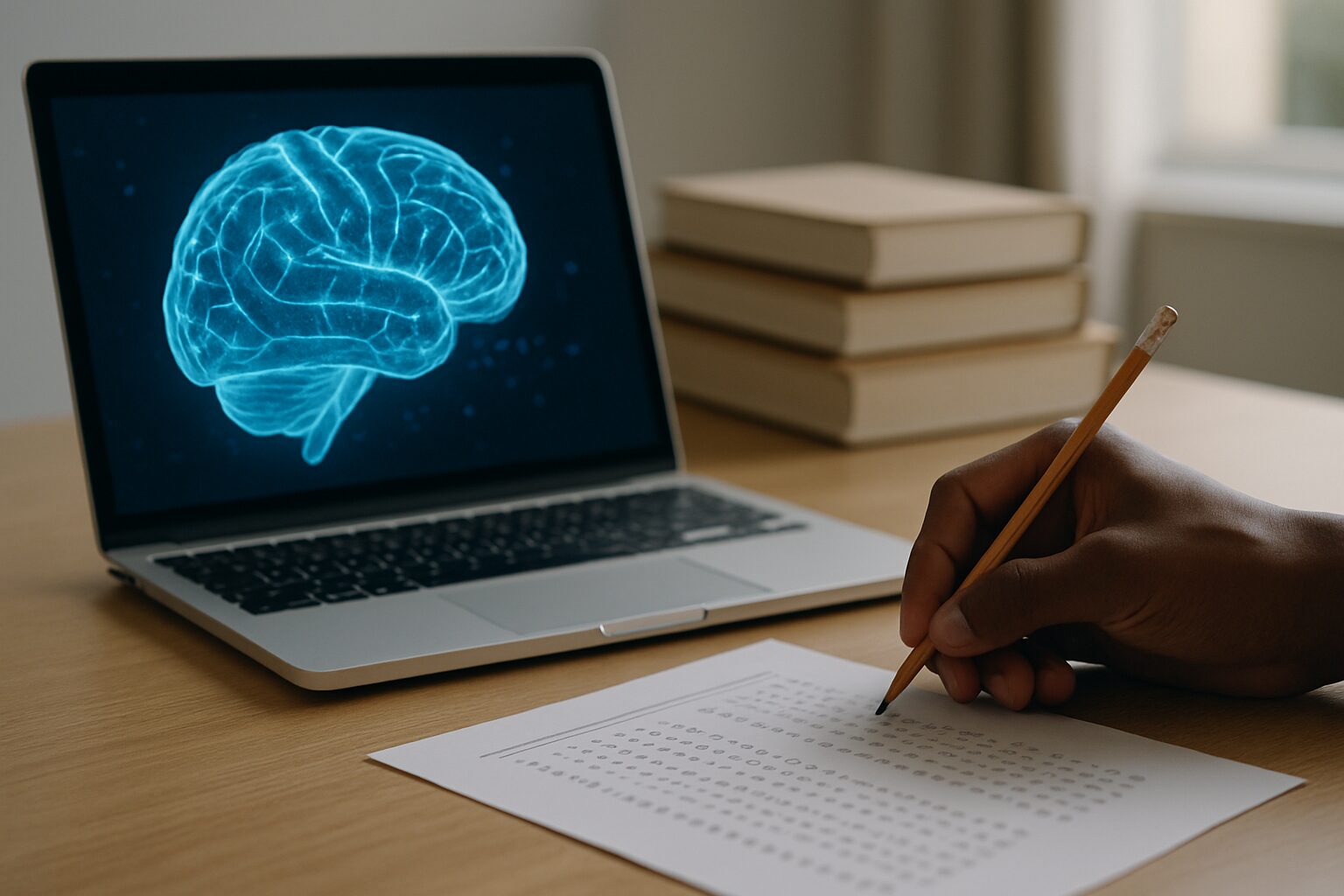
Academic Integrity Debate: Are Automated Plagiarism Checks Unjust?
The use of AI to detect plagiarism in education raises ethical questions about fairness and accuracy. While these tools can efficiently identify copied content, concerns arise over potential biases, false positives, and the impact on student trust. The debate centers on whether AI-assisted plagiarism detection upholds academic integrity or creates unintended barriers to learning.
Why It Matters - Real-world impact
The issue of AI-powered plagiarism detection in education has far-reaching consequences for students, educators, and society. Students face high-stakes consequences—false accusations can derail academic careers, while undetected cheating undermines meritocracy. Educators grapple with balancing academic integrity with the limitations of imperfect AI systems that may reflect biases in their training data. For regular people, this matters because education shapes future professionals—doctors, engineers, and leaders—whose competence affects everyone. Flawed systems could either punish innocent learners or produce graduates who bypassed genuine skill development, eroding trust in educational credentials that society relies upon.
Ethical Concerns - What’s wrong or risky?
AI Plagiarism Detection: A Double-Edged Sword
As educational institutions increasingly adopt AI tools to detect plagiarism, ethical questions arise about their implementation. While these systems promise to uphold academic integrity, they also introduce significant ethical risks that must be addressed.
Fairness Concerns
AI systems may not treat all students equitably. For instance, algorithms might flag non-native English speakers more frequently due to phrasing differences, inadvertently penalizing linguistic diversity rather than intentional cheating. This raises questions about whether such tools are truly fair in practice. More on this can be explored in our article on Ethical Concerns: Fairness.
Risk of Discrimination
Bias in training data can lead AI to disproportionately target certain demographic groups. If historical data used to train these systems contains biases, the AI might perpetuate or even amplify discriminatory outcomes, affecting students from marginalized backgrounds unfairly. Learn about related issues in our coverage of Ethical Concerns: Discrimination.
Lack of Transparency
Many AI plagiarism detectors operate as "black boxes," offering little insight into how decisions are made. This opacity can erode trust, as students and educators cannot verify the accuracy or rationale behind accusations, potentially leading to unjust academic penalties. Transparency is critical, as discussed in our piece on Ethical Concerns: Transparency.
Privacy and Autonomy
These tools often require access to vast amounts of student work, raising concerns about data privacy and intellectual property. Students might feel their autonomy is undermined if their writing is continuously scrutinized without clear consent or purpose beyond surveillance.
Differing Perspectives
Supporters argue that AI detectors promote honesty and save educators time, ensuring a level playing field. Critics, however, worry about over-reliance on technology, which may stifle creativity and foster a culture of suspicion rather than trust in educational environments.
Economic and Labor Implications
Widespread adoption could reduce the need for human oversight in academic evaluation, potentially impacting jobs in education. Additionally, if these tools become expensive, less-funded institutions might struggle to access them, widening educational disparities. For more on such impacts, see Ethical Concern: Economic Impact and Ethical Concerns: Job Loss.
Solutions - What’s being done or proposed?
Improving AI Detection Transparency
Some educators and institutions have called for greater transparency in how AI plagiarism detection tools operate. This includes providing clear explanations of the algorithms used, the databases they reference, and the thresholds for flagging content. By making these processes more transparent, students and teachers can better understand the tool's limitations and reduce false positives.
Human Review as a Second Layer
To mitigate over-reliance on AI, some schools have implemented a two-step process where AI-detected plagiarism is reviewed by a human instructor before any penalties are applied. This ensures that context, such as properly cited sources or common phrases, is considered before making accusations. This approach balances efficiency with fairness.
Student Education on Proper Citation
Many institutions have increased efforts to educate students on proper citation practices and the ethical use of sources. Workshops, tutorials, and mandatory academic integrity courses help students understand what constitutes plagiarism and how to avoid it. Proactive education reduces unintentional plagiarism and fosters a culture of honesty.
Customizing AI Tools for Fairness
Some universities have worked with developers to customize AI plagiarism detectors for their specific academic disciplines. For example, technical fields with commonly used terminology may adjust sensitivity settings to avoid flagging standard phrases. Customization helps reduce false alarms while maintaining detection accuracy.
Legal Frameworks for AI Accountability
Advocates have suggested creating legal guidelines to hold AI plagiarism detection tools accountable for errors, such as false accusations. These frameworks could require companies to provide avenues for appeals or corrections when mistakes occur. Legal oversight ensures that students' rights are protected while using these tools.
Peer Review and Collaborative Writing
Some educators encourage peer review and collaborative writing exercises to teach students how to ethically incorporate others' work. By working together and giving feedback, students learn to distinguish between collaboration and plagiarism. This social approach builds accountability and reduces reliance on punitive measures.
Alternative Assessment Methods
To reduce the temptation of plagiarism, some instructors have shifted toward alternative assessments like oral presentations, project-based learning, or in-class writing. These methods make it harder to plagiarize and encourage original thinking. Diversifying evaluation techniques addresses the root of the problem rather than just detecting it.
Examples and Real Cases
Turnitin's AI Detection in Universities (2023)
In 2023, several universities reported false positives when using Turnitin's AI detection tool, accusing students of using AI-generated content. For example, a Texas A&M professor initially failed an entire class based on Turnitin's results, but later retracted the accusations after human review showed the tool was incorrect.
ChatGPT in High School Essays (Hypothetical)
A high school in California implemented an AI plagiarism detector in 2024, flagging 30% of submitted essays as AI-generated. Upon investigation, teachers realized the tool misidentified students' original writing styles as AI, especially for non-native English speakers, leading to unfair academic penalties.
GPTZero at Princeton (2022)
Princeton student Edward Tian developed GPTZero in December 2022 to detect AI-written text. While initially praised, educators later found it produced inconsistent results, such as flagging historical documents like the US Constitution as AI-generated due to their formal tone.
International Student Bias (Hypothetical)
In 2023, a UK university's AI detector disproportionately flagged essays from international students, mistaking their language patterns for AI generation. This raised ethical concerns about cultural bias in plagiarism detection algorithms.
Georgia Tech's Honor Code Revisions (2021)
After implementing AI-based plagiarism detection in 2021, Georgia Tech had to revise its honor code when students demonstrated that the system could be tricked by simple paraphrasing techniques. This led to debates about whether AI detection unfairly targeted less tech-savvy students.
Frequently Asked Questions
What is AI plagiarism detection in education?
AI plagiarism detection in education refers to the use of artificial intelligence tools to scan and compare students' work against existing sources (like books, articles, or online content) to identify potential copying or unoriginal content. It helps educators ensure academic integrity.
Why is AI plagiarism detection important in schools?
AI plagiarism detection is important because it promotes fairness, discourages cheating, and ensures students develop original thinking and research skills. It also helps maintain academic standards and credibility in educational institutions.
Is AI plagiarism detection always accurate?
No, AI plagiarism detection isn't always perfect. It can sometimes flag common phrases or properly cited content as plagiarism, or miss sophisticated copying. Human review is often needed to confirm results.
How does AI plagiarism detection affect students' access to education?
AI plagiarism detection can both help and hinder access. It ensures fairness by holding all students to the same standards, but over-reliance on these tools may unfairly penalize non-native speakers or students unfamiliar with citation rules, creating barriers.
Can AI plagiarism detection tools be used for learning, not just punishment?
Yes! These tools can be used educationally by helping students identify accidental plagiarism, learn proper citation methods, and improve their writing skills before submitting final work, turning detection into a teaching opportunity.