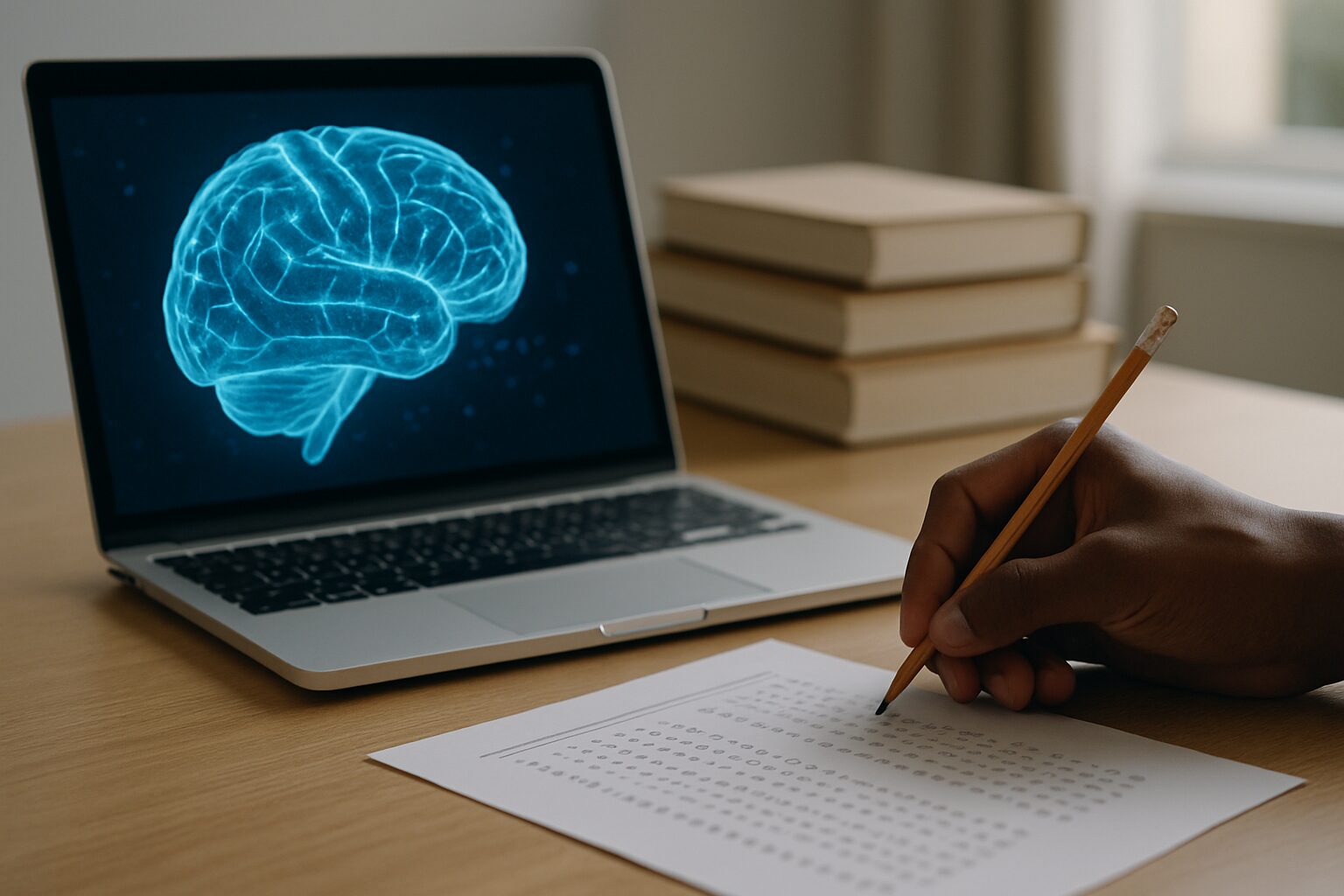
Revolutionizing Education: Smart Strategies for Test Success
AI is increasingly being used in standardized testing to automate scoring, generate questions, and personalize assessments. This raises ethical questions about fairness, bias, and transparency in evaluating student performance. Ensuring best practices in AI-driven testing requires addressing these concerns while maintaining accuracy and equity in education.
Why It Matters - Real-world impact
The ethical use of AI in standardized testing has far-reaching implications for students, educators, and society at large. If biased or flawed algorithms influence scoring, placement, or college admissions, they could perpetuate systemic inequities, disadvantaging marginalized groups and undermining meritocracy. Overreliance on AI-driven assessments may also reduce human oversight, leading to errors that alter academic trajectories. For regular people, this issue matters because standardized tests often determine access to education, scholarships, and career opportunities—key drivers of social mobility. Without transparency and accountability, AI could exacerbate existing disparities rather than fostering fairness in education.
Ethical Concerns - What’s wrong or risky?
Fairness in AI-Enhanced Testing
When AI is used to score or design standardized tests, ensuring fairness is a primary ethical challenge. Algorithms may inadvertently favor certain demographics if training data is not representative, leading to biased outcomes. For example, language processing models might disadvantage non-native speakers or those using regional dialects. This ties into broader concerns about fairness in how opportunities are allocated based on AI-driven results.
Discrimination Risks
AI systems can perpetuate or even amplify existing societal biases. If historical data used to train these models reflects discriminatory patterns, the AI might unfairly penalize certain groups—such as racial minorities or students from low-income backgrounds. This raises significant issues related to discrimination, as biased scoring could affect college admissions or scholarship eligibility.
Transparency and Accountability
Many AI algorithms, especially deep learning models, operate as "black boxes," making it difficult to understand how decisions are made. In standardized testing, this lack of transparency can erode trust among students, educators, and institutions. If a student receives a low score, explaining why—or appealing the result—becomes nearly impossible without clear insight into the AI's reasoning process.
Economic and Access Implications
The adoption of AI in testing could exacerbate economic divides. Wealthier schools might afford advanced AI tools for test preparation or personalized feedback, while underfunded schools struggle to keep up. This creates an uneven playing field and highlights concerns about the economic impact of technological adoption in education.
Worker Rights and Roles
As AI takes on tasks like grading essays or designing tests, there are worries about the displacement of human educators and assessors. This shift could undermine the expertise of teachers and affect worker rights, particularly if AI systems are used to cut costs without considering the value of human judgment in education.
Differing Perspectives
Not all stakeholders view these risks uniformly. Some argue that AI can reduce human bias in grading, promoting objectivity, while others caution that without careful oversight, AI might simply encode existing prejudices. Similarly, proponents highlight efficiency gains, whereas critics emphasize the loss of human touch in evaluating complex student responses.
Additional Ethical Considerations
Beyond the linked issues, privacy is a major concern—AI systems often require vast amounts of student data, raising questions about consent and data security. There's also the moral question of whether standardized testing itself, amplified by AI, overly narrows educational focus to testable metrics, potentially stifling creativity and holistic learning.
Solutions - What’s being done or proposed?
Algorithmic Transparency and Explainability
One proposed solution is to mandate transparency in AI systems used for standardized testing. This involves requiring test providers to disclose how their algorithms make decisions, including the data inputs, weighting mechanisms, and decision-making processes. Explainability tools, such as LIME or SHAP, can help educators and students understand why certain answers were marked correct or incorrect. While this doesn't eliminate bias, it allows for scrutiny and accountability.
Diverse Training Data to Reduce Bias
Technical solutions include using more diverse and representative training data to minimize bias in AI grading systems. For instance, incorporating essays and responses from students of various demographics, regions, and socioeconomic backgrounds can help the AI learn a broader range of valid responses. Regular audits of the training data can also ensure ongoing fairness and inclusivity.
Human-in-the-Loop Systems
Many suggest hybrid models where AI handles initial scoring but humans review borderline cases or flagged responses. This approach combines the efficiency of AI with the nuanced judgment of educators. For high-stakes tests, human oversight can catch errors or biases that the AI might miss, providing an additional layer of fairness.
Regulatory Frameworks and Standards
Legal and institutional solutions involve creating regulatory frameworks to govern AI use in standardized testing. Organizations like the Department of Education or international bodies could set standards for accuracy, fairness, and privacy. Compliance with these standards could be a prerequisite for AI systems to be used in official assessments, ensuring a baseline of ethical practice.
Bias Mitigation Algorithms
Technical teams have developed algorithms specifically designed to detect and mitigate bias in AI scoring. Techniques like adversarial debiasing or reweighting training samples can reduce disparities in how different groups are evaluated. While not perfect, these methods can significantly improve fairness if implemented rigorously.
Student and Educator Feedback Mechanisms
Social solutions include establishing channels for students and educators to report concerns or discrepancies in AI-graded tests. Feedback loops can help identify systemic issues, such as cultural biases in language processing, and prompt corrections. This participatory approach ensures that affected communities have a voice in improving the system.
Alternative Assessment Methods
Some institutions are exploring alternatives to traditional standardized tests, such as project-based assessments or portfolios, which are less reliant on AI grading. These methods can provide a more holistic view of student abilities while reducing dependence on potentially biased algorithms. However, scalability and consistency remain challenges.
Ethics Review Boards for EdTech
Creating ethics review boards within educational technology companies or school districts can help oversee AI testing tools. These boards, composed of educators, ethicists, and technologists, would evaluate the ethical implications of AI systems before deployment and monitor their impact over time, ensuring alignment with educational values.
Examples and Real Cases
ChatGPT's Performance on Standardized Tests
In January 2023, OpenAI revealed that ChatGPT scored in the 90th percentile on the Uniform Bar Exam and the 93rd percentile on the SAT Evidence-Based Reading and Writing test. This raised concerns about AI's ability to undermine the integrity of standardized testing by providing unfair advantages or replacing human assessment.
ETS Integrates AI for GRE Essay Scoring
Since 2019, Educational Testing Service (ETS) has used AI systems like e-rater to score GRE analytical writing essays alongside human graders. While intended to reduce bias, critics argue the algorithm may penalize unconventional writing styles or favor certain linguistic patterns.
Hypothetical: AI-Generated Admissions Essays
A realistic concern is universities encountering AI-written application essays in 2024-2025 admissions cycles. Without proper detection tools, this could disadvantage students without AI access while making it harder to assess genuine writing ability.
China's AI Surveillance During Gaokao
During China's 2021 Gaokao college entrance exams, authorities deployed AI-powered surveillance systems to monitor millions of test-takers for cheating. While effective at detecting misconduct, the system raised privacy concerns and potential for overreach in student monitoring.
Hypothetical: Adaptive Testing Bias
If an AI-powered adaptive test in 2025 disproportionately routes minority students to easier questions based on early performance, it could reinforce achievement gaps. This scenario highlights the need for rigorous bias testing in algorithmic assessment tools.
Frequently Asked Questions
What is AI in standardized testing?
AI in standardized testing refers to the use of artificial intelligence technologies to create, administer, score, or analyze standardized tests. It can help personalize assessments, detect cheating, and provide faster, more accurate results.
Why is AI important for standardized testing?
AI is important because it can make testing more efficient, fair, and adaptive. It reduces human bias in grading, provides instant feedback, and can tailor questions to a student's skill level, improving the overall assessment experience.
How can AI improve access to standardized testing?
AI can improve access by enabling remote proctoring, offering tests in multiple languages, and adapting to students with disabilities (e.g., speech-to-text for visually impaired learners). This makes testing more inclusive and accessible globally.
What are the risks of using AI in standardized testing?
Risks include potential data privacy concerns, over-reliance on technology, and algorithmic bias if the AI isn't properly trained. Ensuring transparency and fairness in AI systems is critical to avoid disadvantaging certain groups.
How is AI being used in standardized testing today?
Today, AI is used for automated essay scoring, detecting answer patterns (e.g., cheating), generating test questions, and providing personalized learning recommendations based on test results. Schools and testing agencies are increasingly adopting these tools.