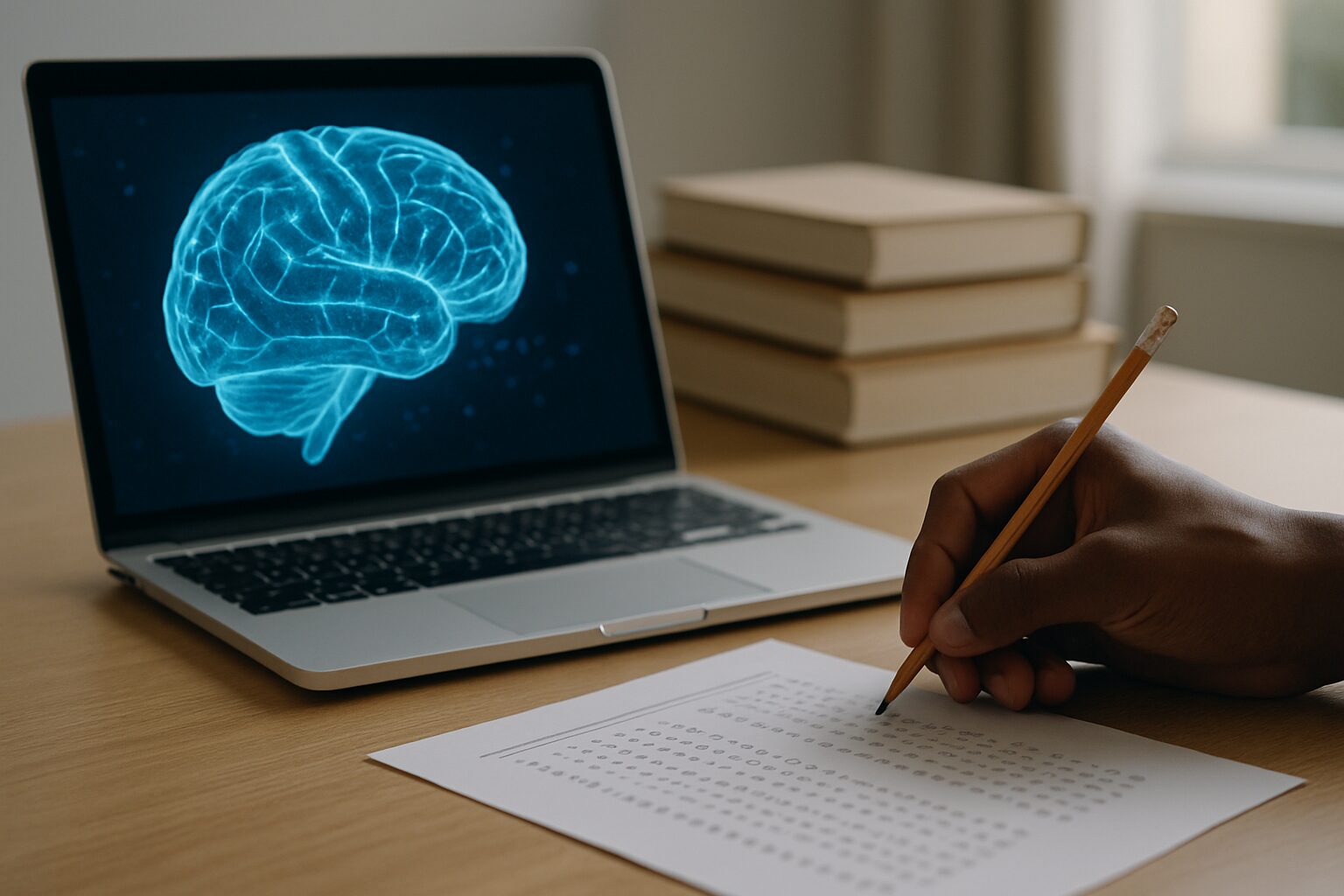
Balancing Tech and Trust: The Future of Exam Monitoring in Schools
AI proctoring refers to the use of artificial intelligence to monitor students during exams, often through video, audio, or screen recording. While it aims to prevent cheating, it raises concerns about student privacy due to the collection and analysis of personal data. The ethical challenge lies in balancing academic integrity with the right to privacy in educational settings.
Why It Matters - Real-world impact
AI proctoring tools, which monitor students during exams using facial recognition, screen recording, and other surveillance technologies, raise significant privacy concerns that extend beyond the classroom. Students are the most directly affected, as these systems collect sensitive biometric data, often without clear consent or transparency about how it is stored and used. Errors in AI monitoring—such as false accusations of cheating—can have lasting academic and emotional consequences, disproportionately impacting marginalized groups who may face higher rates of misidentification. Institutions risk eroding trust by prioritizing convenience over student rights, while broader societal implications include normalizing invasive surveillance in education. Regular people should care because the normalization of such technologies could pave the way for increased privacy violations in other areas of daily life, setting dangerous precedents for how personal data is handled in the name of efficiency.
Ethical Concerns - What’s wrong or risky?
AI Proctoring and Student Privacy: Navigating Ethical Risks
AI proctoring systems, which use algorithms to monitor students during exams, raise significant ethical concerns regarding privacy and fairness in education. These tools often collect extensive data—such as video, audio, and biometric information—without clear guidelines on how this data is stored, used, or protected. This can lead to violations of student privacy and autonomy, as well as broader ethical issues.
Fairness and Bias
One major risk involves fairness. AI proctoring systems may not perform equally well for all students. Factors like lighting, internet connectivity, or cultural differences in behavior could cause the system to flag certain students unfairly. For example, a student in a low-income household with a poor internet connection might be penalized for technical issues beyond their control, exacerbating existing inequalities.
Discrimination Risks
There is also a risk of discrimination. If the AI is trained on biased data, it might disproportionately target students from certain racial, ethnic, or socioeconomic backgrounds. For instance, facial recognition algorithms have historically shown higher error rates for people of color, which could lead to false accusations of cheating.
Lack of Transparency
Transparency is another critical issue. Many AI proctoring tools operate as "black boxes," where the decision-making process is not clear to students or educators. This lack of transparency makes it difficult to challenge false positives or understand how data is being used, undermining trust in the educational process.
Economic and Access Concerns
While not always highlighted, there are economic implications. The adoption of AI proctoring may shift costs to students, who might need to invest in better technology or internet access to avoid being flagged. This creates an economic impact that disadvantages those from less affluent backgrounds, effectively creating a two-tiered system of access.
Differing Perspectives
Not everyone views these risks uniformly. Proponents argue that AI proctoring ensures academic integrity and provides a scalable solution for remote learning. They may see privacy trade-offs as necessary for maintaining fair assessment standards. Critics, however, emphasize that the potential for harm—such as invasive surveillance and biased outcomes—outweighs the benefits, calling for stricter regulations and alternative assessment methods.
Other Moral Concerns
Beyond the linked issues, there are additional ethical worries. For example, constant monitoring could contribute to student anxiety and stress, affecting mental health. There is also the risk of data breaches, where sensitive student information could be exposed. Moreover, the normalization of surveillance in education might desensitize students to privacy erosion in other areas of their lives.
Solutions - What’s being done or proposed?
Transparency and Consent Policies
Many institutions have implemented transparency and consent policies where students are fully informed about how AI proctoring tools work, what data is collected, and how it will be used. This includes clear opt-in or opt-out mechanisms, ensuring students have agency over their participation. Some schools also provide alternatives for students who are uncomfortable with AI monitoring.
Data Minimization Techniques
Technical solutions like data minimization have been suggested, where AI proctoring systems only collect the bare minimum data necessary to verify academic integrity. This includes limiting video recording to specific timeframes, avoiding unnecessary biometric data collection, and anonymizing data where possible to reduce privacy risks.
Legislative and Regulatory Frameworks
Some regions have introduced or proposed laws to regulate AI proctoring, such as requiring explicit consent, mandating data protection measures, or banning certain invasive practices like facial recognition. These frameworks aim to balance educational needs with privacy rights, though enforcement remains a challenge in some areas.
Human-in-the-Loop Oversight
To mitigate over-reliance on AI, some institutions use a hybrid approach where AI flags potential issues but a human reviewer makes the final determination. This reduces false positives and ensures that sensitive decisions (like academic penalties) are not left solely to algorithms, addressing both fairness and privacy concerns.
Decentralized and On-Device Processing
Technical proposals include decentralized AI proctoring, where data is processed locally on a student's device rather than being sent to cloud servers. This reduces exposure to data breaches and limits third-party access. However, this approach requires robust software and hardware support to be effective.
Alternative Assessment Methods
Some educators advocate for replacing high-stakes proctored exams with alternative assessments like project-based evaluations, open-book exams, or oral presentations. These methods reduce the need for invasive monitoring while still evaluating student understanding, though they may not be feasible for all subjects or institutions.
Student and Faculty Advocacy
Student unions and faculty groups have pushed back against intrusive AI proctoring by organizing protests, petitions, and negotiations with administrators. In some cases, this has led to policy changes or the abandonment of certain tools, demonstrating the power of collective action in shaping ethical standards.
Examples and Real Cases
Proctorio's Data Collection Controversy (2020)
In 2020, Proctorio, an AI proctoring software, faced backlash when students discovered it collected extensive data, including eye movements and room scans. The Electronic Frontier Foundation (EFF) filed a complaint alleging violations of student privacy under the Family Educational Rights and Privacy Act (FERPA).
ExamSoft's Facial Recognition Lawsuit (2021)
ExamSoft, used by law schools, was sued in 2021 for allegedly storing biometric data without consent. Students claimed the software's facial recognition feature violated Illinois' Biometric Information Privacy Act (BIPA), leading to a settlement in 2022.
Hypothetical: University X's AI Proctoring Bias (2023)
In a hypothetical scenario, University X's AI proctoring system flagged non-native English speakers disproportionately for 'suspicious behavior' in 2023. An audit revealed the algorithm misinterpreted cultural differences in body language, raising concerns about algorithmic bias in education.
Honorlock's Room Scanning Feature (2020)
Honorlock drew criticism in 2020 for requiring students to perform 360-degree room scans before exams. Privacy advocates argued this practice exposed personal living spaces and unrelated belongings to unauthorized third-party review.
Hypothetical: K-12 District Y's Data Breach (2024)
In a realistic hypothetical, K-12 District Y's AI proctoring vendor suffered a data breach in 2024, exposing students' video recordings and ID documents. The incident highlighted risks of centralized storage of sensitive biometric educational data.
Frequently Asked Questions
What is AI proctoring in education?
AI proctoring is the use of artificial intelligence to monitor students during online exams. It can track behaviors like eye movements, screen activity, and background noise to detect potential cheating.
Why is student privacy important in AI proctoring?
Student privacy is important because AI proctoring often collects sensitive data (like video recordings or biometric data). Without proper safeguards, this could be misused or expose students to risks like surveillance or data breaches.
How does AI proctoring affect students with disabilities?
AI proctoring may unintentionally disadvantage students with disabilities if it flags normal accommodations (like screen readers or extra movement) as suspicious. Schools must ensure these tools are accessible and fair.
Can AI proctoring be biased?
Yes, AI proctoring can have biases if its algorithms are trained on limited data. For example, it might misinterpret cultural differences in behavior or struggle with diverse lighting/settings, leading to unfair flags.
What should schools consider before using AI proctoring?
Schools should evaluate the tool's accuracy, privacy policies, accessibility features, and transparency. They should also communicate clearly with students about how data is used and provide alternatives if needed.