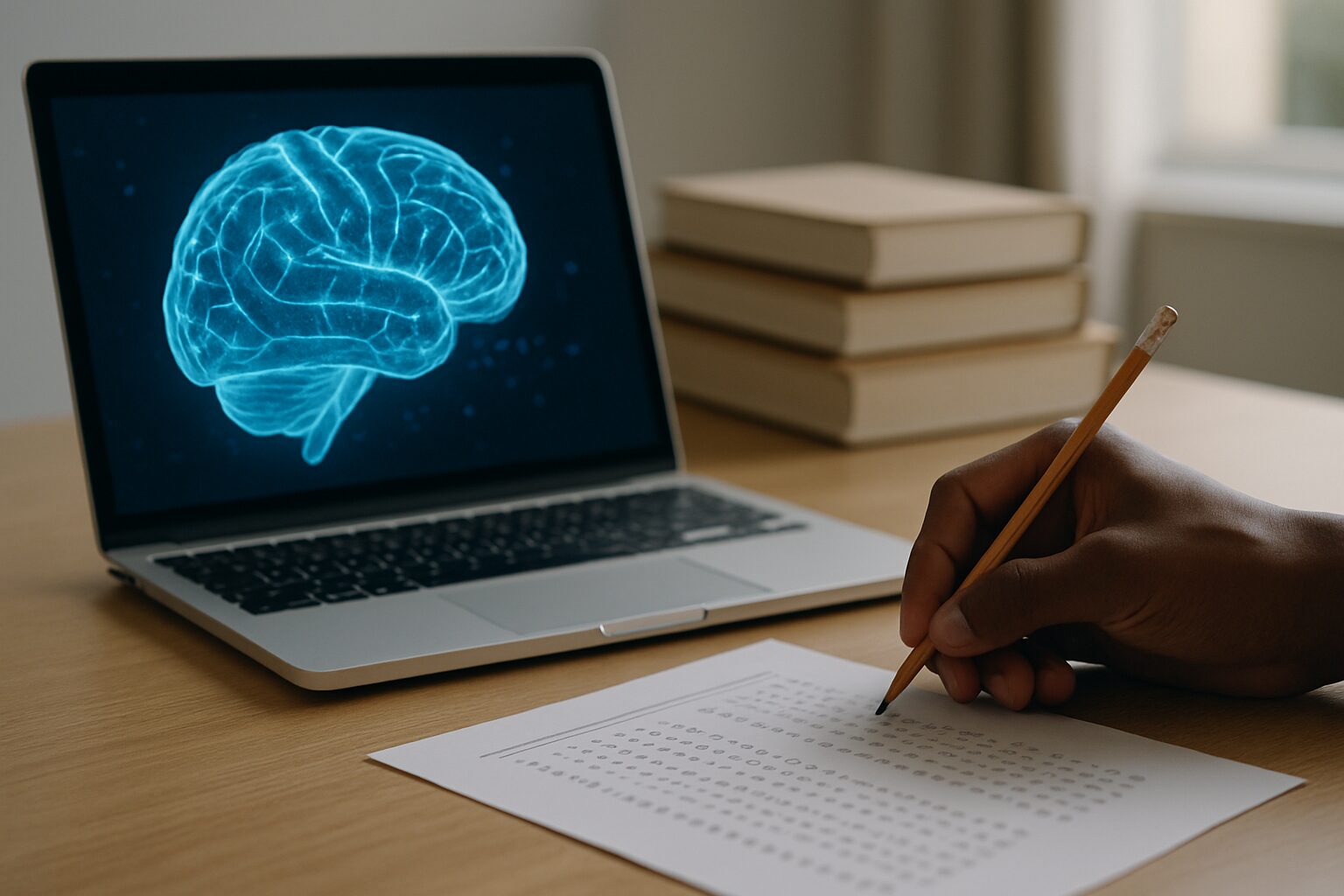
The Hidden Costs of Digital Monitoring in Education: Balancing Privacy and Accountability
Student surveillance in online learning refers to the use of AI-driven tools to monitor students' activities during virtual classes or exams. These tools may track behaviors like eye movements, keystrokes, or browser activity to detect potential cheating or disengagement. The practice raises ethical questions about privacy, consent, and the balance between accountability and trust in education.
Why It Matters - Real-world impact
The issue of student surveillance in online learning carries significant real-world consequences, affecting students, educators, and society at large. Excessive monitoring tools—such as keystroke logging, facial recognition, or automated proctoring—can erode trust, stifle academic freedom, and disproportionately target marginalized groups, exacerbating existing inequities. When surveillance crosses ethical boundaries, it risks normalizing intrusive data collection, conditioning young learners to accept privacy violations as inevitable. For regular people, this matters because it sets precedents for how technology governs behavior, potentially extending beyond education into workplaces and public life. Without accountability, these systems may prioritize control over growth, undermining the very purpose of education: to foster critical thinking and autonomy.
Ethical Concerns - What’s wrong or risky?
Student Surveillance in Online Learning: An Ethical Minefield
As educational institutions increasingly adopt online learning platforms, many are implementing surveillance technologies to monitor students during exams, track participation, and ensure academic integrity. While these tools aim to promote accountability, they raise significant ethical concerns that must be addressed.
Fairness in Assessment
Surveillance systems often rely on algorithms to flag suspicious behavior, such as looking away from the screen or unusual keyboard patterns. However, these systems may not account for individual differences in behavior, learning disabilities, or cultural norms. For example, a student with anxiety might exhibit behaviors mistakenly flagged as cheating, unfairly penalizing them. This challenges the principle of fairness, as the technology may not treat all students equitably.
Discrimination and Bias
AI-driven surveillance can perpetuate or even exacerbate existing biases. Facial recognition and behavior analysis algorithms have been shown to perform less accurately for people of color, individuals with disabilities, or those from non-Western cultural backgrounds. This could lead to disproportionate scrutiny or false accusations against marginalized groups, raising serious concerns about discrimination.
Lack of Transparency
Many institutions use proprietary surveillance software whose inner workings are not disclosed to students or educators. This lack of transparency makes it difficult to challenge erroneous flags or understand how decisions are made. Students may be subjected to monitoring without fully understanding what data is collected, how it is used, or who has access to it.
Privacy and Autonomy
Constant monitoring infringes on students' privacy and undermines their autonomy. Being watched during study sessions or even outside exam contexts can create an environment of distrust and stress, potentially hindering learning rather than fostering it. This surveillance normalizes invasive practices, which could have long-term societal implications.
Differing Perspectives
Not everyone views student surveillance negatively. Proponents argue that these tools are necessary to maintain academic integrity in remote learning environments, especially for high-stakes assessments. They believe that the benefits of preventing cheating outweigh the ethical risks. Others suggest that with proper safeguards, such as clear policies and opt-out options, surveillance can be implemented responsibly.
Economic and Access Considerations
Surveillance tools often require reliable internet, high-quality cameras, and powerful devices, which may not be accessible to all students. This could widen the digital divide, disadvantaging low-income students. Additionally, the financial cost of these systems may divert resources from other educational needs, impacting economic equity in education.
Conclusion
While accountability in online learning is important, it should not come at the expense of ethical principles. Institutions must carefully weigh the benefits of surveillance against risks to fairness, non-discrimination, transparency, and privacy. Engaging stakeholders—including students—in these conversations is crucial to developing balanced and ethical approaches.
Solutions - What’s being done or proposed?
Transparent Data Collection Policies
Educational institutions and edtech companies have proposed creating clear, accessible policies that outline what data is collected during online learning, how it is used, and who has access to it. This includes providing students and parents with opt-in or opt-out choices for certain types of surveillance, such as webcam monitoring or keystroke logging. Transparency builds trust and allows stakeholders to make informed decisions about their participation.
Privacy-Focused Technology Alternatives
Some educators and technologists advocate for using privacy-preserving tools that minimize data collection. For example, platforms could employ local processing for proctoring software instead of cloud-based storage, or use anonymized analytics to track engagement without identifying individual students. Open-source solutions are also being explored to give institutions more control over their data practices.
Legal Frameworks and Regulations
Lawmakers and advocacy groups have pushed for stricter regulations, such as expanding the Family Educational Rights and Privacy Act (FERPA) to cover digital surveillance in education. Proposed laws aim to limit the types of data collected, mandate data deletion after a set period, and impose penalties for misuse. These frameworks seek to balance accountability with student privacy rights.
Student and Educator Advocacy
Student unions, teacher associations, and civil rights organizations have organized campaigns to raise awareness about over-surveillance. They lobby for institutional policies that prioritize ethical AI use, such as banning invasive monitoring tools or requiring student consent. Grassroots efforts have led some schools to revise their tech contracts or adopt student-led oversight committees.
Ethical AI Design Principles
Tech developers are increasingly adopting ethical guidelinesu2014like fairness, accountability, and transparencyu2014when designing AI tools for education. This includes auditing algorithms for bias (e.g., in facial recognition proctoring) and involving educators and students in the development process to ensure tools meet pedagogical needs without compromising privacy.
Institutional Accountability Measures
Some universities and schools have implemented internal review boards to assess the ethical implications of surveillance technologies before adoption. These boards evaluate whether tools are necessary, proportionate, and aligned with educational goals. Regular audits and impact assessments are also conducted to monitor ongoing use and address concerns.
Examples and Real Cases
Proctorio's Remote Proctoring During COVID-19
In 2020, Proctorio's AI-powered remote proctoring software was widely adopted by universities during COVID-19. Students reported invasive monitoring including room scans, eye movement tracking, and flagging 'suspicious' behaviors like looking away from the screen.
New York School District's Gaggle Monitoring
In 2021, the Lockport City School District in New York used Gaggle's AI to monitor students' online activities 24/7. The system flagged LGBTQ+ content and mental health discussions as 'inappropriate,' leading to student outcry over privacy violations.
Hypothetical: AI-Powered 'Attention Scoring' in Virtual Classrooms
A hypothetical system could analyze webcam feeds to assign 'attention scores' based on facial expressions and eye contact. Students with lower scores might face automated penalties, creating pressure to perform for the algorithm rather than engage authentically.
University of Edinburgh's ExamSoft Controversy
In 2021, the University of Edinburgh required students to install ExamSoft, which collected biometric data and ran continuous background monitoring. The software malfunctioned during exams, falsely flagging hundreds of students for cheating.
Hypothetical: Predictive Analytics for 'At-Risk' Students
An AI system might predict dropout risk by analyzing login frequency, assignment submission times, and discussion forum activity. While intended to help, it could unfairly label students facing technical barriers or caregiving responsibilities as 'disengaged.'
Frequently Asked Questions
What is student surveillance in online learning?
Student surveillance in online learning refers to the monitoring of students' activities, behavior, and performance through digital tools like tracking software, cameras, or data analytics. It is often used to ensure accountability, prevent cheating, or improve engagement.
Why is student surveillance important in education?
Student surveillance helps educators maintain academic integrity, identify struggling students, and personalize learning experiences. It also ensures fairness in assessments and can improve online classroom management.
How does student surveillance affect privacy?
While surveillance can enhance accountability, it raises privacy concerns as it collects personal data like browsing history or facial recognition. Schools must balance monitoring with ethical data practices to protect students' rights.
What tools are used for student surveillance?
Common tools include proctoring software (like Respondus or Proctorio), learning management systems (like Canvas or Blackboard), and AI-driven analytics that track login times, participation, or plagiarism detection.
How can schools ensure ethical student surveillance?
Schools should be transparent about monitoring policies, limit data collection to necessary metrics, obtain consent where possible, and comply with privacy laws like FERPA or GDPR to protect student rights.