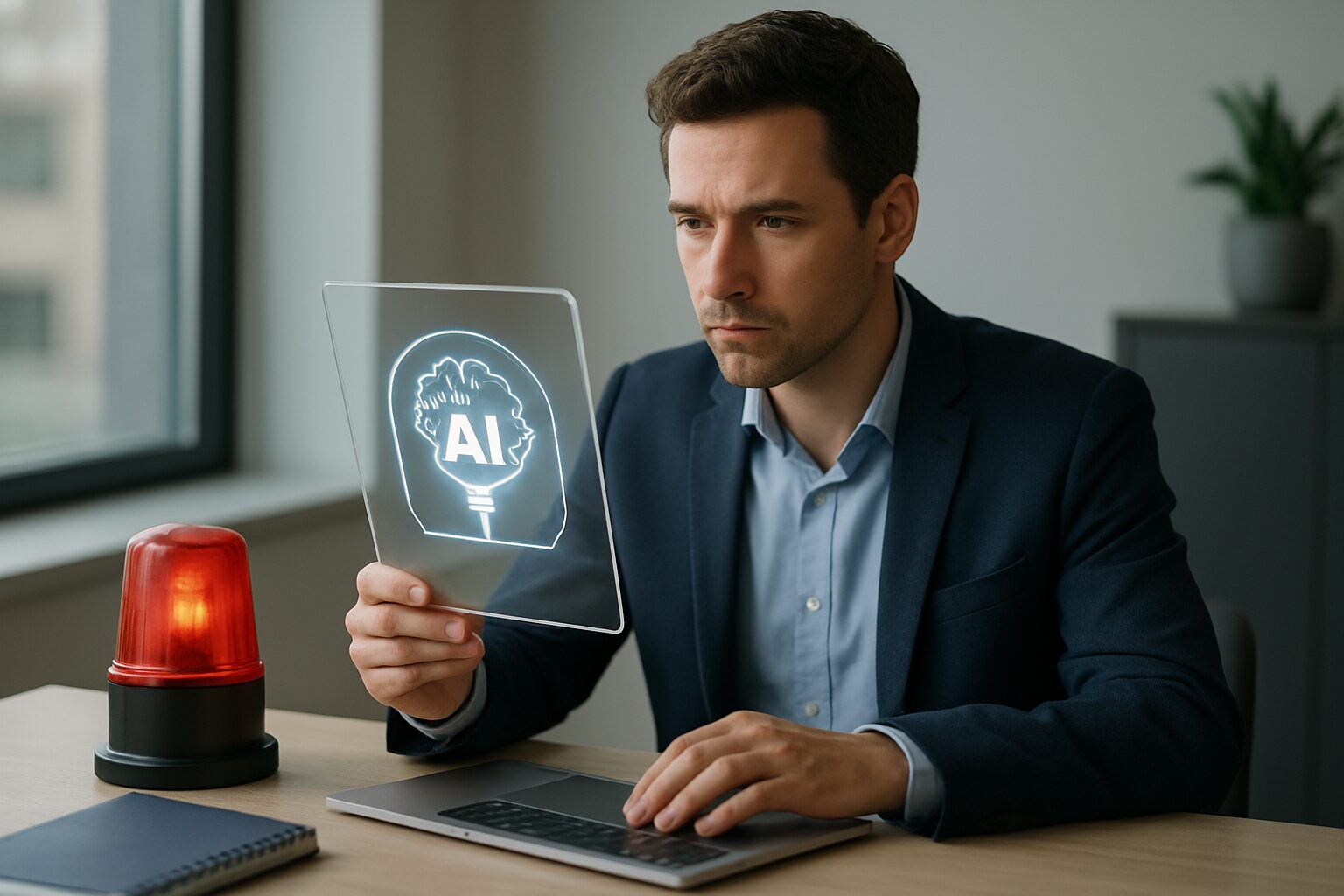
AI for Disaster Prediction: Balancing Innovation and Responsibility
AI plays an increasingly critical role in predicting disasters such as hurricanes, earthquakes, and wildfires. While these systems can save lives by providing early warnings, their use raises ethical concerns around accuracy, bias, and accountability. Errors in prediction or unequal access to AI-driven alerts could disproportionately harm vulnerable communities. Balancing technological advancement with ethical responsibility is essential to ensure these tools minimize harm and maximize public safety.
Why It Matters - Real-world impact
The ethics of AI in disaster prediction carry profound real-world implications, as flawed or biased systems can misdirect resources, exacerbate inequalities, or instill false confidence in vulnerable communities. Governments, emergency responders, and at-risk populations—particularly in marginalized or low-income regions—rely on these tools for life-or-death decisions. Errors in prediction models could delay evacuations, misallocate aid, or even worsen casualties by overlooking underrepresented data. Regular people should care because these systems shape preparedness for hurricanes, earthquakes, or wildfires—events where minutes matter. Without ethical oversight, AI could replicate historical biases, leaving the most vulnerable without protection while perpetuating systemic failures in disaster response.
Ethical Concerns - What’s wrong or risky?
Ethical Risks in AI Disaster Prediction
AI systems for disaster prediction, while potentially life-saving, introduce several ethical risks that must be addressed to ensure responsible deployment.
Fairness Concerns
AI models may be trained on biased historical data, leading to unequal predictive accuracy across different regions or communities. For example, affluent areas with more data might receive better warnings than underserved regions. This raises issues of fairness in resource allocation and protection.
Discrimination Risks
Predictive algorithms could inadvertently discriminate based on demographics or socioeconomic status. If AI prioritizes warnings for certain groups over others, it may exacerbate existing inequalities. More on this can be explored under discrimination concerns.
Transparency Issues
Many AI systems operate as "black boxes," making it difficult to understand how predictions are generated. Lack of transparency can erode public trust and hinder accountability, especially if false predictions cause harm or unnecessary panic.
Economic and Social Impacts
Over-reliance on AI predictions might lead to economic disruptions, such as premature evacuations or devaluation of property in high-risk zones. The economic impact of these systems requires careful consideration to avoid unintended consequences.
Worker Rights Considerations
As AI systems automate disaster prediction, there may be implications for meteorologists, emergency planners, and other professionals. Ensuring that their expertise is integrated and their rights are protected is crucial.
Differing Perspectives
Some argue that AI's potential to save lives outweighs ethical risks, advocating for rapid deployment. Others emphasize caution, stressing that without robust ethical safeguards, these systems could cause more harm than good. Balancing innovation with responsibility remains a key debate.
Solutions - What’s being done or proposed?
Establishing Ethical Guidelines for AI Development
Organizations and governments have proposed creating comprehensive ethical guidelines for AI development in disaster prediction. These guidelines emphasize transparency, accountability, and fairness in algorithmic decision-making. For example, the European Union's AI Act includes provisions for high-risk AI systems, requiring rigorous testing and documentation to ensure they do not perpetuate biases or cause harm.
Implementing Bias Detection and Mitigation Tools
Technical solutions have been developed to detect and mitigate biases in AI models used for disaster prediction. Tools like fairness-aware algorithms and adversarial debiasing techniques are employed to ensure that predictions do not disproportionately affect marginalized communities. Researchers are also advocating for diverse training datasets to reduce inherent biases in AI systems.
Creating Multi-Stakeholder Oversight Committees
Institutional solutions include forming multi-stakeholder oversight committees to monitor AI systems in disaster prediction. These committees comprise ethicists, technologists, policymakers, and community representatives to ensure balanced decision-making. Such bodies can review AI deployments, assess risks, and recommend corrective actions when ethical concerns arise.
Enhancing Public Awareness and Education
Social initiatives focus on raising public awareness about the capabilities and limitations of AI in disaster prediction. Educational campaigns and community workshops aim to demystify AI, empowering individuals to understand and question how predictions are made. This fosters trust and encourages informed public participation in discussions about AI ethics.
Developing Legal Frameworks for Accountability
Legal solutions involve drafting laws that hold developers and deployers of AI systems accountable for errors or misuse in disaster prediction. For instance, some jurisdictions are exploring liability frameworks that specify penalties for negligence or harm caused by AI. These frameworks aim to incentivize responsible development and deployment practices.
Promoting Open-Source and Collaborative AI Models
To address transparency concerns, some advocates suggest promoting open-source AI models for disaster prediction. Collaborative platforms allow researchers worldwide to audit, improve, and validate algorithms, reducing the risk of hidden biases or unethical practices. This approach also encourages innovation and shared responsibility in AI development.
Examples and Real Cases
Google's Flood Forecasting Initiative in India (2018)
In 2018, Google launched its AI-powered flood forecasting system in India, aiming to provide early warnings. While it improved response times, critics raised concerns about data privacy and the potential for unequal access to warnings, disproportionately affecting marginalized communities.
Hurricane Harvey Response in Texas (2017)
During Hurricane Harvey, AI models were used to predict flood paths and prioritize rescue operations. However, inaccuracies in some predictions led to misallocated resources, leaving some neighborhoods without timely aid and raising questions about reliance on AI in life-or-death scenarios.
Hypothetical: AI Earthquake Prediction in Japan
Imagine an AI system in Japan predicts a major earthquake with 80% accuracy, leading to mass evacuations. If the quake doesn't occur, the economic disruption and public distrust could outweigh the potential benefits, creating an ethical dilemma about prediction thresholds.
Wildfire Detection by Pano AI in California (2022)
Pano AI's cameras and algorithms detected the 2022 McKinney Fire early, but false alarms in other instances caused unnecessary panic. This highlighted the balance needed between early warnings and maintaining public trust in AI systems.
Hypothetical: AI-Powered Tsunami Warning System
An AI tsunami warning system might prioritize alerts for high-population areas first due to resource constraints. This could ethically compromise warnings for smaller coastal villages, forcing developers to choose between utilitarian efficiency and equitable protection.
Frequently Asked Questions
What is AI disaster prediction and why is it important?
AI disaster prediction uses artificial intelligence to analyze data and forecast natural disasters like hurricanes, earthquakes, or floods. It's important because early warnings can save lives, reduce economic losses, and help communities prepare better.
What are the ethical risks of using AI for disaster prediction?
Ethical risks include biased algorithms that may overlook vulnerable communities, over-reliance on AI leading to human complacency, and misuse of data that could violate privacy or be exploited for profit instead of public safety.
How can AI disaster prediction be made safer and fairer?
To improve safety and fairness, AI systems should be transparent, regularly audited for bias, include diverse data sources, and involve human oversight to ensure predictions align with ethical guidelines and community needs.
Can AI disaster predictions be wrong, and what happens if they are?
Yes, AI predictions can be wrong due to incomplete data or flawed models. False alarms may cause unnecessary panic or resource waste, while missed predictions could lead to unpreparednessu2014highlighting the need for accuracy checks and human verification.
Who is responsible if AI fails to predict a disaster correctly?
Responsibility often falls on the organizations developing and deploying the AI, governments regulating its use, and stakeholders implementing the systems. Clear accountability frameworks are needed to address harm caused by failures.