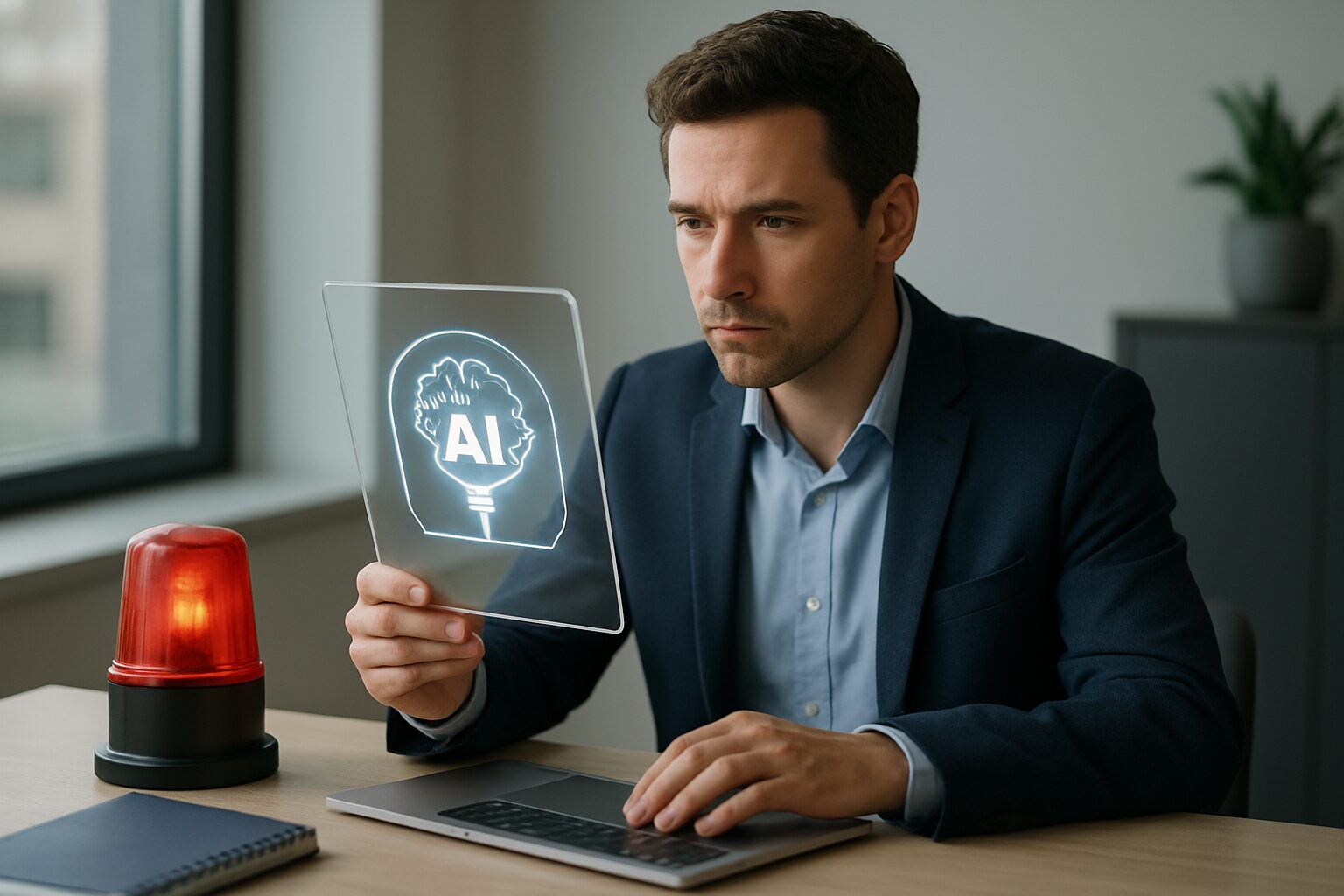
AI Hacking Fears: Separating Fact from Fiction
As artificial intelligence becomes more advanced, concerns about its misuse by malicious actors, such as hackers, have grown. While some risks are real, others may be exaggerated or misunderstood. This article examines common myths and realities surrounding AI's potential exploitation in cyberattacks, separating speculation from credible threats.
Why It Matters - Real-world impact
The misuse of AI by hackers poses tangible threats to individuals, businesses, and society at large. Cybercriminals could leverage AI to automate phishing attacks, create deepfake scams, or exploit vulnerabilities in critical infrastructure, leading to financial losses, privacy breaches, or even physical harm. Everyday people are at risk—whether through identity theft, manipulated media, or disruptions to essential services like healthcare or transportation. The scale and efficiency of AI-driven attacks could amplify their impact, making defenses harder to maintain. Ignoring these risks leaves everyone vulnerable, underscoring the need for awareness, regulation, and proactive security measures to mitigate potential harm.
Ethical Concerns - What’s wrong or risky?
Myth: AI misuse by hackers is purely a technical problem
Many assume that AI hacking risks are confined to technical exploits like data breaches or system takeovers. However, the reality is that these actions often lead to profound ethical consequences, such as exacerbating discrimination when biased algorithms are manipulated to target vulnerable groups unfairly.
Myth: AI-driven attacks only affect data security
While data theft is a concern, the misuse of AI by hackers can also undermine fairness in critical systems—for example, by manipulating AI-driven loan approval or hiring tools to exclude certain demographics, perpetuating systemic inequities.
Reality: Lack of transparency enables malicious exploitation
Hackers can exploit opaque AI systems to hide their activities, making accountability nearly impossible. This directly challenges transparency, as victims and regulators struggle to understand how decisions were manipulated or biased.
Reality: AI misuse can harm economic stability
Beyond immediate financial losses, AI-powered attacks can disrupt markets or automate fraud at scale, contributing to broader economic impact, such as destabilizing small businesses or widening wealth gaps.
Differing perspectives on responsibility
Some argue that developers bear primary responsibility for securing AI systems against misuse, while others believe policymakers must enforce stricter regulations. A third perspective emphasizes that users and organizations should prioritize ethical training and oversight to mitigate risks.
Worker rights in the age of automated threats
As hackers use AI to automate attacks on businesses, employees may face unjust blame or job insecurity due to system failures, highlighting concerns about worker rights and the need for protections in increasingly automated workplaces.
Job loss fears: exaggerated or underestimated?
While some fear AI misuse will lead to widespread job loss via automated cyberattacks on industries, others contend that these risks are overstated and that new roles in AI security and ethics will emerge to counter these threats.
Solutions - What’s being done or proposed?
Enhanced Cybersecurity Measures
Organizations and governments have invested in advanced cybersecurity frameworks to protect AI systems from being hijacked by hackers. This includes implementing robust encryption, multi-factor authentication, and continuous monitoring for unusual activity. Penetration testing and red teaming are also employed to identify vulnerabilities before malicious actors can exploit them.
AI Ethics and Governance Frameworks
Institutions have developed ethical guidelines and governance frameworks to ensure AI is used responsibly. These frameworks often include principles like transparency, accountability, and fairness. By embedding these values into AI development, the risk of misuse can be mitigated. Some organizations also establish review boards to oversee AI projects and ensure compliance with ethical standards.
Legal and Regulatory Actions
Governments worldwide are enacting laws to regulate AI use and penalize malicious activities. For example, the EU's AI Act categorizes AI systems by risk level and imposes strict requirements on high-risk applications. Similar legislation in other regions aims to criminalize AI misuse, such as deepfake fraud or autonomous hacking tools, while promoting accountability among developers and users.
Public Awareness and Education
Educational campaigns aim to inform the public and businesses about the risks of AI misuse and how to recognize threats like phishing scams or manipulated media. Training programs for developers emphasize secure coding practices and ethical considerations. By raising awareness, stakeholders can better defend against social engineering attacks and other AI-driven threats.
Collaborative Threat Intelligence Sharing
Industries and governments have formed alliances to share threat intelligence and best practices for countering AI misuse. Initiatives like the Cybersecurity and Infrastructure Security Agency (CISA) in the U.S. foster collaboration between public and private sectors. These partnerships enable faster responses to emerging threats and collective defense strategies against sophisticated AI-powered attacks.
AI Red Teaming and Adversarial Testing
To proactively identify weaknesses, researchers conduct adversarial testing where AI systems are intentionally attacked to evaluate their resilience. Red teaming exercises simulate real-world hacking scenarios to uncover flaws before deployment. This approach helps developers patch vulnerabilities and design more secure AI models resistant to exploitation.
Examples and Real Cases
Deepfake Audio in CEO Fraud
In March 2019, hackers used AI-generated deepfake audio to impersonate a CEO's voice, tricking a UK-based energy firm into transferring u20ac220,000. The attackers cloned the CEO's voice using publicly available recordings and AI voice synthesis software.
AI-Powered Phishing Campaigns
In 2020, cybersecurity firm Darktrace reported AI-driven phishing emails that adapted language in real-time based on victim responses. These campaigns used natural language processing (NLP) to make scams more convincing than traditional templates.
Automated Vulnerability Discovery
Hypothetical: In 2022, researchers demonstrated how AI could autonomously find and exploit zero-day vulnerabilities 100x faster than humans. While no confirmed attacks use this yet, tools like AutoML for exploit generation make this scenario increasingly plausible.
Adversarial Attacks on Facial Recognition
In 2018, researchers showed how subtle pixel changes (adversarial patches) could fool AI systemsu2014demonstrated by bypassing Chinese police surveillance with patterned glasses. Real-world misuse remains rare but was proven possible in controlled tests.
AI-Generated Fake Identities for Scams
In 2021, the FBI warned about AI-generated fake profiles on LinkedIn used for corporate espionage. These profiles used GANs to create realistic photos and personas, with some engaging targets for months before detection.
Frequently Asked Questions
Can hackers really use AI to break into any system?
While AI can enhance hackers' capabilities, it's a myth that AI can break into any system effortlessly. AI tools still require vulnerabilities to exploit, and strong cybersecurity measures can effectively block many AI-powered attacks.
Is AI going to make hacking unstoppable in the future?
No, this is a common misconception. While AI can automate attacks and make them more sophisticated, cybersecurity defenses are also advancing with AI. Human oversight and updated security protocols remain key to staying protected.
Do hackers use AI to create fake identities or deepfakes easily?
AI does make it easier to generate convincing deepfakes or fake profiles, but it's not as simple as pressing a button. Creating high-quality fakes still requires skill, and detection tools are improving to spot AI-generated content.
Are small businesses safe from AI-powered cyberattacks?
No, small businesses are not automatically safe. Hackers may use AI to target weaker defenses, but basic cybersecurity practices like strong passwords, employee training, and regular updates can significantly reduce risks.
Can AI predict and stop all hacking attempts before they happen?
AI can help detect unusual patterns and potential threats, but it's not foolproof. Cybersecurity relies on a combination of AI tools, human expertise, and proactive measures to stay ahead of evolving threats.