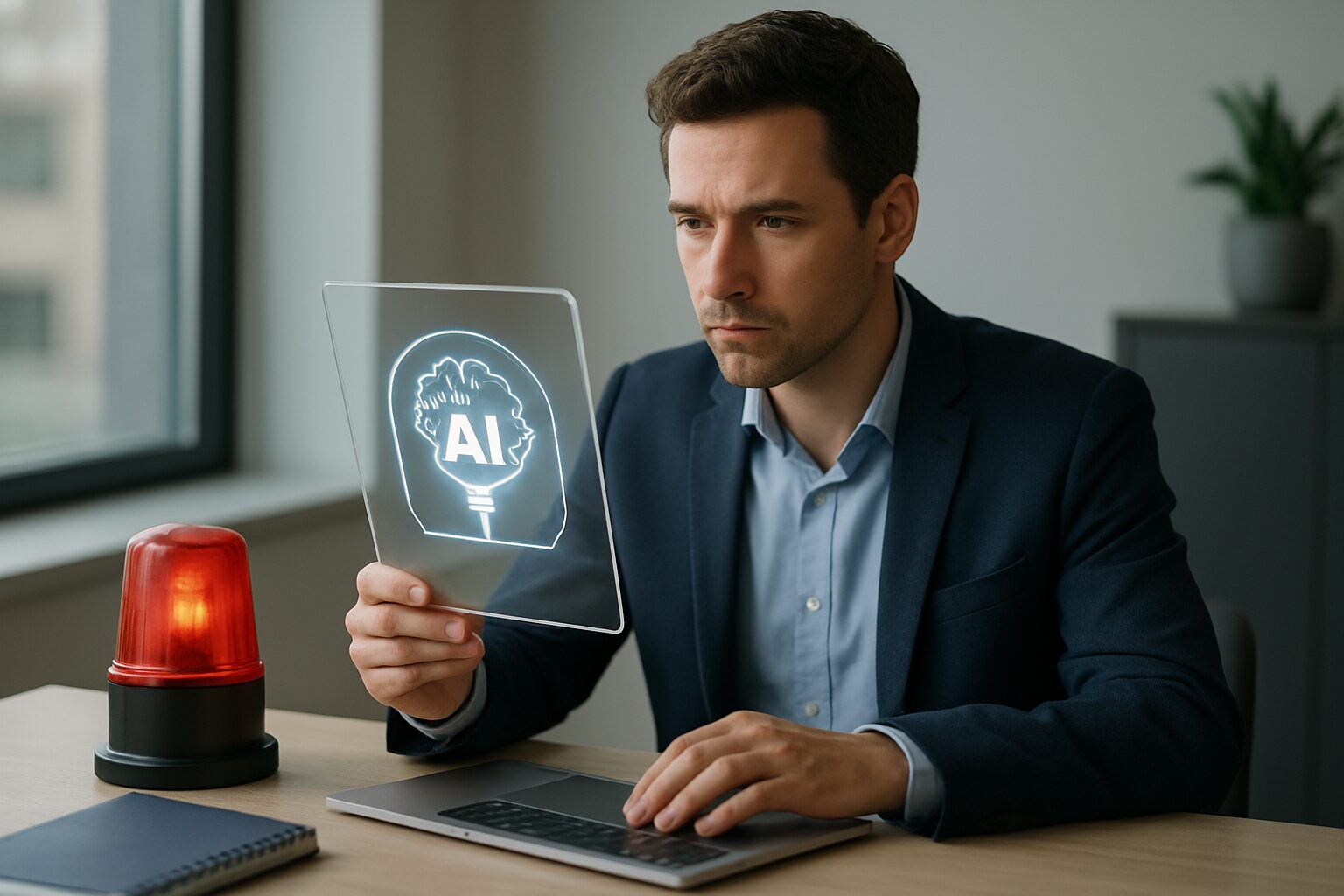
AI in the Wrong Hands: How Hackers Exploit Artificial Intelligence
As artificial intelligence becomes more advanced, hackers can exploit these technologies for malicious purposes. AI misuse includes automating cyberattacks, bypassing security systems, or generating deceptive content at scale. The risk grows as AI tools become more accessible and capable. Addressing these threats requires understanding how AI can be weaponized in unauthorized ways.
Why It Matters - Real-world impact
The misuse of AI by hackers poses tangible threats to individuals, businesses, and society at large. Cybercriminals could leverage AI to automate phishing attacks, create deepfake scams, or exploit vulnerabilities in critical infrastructure, leading to financial losses, privacy breaches, or even physical harm. Everyday people are at risk—whether through identity theft, manipulated media, or disruptions to essential services like healthcare or transportation. Beyond personal consequences, widespread AI-driven attacks could erode trust in digital systems, destabilize economies, and amplify societal divisions. This isn't a hypothetical concern; as AI tools become more accessible, the potential for harm grows exponentially. Ignoring these risks leaves everyone vulnerable to a future where malicious actors wield AI as a weapon.
Ethical Concerns - What’s wrong or risky?
Economic Impact of AI Misuse
Hackers exploiting AI systems can cause severe economic disruption, from stock market manipulation to automated fraud at scale. Such misuse raises concerns about the economic impact on individuals and institutions, potentially destabilizing markets and widening wealth gaps.
Discrimination Through AI Exploitation
When hackers manipulate AI algorithms, they can intentionally embed or amplify biases, leading to unfair treatment of certain groups. This misuse directly ties into discrimination, as biased outcomes may affect hiring, lending, or law enforcement decisions.
Fairness in Compromised Systems
AI systems hacked to favor specific entities undermine the principle of fairness. For example, manipulated recommendation algorithms could prioritize malicious content, while compromised decision-making tools might unjustly benefit some users over others.
Transparency Issues in Malicious AI Use
Hackers often exploit opaque AI systems, making it difficult to detect or understand malicious alterations. This lack of transparency complicates accountability and erodes trust, as users cannot discern whether outputs are genuine or manipulated.
Differing Perspectives on AI Misuse Risks
Some argue that emphasizing hacker risks may overshadow broader ethical issues like AI autonomy or privacy. Others believe focusing on malicious external threats is essential for proactive security, though this view may downplay systemic or unintentional harms caused by developers themselves.
Additional Ethical Concerns
Beyond the linked categories, AI misuse by hackers raises moral questions about consent (e.g., using deepfakes), privacy (e.g., data poisoning), and even physical safety if critical infrastructure AI is compromised. These issues highlight the need for comprehensive ethical frameworks alongside technical safeguards.
Solutions - What’s being done or proposed?
Enhanced Cybersecurity Measures
Organizations and governments have invested in advanced cybersecurity frameworks to protect AI systems from being hijacked by hackers. This includes the use of encryption, multi-factor authentication, and continuous monitoring for unusual activities. By securing the infrastructure that supports AI, the risk of misuse can be significantly reduced.
Ethical AI Development Guidelines
Industry leaders and academic institutions have proposed ethical guidelines for AI development to prevent misuse. These guidelines emphasize transparency, accountability, and the inclusion of safety features during the design phase. By adhering to these principles, developers can create AI systems that are harder to exploit for malicious purposes.
Legal Frameworks and Regulations
Governments worldwide are enacting laws to regulate the use of AI and penalize malicious activities. For example, the EU's AI Act aims to classify AI systems based on risk levels and impose strict requirements on high-risk applications. Legal frameworks help deter hackers by establishing clear consequences for misuse.
Public Awareness and Education
Raising awareness about the potential risks of AI misuse is another approach. Educational campaigns and training programs aim to inform the public and professionals about safe AI practices. By fostering a culture of responsibility, individuals and organizations can better recognize and mitigate threats.
Collaborative Threat Intelligence Sharing
To combat AI misuse, public and private sectors have established platforms for sharing threat intelligence. These collaborations enable faster detection and response to emerging threats. By pooling resources and knowledge, stakeholders can stay ahead of hackers who seek to exploit AI vulnerabilities.
Red Teaming and Penetration Testing
Many organizations now employ red teaming exercises and penetration testing to identify weaknesses in AI systems before hackers can exploit them. These simulated attacks help uncover vulnerabilities, allowing developers to strengthen defenses proactively.
AI Misuse Detection Systems
Researchers are developing specialized AI systems designed to detect and counteract malicious uses of AI. These detection systems use machine learning to identify patterns indicative of hacking attempts, providing an additional layer of security.
Examples and Real Cases
Deepfake Audio in CEO Fraud
In March 2019, hackers used AI-generated deepfake audio to impersonate a CEO's voice, tricking a UK-based energy firm into transferring u20ac220,000 to a fraudulent account. The AI mimicked the German executive's accent and tone with high accuracy, marking one of the first known cases of AI-powered CEO fraud.
AI-Powered Phishing Campaigns
In 2020, cybersecurity firm Darktrace reported AI-generated phishing emails that adapted language based on victim responses, increasing success rates. These campaigns used natural language processing (NLP) to craft highly personalized messages at scale, bypassing traditional spam filters.
Automated Vulnerability Discovery
Hypothetical: In 2023, hackers could deploy AI systems that continuously scan millions of websites for zero-day vulnerabilities faster than human researchers. Such tools would dramatically increase the scale of exploits before patches are developed.
AI-Generated Fake Profiles for Social Engineering
In 2021, Israeli investigators uncovered a network of AI-generated fake LinkedIn profiles used to connect with defense industry personnel. The bots engaged targets in lengthy conversations to gather sensitive information over several months.
Adversarial Attacks on Facial Recognition
Researchers demonstrated in 2018 how subtle pixel manipulations (adversarial patches) could fool AI systemsu2014a technique hackers could weaponize. For example, specially patterned glasses frames caused misidentification in commercial facial recognition systems.
Frequently Asked Questions
What is AI misuse by hackers?
AI misuse by hackers refers to the use of artificial intelligence by cybercriminals to automate attacks, create more sophisticated scams, or bypass security measures, making cyber threats harder to detect and stop.
Why is AI misuse by hackers a growing concern?
It's a growing concern because AI can make cyberattacks faster, more scalable, and harder to defend against. Hackers can use AI to generate convincing phishing emails, crack passwords, or even mimic human behavior to trick security systems.
How can AI be used maliciously by hackers today?
Today, hackers use AI for deepfake scams, automated malware creation, and social engineering attacks. For example, AI can mimic voices in fake calls or generate fake videos to spread misinformation or extort victims.
What can individuals do to protect themselves from AI-powered cyber threats?
Individuals can stay safe by using strong passwords, enabling multi-factor authentication, being cautious of suspicious messages, and keeping software updated to defend against evolving AI-driven attacks.
How does AI misuse impact cybersecurity defenses?
AI misuse forces cybersecurity teams to adapt by using AI themselves to detect and counter threats. It creates an ongoing 'arms race' where both attackers and defenders leverage AI to outsmart each other.