The Hidden Flaws in Facial Recognition Tech Exposed
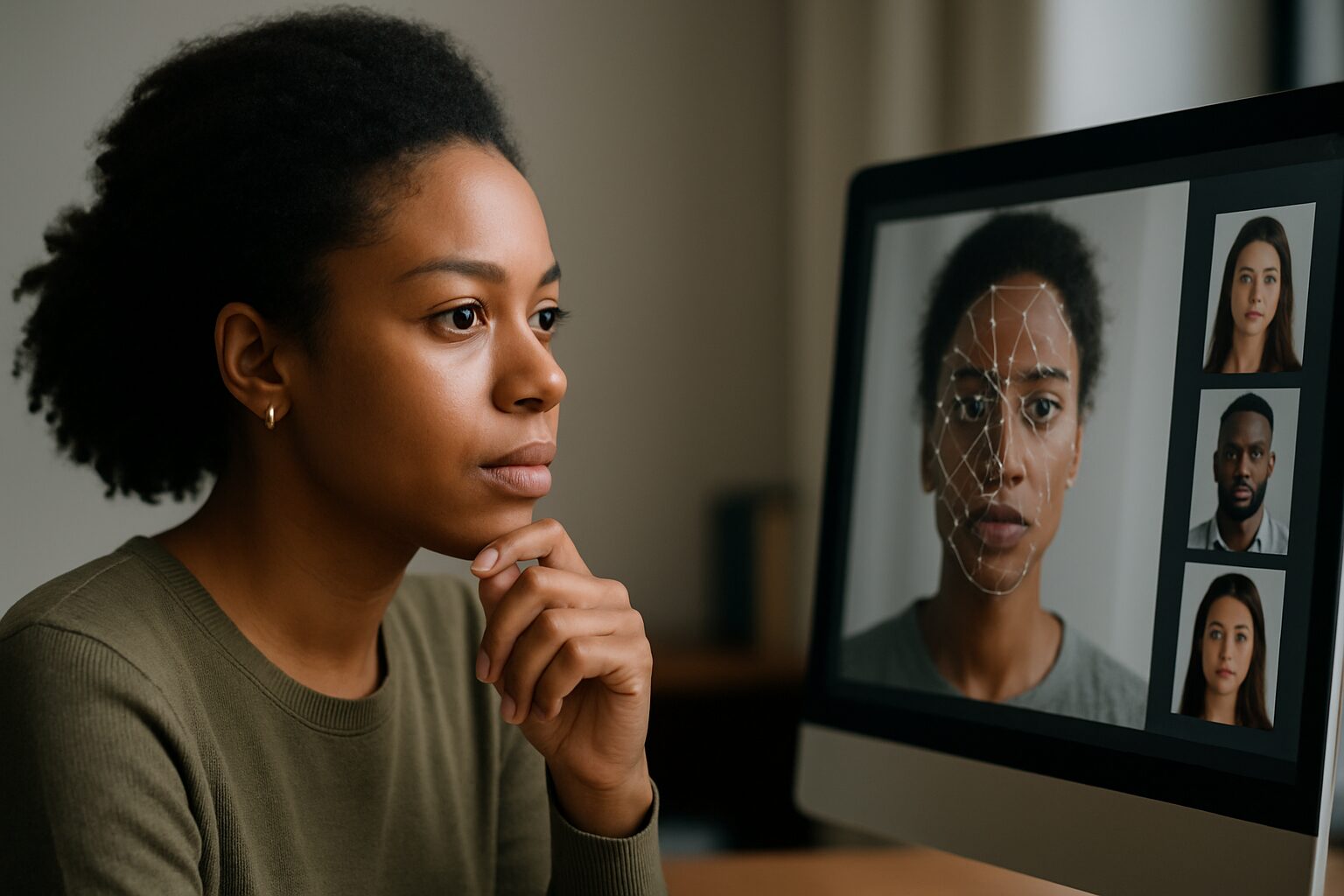
Facial recognition systems are widely used for identification, security, and authentication, but they can exhibit biases that affect their accuracy and fairness. These biases often arise from imbalanced training data or flawed algorithms, leading to unequal performance across different demographic groups. Addressing these challenges is critical to ensuring equitable outcomes in AI-driven decision-making.
Why It Matters - Real-world impact
Bias in facial recognition systems has serious real-world consequences, disproportionately affecting marginalized communities, people of color, women, and other underrepresented groups. Flawed algorithms can lead to false identifications, wrongful arrests, or discriminatory surveillance, reinforcing systemic inequities. In critical areas like law enforcement, hiring, or banking, these errors can devastate lives by denying opportunities or violating civil liberties. Even in everyday applications—such as unlocking phones or airport security—biased systems create frustration and exclusion. As this technology becomes more widespread, everyone should care about its fairness, as unchecked bias undermines trust in institutions and perpetuates societal divisions.
Ethical Concerns - What’s wrong or risky?
Understanding Bias in Facial Recognition Systems
Facial recognition technologies, while innovative, carry significant ethical risks due to inherent biases. These systems often perform less accurately on certain demographic groups, leading to serious moral concerns.
Fairness Concerns
One primary issue is fairness. If a system is trained on non-representative data, it may fail to recognize faces from underrepresented groups equally, undermining the principle of equal treatment.
Discrimination Risks
Bias can lead to direct discrimination, such as higher false positive rates for people of color, resulting in unjust surveillance or law enforcement actions.
Transparency Issues
Lack of transparency in how these algorithms are developed and deployed makes it difficult to audit for bias, eroding trust and accountability.
Economic and Employment Effects
There are concerns about economic impact, as biased systems might disproportionately affect job opportunities or access to services for certain groups. Additionally, automation driven by such technologies could contribute to job loss in sectors like security, raising issues about worker rights.
Differing Perspectives
Not all stakeholders agree on the severity of these risks. Some argue that with improved data and algorithms, biases can be mitigated, while others emphasize that the fundamental design of these systems perpetuates existing social inequalities. Proponents might highlight efficiency gains, whereas critics stress the potential for harm without stringent oversight.
Other Moral Concerns
Beyond the linked issues, there are worries about privacy invasion, consent, and the potential for these systems to be used in ways that suppress dissent or limit freedoms, underscoring the need for comprehensive ethical frameworks.
Solutions - What’s being done or proposed?
Diverse Training Datasets
One technical approach to reducing bias in facial recognition systems is the use of more diverse and representative training datasets. By ensuring that datasets include a wide range of ethnicities, genders, ages, and other demographic factors, developers can minimize disparities in accuracy across different groups. This requires intentional data collection and curation to avoid overrepresentation or underrepresentation of certain populations.
Algorithmic Audits and Transparency
Regular audits of facial recognition algorithms by independent third parties can help identify and mitigate biases. Transparency in how these systems are developed and tested is crucial. Companies and researchers are encouraged to publish detailed reports on their methodologies, performance metrics, and any identified biases to foster accountability and trust.
Legal Regulations and Bans
Some governments and municipalities have implemented legal measures to address bias in facial recognition. These range from strict regulations on its use to outright bans in certain contexts, such as law enforcement. For example, several cities in the U.S. have prohibited police use of facial recognition due to concerns about racial bias and civil liberties.
Bias Mitigation Techniques in AI Development
Researchers are developing technical methods to explicitly reduce bias during the AI training process. Techniques such as adversarial debiasing, reweighting training data, and fairness constraints aim to balance accuracy across different demographic groups. These methods require ongoing refinement but show promise in creating more equitable systems.
Community Involvement and Ethical Oversight
Engaging diverse communities in the development and deployment of facial recognition systems can help address bias from a social perspective. Ethical oversight boards, including representatives from affected groups, can provide valuable feedback and ensure that systems are designed with fairness in mind. This approach emphasizes the importance of inclusivity in AI governance.
Public Awareness and Education
Raising public awareness about the limitations and biases of facial recognition technology is another key solution. Educating users, policymakers, and stakeholders about potential risks and ethical considerations can lead to more informed decisions about its use. Advocacy groups and media play a critical role in highlighting these issues.
Industry Standards and Best Practices
Establishing industry-wide standards and best practices for facial recognition systems can help mitigate bias. Organizations like the IEEE and NIST have developed guidelines for fairness, accountability, and transparency in AI. Adopting these standards encourages consistency and responsibility across the tech industry.
Examples and Real Cases
Gender Shades Study (2018)
In 2018, Joy Buolamwini and Timnit Gebru published the Gender Shades study, which evaluated facial recognition systems from IBM, Microsoft, and Face++. The study found these systems had higher error rates for darker-skinned women (up to 34.7%) compared to lighter-skinned men (error rates as low as 0.8%).
Wrongful Arrest of Robert Williams (2020)
In January 2020, Robert Williams, a Black man, was wrongfully arrested in Detroit due to a false facial recognition match. The system incorrectly identified him as a suspect in a shoplifting case, highlighting racial bias in law enforcement use of the technology.
Amazon Rekognition Congressional Testimony (2018)
During 2018 Congressional testimony, the ACLU demonstrated that Amazon's Rekognition software incorrectly matched 28 members of Congress with criminal mugshots. The false matches disproportionately affected people of color, including 39% of non-white members being misidentified.
UK Metropolitan Police Trial (2020)
In 2020, the UK Metropolitan Police's live facial recognition trial showed the system had an 81% false positive rate. Independent analysis found the technology was more likely to misidentify people from ethnic minority backgrounds.
Hypothetical: Hiring System Discrimination
A hypothetical AI-powered hiring system using facial recognition might favor candidates with certain facial features common in its training data (e.g., lighter skin or male-presenting faces). This could systematically disadvantage qualified applicants from underrepresented groups during video interview screening.
Frequently Asked Questions
What is bias in facial recognition systems?
Bias in facial recognition systems refers to errors or inaccuracies that disproportionately affect certain groups of people, often based on race, gender, or age. This happens because the data used to train these systems may not be diverse enough, leading to unfair outcomes.
Why is bias in facial recognition a problem?
Bias in facial recognition can lead to unfair treatment, such as higher error rates for people of color or women. This is especially concerning in applications like law enforcement or hiring, where mistakes can have serious consequences for individuals and communities.
How does bias occur in facial recognition technology?
Bias occurs when the training data used to develop facial recognition systems lacks diversity or contains imbalances. If the data mostly includes faces of one race or gender, the system may perform poorly on groups that are underrepresented in the data.
What are real-world examples of facial recognition bias?
Real-world examples include facial recognition systems misidentifying people of color more often than white individuals, or struggling to correctly identify women. For instance, some systems have shown higher error rates for darker-skinned women compared to lighter-skinned men.
How can we reduce bias in facial recognition systems?
To reduce bias, developers can use more diverse and representative training data, test systems across different demographic groups, and implement fairness checks. Transparency in how these systems are built and used is also important to address biases effectively.