
Revolutionizing Workforce Assessments with Smart Technology
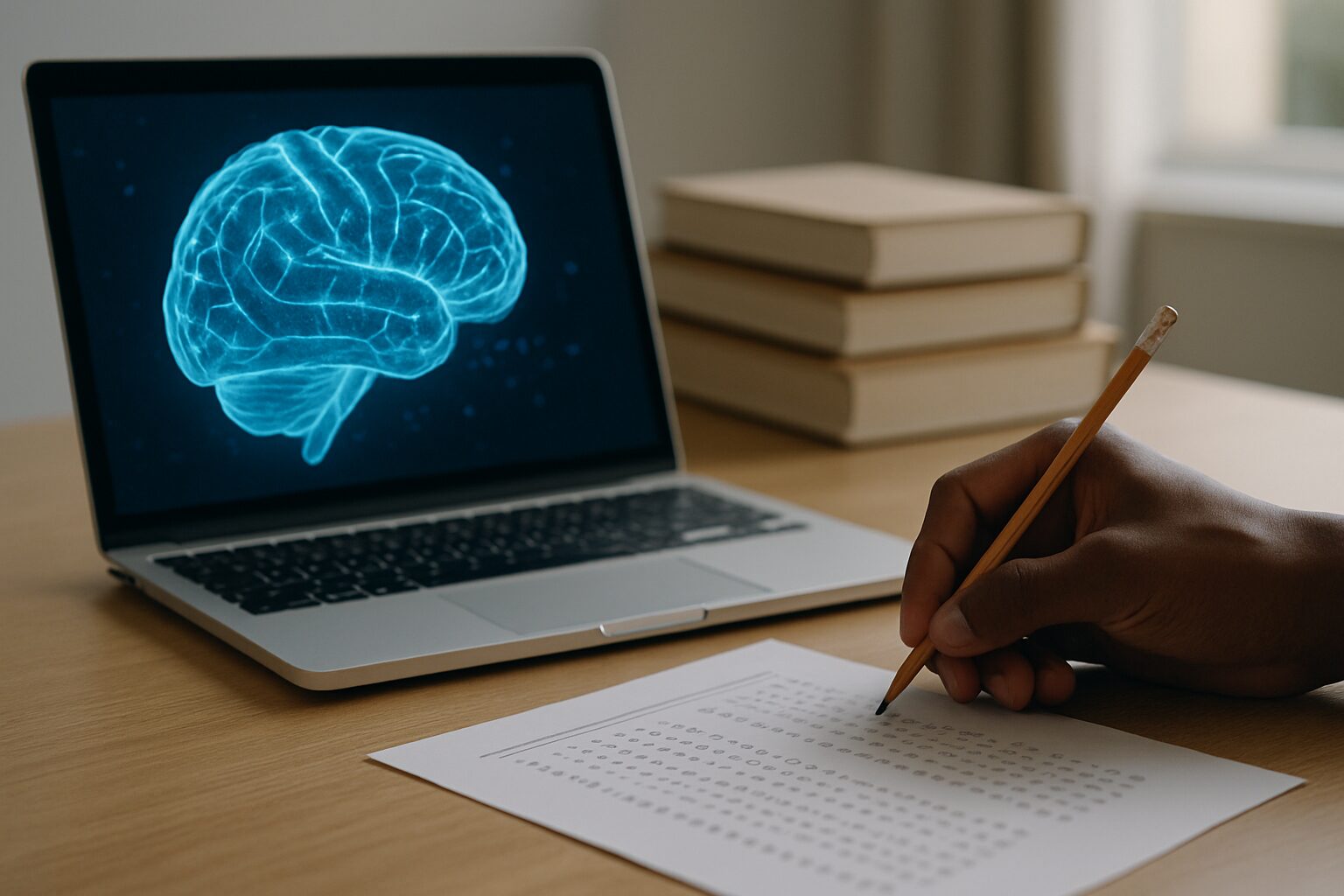
AI is increasingly being used in standardized testing for hiring, certification, and education. This raises ethical questions about fairness, bias, and accessibility in automated assessment systems. The reliance on AI for evaluating skills and knowledge may impact opportunities for candidates, depending on how these systems are designed and implemented.
Why It Matters - Real-world impact
The ethical implications of AI in standardized testing extend far beyond theoretical concerns, directly impacting students, educators, and employers. If biased algorithms or flawed data shape high-stakes assessments, marginalized groups may face unfair barriers to education or employment, perpetuating systemic inequities. Companies relying on AI-generated test results risk hiring or promoting candidates based on skewed metrics, undermining meritocracy. For regular people, this could mean missed opportunities, misaligned career paths, or reinforced societal divisions. When automated systems dictate access to advancement without transparency, public trust in both education and corporate institutions erodes. The consequences aren't abstract—they shape who gets access to society's most powerful levers of opportunity.
Ethical Concerns - What’s wrong or risky?
AI and Standardized Testing in Industry: Navigating Ethical Risks
As industries increasingly adopt AI-driven standardized testing for hiring and performance evaluation, several ethical risks emerge. These tools, while efficient, can perpetuate or even amplify existing biases and inequities if not carefully designed and monitored.
Fairness and Discrimination
One of the most pressing concerns is the potential for AI to introduce or exacerbate fairness issues. If training data reflects historical biases, AI systems may unfairly disadvantage certain demographic groups. Similarly, algorithms might inadvertently discriminate based on protected characteristics like race, gender, or age, even if those variables are not explicitly used.
Transparency and Accountability
Many AI testing systems operate as "black boxes," making it difficult to understand how decisions are reached. This lack of transparency can erode trust and make it challenging to identify or correct errors or biases. Candidates and employees may have no recourse if they suspect an unfair outcome.
Economic and Employment Concerns
The adoption of AI in testing could lead to significant job loss among human assessors or those in roles reliant on traditional evaluation methods. Moreover, if testing favors certain skills or backgrounds, it may widen economic disparities, impacting economic opportunities for underrepresented groups.
Worker Rights and Autonomy
AI-driven testing may infringe on worker rights, such as privacy and autonomy. Continuous monitoring or invasive assessments could create a culture of surveillance, undermining dignity and consent in the workplace.
Differing Perspectives
Not all stakeholders view these risks uniformly. Proponents argue that AI can reduce human bias and increase objectivity in evaluations. Critics, however, emphasize that without rigorous oversight, these systems may do more harm than good. Some also question whether standardized testing—AI-driven or not—is the best measure of capability or potential, suggesting alternative approaches that prioritize holistic assessment.
Solutions - What’s being done or proposed?
Algorithmic Transparency and Explainability
One proposed solution is to mandate transparency in AI systems used for standardized testing. This involves requiring companies to disclose how their algorithms make decisions, including the data inputs, weighting mechanisms, and potential biases. Explainability tools, such as LIME or SHAP, can help stakeholders understand AI-driven decisions. While this doesn't eliminate bias, it allows for scrutiny and accountability.
Bias Audits and Third-Party Reviews
Independent audits of AI systems in standardized testing have been suggested to identify and mitigate biases. Third-party organizations could evaluate the fairness of algorithms across different demographic groups. For example, audits might check for disparities in pass rates or scoring accuracy. This approach relies on standardized metrics for fairness and requires cooperation from testing providers.
Diverse Training Data Representation
To reduce bias, some advocate for ensuring AI models are trained on datasets that represent diverse populations. This includes balancing data across race, gender, socioeconomic status, and other factors. However, collecting representative data can be challenging due to privacy concerns or historical underrepresentation. Ongoing updates to training data are also necessary to reflect changing demographics.
Human-in-the-Loop Systems
Integrating human oversight into AI-driven testing systems is another solution. Human reviewers can intervene when AI results seem questionable or biased. For instance, borderline scores might be flagged for manual review. While this combines AI efficiency with human judgment, it can increase costs and slow down processes, posing a trade-off for large-scale testing.
Regulatory Frameworks and Standards
Governments and institutions could establish regulations to govern AI use in standardized testing. These might include requirements for fairness, privacy, and accountability, similar to GDPR for data protection. Standard-setting bodies could also create certification programs for ethical AI in education. Enforcement remains a challenge, especially with globalized testing platforms.
Alternative Assessment Methods
Some suggest moving away from AI-driven standardized tests entirely, opting for alternative assessments like project-based evaluations or portfolios. These methods may reduce reliance on potentially biased algorithms but require more resources to administer and grade. Hybrid models, where AI assists but doesn't dominate, are also being explored.
Stakeholder Collaboration and Public Input
Engaging educators, students, and communities in the design and implementation of AI testing systems can help address ethical concerns. Public forums, surveys, and advisory panels ensure diverse perspectives shape AI tools. However, reaching consensus among stakeholders with differing priorities can be difficult, and input must be meaningfully incorporated into technical designs.
Examples and Real Cases
Amazon's AI Recruitment Tool Bias (2018)
In 2018, Amazon scrapped an AI recruitment tool after discovering it discriminated against women. The system, trained on resumes submitted over a 10-year period (mostly from men), penalized applications containing words like 'womenu2019s' (e.g., 'womenu2019s chess club captain'). This revealed how historical hiring biases can become embedded in AI systems used for standardized candidate evaluation.
Proctorio Automated Proctoring Controversy (2020)
During the COVID-19 pandemic, Proctorio's AI proctoring software faced widespread criticism for flagging students of color more frequently for 'suspicious behavior' during exams. Multiple universities reported disproportionate false positives, with students being wrongly accused of cheating due to algorithmic bias in facial recognition and movement analysis.
Hypothetical: AI-Graded Standardized Job Tests
A hypothetical scenario could involve a corporation using AI to score standardized job skills tests, where the algorithm downgrades applicants who use regional dialects or non-native English phrasingu2014despite their technical competence. This could systematically disadvantage international applicants or those from diverse linguistic backgrounds, replicating existing workplace inequities.
ETS AI Scoring for TOEFL Essays (2021)
In 2021, Educational Testing Service (ETS) deployed an AI system to grade TOEFL essay sections, but researchers found it assigned lower scores to essays with African American English Vernacular features. This raised concerns about fairness in high-stakes language testing, as the AI reinforced standard language biases rather than evaluating communicative competence.
Frequently Asked Questions
What is AI in standardized testing?
AI in standardized testing refers to the use of artificial intelligence technologies to create, administer, score, or analyze standardized tests. This can include automated essay scoring, adaptive testing, and detecting patterns in student performance.
Why is AI important in standardized testing?
AI can make standardized testing more efficient, personalized, and fair. It can reduce grading biases, adapt tests to individual student levels, and provide quicker feedback, helping educators identify learning gaps faster.
How does AI improve access to standardized testing?
AI can make testing more accessible by offering adaptive formats for students with disabilities, providing translations for non-native speakers, and enabling remote proctoring so tests can be taken anywhere, reducing barriers for underserved communities.
What are the risks of using AI in standardized testing?
Potential risks include data privacy concerns, over-reliance on technology, and algorithmic biases that may disadvantage certain groups. Ensuring transparency and fairness in AI systems is crucial to avoid these issues.
How is AI used in standardized testing today?
Today, AI is used for tasks like automated essay scoring (e.g., in GRE or TOEFL), generating personalized practice tests, detecting cheating, and analyzing large datasets to improve test design and educational outcomes.